
[gtranslate]
MENÜ
⚡ Quick Facts: Cervical Pain
That nagging stiffness at the base of your neck after a long day at the screen? It rarely stays minor. Ignored, cervical pain creeps into your shoulders, triggers headaches, disturbs sleep, and can radiate down your arms — quietly shrinking your daily life. The good news: most neck pain responds well to the right mix of posture correction, targeted exercises, and root-cause natural therapy. Here’s exactly how to treat cervical pain and keep it from coming back.
Cervical pain is discomfort, stiffness, or restricted movement originating in the cervical spine — the seven vertebrae of your neck. It can be a dull, constant ache or a sharp, shooting pain, and it often travels into the shoulders, upper back, or arms.
Your neck carries the weight of your head (about 5 kg) all day, on a highly mobile but delicate structure of bones, discs, muscles, and nerves. When posture, strain, or degeneration disturbs that balance, pain follows. In Ayurveda, most neck pain is understood as a Vata dosha imbalance (Greeva Sandhigata Vata) causing dryness, stiffness, and degeneration of the cervical joints — which is why natural treatment focuses on nourishing and lubricating the region rather than just numbing the pain.
Because the neck is so connected to the shoulders, jaw, and head, cervical pain is rarely an isolated problem. Treating it well means addressing the whole chain — the goal of a structured Programm zur Behandlung chronischer Schmerzen und Entzündungen rather than one-off painkillers.
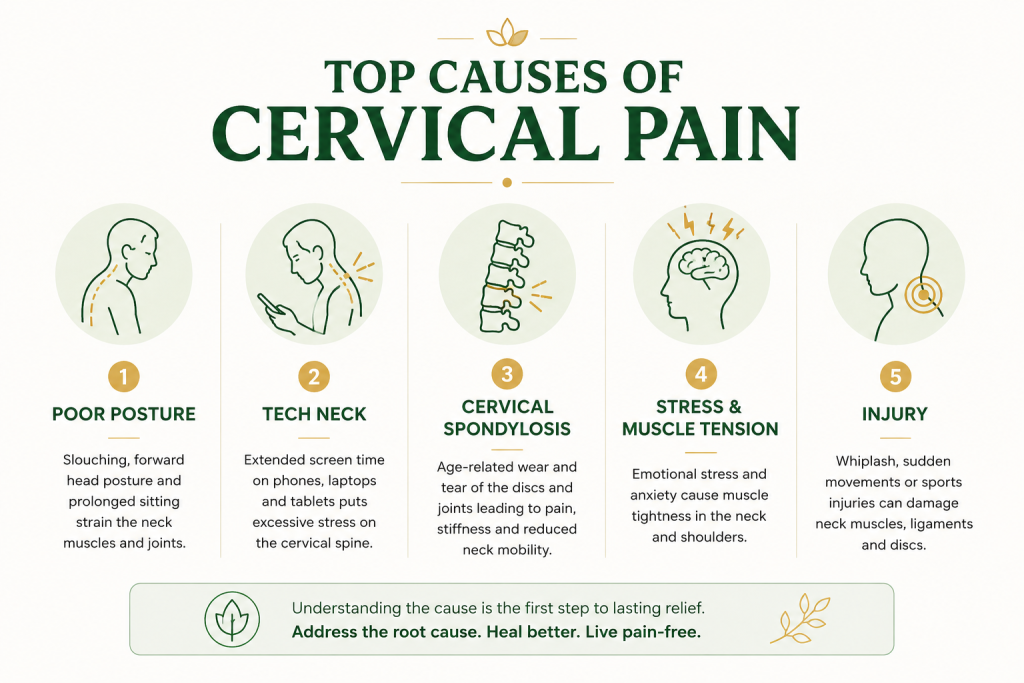
Most cervical pain is mechanical and lifestyle-driven — which is good news, because that means it’s largely preventable and reversible. The common culprits:
Stress deserves special mention. The knot in your neck when you’re overwhelmed is real physiology — sustained tension keeps those muscles contracted for hours. That’s why addressing the mind matters, and why a dedicated Stress- und Burnout-Erholungsprogramm can quietly resolve neck pain that stretches and painkillers never fully fix.
Cervical pain shows up in more ways than a simple ache. Watch for:
💡 Wichtige Erkenntnis: Occasional stiffness is common and usually harmless. But if pain radiates into the arms, causes numbness or weakness, or lasts more than a few weeks, it needs professional evaluation — see the red-flag table below.
For mild, recent cervical pain, these first-line steps bring relief for most people. The aim is to reduce inflammation, ease muscle tension, and restore gentle movement.
If pain lingers beyond 1–2 weeks despite these measures, it’s time to look deeper at the root cause rather than repeatedly masking symptoms — the principle behind a root-cause, functional-medicine approach to chronic pain.
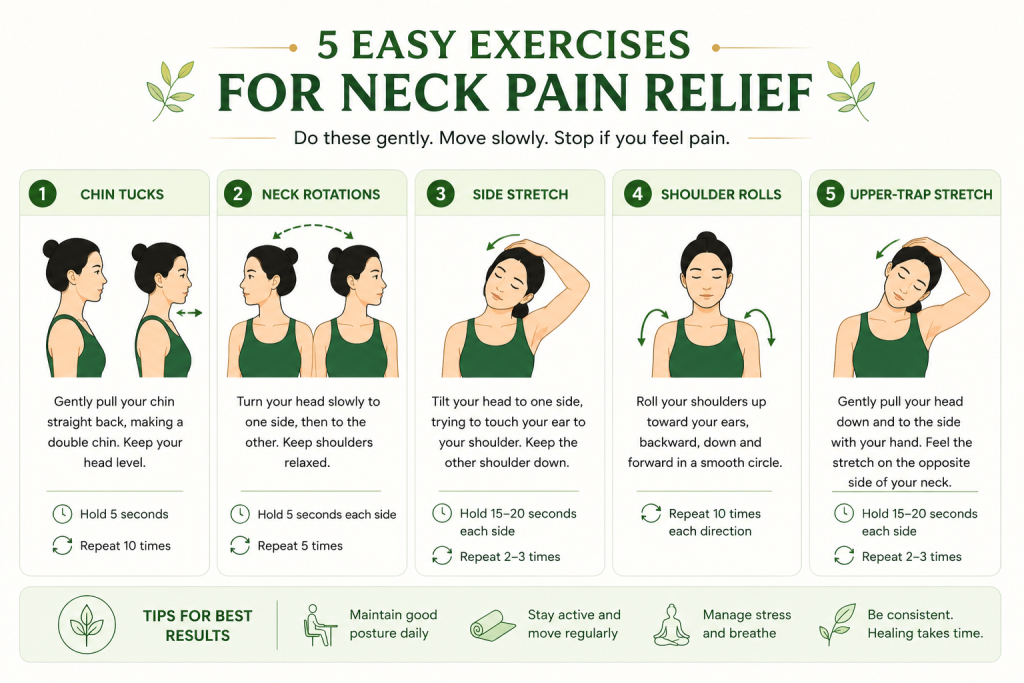
Gentle, consistent movement is one of the most effective ways to treat and prevent cervical pain. Move slowly, never into sharp pain, and stop if symptoms worsen.
Sit tall, gently draw your chin straight back (making a “double chin”). Hold 5 seconds, repeat 10 times. Rebuilds deep neck-stabilising strength.
Slowly turn your head to look over one shoulder, hold, then the other. 5 times each side. Restores rotation range.
Tilt your ear toward your shoulder until you feel a gentle stretch. Hold 20 seconds each side. Releases tight side-neck muscles.
Roll shoulders backward 10 times, then forward. Loosens the shoulder-neck junction where tension collects.
Gently guide your head diagonally forward with one hand. Hold 20 seconds. Eases the muscle most affected by “tech neck”.
💡 Wichtige Erkenntnis: Exercises relieve symptoms, but they work far better when combined with correcting warum the pain started — posture, stress, and (in cervical spondylosis) the underlying tissue degeneration. Symptom relief plus root-cause correction is what makes results last.
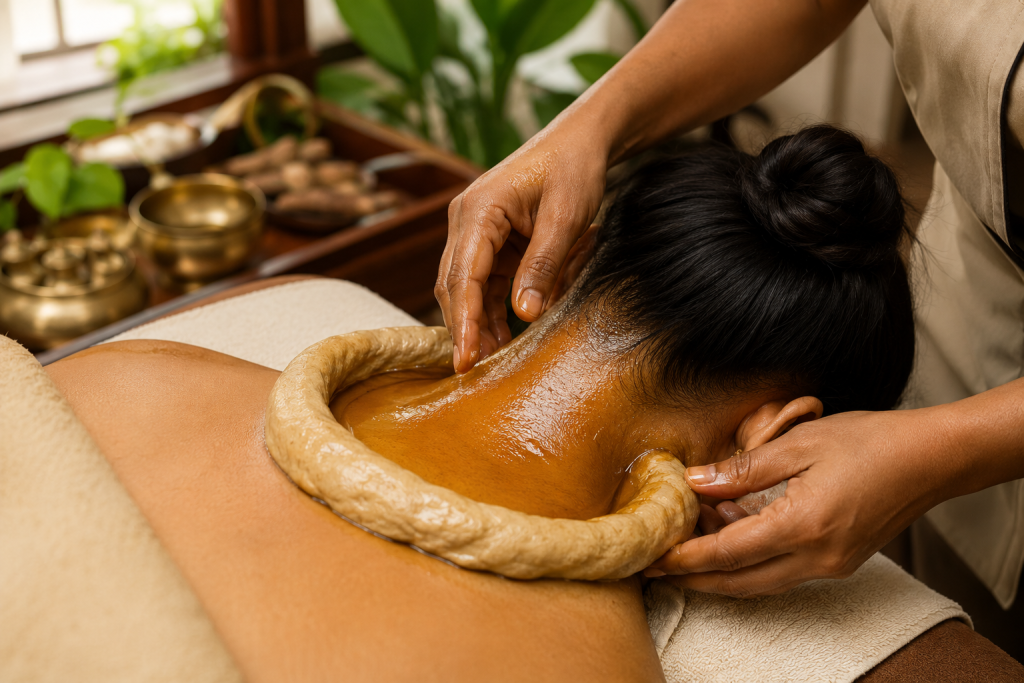
When neck pain is recurring, stubborn, or linked to cervical spondylosis, Ayurveda offers time-tested therapies that target the aggravated Vata dosha at the root — reducing pain and stiffness while nourishing and lubricating the cervical spine. These are the most effective natural treatments:
Warm medicated oil is pooled over the neck within a herbal-dough ring. It deeply lubricates the cervical joints, relieves stiffness, and calms nerve irritation — the signature therapy for neck pain.
A full-body warm-oil massage that improves circulation, relaxes tight muscles, and soothes the nervous system. Even on its own it reduces stiffness and improves sleep.
Warm herbal poultices are pressed over the neck and shoulders to reduce inflammation, improve blood flow, and release deep muscle tension.
A cleansing protocol that clears accumulated toxins (Ama) contributing to inflammation, restoring the body’s balance. Explore how Panchakarma supports chronic pain relief as part of a complete protocol.
Anti-inflammatory herbs such as Guggulu and Ashwagandha, a warm Vata-pacifying diet, and posture-focused lifestyle correction round out the plan.
The same integrative principles apply across the musculoskeletal system — the retreat’s approach to holistic back pain treatment und Ayurvedic remedies for joint pain uses this exact root-cause framework, adapted to each region.
Most cervical pain is manageable, but certain red-flag signs mean you should seek medical care promptly.
| Warning Sign | Warum das wichtig ist |
|---|---|
| Numbness, tingling, or weakness in arms/hands | Possible nerve compression |
| Pain after a fall, accident, or whiplash | Rule out fracture or serious injury |
| Pain with fever, headache, or neck rigidity | Needs urgent evaluation |
| Verlust der Kontrolle über die Blase oder den Stuhlgang | Medical emergency |
| Pain that persists or worsens beyond 2–4 weeks | Needs a proper diagnosis, not more painkillers |
| Unexplained weight loss with neck pain | Requires investigation |
💡 Wichtige Erkenntnis: When in doubt, get assessed. A clear diagnosis lets you choose the right path — from targeted physiotherapy to a structured recovery program — instead of guessing.
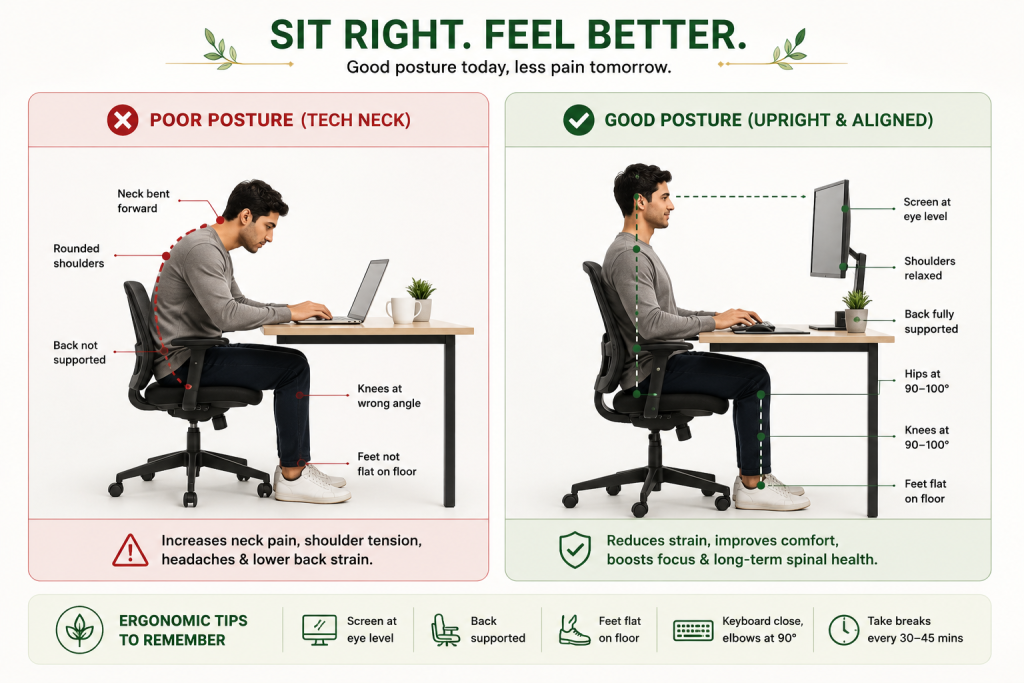
Prevention is simpler than treatment. Build these habits:
For those recovering from injury or a flare-up, a guided post-trauma and rehabilitation program rebuilds strength and mobility safely, reducing the risk of the pain returning.
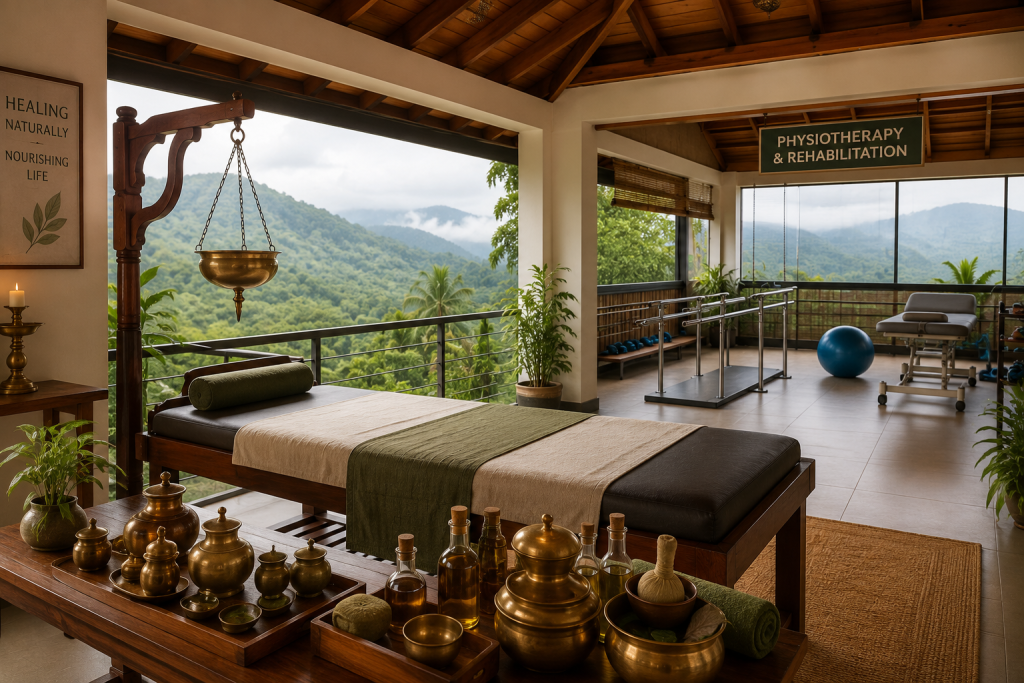
Set amid the serene mountains of Wayanad, Kerala, this integrative retreat blends modern diagnostics with classical Ayurvedic pain therapies — so cervical pain is treated at its root, not just silenced.
What makes the difference:
If cervical pain is disrupting your work or sleep, the highest-value next step is a proper assessment. Explore the full range of integrative wellness and pain-recovery programs, or speak directly with the medical team.
✅ Wichtigste Erkenntnisse
For sudden neck pain, correct your posture, apply a warm compress to relax tight muscles, do gentle neck stretches, and take short movement breaks. Avoid total rest — mild movement recovers faster than immobility.
Mechanical and posture-related cervical pain can often be resolved completely. Degenerative causes like cervical spondylosis can’t be fully “reversed,” but pain and stiffness can be significantly reduced and controlled long-term with the right therapy and habits.
Poor posture and prolonged screen/phone use (“tech neck”) are the leading causes, followed by cervical spondylosis, muscle strain, stress-related tension, and injury.
No. Cervical pain is the symptom; cervical spondylosis is one specific cause — the age- and posture-related wear of the neck’s discs and joints. Not all neck pain is spondylosis.
Greeva Basti (warm medicated oil held over the neck) is the signature therapy, usually combined with Abhyanga massage, Kizhi herbal poultices, and Panchakarma detoxification to address the underlying Vata imbalance.
Chin tucks, gentle neck rotations, side stretches, shoulder rolls, and upper-trapezius stretches. Do them slowly and consistently, never pushing into sharp pain.
Yes. Chronic stress keeps the neck and shoulder muscles tense for long periods, creating and worsening pain. Managing stress is a key part of effective treatment.
Sleep on your back or side with a pillow that keeps the neck neutral (aligned with the spine). Avoid sleeping on your stomach, which twists the neck for hours.
Seek medical care if you have numbness, tingling, or weakness in the arms; pain after an injury; fever with neck stiffness; loss of bladder/bowel control; or pain that persists beyond 2–4 weeks.
Significantly. Forward-head “tech neck” posture multiplies the load on the cervical spine, and correcting it is often the single most effective step in both treating and preventing neck pain.
Simple muscle-strain or posture-related pain often improves within days to two weeks with proper care. Chronic or degenerative pain responds more gradually and benefits from a structured, guided program.
Yes — they complement each other well. Ayurvedic oil therapies address inflammation and tissue nourishment, while physiotherapy rebuilds strength and mobility. An integrated plan often gives the best outcome.
🔑 Key Insights
Ready to End Cervical Pain at the Root?
Stop cycling through painkillers. Get a precise diagnosis and a personalised plan combining physiotherapy and proven Ayurvedic neck-pain therapies in the calm of Kerala’s mountains.