[gtranslate]
MENÜ
Haben Sie ständig mit Husten, Atembeschwerden und Müdigkeit zu kämpfen, weil sich die Luftqualität verschlechtert? Die Luftverschmutzung hat sich zu einem stillen Killer entwickelt, von dem weltweit Millionen Menschen betroffen sind und der Atembeschwerden, Allergien und chronische Gesundheitsstörungen auslöst. Die giftige Luft, die wir täglich einatmen, kann das Immunsystem schwächen, das Lungengewebe schädigen und den Alterungsprozess beschleunigen. Was aber, wenn die alte ayurvedische Weisheit den Schlüssel zum Schutz Ihres Körpers vor den schädlichen Auswirkungen der Umweltverschmutzung enthält? Dieser umfassende Leitfaden zeigt bewährte Ayurvedische Heilmittel für Probleme mit Luftverschmutzung die Ihr System auf natürliche Weise entgiften, die Gesundheit der Atemwege stärken und die Widerstandsfähigkeit gegen Umweltgifte erhöhen.
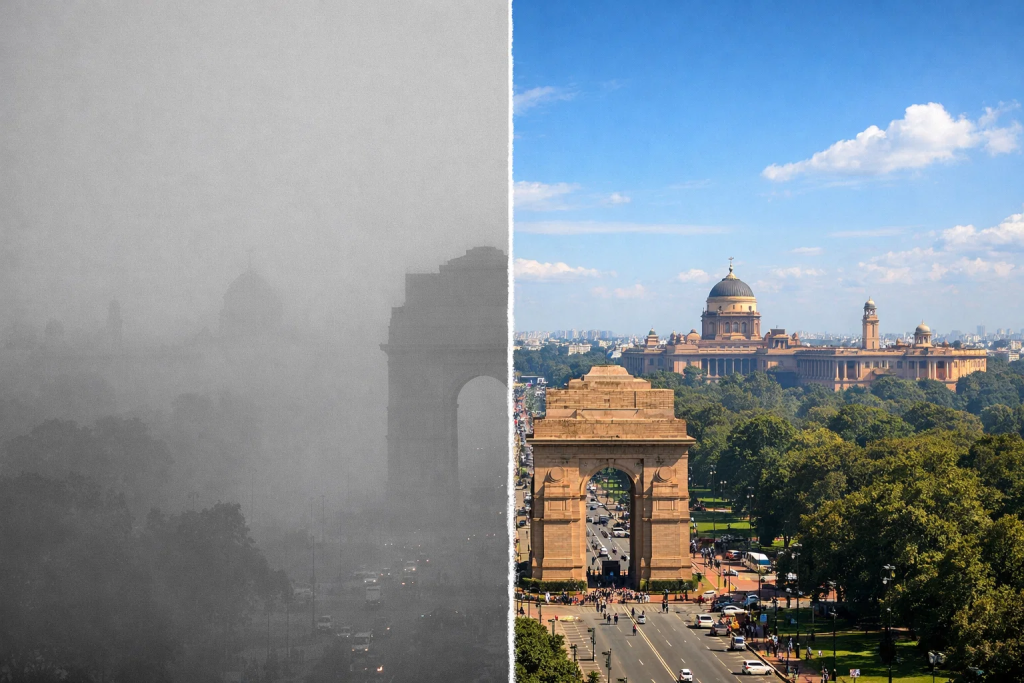
Indien steht derzeit vor einer der schlimmsten Luftqualitätskatastrophen überhaupt, In den Großstädten werden gefährliche Luftqualitätsindizes (AQI) gemessen, die weit über den sicheren Grenzwerten liegen. In Delhi-NCR, Mumbai, Kolkata und anderen Großstädten liegen die AQI-Werte regelmäßig über 400, Sie werden in die Kategorie “schwer” eingestuft, die eine ernsthafte Gesundheitsgefährdung für alle Bewohner darstellt.
Jüngste Daten lassen alarmierende Trends erkennen:
Medizinische Experten in ganz Indien berichten von einem noch nie dagewesenen Anstieg der:
Die Situation erfordert sofortiges Handeln, nicht nur auf politischer Ebene, sondern auch auf individueller Ebene. Regierungsinitiativen wie ungerade Fahrzeugregelungen und Bauverbote bieten zwar eine vorübergehende Entlastung, persönlicher Schutz durch ayurvedische Immunitätsbildung und Entgiftung ist in indischen Städten überlebenswichtig geworden.
Dies ist der Ort, an dem Alte ayurvedische Weisheit trifft auf moderne Notwendigkeit. Die bewährten Heilmittel, die unsere Vorfahren vor Umweltgiften geschützt haben, sind heute wichtiger denn je, um diese moderne Gesundheitskrise zu bekämpfen.
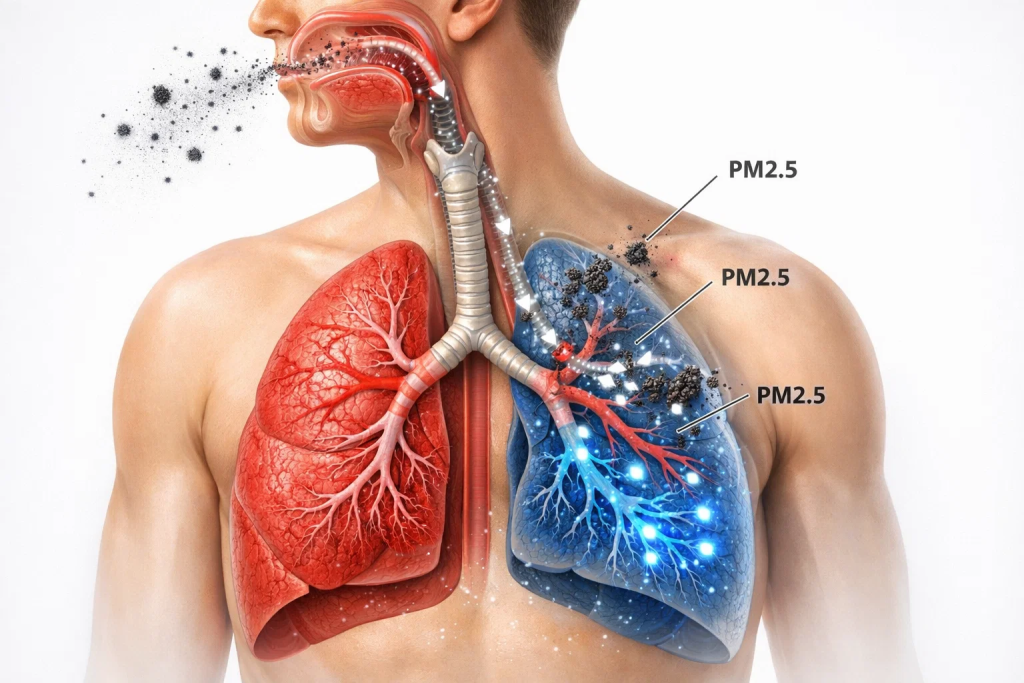
Die Luftverschmutzung hat sich zu einer der dringendsten gesundheitlichen Herausforderungen unserer Zeit entwickelt. Feinstaub (PM2,5 und PM10), Stickstoffdioxid, Schwefeldioxid und Ozon bilden einen Giftcocktail, der tief in unser Atmungssystem eindringt und sowohl unmittelbare als auch langfristige gesundheitliche Folgen hat.
Das Verständnis dieser Auswirkungen ist entscheidend für die Ergreifung proaktiver Maßnahmen. Unter Tigris-Tal Wellness-Rückzug, haben wir aus erster Hand erfahren, wie Integrative ayurvedische Behandlungen kann die durch die Umweltverschmutzung verursachten Schäden rückgängig machen und eine optimale Gesundheit wiederherstellen.

Ayurveda, die 5.000 Jahre alte Wissenschaft vom Leben, bietet einen ganzheitlichen Rahmen für das Verständnis und die Behandlung umweltbedingte Gesundheitsstörungen. Nach ayurvedischen Grundsätzen stört die Luftverschmutzung das natürliche Gleichgewicht des Körpers (Doshas) und führt zu einer Anhäufung von Giftstoffen (Ama) in den Atemwegen und im Kreislaufsystem.
Vata-Kapha-Ungleichgewicht: Luftverschmutzung verschlimmert vor allem Vata (Luftelement) und Kapha (Wasser- und Erdelement). Dies schafft:
Toxinakkumulation (Ama-Bildung): Verschmutzte Luft führt äußere Giftstoffe ein, während eine gestörte Verdauung innere Giftstoffe erzeugt. Diese Doppelbelastung durch Ama schwächt die natürlichen Abwehrmechanismen des Körpers.
Der ayurvedische Ansatz konzentriert sich auf:
Diese ganzheitliche Methodik unterscheidet sich deutlich von herkömmlichen Ansätzen. Entdecken Sie mehr über Ganzheitliche vs. moderne westliche Medizin und warum integratives Heilen bei Problemen mit der Umweltverschmutzung effektiver ist.
Unser spezialisiertes Entgiftungs- und Reinigungsprogramm im Tigris Valley berücksichtigt diese Grundsätze, um eine umfassende Entgiftung der Umweltverschmutzung zu gewährleisten.
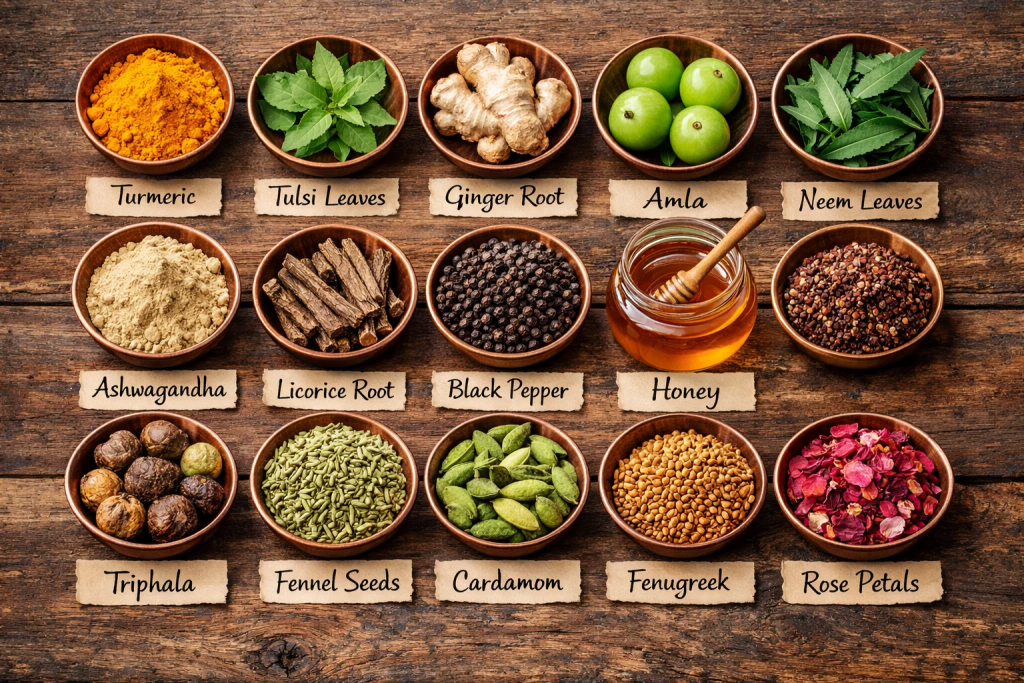
Kurkuma ist das stärkste entzündungshemmende Mittel der Natur, enthält Curcumin, das das Lungengewebe vor oxidativen Schäden schützt. Der tägliche Verzehr hilft:
Wie zu verwenden: Mischen Sie 1 Teelöffel Kurkumapulver mit warmer Milch und einer Prise schwarzem Pfeffer. Zweimal täglich verzehren, besonders in Zeiten hoher Luftverschmutzung.
Tulsi wird als die “Königin der Kräuter” verehrt” im Ayurveda für seine bemerkenswerte Fähigkeit, das Atmungssystem zu reinigen. Es enthält leistungsstarke Phytochemikalien, die:
Wie zu verwenden: Kauen Sie 5-7 frische Tulsi-Blätter auf nüchternen Magen oder bereiten Sie Tulsi-Tee zu, indem Sie 10-12 Blätter in Wasser aufkochen. Unser Ayurveda-Behandlungsprogramme umfassen therapeutische Tulsi-Formulierungen.
Die wärmenden Eigenschaften des Ingwers machen ihn zu einem außergewöhnlichen Mittel, um die Atemwege zu befreien.. Es regt die Durchblutung an, baut Schleim ab und reduziert Entzündungen in den Atemwegen.
Wie zu verwenden: Bereiten Sie frischen Ingwertee mit Honig zu, oder kauen Sie über den Tag verteilt kleine Stücke frischen Ingwers. Fügen Sie Suppen und Mahlzeiten für eine nachhaltige Wirkung hinzu.
Pippali ist speziell angezeigt für chronische Erkrankungen der Atemwege und durch Umweltverschmutzung verursachte Schäden. Es:
Wie zu verwenden: Mischen Sie zweimal täglich 1/4 Teelöffel Pippalipulver mit Honig. Konsultieren Sie für die richtige Dosierung immer einen Ayurveda-Praktiker.
Süßholz pflegt und beruhigt die gereizten Atemwege, Das macht ihn zu einem wertvollen Mittel bei durch Umweltverschmutzung hervorgerufenen Halsreizungen und Husten.
Wie zu verwenden: Bereiten Sie Süßholztee zu oder lutschen Sie kleine Stücke der Süßholzwurzel. Hinweis: Vermeiden Sie es, wenn Sie unter Bluthochdruck leiden.
Amla enthält 20 Mal mehr Vitamin C als Orangen, Das macht es zu einem starken Immunstärker und Antioxidans. Es:
Wie zu verwenden: Täglich 1-2 frische Amlas verzehren oder Amla-Saft (20 ml) mit Wasser vermischt auf nüchternen Magen einnehmen.
Die blutreinigenden Eigenschaften von Neem machen es für die Entgiftung von Umweltverschmutzung unerlässlich. Es beseitigt Giftstoffe aus dem Blut und unterstützt eine gesunde Haut trotz Umweltbelastung.
Wie zu verwenden: Kochen Sie Neemblätter in Wasser und inhalieren Sie den Dampf, oder nehmen Sie Neemkapseln nach Anweisung eines ayurvedischen Arztes ein.
Die Luftverschmutzung beeinträchtigt die kognitive Funktion und die geistige Klarheit. Brahmi schützt die Gehirnzellen vor oxidativem Stress und verbessert die psychische Widerstandsfähigkeit.
Wie zu verwenden: Nehmen Sie Brahmi-Pulver gemischt mit Ghee oder als verschriebene Nahrungsergänzung. Unser Programm zur Erholung von Stress und Burnout umfasst Behandlungen auf Brahmi-Basis.
Ashwagandha stärkt die allgemeine Immunität und hilft dem Körper, sich an Umweltstressoren anzupassen wie Umweltverschmutzung. Es reduziert Entzündungen und unterstützt die Gesundheit der Atemwege.
Wie zu verwenden: Mischen Sie 1 Teelöffel Ashwagandha-Pulver mit warmer Milch vor dem Schlafengehen. Erhältlich als Teil unseres Paket zur Stärkung des Immunsystems.
Triphala reinigt sanft das gesamte Verdauungs- und Atmungssystem, und beseitigt angesammelte Giftstoffe. Seine antioxidativen Eigenschaften schützen vor durch Umweltverschmutzung verursachten Zellschäden. Für ein tieferes Verständnis, lesen Sie über Was ist eine Entgiftungsbehandlung für den Körper?.
Wie zu verwenden: Nehmen Sie 1 Teelöffel Triphala-Pulver mit warmem Wasser vor dem Schlafengehen zur sanften Entgiftung über Nacht.
Vasaka ist speziell für Bronchitis und Asthma angezeigt, die durch Umweltverschmutzung verschlimmert werden. Es:
Wie zu verwenden: Zubereitet als medizinischer Sirup oder Abkochung unter professioneller Anleitung in Zentren wie Tigris-Tal.
Giloy stärkt die Immunität gegen Krankheitserreger und Allergene aus der Luft, und ist daher in Zeiten hoher Luftverschmutzung besonders wichtig.
Wie zu verwenden: Kochen Sie Giloy-Stängelstücke in Wasser und nehmen Sie den Sud zu sich, oder nehmen Sie ihn als Nahrungsergänzungsmittel ein.
Schwarzer Pfeffer befreit nicht nur von Verstopfung, sondern fördert auch die Aufnahme anderer Heilkräuter, und vervielfachen so ihre Wirksamkeit.
Wie zu verwenden: Geben Sie täglich frisch gemahlenen schwarzen Pfeffer in warmes Wasser, Tees und Mahlzeiten.
Roher, unverarbeiteter Honig beruhigt gereizte Atemwege und bietet antimikrobiellen Schutz gegen durch Verschmutzung übertragene Krankheitserreger.
Wie zu verwenden: Nehmen Sie 1 Teelöffel rohen Honig mit warmem Wasser oder Kräutertees ein. Erhitzen Sie Honig nie über 40°C.
Chyawanprash ist eine umfassende ayurvedische Konfitüre, die mehr als 40 Kräuter enthält, speziell für die Immunität und Verjüngung der Atemwege entwickelt.
Wie zu verwenden: Täglich 1-2 Teelöffel mit warmer Milch oder Wasser einnehmen. Besonders wohltuend im Winter und in Monaten mit hoher Luftverschmutzung.

Wenn pflanzliche Heilmittel nicht ausreichen, bietet Panchakarma eine tiefgreifende zelluläre Entgiftung um durch Umweltverschmutzung verursachte Toxine zu beseitigen. Diese uralte fünffache Entschlackungstherapie ist der Goldstandard für Umkehrung von Verschmutzungsschäden. Wenn Sie mehr über diese wirksame Behandlung erfahren möchten, lesen Sie unseren umfassenden Leitfaden über Was ist eine Panchakarma-Behandlung?.
Nasya behandelt direkt die Nasengänge und Nasennebenhöhlen, Sie beseitigt angesammelte Schadstoffe und stärkt die Schleimhäute der Atemwege. Medizinische Öle oder pflanzliche Präparate werden durch die Nasenlöcher verabreicht und bieten:
Diese kontrollierte Reinigungstherapie beseitigt Giftstoffe aus der Leber und dem Verdauungstrakt, wo sich viele aus der Umweltverschmutzung stammende Giftstoffe ansammeln.
Basti reinigt den Dickdarm und gleicht Vata aus, Dies ist von entscheidender Bedeutung, da die Luftverschmutzung vor allem das Vata-Dosha verschlimmert.
Für schwere Fälle von durch Umweltverschmutzung verursachter Toxizität, Die therapeutische Blutreinigung entfernt tief sitzende Giftstoffe aus dem Verkehr gezogen.
Unser umfassendes Entgiftungs- und Reinigungsprogramm im Tigris-Tal beinhaltet authentisches Panchakarma unter fachkundiger Aufsicht und bietet messbare Verbesserungen der Atmungsfunktion und der allgemeinen Vitalität.

Was Sie essen, hat einen direkten Einfluss auf die Fähigkeit Ihres Körpers, Umweltgifte zu neutralisieren. Ayurveda empfiehlt eine spezielle Ernährungsweise, um die Immunität zu stärken und die Entgiftung zu unterstützen.
Unsere Ernährungsexperten bei Tigris-Tal erstellen. personalisierte Mahlzeitenpläne gegen Umweltverschmutzung die mit Ihrer Dosha-Konstitution und Ihren Gesundheitszielen übereinstimmen.

Jenseits von Kräutern und Ernährung, spezifische Änderungen des Lebensstils verringern die Auswirkungen der Umweltverschmutzung erheblich auf Ihre Gesundheit.
Unser Programme für Yoga und Naturheilkunde spezielle Atemtechniken zum Schutz vor Umweltverschmutzung beinhalten.
Ein Aufenthalt in der Natur, fernab von verschmutzten städtischen Gebieten, kann die Genesung deutlich verbessern. Erfahren Sie mehr über die gesundheitliche Vorteile von Aufenthalten in der Natur und warum sie für das Wohlbefinden der Atemwege so wichtig ist.
Regelmäßige Dampfinhalation mit Eukalyptus oder Tulsi hilft:
Geben Sie einige Tropfen ätherisches Eukalyptusöl oder frische Tulsiblätter in kochendes Wasser und inhalieren Sie den Dampf täglich 10-15 Minuten lang.
Yoga in der Halle und leichte Übungen stärken die Atmungsfähigkeit ohne sich der verschmutzten Außenluft auszusetzen. Fokus auf:
Umweltverschmutzungsbedingter Stress und Müdigkeit können zu Burnout führen. Unser Leitfaden für den Weg aus dem Burnout bietet zusätzliche Strategien zur Wiederherstellung der Vitalität. Unser Programm zur Erholung von Stress und Burnout umfasst geführte Bewegungstherapien, die für von Umweltverschmutzung betroffene Personen geeignet sind.

Hausmittel bieten zwar einen erheblichen Schutz, bestimmte Symptome erfordern eine professionelle ayurvedische Intervention:
Unser ganzheitliches Wellness-Retreat bietet spezielle Programme für umweltbedingte Gesundheitsprobleme:
Bei umweltbedingten Entzündungen der Gelenke und Muskeln. Unser die wirksamsten Schmerzbehandlungen im Ayurveda kann dazu beitragen, die mit der Umweltverschmutzung verbundenen Schmerzen zu lindern.
Umweltverschmutzung kann Autoimmunreaktionen auslösen oder verschlimmern. Unser integrativer Ansatz schafft Abhilfe.
Die Luftverschmutzung hat erhebliche Auswirkungen auf die kardiovaskuläre Gesundheit. Dieses Programm befasst sich mit Herzproblemen.
Bekämpfen Sie die durch Umweltverschmutzung verursachte vorzeitige Alterung mit verjüngenden Rasayana-Therapien.
Das Hotel liegt in den unberührten Bergen von Kerala, Tigris Valley verbindet traditionelles Ayurveda mit moderner Diagnostik zur Verfügung zu stellen:
Erkunden Sie das umfassende Vorteile einer Ayurveda-Behandlung und Vorteile der funktionellen Medizin um zu verstehen, wie unser integrativer Ansatz hervorragende Ergebnisse liefert.

Neben dem traditionellen Ayurveda bietet das Tigris Valley modernste Behandlungen der funktionellen Medizin zur Entgiftung der Umwelt. Unser umfassendes AYUSH-Behandlungen in Indiens Wellness-Klinik Nr. 1 kombinieren mehrere Heilsysteme für optimale Ergebnisse:
Verbessert die Sauerstoffzufuhr und unterstützt die Entgiftung der Zellen vor umweltbedingten Schäden.
Direkte Zufuhr von Antioxidantien und Nährstoffen, um freie Radikale zu neutralisieren und Gewebe zu reparieren.
Entfernt Schwermetalle, die sich durch Luftverschmutzung angesammelt haben.
Erfahren Sie mehr über unser Behandlungen der funktionellen Medizin die ayurvedische Ansätze ergänzen.
Die Verschmutzungswerte schwanken saisonal, und erfordern angepasste Protokolle:

Eine echte Heilung von Umweltschäden erfordert einen systemübergreifenden Ansatz. Bei Tigris Valley integrieren wir:
Dieser umfassende Ansatz gewährleistet nachhaltige Erholung und langfristiges Wohlbefinden trotz ständiger Umweltbelastung. Erfahren Sie mehr über die Vorteile von Wellness-Retreats und wie sie Ihre Gesundheit verbessern können.
Unser Wellness-Retreat für Unternehmen umfasst die Entgiftung der Umweltverschmutzung als Teil eines umfassenden Stressmanagements.
Wenn die Umweltverschmutzung chronische Gesundheitsprobleme ausgelöst oder verschlimmert hat, sollten Sie dies untersuchen:
Umweltverschmutzung ist ein bekanntes Karzinogen. Unser Programm für Krebshilfe und Palliativmedizin bietet ganzheitliche Unterstützung.

Nachhaltiges Wohlbefinden erfordert einen individuellen Ansatz. Hier erfahren Sie, wie Sie Ihren Plan erstellen:
Tulsi, Ingwer und Lakritze sind die wirksamsten Kräuter bei durch Umweltverschmutzung verursachtem Husten. Bereiten Sie einen Sud aus diesen Kräutern zu, fügen Sie nach leichtem Abkühlen Honig hinzu und nehmen Sie ihn 2-3 Mal täglich ein. Zusätzlich können Sie zur sofortigen Linderung eine Dampfinhalation mit Eukalyptusöl durchführen.
Erste Verbesserungen können innerhalb von 7-10 Tagen nach Beginn der Behandlung mit pflanzlichen Heilmitteln festgestellt werden., Eine vollständige Entgiftung erfordert jedoch 3-6 Monate konsequenter Praxis. Die Panchakarma-Therapie beschleunigt diesen Prozess erheblich, wobei viele Patienten innerhalb von 2-3 Wochen nach der Behandlung dramatische Verbesserungen erfahren.
Ja, die regelmäßige Anwendung von ayurvedischen Kräutern und Praktiken schafft einen Schutzschild gegen Umweltschäden. Kräuter wie Tulsi, Kurkuma und Ashwagandha verbessern die antioxidativen Abwehrkräfte, stärken das Atemwegsgewebe und unterstützen bei konsequenter Einnahme die natürlichen Entgiftungsmechanismen des Körpers.
Bei sachgemäßer Einnahme unter professioneller Anleitung sind ayurvedische Heilmittel im Allgemeinen sicher und haben nur minimale Nebenwirkungen. Bestimmte Kräuter wie Lakritze sollten jedoch von Menschen mit Bluthochdruck gemieden werden. Konsultieren Sie immer einen Ayurveda-Praktiker, bevor Sie eine neue Kräuterkur beginnen, insbesondere wenn Sie bereits gesundheitliche Probleme haben.
Luftverschmutzung verschlimmert vor allem die Doshas Vata und Kapha. Vata verursacht Trockenheit und Reizung der Atemwege, während Kapha Schleimansammlungen und Stauungen verursacht. Die Behandlung muss beide Doshas durch spezifische Kräuter, Ernährungsumstellungen und Panchakarma-Therapien ansprechen, die auf Ihre Konstitution zugeschnitten sind.
Ja, Kinder können von bestimmten ayurvedischen Heilmitteln in angepasster Dosierung sicher profitieren. Tulsi-Tee, Kurkuma-Milch, Honig mit Ingwer und Chyawanprash sind für Kinder ab 2 Jahren hervorragend geeignet. Konsultieren Sie jedoch immer einen ayurvedischen Kinderarzt, um geeignete Kräuter und Dosierungen je nach Alter und Konstitution des Kindes zu finden.
Panchakarma beseitigt tief eingebettete Giftstoffe auf zellulärer Ebene, die normale Kräuter nicht erreichen können. Nasya reinigt die Nasengänge und Nebenhöhlen, Virechana entfernt Giftstoffe aus Leber und Darm, und Basti gleicht das gestörte Vata aus. Dieser umfassende Ansatz kehrt die durch Umweltverschmutzung verursachten Schäden an Organen und Geweben um.
Ein umfassender Ansatz beinhaltet: Tägliches Pranayama (insbesondere Anulom Vilom und Kapalbhati), regelmäßige Dampfinhalation mit Heilkräutern, Nasenreinigung mit Salzwasser, Einnahme von lungenunterstützenden Kräutern wie Vasaka und Pippali, Einhaltung einer entzündungshemmenden Diät und Vermeidung von kalten, schleimbildenden Nahrungsmitteln. Führen Sie diese Maßnahmen konsequent durch und meiden Sie die Stunden mit hoher Luftverschmutzung im Freien.
Achten Sie auf eine wärmende, leicht verdauliche Ernährung, die reich an Antioxidantien ist. Nehmen Sie Kurkuma, Ingwer, Knoblauch, Blattgemüse, Obst der Saison und wärmende Gewürze in jede Mahlzeit auf. Vermeiden Sie kalte, schwere und verarbeitete Lebensmittel, die mehr Giftstoffe erzeugen. Trinken Sie den ganzen Tag über warmes Wasser und trinken Sie Kräutertees. Unsere Ernährungswissenschaftler im Tigris Valley erstellen individuelle Ernährungspläne gegen Umweltverschmutzung.
Ein grundlegender Schutz vor Umweltverschmutzung kann zu Hause mit Kräutern und Lebensgewohnheiten aufrechterhalten werden. Für eine tiefgreifende Entgiftung und die Umkehrung erheblicher Schäden ist jedoch ein Retreat wie Tigris-Tal bietet wesentliche Vorteile: Panchakarma unter fachkundiger Aufsicht, eine saubere Umgebung ohne Umweltverschmutzung, professionelle Überwachung, authentische Behandlungen und umfassende Heilungsprotokolle, die zu Hause nur schwer nachgeahmt werden können.
Die Luftverschmutzung ist eine unvermeidliche Realität des modernen Lebens, aber ihre schädlichen Auswirkungen müssen nicht sein. Durch die Weisheit des Ayurveda und die umfassenden Programme im Tigris Valley können Sie sich schützen, bestehende Schäden rückgängig machen und eine dauerhafte Widerstandsfähigkeit gegen Umweltgifte aufbauen.
Der Schlüssel ist Konsistenz und Personalisierung. Beginnen Sie mit einfachen täglichen Praktiken wie Tulsi-Tee und Pranayama, nehmen Sie schützende Kräuter in Ihre Routine auf und planen Sie bei Bedarf eine tiefere Entgiftung durch authentisches Panchakarma.
Erinnern Sie sich, die Gesundheit der Atemwege ist die Grundlage der allgemeinen Vitalität. Warten Sie nicht, bis sich die Symptome verschlimmern. Ergreifen Sie noch heute proaktive Maßnahmen, um Ihren Körper vor den schädlichen Auswirkungen der Umweltverschmutzung zu schützen.
Unter Tigris-Tal Wellness-Rückzug, Wir kombinieren altes ayurvedisches Wissen mit moderner Diagnostik, um personalisierte Programme zur Entgiftung von Schadstoffen und zum Wohlbefinden der Atemwege anzubieten. Unser Expertenteam, die unberührte Bergwelt und unser umfassender integrativer Ansatz sorgen für optimale Ergebnisse.
Vereinbaren Sie noch heute einen Beratungstermin und entdecken Sie, wie ayurvedische Heilmittel Ihre Gesundheit trotz der Herausforderungen der Luftverschmutzung verbessern können. Ihre Reise zu sauberen Lungen, lebendiger Energie und dauerhaftem Wohlbefinden beginnt hier.