
[gtranslate]
MENÜ
⚡ Wissenswertes: Nackenschmerzen
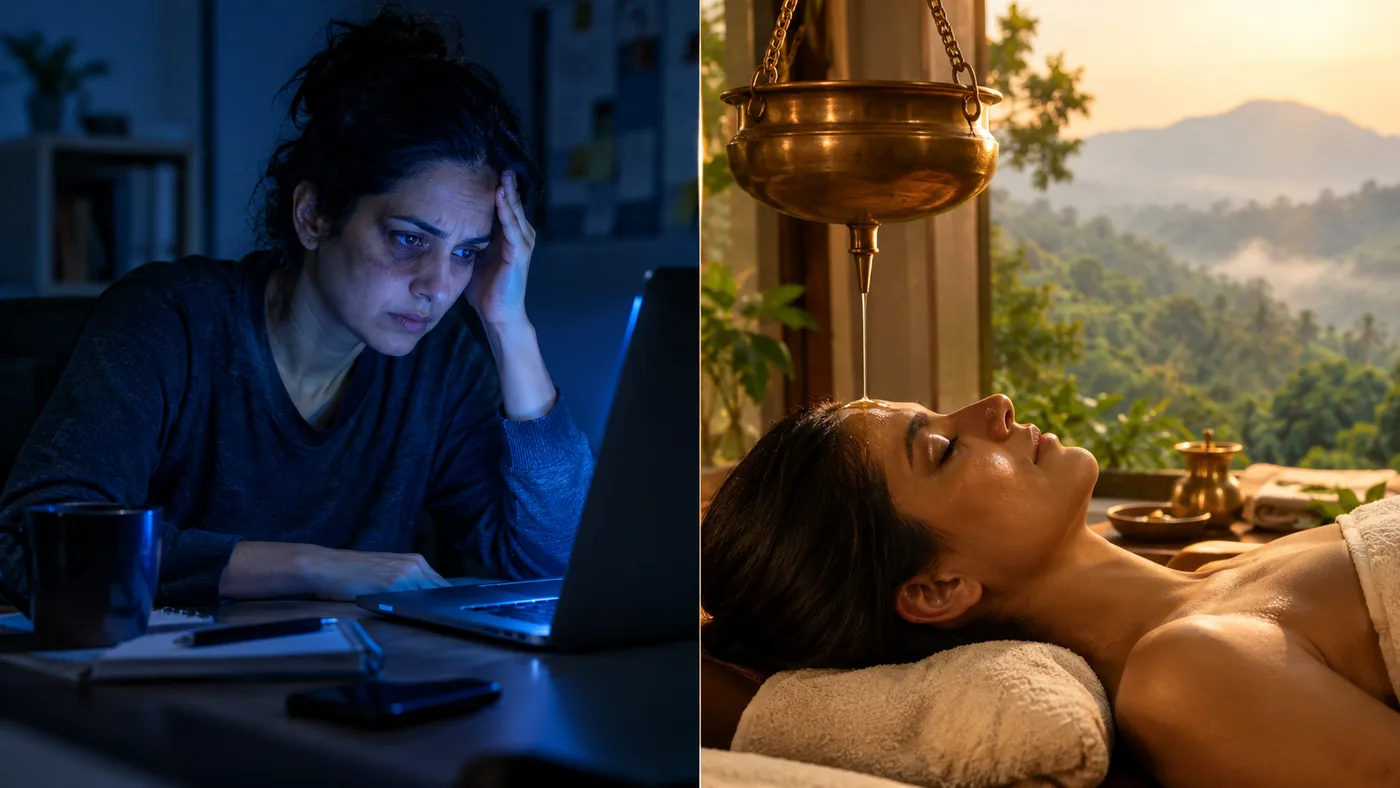
Diese quälende Verspannung im Nackenansatz nach einem langen Tag vor dem Bildschirm? Die bleibt selten harmlos. Wenn man sie ignoriert, Nackenschmerzen schleicht sich in Ihre Schultern ein, löst Kopfschmerzen aus, stört den Schlaf und kann in die Arme ausstrahlen – wodurch Ihr Alltag still und leise eingeschränkt wird. Die gute Nachricht: Die meisten Nackenschmerzen lassen sich gut mit einer Kombination aus Haltungskorrektur, gezielten Übungen und einer natürlichen Therapie behandeln, die auf die eigentliche Ursache abzielt. Hier erfahren Sie genau, wie Sie Nackenschmerzen behandeln und verhindern können, dass sie wiederkehren.
Nackenschmerzen sind Beschwerden, Verspannungen oder Bewegungseinschränkungen, die ihren Ursprung in der Halswirbelsäule – den sieben Halswirbeln – haben. Es kann sich um einen dumpfen, anhaltenden Schmerz oder um einen stechenden, schießenden Schmerz handeln, der oft in die Schultern, den oberen Rücken oder die Arme ausstrahlt.
Ihr Nacken trägt den ganzen Tag über das Gewicht Ihres Kopfes (etwa 5 kg) – und zwar auf einer äußerst beweglichen, aber empfindlichen Struktur aus Knochen, Bandscheiben, Muskeln und Nerven. Wenn Haltung, Überlastung oder Verschleiß dieses Gleichgewicht stören, treten Schmerzen auf. Im Ayurveda werden die meisten Nackenschmerzen als Ungleichgewicht des Vata-Dosha (Greeva Sandhigata Vata), was zu Trockenheit, Steifheit und Degeneration der Halswirbelgelenke führt – weshalb sich die natürliche Behandlung darauf konzentriert, den Bereich zu nähren und zu schmieren, anstatt lediglich die Schmerzen zu betäuben.
Da der Nacken so eng mit den Schultern, dem Kiefer und dem Kopf verbunden ist, sind Nackenschmerzen selten ein isoliertes Problem. Eine erfolgreiche Behandlung erfordert daher die Berücksichtigung der gesamten Kette – das Ziel einer strukturierten Programm zur Behandlung chronischer Schmerzen und Entzündungen anstatt einmalig eingenommener Schmerzmittel.
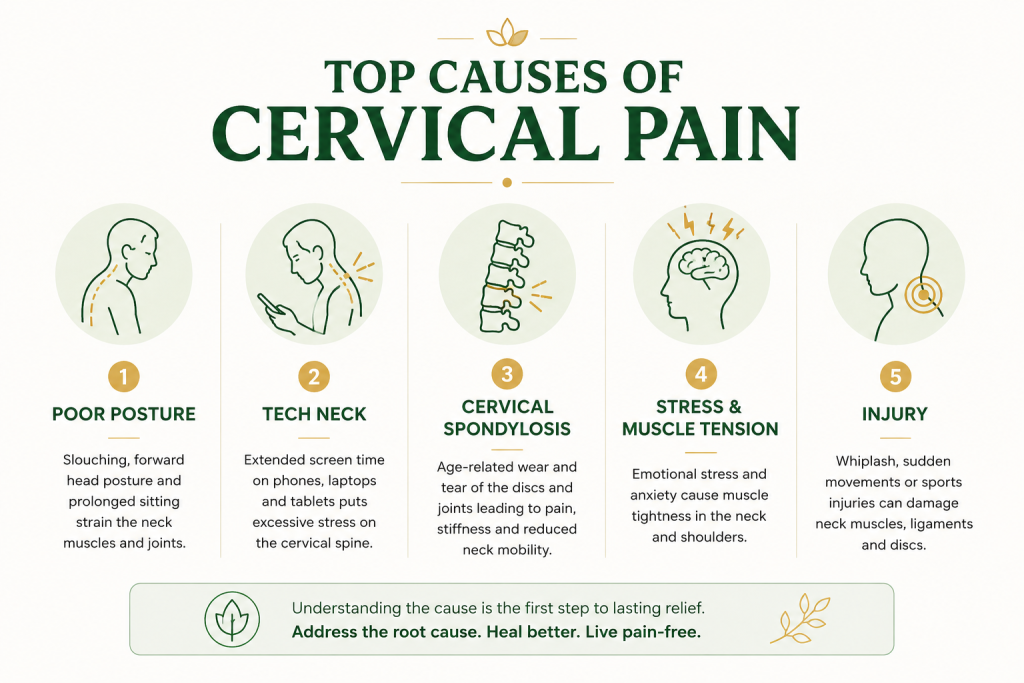
Die meisten Nackenschmerzen sind mechanisch und lebensstilbedingt — was eine gute Nachricht ist, denn das bedeutet, dass es weitgehend vermeidbar und reversibel ist. Die häufigsten Ursachen:
Stress verdient besondere Erwähnung. Der Knoten im Nacken, wenn man überfordert ist, ist ein echtes physiologisches Phänomen – anhaltende Anspannung hält diese Muskeln stundenlang angespannt. Deshalb ist es wichtig, sich mit der Psyche auseinanderzusetzen, und deshalb ist ein spezielles Stress- und Burnout-Erholungsprogramm kann Nackenschmerzen, die durch Dehnübungen und Schmerzmittel nie ganz behoben werden können, auf sanfte Weise lindern.
Nackenschmerzen äußern sich nicht nur als einfaches Ziehen. Achten Sie auf folgende Anzeichen:
💡 Wichtige Erkenntnis: Gelegentliche Steifheit ist häufig und in der Regel harmlos. Wenn die Schmerzen jedoch in die Arme ausstrahlen, Taubheitsgefühle oder Schwäche verursachen oder länger als ein paar Wochen anhalten, ist eine fachärztliche Untersuchung erforderlich – siehe die Tabelle mit den Warnzeichen weiter unten.
Bei leichten, erst kürzlich aufgetretenen Nackenschmerzen verschaffen diese Maßnahmen der ersten Wahl den meisten Menschen Linderung. Ziel ist es, Entzündungen zu lindern, Muskelverspannungen zu lösen und wieder eine sanfte Bewegungsfähigkeit herzustellen.
Wenn die Schmerzen trotz dieser Maßnahmen länger als 1–2 Wochen anhalten, ist es an der Zeit, die eigentliche Ursache genauer zu untersuchen, anstatt die Symptome immer wieder zu überdecken – das ist das Prinzip hinter einer Ursachenorientierter Ansatz der funktionellen Medizin bei chronischen Schmerzen.
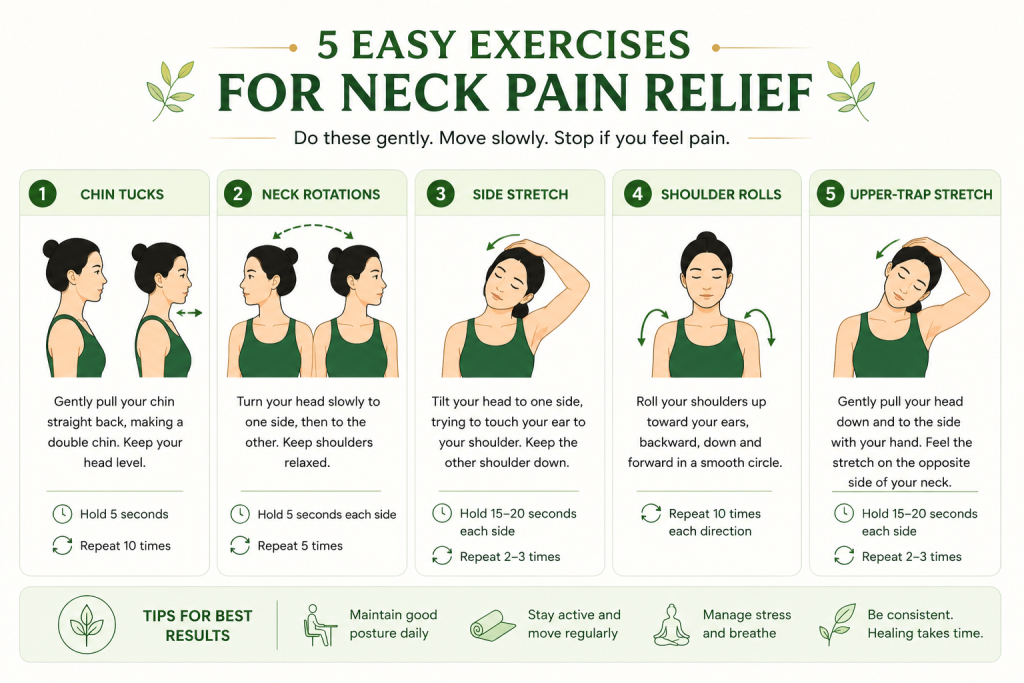
Sanfte, gleichmäßige Bewegungen gehören zu den wirksamsten Methoden zur Behandlung und Vorbeugung von Nackenschmerzen. Bewegen Sie sich langsam, vermeiden Sie dabei starke Schmerzen und hören Sie auf, wenn sich die Symptome verschlimmern.
Setzen Sie sich aufrecht hin und ziehen Sie Ihr Kinn sanft gerade nach hinten (so dass ein “Doppelkinn” entsteht). Halten Sie diese Position 5 Sekunden lang und wiederholen Sie die Übung 10 Mal. Das stärkt die tiefen, den Nacken stabilisierenden Muskeln.
Drehen Sie Ihren Kopf langsam, um über eine Schulter zu blicken, halten Sie die Position, dann über die andere. Je 5 Mal pro Seite. Stellt den Bewegungsumfang wieder her.
Neigen Sie Ihr Ohr in Richtung Ihrer Schulter, bis Sie eine leichte Dehnung spüren. Halten Sie diese Position auf jeder Seite 20 Sekunden lang. Das lockert verspannte Nackenmuskeln an der Seite.
Die Schultern 10 Mal nach hinten und dann nach vorne rollen. Das lockert den Übergang zwischen Schulter und Nacken, wo sich Verspannungen ansammeln.
Führen Sie Ihren Kopf mit einer Hand sanft schräg nach vorne. Halten Sie diese Position 20 Sekunden lang. Das entspannt den Muskel, der am stärksten vom “Tech-Neck” betroffen ist.
💡 Wichtige Erkenntnis: Übungen lindern die Symptome, sind jedoch in Kombination mit einer Korrektur weitaus wirksamer warum Die Schmerzen begannen – durch Fehlhaltungen, Stress und (bei einer zervikalen Spondylose) die zugrunde liegende Gewebedegeneration. Erst die Linderung der Symptome in Verbindung mit der Behebung der Ursache sorgt für dauerhafte Ergebnisse.
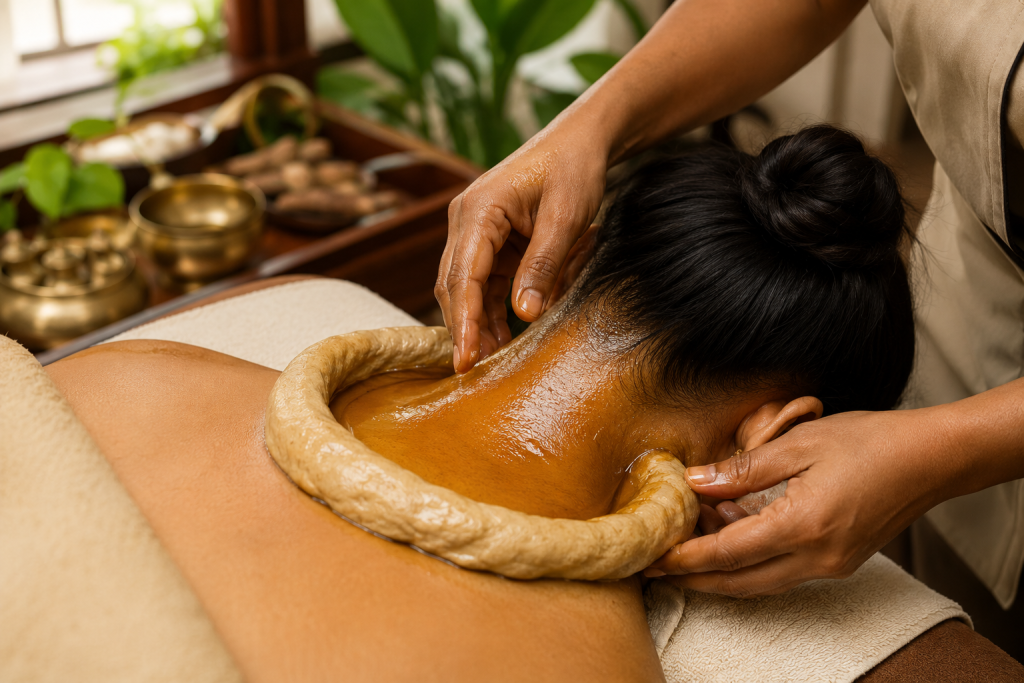
Wenn Nackenschmerzen immer wieder auftreten, hartnäckig sind oder mit einer zervikalen Spondylose zusammenhängen, Ayurveda bietet bewährte Therapien, die das gestörte Vata-Dosha an der Wurzel angehen. — Schmerzen und Steifheit lindern und gleichzeitig die Halswirbelsäule mit Nährstoffen versorgen und geschmeidig halten. Dies sind die wirksamsten natürlichen Behandlungsmethoden:
Warmes medizinisches Öl wird in einem Ring aus Kräuterteig über den Nacken gegossen. Es versorgt die Halswirbelgelenke tiefgehend mit Feuchtigkeit, lindert Verspannungen und beruhigt Nervenreizungen – die charakteristische Therapie bei Nackenschmerzen.
Eine Ganzkörpermassage mit warmem Öl, die die Durchblutung fördert, verspannte Muskeln lockert und das Nervensystem beruhigt. Schon für sich allein wirkt sie gegen Verspannungen und verbessert den Schlaf.
Warme Kräuterkompressen werden auf Nacken und Schultern aufgelegt, um Entzündungen zu lindern, die Durchblutung zu fördern und tiefsitzende Muskelverspannungen zu lösen.
Ein Reinigungsprogramm, das angesammelte Giftstoffe beseitigt (Ama) Entzündungen entgegenwirken und das Gleichgewicht des Körpers wiederherstellen. Erfahren Sie, wie Panchakarma trägt zur Linderung chronischer Schmerzen bei als Teil eines umfassenden Protokolls.
Entzündungshemmende Kräuter wie Guggulu und Ashwagandha, eine wärmende, Vata-beruhigende Ernährung sowie eine auf die Körperhaltung ausgerichtete Anpassung des Lebensstils runden den Plan ab.
Die gleichen integrativen Prinzipien gelten für den gesamten Bewegungsapparat – der Ansatz des Retreats in Bezug auf ganzheitliche Behandlung von Rückenschmerzen und Ayurvedische Heilmittel gegen Gelenkschmerzen nutzt genau dieses Rahmenkonzept zur Ermittlung der Grundursachen, angepasst an die jeweilige Region.
Die meisten Nackenschmerzen lassen sich gut behandeln, doch bestimmte Warnzeichen deuten darauf hin, dass Sie umgehend ärztliche Hilfe in Anspruch nehmen sollten.
| Warnschild | Warum das wichtig ist |
|---|---|
| Taubheitsgefühl, Kribbeln oder Schwäche in Armen/Händen | Mögliche Nervenkompression |
| Schmerzen nach einem Sturz, einem Unfall oder einem Schleudertrauma | Schließen Sie eine Fraktur oder eine schwere Verletzung aus |
| Schmerzen in Verbindung mit Fieber, Kopfschmerzen oder Nackensteifigkeit | Muss dringend geprüft werden |
| Verlust der Kontrolle über die Blase oder den Stuhlgang | Medizinischer Notfall |
| Schmerzen, die länger als 2–4 Wochen anhalten oder sich verschlimmern | Es bedarf einer gründlichen Diagnose, nicht noch mehr Schmerzmittel |
| Unerklärlicher Gewichtsverlust mit Nackenschmerzen | Muss untersucht werden |
💡 Wichtige Erkenntnis: Im Zweifelsfall sollten Sie sich untersuchen lassen. Eine klare Diagnose ermöglicht es Ihnen, den richtigen Weg einzuschlagen – von gezielter Physiotherapie bis hin zu einem strukturierten Rehabilitationsprogramm –, anstatt zu raten.
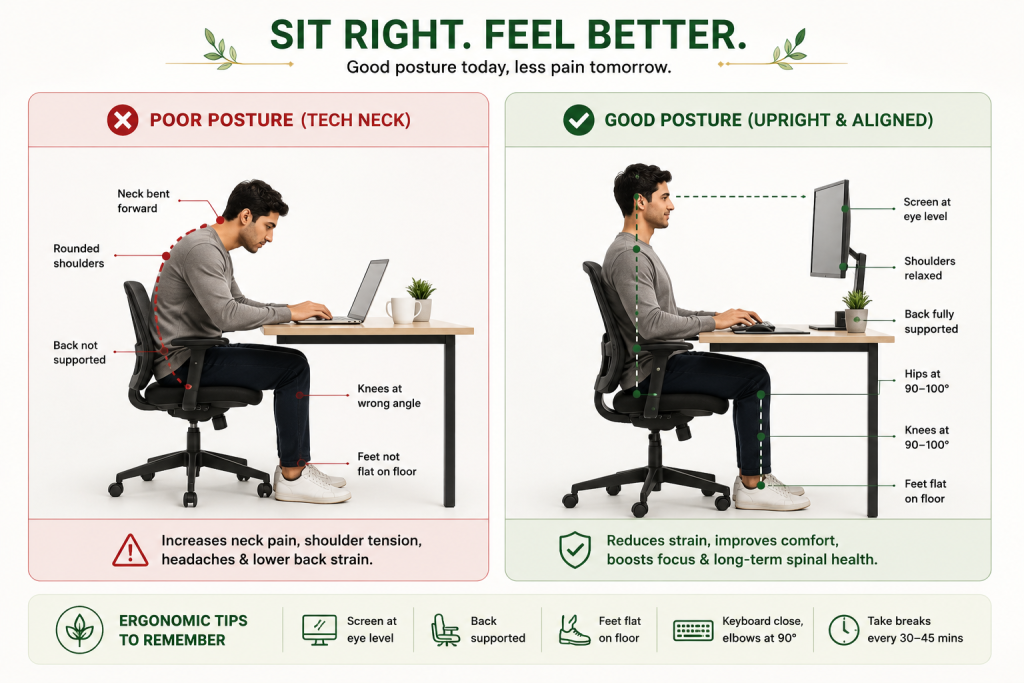
Vorbeugung ist einfacher als Behandlung. Gewöhnen Sie sich folgende Gewohnheiten an:
Für alle, die sich von einer Verletzung oder einem akuten Schub erholen, ist ein angeleitetes Programm zur Behandlung von Traumafolgen und zur Rehabilitation Stärkt Kraft und Beweglichkeit auf sichere Weise und verringert so das Risiko eines erneuten Auftretens der Schmerzen.
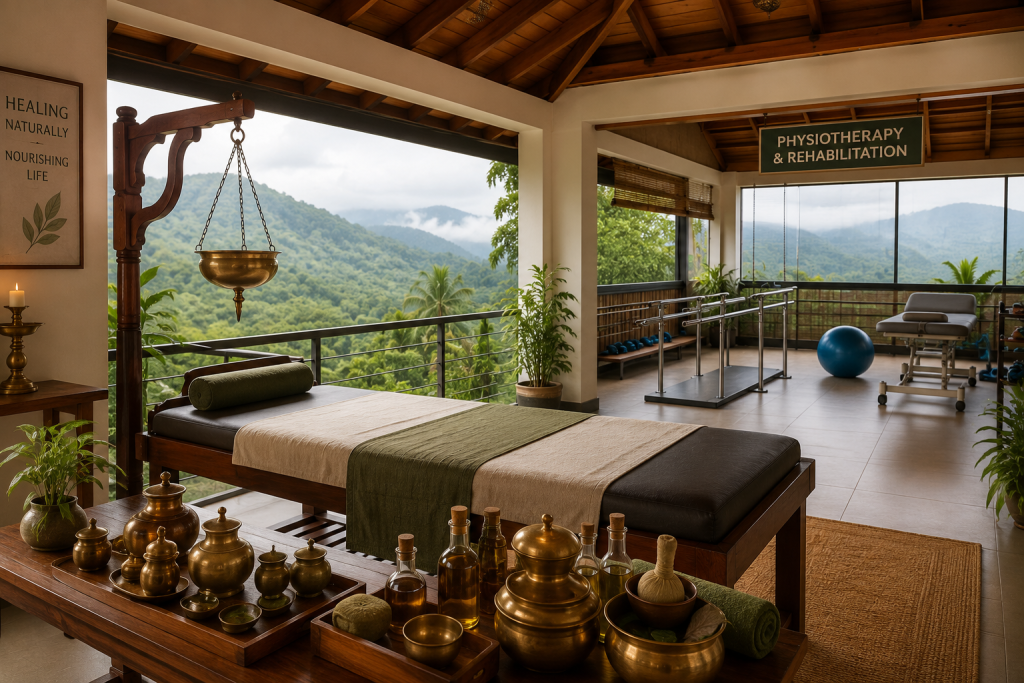
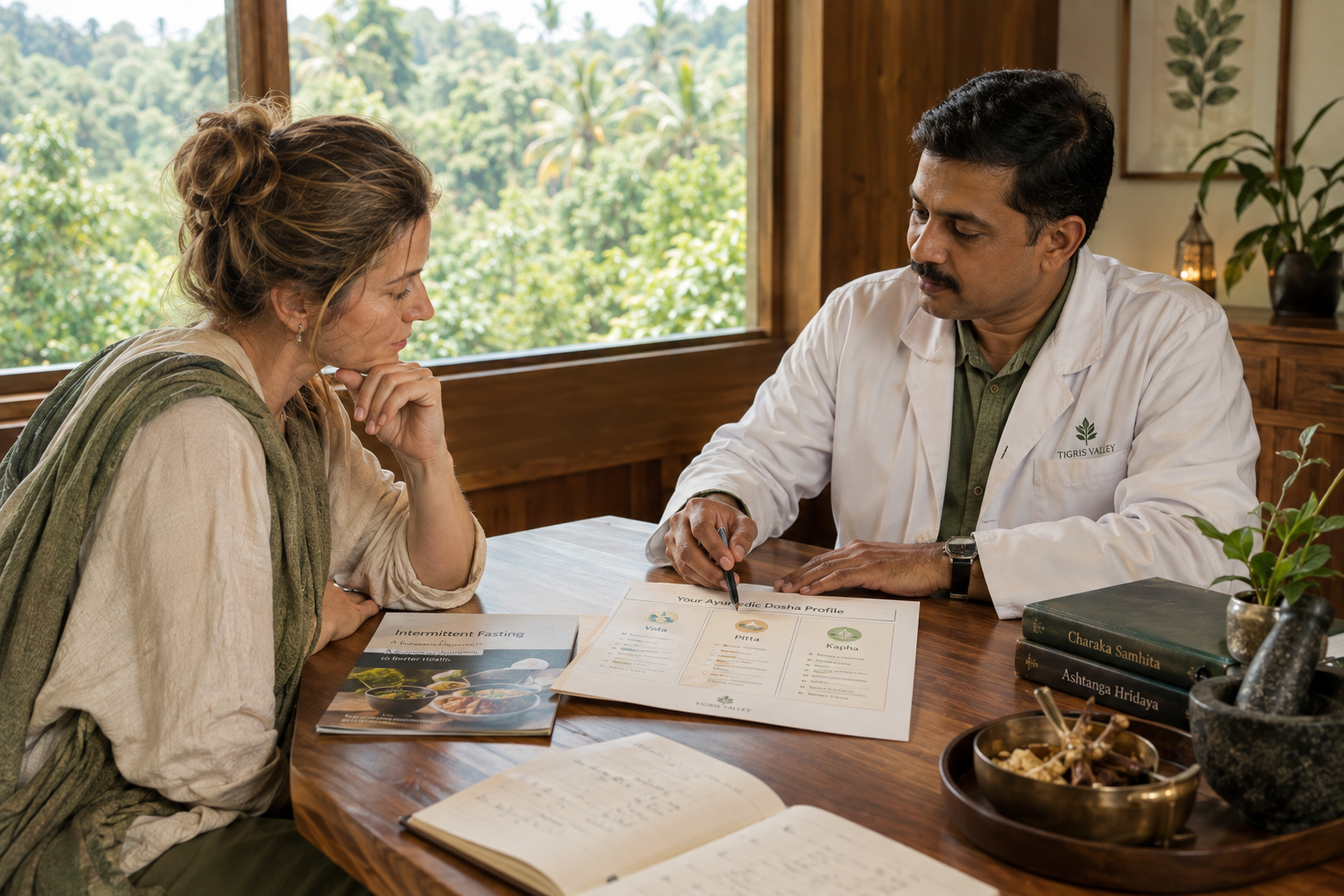
Inmitten der ruhigen Berglandschaft von Wayanad in Kerala gelegen, verbindet dieser ganzheitliche Rückzugsort moderne Diagnostik in Verbindung mit klassischen ayurvedischen Schmerztherapien — so werden Nackenschmerzen an der Wurzel behandelt und nicht nur unterdrückt.
Was den Unterschied ausmacht:
Wenn Nackenschmerzen Ihre Arbeit oder Ihren Schlaf beeinträchtigen, ist eine gründliche Abklärung der sinnvollste nächste Schritt. Entdecken Sie das gesamte Angebot an Integrative Wellness- und Schmerztherapieprogramme, oder wenden Sie sich direkt an das medizinische Team.
✅ Wichtigste Erkenntnisse
Bei plötzlichen Nackenschmerzen sollten Sie auf eine korrekte Körperhaltung achten, eine warme Kompresse auflegen, um verspannte Muskeln zu lockern, sanfte Dehnübungen für den Nacken durchführen und kurze Bewegungspausen einlegen. Vermeiden Sie völlige Ruhe – leichte Bewegung fördert die Genesung schneller als Bewegungsmangel.
Mechanisch bedingte und haltungsbedingte Nackenschmerzen lassen sich oft vollständig beheben. Degenerative Ursachen wie eine zervikale Spondylose lassen sich zwar nicht vollständig “rückgängig machen”, doch lassen sich Schmerzen und Steifheit mit der richtigen Therapie und den richtigen Gewohnheiten deutlich lindern und langfristig unter Kontrolle halten.
Eine schlechte Körperhaltung und die längere Nutzung von Bildschirmen bzw. Smartphones (“Tech Neck”) sind die Hauptursachen, gefolgt von zervikaler Spondylose, Muskelverspannungen, stressbedingten Verspannungen und Verletzungen.
Nein. Nackenschmerzen sind das Symptom; die zervikale Spondylose ist eine bestimmte Ursache – die alters- und haltungsbedingte Abnutzung der Bandscheiben und Gelenke im Nackenbereich. Nicht alle Nackenschmerzen sind auf eine Spondylose zurückzuführen.
Greeva Basti (das Auflegen von warmem, medizinisch angereichertem Öl auf den Nacken) ist die charakteristische Therapie, die in der Regel mit einer Abhyanga-Massage, Kizhi-Kräuterkompressen und einer Panchakarma-Entgiftung kombiniert wird, um das zugrunde liegende Vata-Ungleichgewicht zu beheben.
Kinnziehen, sanfte Nackenrotationen, Seitendehnungen, Schulterkreisen und Dehnungen des oberen Trapezmuskels. Führen Sie diese Übungen langsam und gleichmäßig aus und gehen Sie dabei niemals so weit, dass Sie starke Schmerzen verspüren.
Ja. Chronischer Stress führt dazu, dass die Nacken- und Schultermuskulatur über lange Zeiträume hinweg angespannt bleibt, was Schmerzen verursacht und verschlimmert. Der Umgang mit Stress ist ein wesentlicher Bestandteil einer wirksamen Behandlung.
Schlafen Sie auf dem Rücken oder auf der Seite mit einem Kissen, das den Nacken in einer neutralen Position hält (in einer Linie mit der Wirbelsäule). Vermeiden Sie es, auf dem Bauch zu schlafen, da dies den Nacken stundenlang verdreht.
Suchen Sie einen Arzt auf, wenn Sie Taubheitsgefühle, Kribbeln oder Schwäche in den Armen haben, Schmerzen nach einer Verletzung verspüren, Fieber in Verbindung mit Nackensteifigkeit haben, die Kontrolle über Blase oder Darm verloren haben oder wenn die Schmerzen länger als 2–4 Wochen anhalten.
Und zwar erheblich. Eine nach vorne geneigte “Tech-Neck”-Haltung erhöht die Belastung der Halswirbelsäule um ein Vielfaches, und ihre Korrektur ist oft die wirksamste Einzelmaßnahme sowohl bei der Behandlung als auch bei der Vorbeugung von Nackenschmerzen.
Einfache Muskelzerrungen oder haltungsbedingte Schmerzen bessern sich bei richtiger Behandlung oft innerhalb weniger Tage bis zu zwei Wochen. Chronische oder degenerative Schmerzen sprechen langsamer auf die Behandlung an und profitieren von einem strukturierten, begleiteten Programm.
Ja – sie ergänzen sich gut. Ayurvedische Ölbehandlungen wirken entzündungshemmend und versorgen das Gewebe mit Nährstoffen, während die Physiotherapie Kraft und Beweglichkeit wiederherstellt. Ein ganzheitlicher Behandlungsplan führt oft zu den besten Ergebnissen.
🔑 Wichtigste Erkenntnisse
Sind Sie bereit, Ihre Nackenschmerzen an der Wurzel zu bekämpfen?
Hören Sie auf, sich ständig mit Schmerzmitteln zu betäuben. Lassen Sie sich eine genaue Diagnose stellen und einen individuellen Behandlungsplan erstellen, der Physiotherapie und bewährte ayurvedische Therapien gegen Nackenschmerzen in der Ruhe der Berge von Kerala kombiniert.

Kaithappoyil, in den Westghats.
Markaz Knowledge City Road, Kaithappoyil, Adivaram, Kerala
Anfahrtsbeschreibung +91 90726 61622 reservation@tigrisvalley.com
Kaithappoyil, Westghats

Bevor Sie gehen
Ein Arzt liest jede Nachricht. Vereinbaren Sie einen Termin oder senden Sie eine Anfrage – Sie erhalten noch am selben Tag eine Antwort.