[gtranslate]
MENÜ
Die meisten Menschen sind sich nicht bewusst, dass ihr Körper den Überblick behält und im Stillen Spannungen, Trockenheit, Entzündungen und Müdigkeit von innen nach außen anhäuft. Sie spüren das vielleicht als steife Gelenke am Morgen, unruhigen Schlaf in der Nacht oder Haut, die sich einfach nicht mehr lebendig anfühlt. Dies sind keine Zeichen des Alterns. Sie sind oft Anzeichen dafür, dass Ihr Körper nach Pflege verlangt, die er schon lange nicht mehr erhalten hat.
Abhyanga-Massage - eine aus dem Ayurveda stammende Ganzkörpertherapie mit warmem Öl - ist eine der ältesten Antworten auf genau diese Frage. Und im Gegensatz zu trendigen Wellness-Routinen stützt sie sich auf eine jahrtausendealte Praxis und eine wachsende Zahl moderner Erkenntnisse.
Abhyanga (ausgesprochen ab-yahn-ga) kommt aus dem Sanskrit - Abhi was “in” oder “auf” bedeutet, und Anga was “Glied” oder “Körper” bedeutet. Zusammengenommen bedeutet es grob übersetzt liebevolle Pflege des Körpers durch Öl. In dem alten System der Ayurveda, wird es als tägliches Ritual der Selbstfürsorge beschrieben - Dinacharya - Sie sollen den physischen Körper nähren, das Nervensystem beruhigen und das Gleichgewicht der drei Doshas aufrechterhalten: Vata, Pitta und Kapha.
Im Gegensatz zur schwedischen oder Tiefengewebsmassage, die in erster Linie mechanisch auf Muskelgruppen abzielt, wirkt Abhyanga auf mehreren Ebenen - Haut, Lymphe, Faszien, Gelenke und das Nervensystem - mit Hilfe von warmen, mit Kräutern versetzten Ölen. Sie ist sowohl therapeutisch als auch tief präventiv.
In klassischen ayurvedischen Texten wie dem Ashtanga Hridayam, Der täglichen Abhyanga wird nachgesagt, dass sie den Auswirkungen von Alterung, Müdigkeit und Degeneration entgegenwirken kann. Moderne Praktiker und Forscher stellen zunehmend fest, dass dies nicht nur eine poetische Formulierung ist, sondern echte physiologische Wirkungen widerspiegelt.
Unter Tigris-Tal Wellness-Rückzug, Abhyanga wird als Teil einer strukturierten Ausbildung angeboten. Ayurvedisches Behandlungsprogramm die auf die Konstitution und die gesundheitlichen Ziele jedes Einzelnen zugeschnitten sind.
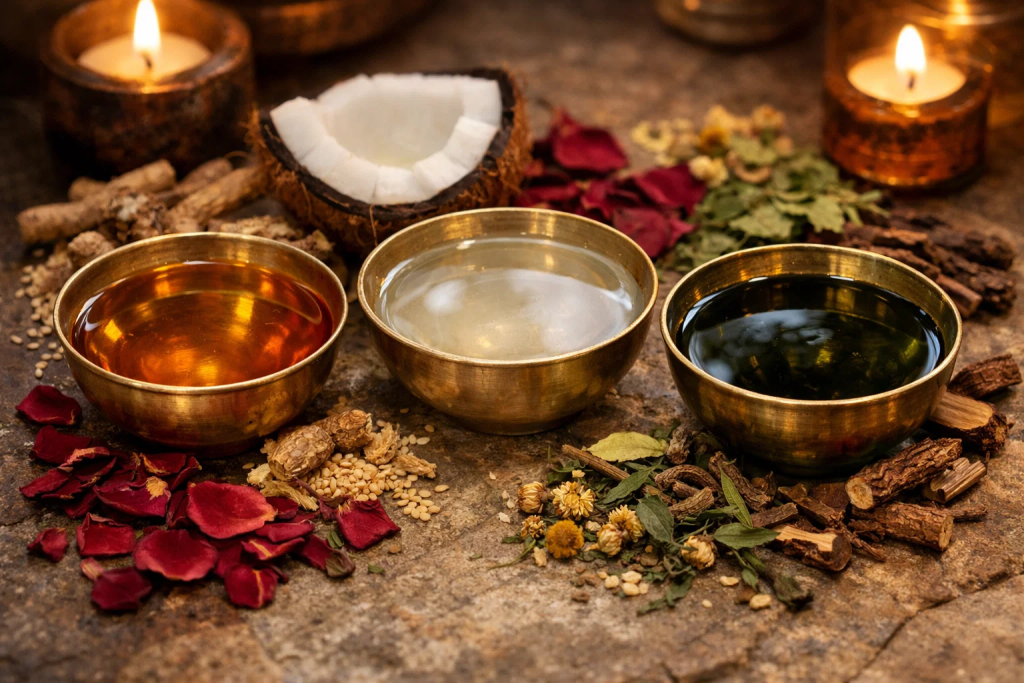
Die Wahl des Öls in der Abhyanga ist nicht willkürlich. Sie wird bestimmt durch Ihre Prakriti (Körperkonstitution), aktuelle Ungleichgewichte (Vikriti), der Jahreszeit und den gesundheitlichen Zielen. Verschiedene Öle haben unterschiedliche therapeutische Eigenschaften und dringen in unterschiedliche Gewebeschichten ein.
| Öl | Am besten für | Primäreffekt |
|---|---|---|
| Sesamöl | Vata-Ungleichgewicht, Gelenksteifheit | Wärmend, tief eindringend, erdend |
| Kokosnussöl | Pitta-Ungleichgewicht, Entzündungen | Kühlend, entzündungshemmend, hautpflegend |
| Senföl | Kapha-Ungleichgewicht, Trägheit | Stimulierend, durchblutungsfördernd, entgiftend |
| Medizinische pflanzliche Öle (z. B. Dhanwantharam, Ksheerabala) | Chronische Erkrankungen, Schmerzen, neurologische Versorgung | Gezielte therapeutische Maßnahmen |
Öle sind fast immer vor der Anwendung erwärmt - Dies dient nicht nur der Bequemlichkeit. Wärme öffnet die Hautporen, lässt das Öl in die Dermis eindringen und aktiviert die pflanzlichen Verbindungen in den medizinischen Ölen. Die Haut nimmt diese Verbindungen auf, die dann in die tieferen Gewebe und in den Blutkreislauf gelangen und ihre heilenden Eigenschaften mit sich bringen.
Deshalb unterscheidet sich die Abhyanga, die von einem geschulten ayurvedischen Therapeuten unter Verwendung korrekt vorgeschriebener Öle durchgeführt wird, von einer einfachen Entspannungsmassage.
Eine typische therapeutische Abhyanga-Sitzung in einer klinischen Wellness-Einrichtung dauert zwischen 45 und 60 Minuten. Hier ist, was Sie erwarten können:
Vor der Sitzung: Ein ausgebildeter ayurvedischer Arzt oder Therapeut wird Ihre Konstitution und Ihren aktuellen Gesundheitszustand beurteilen. Auf dieser Grundlage wird eine spezielle Ölrezeptur für Sie ausgewählt. Möglicherweise werden Sie zu Verdauung, Schlaf, Gelenkproblemen und emotionalem Zustand befragt.
Während der Sitzung: Sie liegen auf einem speziellen hölzernen Droni (Massagetisch). Der Therapeut trägt warmes Öl in langen, rhythmischen Strichen (entlang der Gliedmaßen) und kreisenden Bewegungen (über Gelenke und den Bauch) auf. Beide Seiten des Körpers werden behandelt, auch die Kopfhaut, das Gesicht, die Ohren und die Fußsohlen. Der Druck und die Geschwindigkeit variieren - lange Striche wirken beruhigend auf das Nervensystem, während kürzere, schnellere Striche den Kreislauf anregen.
Nach der Sitzung: Ein medizinisches Dampfbad (Swedana) folgt normalerweise auf Abhyanga. Der Dampf hilft, das Öl tiefer in das Gewebe zu bringen, öffnet Kanäle (srotas) und fördert die Freisetzung von tief sitzenden Giftstoffen durch Schweiß. Anschließend sollten Sie sich ausruhen und kaltes Wasser eine Zeit lang meiden.
So funktioniert Abhyanga in einem professionellen klinischen Kontext - ganz anders als die schnelle Selbstmassageversion, die oft in Lifestyle-Blogs beschrieben wird.

Eine der unmittelbarsten und beständigsten Wirkungen der Abhyanga ist ein tiefes Gefühl der Ruhe. Die langsame, bewusste Berührung, kombiniert mit der Wärme des Öls, stimuliert direkt die Parasympathikus - den “Ruhe- und Verdauungsmodus” des Körpers. Der Cortisolspiegel sinkt. Der Atem wird langsamer. Der Schutz der Muskeln wird aufgehoben.
Für jeden, der mit Burnout, Angstzuständen oder chronischem Stress zu kämpfen hat, ist dies kein Luxus - es ist Medizin. Erfahren Sie, wie Abhyanga in einen strukturierten Genesungsrahmen passt, in Tigris Valley's Stress & Burnout Recovery Programm.
Die Abhyanga verbessert die periphere Durchblutung erheblich. Der manuelle Druck der Schläge und die gefäßerweiternde Wirkung des warmen Öls erhöhen die Durchblutung der Haut, der Muskeln und der Gliedmaßen, ohne dass das Herz-Kreislauf-System des Körpers belastet wird. Das macht sie besonders wertvoll für Menschen, die sich von einer Krankheit oder einem kardialen Ereignis erholen. Wie die integrative Herzbehandlung funktioniert, erfahren Sie in unserer Programm zur Wiederherstellung der kardio-metabolischen Gesundheit.
Das Lymphsystem hat keine Pumpe - es ist auf Bewegung, Atmung und manuelle Stimulation angewiesen, um sich zu bewegen. Abhyanga, die in der richtigen Richtung (zum Herzen hin) ausgeführt wird, unterstützt den Lymphfluss und hilft, Stoffwechselabfälle, entzündliche Nebenprodukte und Ama (unverdaute Giftstoffe im ayurvedischen Sinne) aus dem Gewebe.
Aus diesem Grund ist Abhyanga ein Eckpfeiler der Therapie in Das Entgiftungs- und Reinigungsprogramm des Tigris-Tals, wo es in Synergie mit Panchakarma, Kräutertherapien und Ansätze der funktionellen Medizin.
Die Haut ist das größte Organ des Körpers, und sie nimmt weit mehr auf, als wir ihr zutrauen. Warme Kräuteröle, die während der Abhyanga aufgetragen werden, stellen die natürliche Lipidbarriere der Haut wieder her, verbessern die Elastizität, verringern Rauheit und Trockenheit und stimulieren kollagenfördernde Prozesse. Regelmäßige Sitzungen werden mit einer Verringerung feiner Linien, einem verbesserten Hautton und einem charakteristischen ayurvedischen Konzept namens Twak Prasadana - Leuchtkraft der Haut.
Dies ist ein Grund dafür, dass Abhyanga ein zentraler Bestandteil der Das Anti-Aging- und Langlebigkeits-Programm des Tigris-Tals. Wenn die Gesundheit der Haut ein Thema ist - sei es aufgrund chronischer Erkrankungen oder Umweltschäden -, sollten Sie unsere Behandlungsansatz für Hautkrankheiten auch.
Im Ayurveda werden die meisten Erkrankungen der Gelenke und des Bewegungsapparats mit folgenden Faktoren in Verbindung gebracht Vata-Vergiftung - Trockenheit und unregelmäßige Bewegungen in den Gelenken und Kanälen. Die Abhyanga wirkt dem direkt entgegen, indem sie wärmende, geschmeidige Öle in das periartikuläre Gewebe einbringt. Patienten mit Arthrose, Schultersteife, Steifheit im unteren Rückenbereich und Spondylose der Halswirbelsäule berichten oft von einer deutlichen Verbesserung nach einer Abhyanga-Kur in Kombination mit anderen Therapien.
Für diejenigen, die mit anhaltenden Schmerzen leben, ist dies ein natürlicher Bestandteil der Tigris Valley's Programm zur Behandlung chronischer Schmerzen und Entzündungen.
Die beruhigende Wirkung der Abhyanga geht über die Sitzung hinaus. Regelmäßiges Üben wird mit einer verbesserten Schlaflatenz (wie schnell man einschläft), Schlaftiefe und morgendlicher Wachsamkeit in Verbindung gebracht. Eine Fußmassage mit warmem Öl vor dem Schlafengehen - eine vereinfachte Abhyanga-Praxis - reduziert nachweislich den Cortisolspiegel und verbessert die Melatoninausschüttung.
Für alle, die unter Schlafstörungen und chronischem Stress leiden, kann die Kombination von Abhyanga mit Achtsamkeits- und Meditationsübungen die Ergebnisse verstärken. Erforschen Sie diese Kombination auf der Paket Achtsamkeit & Mentale Klarheit.
Die Wirkung der Lymphdrainage, der Stressabbau, der verbesserte Schlaf und die Stärkung der Hautbarriere tragen gemeinsam zu einer stärkeren Immunantwort bei. Regelmäßige Abhyanga hilft dem Körper, seine natürlichen Überwachungssysteme effektiver aufrechtzuerhalten. Dies ist besonders wichtig bei der Genesung von Krankheiten, bei saisonalen Veränderungen oder bei Menschen mit Autoimmunerkrankungen.
Sehen Sie, wie Tigris Valley die Gesundheit des Immunsystems ganzheitlich durch das Paket zur Stärkung des Immunsystems und die Programm zur Bewältigung von Autoimmunkrankheiten.
Die Haut und das Nervensystem haben denselben embryonalen Ursprung - das Ektoderm. Deshalb hat Berührung eine so direkte und starke Wirkung auf die emotionale Regulierung. Abhyanga hilft durch langsame, absichtliche Ganzkörperberührung, gespeicherte somatische Spannungen aufzulösen und unterstützt die emotionale Verarbeitung.
Menschen, die mit Trauer, Trauma, Angst oder emotionaler Erschöpfung zu kämpfen haben, beschreiben Abhyanga oft als Hilfe, um “in ihren Körper zurückzukommen”. Dies steht in engem Zusammenhang mit Der integrierte Ansatz von Tigris Valley für emotionale Heilung und mentales Wohlbefinden und die Programm zur Rehabilitation nach Traumata.
Durch die Verbesserung der Verdauung, der Leberfunktion, des Lymphflusses und der Stoffwechselregulierung kann eine regelmäßige Abhyanga ein gesundes Gewichtsmanagement unterstützen - insbesondere in Kombination mit einer Ernährungsumstellung und anderen Lebensstiltherapien. Im Ayurveda werden ein träges Lymphsystem und angesammelte Ama werden als Hauptursachen für Gewichtszunahme angesehen. Abhyanga behandelt beide. Für Menschen mit Stoffwechselproblemen ist dies eine gute Kombination mit dem Programm zur Behandlung von Stoffwechselstörungen und die Gewichtsmanagement-Paket.
Klassische ayurvedische Texte beschreiben Abhyanga als Deerghayushyam - Langlebigkeit - denn sie erhält die Gesundheit der Sinnesorgane, hält den Körper geschmeidig und bewahrt die Vitalität bis ins hohe Alter. In der Praxis berichten die Menschen über ein allgemeines Gefühl der Lebendigkeit, des Körperbewusstseins und der Energie, das noch lange nach dem Ende einer Behandlung anhält.
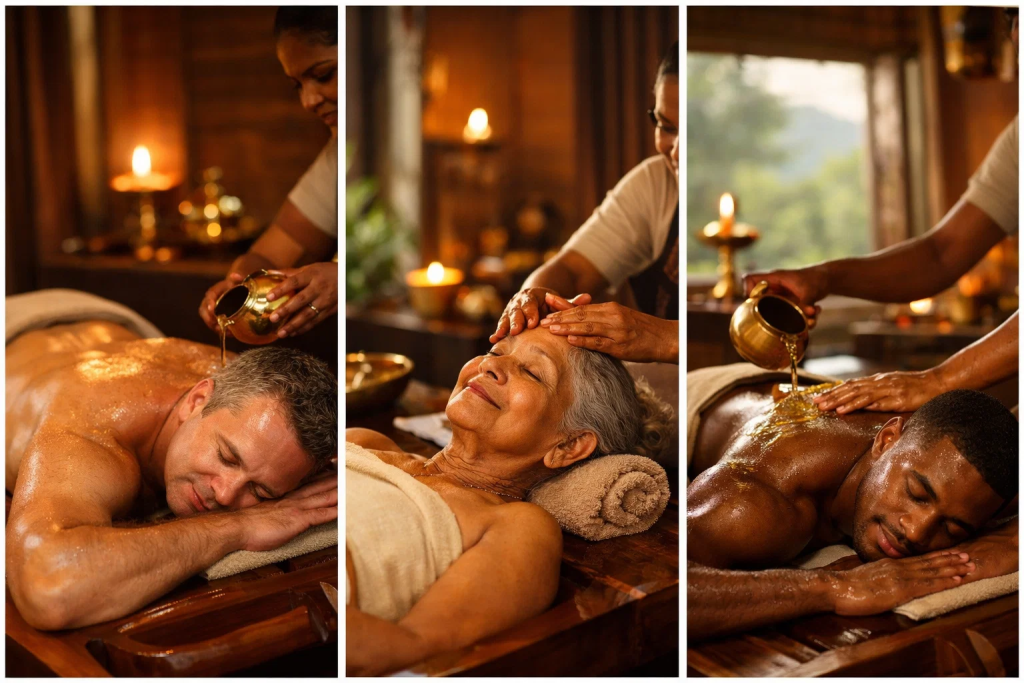
Abhyanga ist wirklich für die meisten Menschen von Vorteil, aber es ist besonders geeignet für:
Wann man Abhyanga vermeiden oder modifizieren sollte: Es wird im Allgemeinen nicht empfohlen bei Fieber, aktiven Infektionen, offenen Wunden oder während des ersten Trimesters der Schwangerschaft. Ein qualifizierter ayurvedischer Arzt sollte immer Ihre Eignung beurteilen, bevor Sie ein klinisches Programm beginnen.
Abhyanga funktioniert auf klinischer Ebene selten isoliert. Ihr größter Nutzen zeigt sich, wenn sie Teil eines kohärenten Therapieplans ist. Im Tigris Valley wird die Abhyanga integriert mit:
Das ist der Unterschied zwischen Abhyanga als Kurbehandlung und Abhyanga als Medizin. Erstere bietet vorübergehende Entspannung. Letztere schafft messbare, dauerhafte Veränderungen.
Erkunden Sie die gesamte Palette der AYUSH-Behandlungen und Wellness-Programme im Tigris-Tal.
Das Tigris Valley liegt in den Bergen von Wayanad, Kerala - ein Ort, an dem die Umgebung selbst die Heilung unterstützt. Unsere Ayurveda-Ärzte passen jede Abhyanga-Sitzung individuell an Ihre Körperkonstitution, Ihren aktuellen Gesundheitszustand und Ihre Behandlungsziele an. Wir bieten keine generischen Massagepakete an. Wir bieten Medizin.
Unser Team bündelt Fachwissen aus folgenden Bereichen Ayurveda, Unani, Funktionelle Medizin, So steht Ihre Abhyanga-Therapie nie für sich allein, sondern ist immer Teil einer größeren, zusammenhängenden Heilungsreise.
Lesen Sie, was frühere Gäste auf unserer Website berichtet haben Seite Zeugnisse, erkunden Die Tigris-Erfahrung, oder einfach sich melden um mit einem Mitglied unseres Pflegeteams zu sprechen.
Abhyanga ist in erster Linie eine therapeutische und präventive ayurvedische Praxis. Ihr Hauptzweck ist es, den Körper durch warmes Öl zu nähren, die Gesundheit des Lymphsystems und des Kreislaufs zu unterstützen, das Nervensystem zu beruhigen und das Gleichgewicht der drei Doshas - Vata, Pitta und Kapha - zu erhalten.
Im Gegensatz zu einer allgemeinen Entspannungsmassage ist die Abhyanga eine klinische ayurvedische Therapie, bei der die Wahl des Öls, die Richtung der Streichungen, der Druck, die Dauer und das Nachbehandlungsprotokoll von Ihrer individuellen Körperkonstitution und Ihren Gesundheitszielen bestimmt werden. Es ist Medizin mit Absicht, nicht nur Berührung.
Während eines intensiven Wellness-Programms kann die Abhyanga täglich durchgeführt werden. Für die allgemeine Pflege ist ein- bis zweimal pro Woche für die meisten Erwachsenen effektiv. Ihr ayurvedischer Arzt wird Ihnen die geeignete Häufigkeit empfehlen, die auf Ihrer Konstitution und Ihren Gesundheitszielen basiert.
Ja. Eine der am besten dokumentierten Wirkungen ist die auf das Nervensystem - sie fördert die Dominanz des Parasympathikus, reduziert das Cortisol und verbessert die Schlafqualität. Es wird häufig zusammen mit Achtsamkeitstherapien und Yoga bei Angstzuständen und Schlaflosigkeit eingesetzt.
Ja, die Wahl des Öls ist entscheidend. Sesamöl wird am häufigsten wegen seiner wärmenden, tief eindringenden Eigenschaften verwendet. Kokosnussöl wird bei entzündlichen Erkrankungen bevorzugt. Medizinische Öle wie Dhanwantharam oder Ksheerabala werden für bestimmte therapeutische Zwecke verwendet. Das falsche Öl kann ein bestehendes Ungleichgewicht noch verschlimmern.
In den meisten Fällen ja - und es kann bei Erkrankungen wie Schuppenflechte, Ekzemen und chronischer Trockenheit sehr hilfreich sein. Allerdings muss das spezifische Öl sorgfältig ausgewählt werden. Ein ausgebildeter ayurvedischer Arzt sollte Ihren Hautzustand beurteilen, bevor er Ihnen ein Protokoll empfiehlt. Erfahren Sie mehr über Ganzheitliche Behandlung von Hautkrankheiten.
Die Abhyanga unterstützt indirekt ein gesundes Gewicht, indem sie den Lymphfluss, die Verdauung und die Stoffwechselfunktion verbessert und das stressbedingte Cortisol reduziert (das die Fettspeicherung, insbesondere am Bauch, fördert). Sie wirkt am besten als Teil eines umfassenden Programms, das auch Änderungen der Ernährung und des Lebensstils umfasst. Erforschen Sie die Gewichtsmanagement-Paket.
Unbedingt. Abhyanga gehört zu den wichtigsten Therapien bei Vata-bedingten Störungen, zu denen die meisten Erkrankungen des Bewegungsapparats und der Gelenke gehören. Sie reduziert Steifheit, verbessert die Beweglichkeit der Gelenke und lindert Schmerzen - vor allem in Kombination mit Swedana (Dampftherapie) und innerlichen Kräutermitteln.
Ja, eine vereinfachte Version namens Selbst-Abhyanga kann zu Hause mit warmem Sesam- oder Kokosnussöl vor dem Duschen praktiziert werden. Um jedoch therapeutische Ergebnisse zu erzielen - insbesondere bei chronischen Erkrankungen - wird sie am besten von einem geschulten ayurvedischen Therapeuten mit verschriebenen medizinischen Ölen durchgeführt. Bei der klinischen Anwendung kommt es auf die Tiefe, die Technik und die Reihenfolge an.
Es gibt einen Grund, warum die Abhyanga Tausende von Jahren überlebt hat, ohne ersetzt zu werden. Sie fühlt sich nicht nur gut an - sie wirkt, und zwar auf einer Ebene, die die moderne Medizin gerade erst beginnt, formell zu messen. Von der Hautoberfläche bis hinunter zum Nervensystem, der Lymphe, den Gelenken und sogar Ihrer Gefühlswelt bewirkt warmes Öl, das mit Absicht und Geschick aufgetragen wird, etwas, das keine Pille und kein Gerät auch nur annähernd nachahmen kann: Es erinnert Ihren Körper daran, wie es sich anfühlt, umsorgt zu werden.
Das mag poetisch klingen, hat aber reale physiologische Folgen: niedrigeres Cortisol, besserer Schlaf, geschmeidigere Gelenke, reinere Haut, verbesserte Entgiftung und ein Nervensystem, das sich tatsächlich erholen kann.
Wenn Sie mit leeren Händen dastehen, mit chronischen Schmerzen zu kämpfen haben, mit Stress zu kämpfen haben oder sich einfach von Ihrem eigenen Körper abgekoppelt fühlen, ist Abhyanga es wert, ernst genommen zu werden - nicht als einmalige Wellness-Behandlung, sondern als Teil eines bewussten, anhaltenden Engagements für Ihre Gesundheit.
Unter Tigris-Tal, Wir haben unseren gesamten Ansatz auf dieser Philosophie aufgebaut. Jede Therapie - einschließlich Abhyanga - wird verschrieben, nicht vorausgesetzt. Denn echte Heilung ist nicht allgemeingültig, und Sie sind es auch nicht.
💚 Machen Sie den ersten Schritt zur echten Wiederherstellung. Nehmen Sie Kontakt zu unserem Team im Tigris Valley auf →
Erfahren Sie mehr über die Tigris Valley Wellness Blog oder Erfahren Sie mehr über uns um unsere integrative Heilungsphilosophie zu verstehen.