
[gtranslate]
MENU
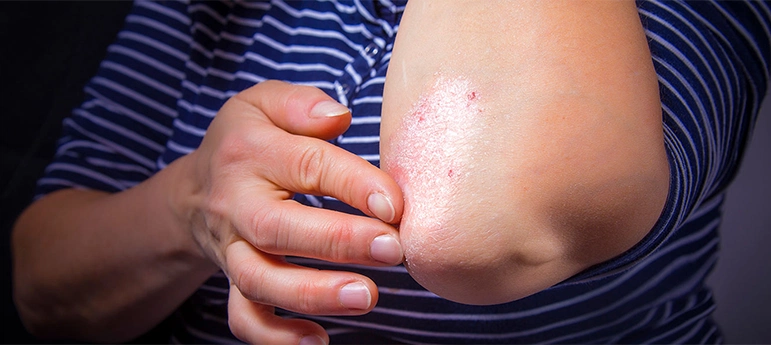
Psoriasis is one of the most misunderstood skin conditions in the world affecting over 125 million people globally and yet still widely treated as a surface-level problem. It isn’t just dry, flaky skin. It is a chronic autoimmune inflammatory condition where the immune system sends faulty signals that cause skin cells to multiply up to 10 times faster than normal.
The result? Raised, red, scaly patches called plaques – that can appear anywhere on the body: the scalp, elbows, knees, lower back, and even the nails or joints.
What makes psoriasis particularly challenging is its relapsing-remitting nature. It flares, settles, and flares again — often without warning. Most people with psoriasis spend years managing symptoms without ever addressing the underlying immune dysfunction or the lifestyle factors that keep the cycle going.
This guide is designed to change that. Whether you’re newly diagnosed or have been living with psoriasis for years, understanding the condition from a root-cause perspective is the first step toward genuine, lasting relief.
Not all psoriasis looks or behaves the same. Knowing your type helps you understand the most appropriate treatment approach.
The most common form accounting for nearly 80–90% of cases. Characterized by raised, inflamed red patches covered in silvery-white scales. Most commonly appears on the elbows, knees, scalp, and lower back.
Often triggered by bacterial infections (like streptococcal throat infection), this type appears as small, drop-shaped lesions scattered across the trunk, arms, and legs. More common in children and young adults.
Affects skin folds – armpits, groin, under the breasts, and around the genitals. Appears as smooth, shiny red patches without scaling, often worsened by friction and sweating.
A more severe form involving white blisters (pustules) filled with non-infectious pus, surrounded by red skin. Can be localized or generalized and may be accompanied by fever and systemic symptoms.
A rare but serious form where the inflammatory redness and scaling spread across most of the body’s surface. This is a medical emergency that requires immediate attention.
Approximately 30% of people with psoriasis also develop psoriatic arthritis – a condition where the immune inflammation extends to the joints, causing pain, stiffness, and swelling.
Key Insight: The type of psoriasis you have significantly influences which therapies – Ayurvedic or otherwise will be most effective. A proper diagnosis and individualized assessment are always the starting point.
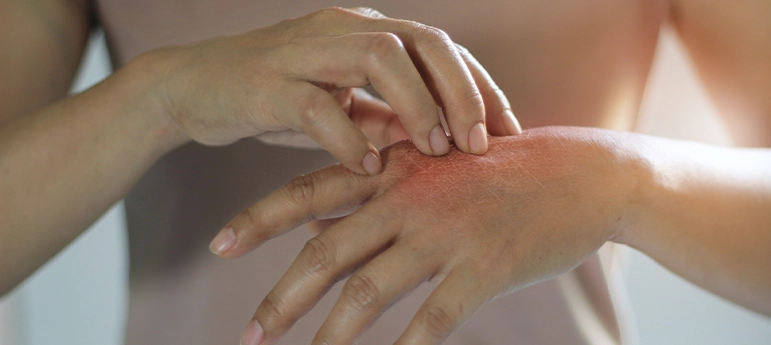
Modern medicine classifies psoriasis as a multifactorial autoimmune disease, meaning it is influenced by multiple factors:
1. Genetic Predisposition Research identifies more than 25 genetic loci associated with psoriasis risk. Having a first-degree relative with the condition significantly increases your likelihood of developing it.
2. Immune System Dysregulation The T-cells in the immune system which normally fight pathogens mistakenly attack healthy skin cells. This triggers an accelerated skin cell production cycle and chronic inflammation.
3. Environmental Triggers Infections, physical trauma to the skin (known as the Koebner phenomenon), certain medications (lithium, beta-blockers, antimalarials), and even weather changes can initiate or worsen psoriasis.
4. Gut-Skin Axis Dysfunction Emerging research consistently links gut microbiome imbalances to inflammatory skin diseases, including psoriasis. A leaky gut or chronic digestive dysfunction may feed systemic inflammation.
Ayurvedic Perspective: In Ayurveda, psoriasis is understood as a condition rooted in the vitiation of Vata and Kapha doshas, with deep toxin accumulation (Ama) in the tissues. The liver, skin, and immune channels (Srotas) are all implicated. This multi-system view makes the Ayurvedic treatment framework uniquely positioned for root-cause healing.
One of the most empowering things you can do with psoriasis is identify your personal triggers. Triggers don’t cause the disease but they can spark a flare or prolong one. Common triggers include:
Pro Tip: Keep a psoriasis trigger diary tracking diet, stress levels, sleep, and symptoms for 4–6 weeks can reveal patterns that your doctor or Ayurvedic physician can help you address directly.
This section is not about dismissing modern medicine – it’s about helping you understand why so many people with psoriasis continue to seek alternatives even after years of conventional therapy.
Standard medical treatments for psoriasis include:
| Treatment Type | Examples | Limitations |
|---|---|---|
| Topical corticosteroids | Betamethasone, clobetasol | Skin thinning with prolonged use; rebound flares |
| Vitamin D analogues | Calcipotriol | Slow-acting; irritation in sensitive areas |
| Systemic immunosuppressants | Methotrexate, cyclosporine | Liver/kidney toxicity; requires regular monitoring |
| Biologics | Adalimumab, secukinumab | High cost; risk of infections; not accessible to all |
| Phototherapy | UVB, PUVA | Requires frequent clinic visits; long-term UV risk |
While these treatments can offer significant short-term relief particularly biologics, they do not address the immune dysfunction, gut imbalances, stress response, or lifestyle factors that maintain the disease. Many people find that symptoms return once treatment stops, or that the side effect profile is not sustainable long-term.
This is precisely why an integrative, holistic approach to psoriasis treatment – one that works alongside rather than against conventional medicine is increasingly sought after.
Ayurveda has documented skin diseases for over 3,000 years, and psoriasis closely corresponds to what ancient texts call “Kushtha” specifically Kitibha (resembling plaque psoriasis) and Eka Kushtha (non-sweating, fish-scale type lesions).
From the Ayurvedic lens, psoriasis results from:
Understanding how Ayurveda treats psoriasis requires recognizing that the approach is deeply individualized. Two people with the same diagnosis may receive very different treatment protocols based on their dominant dosha, constitution (Prakriti), digestive strength (Agni), and the depth to which toxins have penetrated.
The Ayurvedic goal is not just to clear the skin – it is to restore systemic balance, cleanse toxin-loaded tissues, strengthen the immune response, and rebuild the skin’s natural resilience from within.
At a comprehensive Ayurvedic wellness retreat, psoriasis is addressed through multiple therapeutic layers. Each therapy serves a specific function in the healing process.
One of the five Panchakarma procedures, Virechana specifically targets Pitta and is highly effective in eliminating blood-borne toxins implicated in psoriasis. It involves the administration of carefully selected herbal laxatives after proper internal oleation (Snehana) to draw toxins out of deeper tissues into the GI tract for elimination.
Used in Kapha-dominant presentations, Vamana involves medicated emesis to eliminate accumulated toxins from the upper GI tract and respiratory channels. It is particularly relevant when psoriasis is associated with obesity, excess mucus, or chronic respiratory conditions.
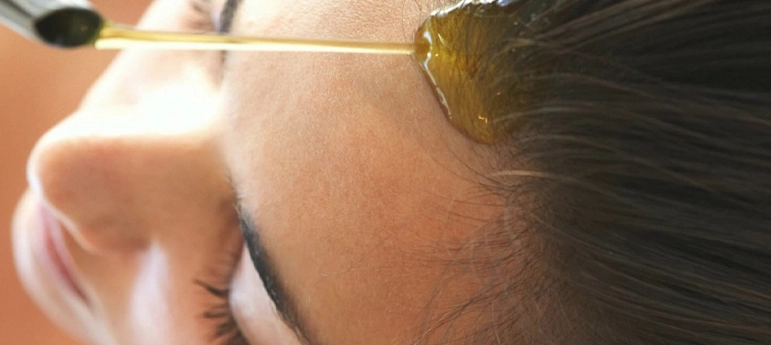
A specialized therapy where medicated buttermilk (Takra) is continuously poured over the forehead or skin. It is deeply cooling, anti-inflammatory, and particularly beneficial in psoriasis cases with strong Pitta involvement and psychological stress. Read our detailed Shirodhara treatment guide to understand how continuous-flow therapies work on the body and mind.
Full-body warm oil massage using specific medicated oils – such as Karpooradi Taila or Nalpamaradi Taila — helps restore Vata balance, improve circulation in affected tissues, and soften scaling without harsh exfoliation.
External application of freshly prepared herbal pastes – containing ingredients like Neem (Azadirachta indica), Turmeric (Curcuma longa), Manjistha (Rubia cordifolia), and Bakuchi (Psoralea corylifolia) – directly on psoriatic plaques. These have documented anti-inflammatory, antimicrobial, and skin-normalizing properties.
In classical Ayurveda, selective bloodletting particularly using leeches (Jalaukavacharana) – was used to draw vitiated Rakta (blood) from affected areas. Modern integrative centers may use adapted forms of this therapy where clinically appropriate.
Specialized Ayurvedic formulations are prescribed based on the individual’s constitution and disease stage. These commonly include:
If you’ve explored Ayurvedic approaches to psoriasis, you’ve likely encountered Panchakarma – the signature five-action detoxification system of Ayurveda. For chronic conditions like psoriasis, Panchakarma is not optional; it is foundational.
Here’s why: topical treatments and dietary changes work at the surface level. But the Ama (undigested toxins) that feeds psoriasis has often penetrated deep into the Rasa, Rakta, and Mamsa Dhatus (plasma, blood, and muscle tissues). Panchakarma is the only therapeutic system designed to extract toxins from these deeper layers.
A structured Panchakarma program for psoriasis typically follows three phases:
Phase 1 – Purvakarma (Preparation) The body is prepared for cleansing through internal and external oleation (Snehana) and sudation (Svedana). Medicated ghee (Ghrita) is administered orally in increasing doses over 5–7 days to loosen toxins and lubricate tissue channels.
Phase 2 – Pradhanakarma (Core Procedures) The main elimination procedures — typically Virechana for psoriasis, sometimes combined with Vamana or Basti — are administered. This is the most critical phase and requires close medical supervision.
Phase 3 – Paschatkarma (Rejuvenation) After the purge, the body is in a receptive state. This phase involves a carefully graduated diet, specific Rasayana (rejuvenative) herbs, and supportive therapies to restore digestive fire (Agni) and rebuild tissue quality.
A minimum 14–21 day residential program is typically recommended for meaningful results in chronic psoriasis. The serene environment, expert medical guidance, and integrated approach offered at Tigris Valley Wellness Retreat make it an ideal setting for this kind of deep healing work.
Diet is not a peripheral consideration in psoriasis – it is central. Several large-scale studies have demonstrated clear links between dietary patterns and psoriasis severity. An anti-inflammatory, gut-supportive diet is essential for any psoriasis treatment plan.
Anti-inflammatory staples:
Herbs with documented anti-psoriatic properties:
| Avoid | Why |
|---|---|
| Processed foods and fast food | High in pro-inflammatory trans fats and additives |
| Refined sugar and sweets | Spikes insulin, fuels inflammatory cascades |
| Dairy (for many patients) | Can increase Kapha and mucus; assess individually |
| Alcohol | Disrupts liver function; major psoriasis trigger |
| Gluten (for sensitive individuals) | Associated with intestinal permeability and immune activation |
| Nightshades (tomatoes, peppers, eggplant) | May aggravate inflammation in susceptible individuals |
| Excessive red meat | Arachidonic acid content promotes prostaglandin synthesis |
Ayurvedic Dietary Principle: Beyond the food itself, Ayurveda emphasizes how you eat. Eating freshly cooked, warm meals; avoiding incompatible food combinations; not overeating; and maintaining consistent meal timing all support Agni (digestive fire) which is the foundation of skin health according to Ayurvedic science.
Managing psoriasis externally is about supporting the skin barrier not stripping it. A consistent, gentle routine makes a meaningful difference in reducing the frequency and severity of flares.
Perhaps no other factor is as consistently underestimated in psoriasis management as psychological stress. Clinical studies show that >80% of patients identify stress as a major trigger for their flares and the biology backs this up.
When you’re under chronic stress, your body releases cortisol and other stress hormones that dysregulate immune function. In psoriasis patients, this immune dysregulation directly amplifies the T-cell activity and inflammatory cytokine release that drive plaque formation.
The relationship is bidirectional: stress worsens psoriasis, and living with psoriasis – its visibility, unpredictability, and social impact generates more stress. This stress-psoriasis loop is one of the most important cycles to break in any comprehensive treatment program.
Effective mind-body interventions for psoriasis include:
The serene mountain environment of Tigris Valley is itself a therapeutic modality designed to support the parasympathetic recovery that is so often missing in the lives of people with stress-driven psoriasis. Discover more about healing psoriasis naturally at Tigris Valley and how the retreat’s integrated environment supports lasting skin healing.
🌿 Ready to Begin Your Healing Journey?
Tigris Valley offers a fully personalized Ayurvedic psoriasis treatment program designed for lasting results not just temporary relief. Expert doctors. Proven therapies. A healing environment unlike any other. Book a Free Consultation at Tigris Valley →
At Tigris Valley Wellness Retreat, psoriasis treatment is not a one-size-fits-all protocol – it is a deeply individualized journey guided by an expert multidisciplinary team. Nestled in the mountains of Kerala, the retreat integrates the best of Ayurveda, Unani medicine, functional medicine, and nature-based therapies into a coherent healing program.
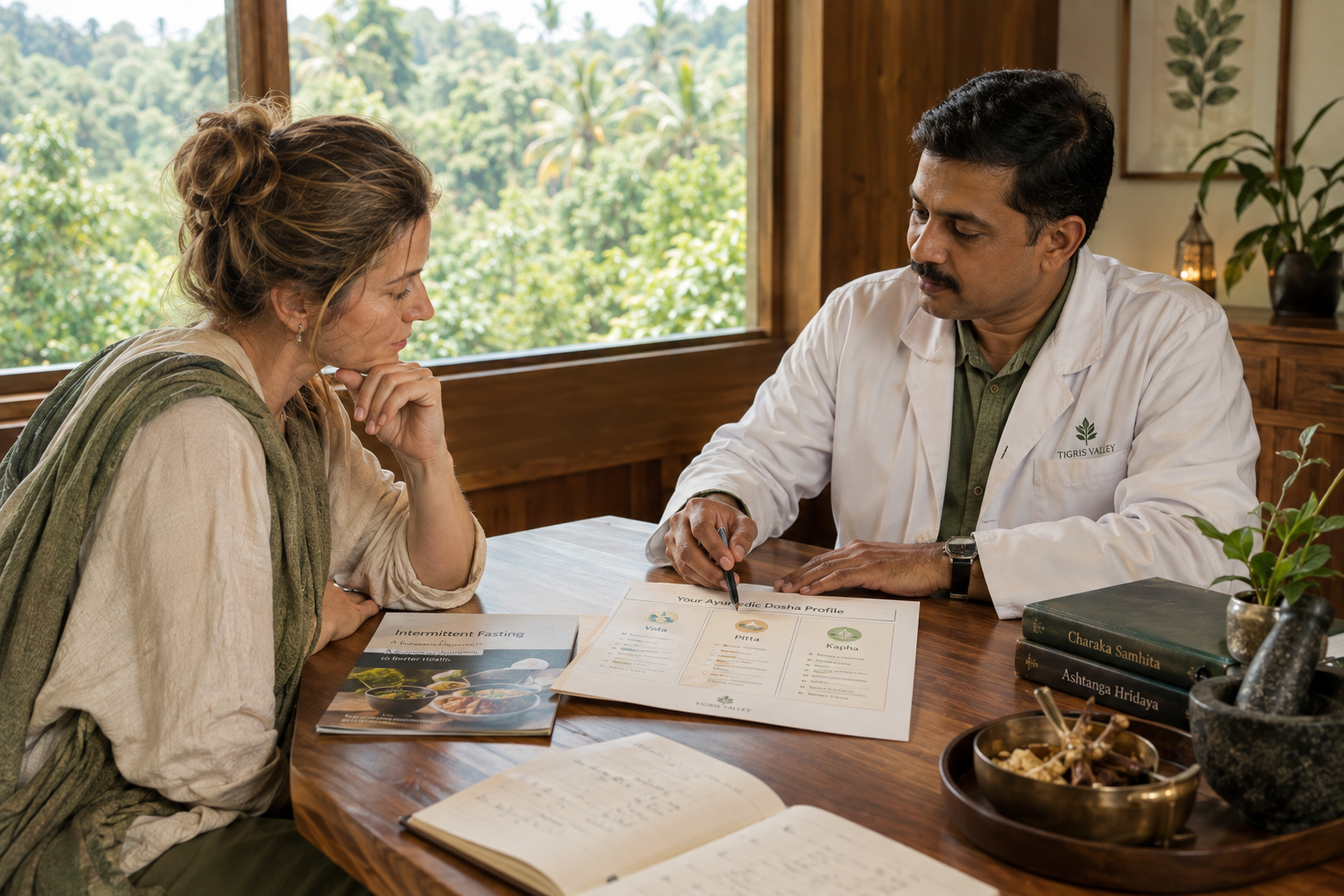
Every program begins with a comprehensive consultation. Doctors review your complete medical history, current medications, dietary patterns, stress markers, digestive function, and the specific nature of your psoriasis (type, duration, severity, triggers). Blood investigations and, where relevant, functional medicine assessments are included.
Based on your assessment, a customized program is developed that may include a combination of:
This represents what makes the best Ayurvedic psoriasis treatment at Tigris Valley distinctive: nothing is generic. Every protocol is built around you.
The retreat’s environment – mountain air, forest walks, hydrotherapy using natural spring water, meditation gardens is woven into the treatment protocol. These are not add-ons; they are active therapeutic components with measurable effects on immune tone and stress hormone regulation.
Meals at Tigris Valley are chef-curated and medically aligned – designed to support your Ayurvedic treatment, reduce inflammatory load, and nourish skin tissue. This is not hospital food; it is food as medicine.
Healing from psoriasis is a process, not an event. At Tigris Valley, discharge is followed by a structured at-home protocol – including dietary guidelines, herbal medicine continuation, lifestyle recommendations, and remote follow-up support with your treating physician.
This is the question every person with psoriasis wants answered – and deserves an honest response.
Short-term (2–4 weeks):
Medium-term (2–3 months):
Long-term (6–12 months with ongoing adherence):
Important: Results depend heavily on the duration and severity of psoriasis, the patient’s dietary and lifestyle adherence, and the degree of underlying immune dysfunction. Psoriasis is a chronic condition – the goal of Ayurvedic treatment is not a permanent cure but sustained management and significantly improved quality of life.
No. Psoriasis is an autoimmune condition – not an infection. It cannot be spread through skin contact, sharing utensils, or any form of physical proximity. The red, scaly patches are the result of the immune system attacking the body’s own skin cells, not an external pathogen.
Ayurveda does not claim to permanently cure psoriasis, as it is a chronic autoimmune condition with genetic components. However, a well-designed Ayurvedic treatment program can achieve significant and prolonged remission, greatly reduce flare frequency, and dramatically improve quality of life without the side effects associated with long-term pharmaceutical use.
This depends on the duration and severity of the condition. For mild to moderate psoriasis, a 14–21 day Panchakarma program combined with 3–6 months of herbal medicines and dietary adherence typically produces meaningful results. Chronic, severe cases may require longer programs and ongoing maintenance.
Yes — significantly. Research consistently links dietary patterns to psoriasis severity. Anti-inflammatory diets rich in omega-3 fatty acids, antioxidants, and gut-supportive foods reduce inflammatory markers associated with psoriasis. Foods like alcohol, refined sugar, processed foods, and for some individuals – gluten or dairy can trigger or worsen flares.
Yes. Psychological stress is one of the most commonly reported psoriasis triggers, supported by strong biological evidence. Stress activates inflammatory pathways and disrupts immune regulation in ways that directly amplify psoriatic activity. Stress management is therefore not optional in any comprehensive psoriasis treatment program – it is a core component.
Researchers have found that patients with psoriasis often have altered gut microbiome compositions reduced diversity and changes in the ratio of beneficial to harmful bacteria. A compromised gut barrier (leaky gut) allows inflammatory compounds to enter the bloodstream, fueling systemic inflammation that manifests in the skin. Gut-healing protocols are an important component of holistic psoriasis care.
Yes. Approximately 30% of psoriasis patients develop psoriatic arthritis – an inflammatory joint condition that causes pain, stiffness, swelling, and in severe cases, joint damage. It can develop before, during, or after skin symptoms appear. Any joint pain or stiffness in a person with psoriasis should be evaluated promptly to prevent irreversible joint damage.
🌿 Take the First Step Toward Clearer, Healthier Skin
Psoriasis doesn’t have to define your life. At Tigris Valley Wellness Retreat, our expert team of Ayurvedic physicians, functional medicine specialists, and wellness practitioners will work with you to build a personalized treatment plan that addresses psoriasis at its root – not just its surface.
✅ Comprehensive initial consultation
✅ Personalized Panchakarma & Ayurvedic protocol
✅ Medically supervised programs in a serene mountain environment
✅ Post-program support and follow-up care
Schedule Your Consultation Today → 📞 Call us: +91 96563 07322 | ✉️ smhead@tigrisvalley.com
Kaithappoyil, in the Western Ghats.
Markaz Knowledge City Road, Kaithappoyil, Adivaram, Kerala
Get directions +91 90726 61622 reservation@tigrisvalley.com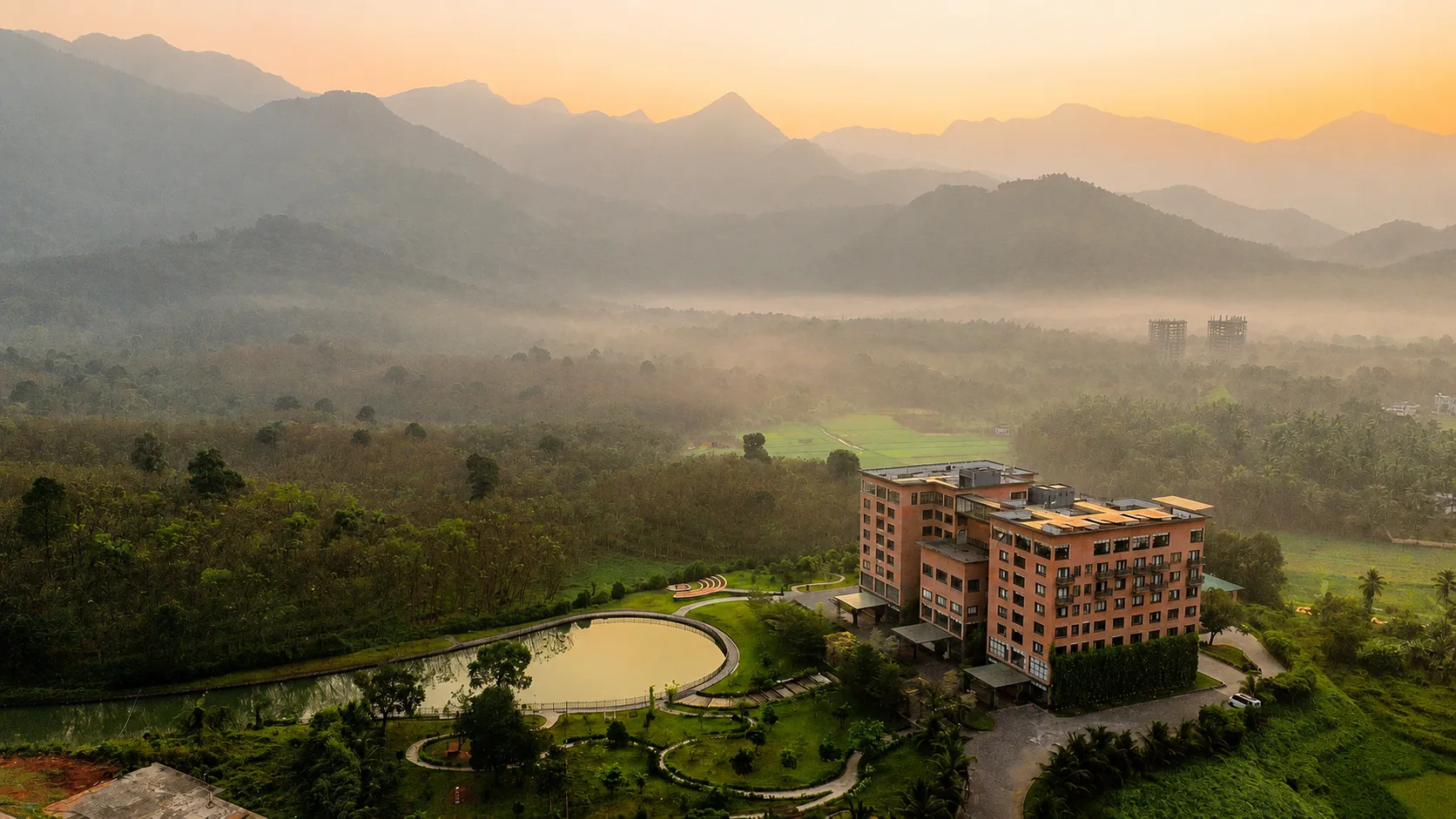
Kaithappoyil, Western Ghats

Before you leave
A physician reads every letter. Book a consultation, or send an inquiry — reservations answers the same day.