
[gtranslate]
MENÜ
⚠️ Medizinischer Haftungsausschluss: Bluthochdruck (Hypertonie) ist eine schwerwiegende Erkrankung, die das Risiko für Schlaganfall, Herzinfarkt und Nierenerkrankungen erheblich erhöht. Dieser Artikel dient ausschließlich zu Informationszwecken und stellt keine medizinische Beratung dar. Setzen Sie blutdrucksenkende Medikamente nicht ab, reduzieren Sie die Dosis nicht und nehmen Sie keine Änderungen vor, ohne ausdrückliche Anweisung Ihres verschreibenden Arztes. Bei schwerem Bluthochdruck, einer hypertensiven Krise, Brustschmerzen, Sehstörungen oder starken Kopfschmerzen suchen Sie unverzüglich einen Notarzt auf. Alle Gäste im Tigris Valley durchlaufen vor Beginn eines Programms eine umfassende ärztliche Beratung und Blutdruckmessung.
Sie leiden unter Bluthochdruck – nehmen wahrscheinlich Medikamente ein, kennen wahrscheinlich Ihre Blutdruckwerte und fragen sich wahrscheinlich, ob ein Ayurveda-Aufenthalt helfen könnte, anstatt ein zusätzliches Risiko darzustellen. Das ist eine berechtigte Frage, und die ehrliche Antwort lässt sich nicht einfach mit Ja oder Nein beantworten. Ein Ayurveda-Aufenthalt in einer NABH-zertifizierten, ärztlich betreuten Klinik kann für Patienten mit Bluthochdruck nicht nur sicher, sondern auch wirklich wohltuend sein – allerdings nur, wenn bestimmte klinische Voraussetzungen erfüllt sind. In diesem Artikel wird genau dargelegt, wie diese Bedingungen lauten.
📋 Inhaltsverzeichnis
Laut der Weltgesundheitsorganisation sind weltweit über 1,28 Milliarden Erwachsene von Bluthochdruck betroffen, der weltweit der führende Risikofaktor für Herz-Kreislauf-Erkrankungen ist. Die standardmäßige medikamentöse Behandlung – ACE-Hemmer, ARBs, Kalziumkanalblocker, Betablocker, Diuretika – reguliert bei den meisten Patienten die Blutdruckwerte. Was sie jedoch nicht tut, ist, die zugrunde liegenden Ursachen anzugehen, die den Blutdruckanstieg überhaupt erst verursacht haben.
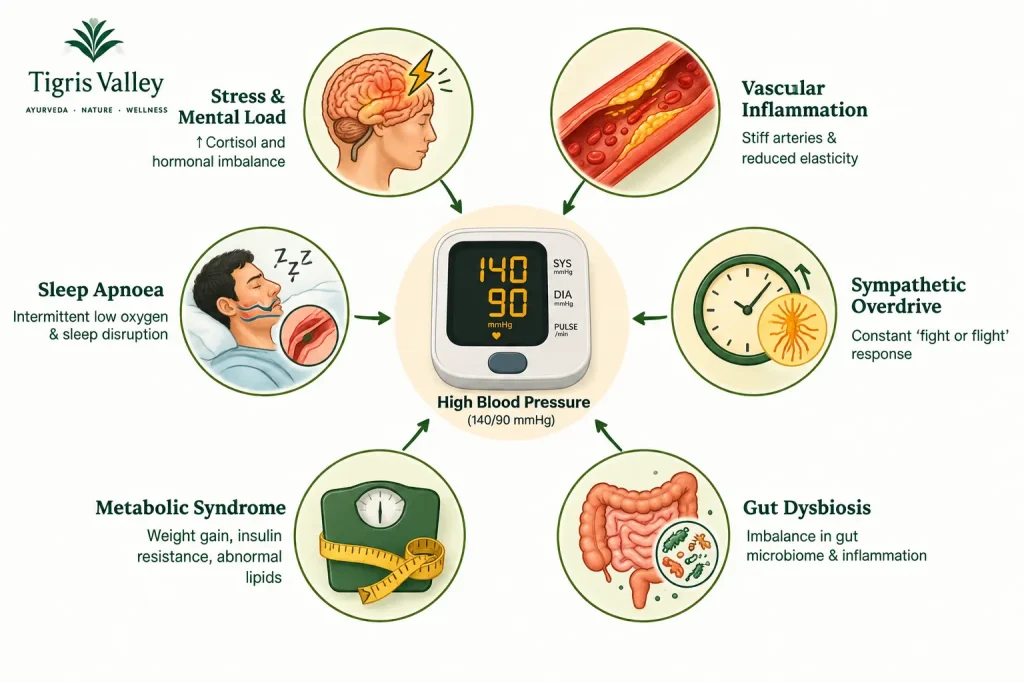
Die häufigsten Ursachen für Bluthochdruck, die durch Medikamente lediglich behandelt, aber nicht beseitigt werden:
Genau diese Art von komplexer, mehrere Systeme umfassender Ursache ist es, die ein integrierter Ansatz aus Ayurveda und funktioneller Medizin aufgrund seiner Struktur gezielt angehen kann. Die bestätigte Programm für kardiometabolische Gesundheit und Regeneration Bei Tigris Valley wird die Behandlung von Bluthochdruck ausdrücklich als bestätigte Indikation aufgeführt, wobei “Blutdruckstabilisierung” als dokumentierter Nutzen des Programms angegeben wird.
Die kurze Antwort: Wenn der Blutdruck angemessen eingestellt ist, die klinische Umgebung eine ärztliche Betreuung gewährleistet und Ihre behandelnden Ärzte zu Hause informiert sind und ihre Zustimmung erteilt haben. Konkret sind die folgenden Voraussetzungen gegeben, damit ein ärztlich betreutes Ayurveda-Retreat für Patienten mit Bluthochdruck geeignet ist:
Dieser Abschnitt wurde aufgenommen, weil eine ehrliche klinische Kommunikation dies erfordert – und weil kein verantwortungsbewusstes Gesundheitsprogramm darauf verzichten sollte.
Buchen Sie keinen Ayurveda-Aufenthalt und reisen Sie nicht dorthin, wenn einer der folgenden Punkte auf Sie zutrifft:
Im Rahmen der ärztlichen Vorabuntersuchung im Tigris Valley wird gezielt auf alle oben genannten Punkte geprüft. Gäste, bei denen eines dieser Merkmale festgestellt wird, werden individuell beurteilt – für manche kann ein angepasstes Programm in Frage kommen; anderen wird empfohlen, sich vor der Teilnahme zunächst einer entsprechenden medizinischen Stabilisierung zu unterziehen.
Im Ayurveda wird der Begriff “Hypertonie” nicht verwendet – doch seine klinische Systematik befasst sich mit bemerkenswerter Präzision mit den physiologischen Aspekten des Bluthochdrucks und identifiziert dabei Mechanismen, die die moderne Herz-Kreislauf-Medizin als echte ursächliche Zusammenhänge anerkennt.
Die Erkrankung, die in den ayurvedischen klinischen Texten am ehesten der Hypertonie entspricht, ist Raktavata — eine Störung des Blutkreislaufs (Rakta Dhatu) und Vata in den Herz-Kreislauf-Kanälen (Rasavaha und Raktavaha Srotas). Ein erhöhtes Vata führt zu einem Anstieg des Gefäßtonus, der Herzfrequenz und der Aktivierung des Nervensystems, was wir physiologisch als Überaktivierung des sympathischen Nervensystems verstehen. Die Beteiligung von Pitta fügt die entzündliche Komponente hinzu – Endothelentzündung, Hitze im Herz-Kreislauf-System. Die Beteiligung von Kapha fügt die metabolische Komponente hinzu – Viskosität, Cholesterin und Verdickung der Gefäßwände.
Im Ayurveda gilt das Herz (Hridaya) ist nicht nur eine physische Pumpe – sie ist der Sitz des Bewusstseins, das integrierende Zentrum von Prana, Tejas und Ojas. Die tiefgreifende ayurvedische Erkenntnis – dass der psychische Zustand des Einzelnen die Herz-Kreislauf-Funktion direkt und mechanistisch bestimmt – wird mittlerweile durch umfangreiche Forschungen zur HPA-Achse, zur Regulation des Herzzeitvolumens durch das autonome Nervensystem sowie zur spezifischen Rolle von psychischem Stress bei endothelialer Dysfunktion und Bluthochdruck bestätigt. Die therapeutische Wirkung von Shirodhara auf die Verbindung zwischen Herz, Geist und Gefäßen ist nicht metaphorisch – sie ist physiologisch spezifisch.
Kumuliert Ama — der Stoffwechselrückstand einer gestörten Verdauung — trägt in der ayurvedischen Pathophysiologie zu Gefäßentzündungen und zur Blutviskosität bei. Die moderne Entsprechung ist die durch Darmdysbiose, Insulinresistenz und oxidativen Stress bedingte, leichtgradige systemische Entzündung, die beim metabolischen Syndrom stets zusammen mit Bluthochdruck auftritt. Die Ama-beseitigende Wirkung des Panchakarma wirkt direkt auf diese entzündliche Dimension der kardiovaskulären Gesundheit ein.
Die im Titel dieses Blogs gestellte Frage verdient eine direkte und konkrete Antwort. So sieht die klinische Betreuung eines Bluthochdruckpatienten bei Tigris Valley tatsächlich aus – basierend auf bestätigten Programmunterlagen und den NABH-Standards für die klinische Praxis:
Das kardiometabolische Programm von Tigris Valley wird von Ärzten mit Spezialisierung auf Herzgesundheit und funktionelle Medizin sowie von ayurvedischen Ärzten mit BAMS-Qualifikation betreut. In der bestätigten Programmdokumentation heißt es: “Eine ausführliche Beratung durch unsere Fachärzte mit Spezialisierung auf Herzgesundheit, funktionelle Medizin und ganzheitliche Betreuung”, gefolgt von “fortgeschrittenen diagnostischen Tests zur Beurteilung kardiovaskulärer und metabolischer Marker”. Dabei handelt es sich nicht um eine allgemeine Wellness-Betreuung, sondern um eine kardiovaskuläre Untersuchung auf Facharztniveau in einem integrativen Rahmen.
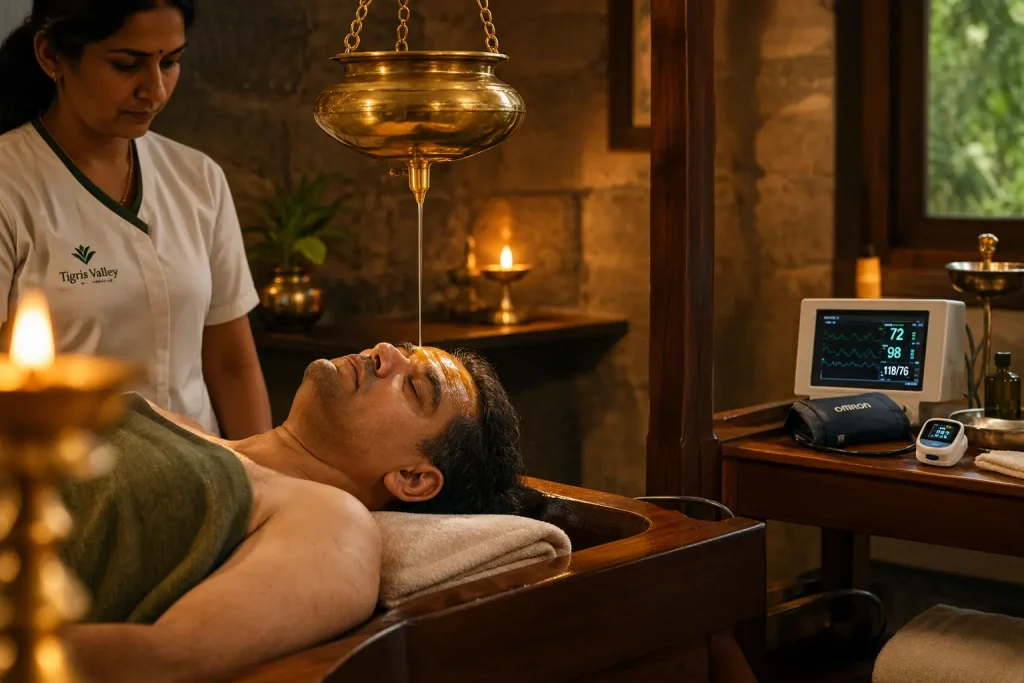
Alle nachstehend aufgeführten Leistungen stammen direkt aus den bestätigten Programmunterlagen von Tigris Valley. Es werden keine unbestätigten Angaben gemacht.
Im Tigris-Tal bestätigt als: “Baut Stress ab und fördert die Verbindung zwischen Herz und Geist” im Rahmen des Programms „Kardio-metabolische Gesundheit und Regeneration“. Der Wirkmechanismus von Shirodhara steht in direktem Zusammenhang mit der häufigsten Ursache für resistente Hypertonie – der anhaltenden Aktivierung des sympathischen Nervensystems. Die kontinuierliche Anwendung von warmem Öl auf das reichhaltige Nervenfeld der Stirn führt zu einer tiefgreifenden Dominanz des Parasympathikus, wodurch der Cortisolspiegel messbar gesenkt, die Herzfrequenzvariabilität zugunsten des Vagustonus verringert und der neuroendokrine Zyklus unterbrochen wird, der den erhöhten Gefäßwiderstand aufrechterhält. Bei stressbedingtem Bluthochdruck behandelt Shirodhara die neurologische Grundursache und nicht den daraus resultierenden Blutdruckwert.
Im kardiometabolischen Programm bestätigt als: “Abhyanga (therapeutische Ölmassage): Fördert die Durchblutung und wirkt entzündungshemmend.” Beide Mechanismen sind für die Pathophysiologie der Hypertonie von unmittelbarer Bedeutung. Eine verbesserte periphere Durchblutung senkt die Herznachlast; eine verminderte systemische Entzündung verbessert die Endothelfunktion und die Verfügbarkeit von Stickstoffmonoxid. Die gefäßerweiternde Wirkung von Abhyanga durch warmes, medizinisches Öl und rhythmische Druckstimulation ist sowohl in klassischen ayurvedischen Texten als auch im modernen physiologischen Verständnis allgemein anerkannt.
Im Rahmen des integrierten therapeutischen Ansatzes im kardiometabolischen Programm bestätigt. Bei Bluthochdruck mit einer Komponente des metabolischen Syndroms – dem häufigsten Muster in der Bevölkerung der Golfstaaten, Südasiens und Nordamerikas – reduzieren die Entgiftungsmaßnahmen des Panchakarma die durch „Ama“ verursachten Entzündungen und die metabolische Belastung, die zu einer endothelialen Dysfunktion und Insulinresistenz beitragen. Für Patienten mit Bluthochdruck werden Anpassungen am Programm vorgenommen: Die Intensität der Behandlungen und deren Abfolge werden entsprechend dem aktuellen Blutdruckstatus angepasst.
Dies wurde in mehreren Programmen des Tigris-Tals zum Thema “Stressbewältigung” und zur Förderung der Herzgesundheit bestätigt. Yoga und kontrollierte Atemübungen gehören zu den in der begutachteten Fachliteratur am konsequentesten durch wissenschaftliche Erkenntnisse belegten Maßnahmen zur Blutdrucksenkung – sie haben nachweislich Auswirkungen auf die Herzfrequenzvariabilität, die Baroreflexempfindlichkeit und die Cortisolsenkung, was sich direkt in einem niedrigeren Ruheblutdruck niederschlägt. Für Bluthochdruckpatienten ist Pranayama in der Regel die erste und sicherste Intervention, die Körper und Geist einbezieht – wobei die spezifischen Techniken je nach kardiovaskulärem Zustand des Patienten ausgewählt und angepasst werden.
Im kardiometabolischen Programm bestätigt als: “Infusionen zur Verabreichung von Antioxidantien und Nährstoffen zur Verringerung von oxidativem Stress.” Zu den für Bluthochdruck unmittelbar relevantesten intravenösen Therapien zählen:
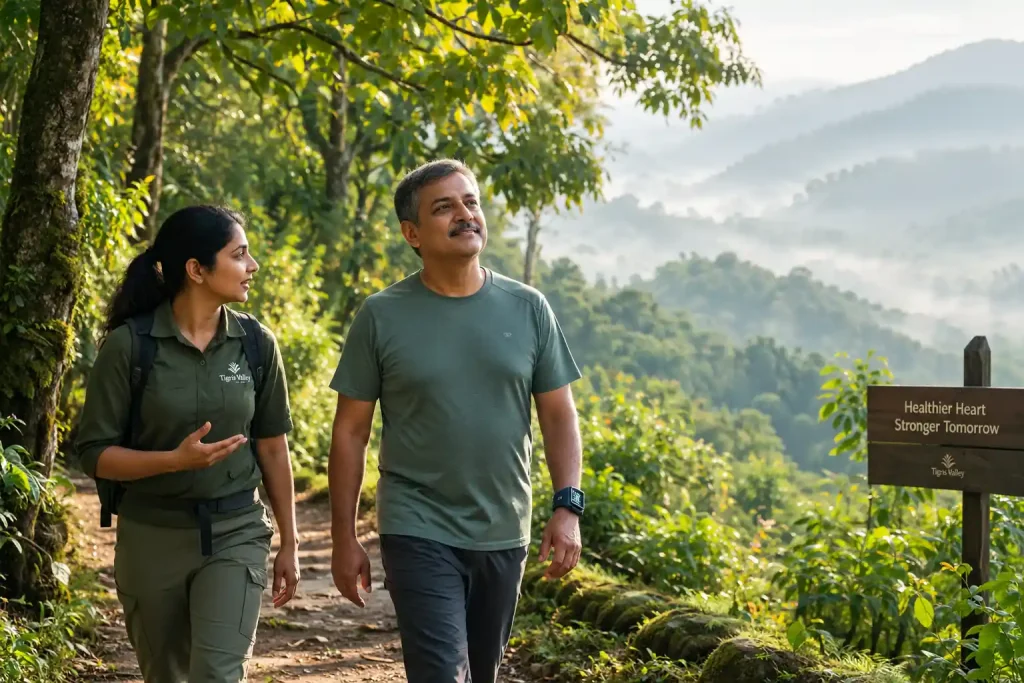
Im kardiometabolischen Programm bestätigt als: “Geführte Waldspaziergänge und Aktivitäten im Freien zur Erholung von Körper und Geist. Die frische Bergluft wirkt stressmindernd und fördert die Sauerstoffversorgung.” In der begutachteten Fachliteratur sind blutdrucksenkende Wirkungen des Waldbadens dokumentiert – vor allem durch eine Senkung des Cortisolspiegels, eine Herunterregulierung des sympathischen Nervensystems und die spezifischen Auswirkungen der Exposition gegenüber Phytonziden (natürlichen Pflanzenstoffen) auf den autonomen Tonus. Der artenreiche Wald der Westghats in Wayanad bietet die therapeutische Umgebung, in der dieser Mechanismus am stärksten zum Tragen kommt.
Im kardiometabolischen Programm bestätigt als: “Maßgeschneiderte Rezepturen für die Herzgesundheit und Entgiftung.” Es handelt sich hierbei um ärztlich verschriebene, individuell abgestimmte Kräuterrezepturen – nicht um generische Nahrungsergänzungsmittel. Die Auswahl der jeweiligen Kräuter erfolgt auf der Grundlage des Dosha-Musters des Patienten, seines aktuellen kardiovaskulären Zustands und einer Überprüfung der eingenommenen Medikamente. Entscheidend ist: Alle Kräuterrezepturen werden vor der Verschreibung auf Wechselwirkungen mit blutdrucksenkenden Medikamenten überprüft.
Klinische Ehrlichkeit erfordert, dass man darlegt, was bei Bluthochdruckpatienten einer sorgfältigen Behandlung bedarf – und nicht nur, was hilft. Folgende Aspekte erfordern eine Beurteilung und Anpassung durch den Arzt:
| Therapie | Bedenken bei Bluthochdruck | Wie Tigris Valley das bewältigt |
|---|---|---|
| Intensives Swedana (Dampfbad) | Starke Hitze kann zu einem akuten Anstieg des Blutdrucks führen; Gefäßerweiterung, gefolgt von einer Reflexreaktion; Dehydrierungsrisiko | Dauer und Temperatur angepasst; Blutdruck vor und nach der Behandlung gemessen; bei erhöhtem Blutdruck am jeweiligen Tag auf die Behandlung verzichtet |
| Virechanam (medizinisches Abwaschen) | Flüssigkeitsverlust und Elektrolytverschiebungen während der Spülung können den Blutdruck bei Patienten mit Bluthochdruck beeinflussen – insbesondere bei denen, die Diuretika einnehmen | Blutdruck am Morgen des Eingriffs gemessen; Protokoll zur ausreichenden Flüssigkeitszufuhr befolgt; Behandlung ausgesetzt, wenn der Blutdruck vor dem Eingriff außerhalb des sicheren Bereichs lag; Wechselwirkungen mit Diuretika überprüft |
| Colon-Hydro-Therapie | Eine Vagusnervstimulation während eines Eingriffs am Dickdarm kann die Herzfrequenz und den Blutdruck beeinflussen; Auswirkungen auf den Elektrolythaushalt | In den Standardarbeitsanweisungen (SOP) von Tigris Valley festgelegt: Blutdruckmessung vor, während (falls erforderlich) und nach dem Eingriff; Überwachung der Herzfrequenz; Überwachung des Blutsauerstoffgehalts; ausdrückliche Abfrage nach “Herzerkrankungen in der Anamnese” im Aufnahmeformular |
| Snehapanam (innere Ölbehandlung) | Große Mengen an medizinischem Ghee/Öl können den Fettstoffwechsel vorübergehend beeinflussen – relevante Zusammenhänge bei Patienten mit begleitender Dyslipidämie | Dosis und Dauer werden an den individuellen Stoffwechselzustand angepasst; das Lipidprofil wird bei der Aufnahme überprüft |
| Bestimmte ayurvedische Kräuter | Einige Kräuter können die Wirkung von blutdrucksenkenden Medikamenten verstärken oder hemmen; Süßholzwurzel (Yashtimadhu) kann den Blutdruck erhöhen und muss bei Bluthochdruck vermieden werden. | Alle pflanzlichen Präparate werden vor der Verschreibung von einem Arzt im Hinblick auf die aktuelle blutdrucksenkende Therapie des Patienten geprüft; ohne diese Prüfung werden keine pflanzlichen Präparate verabreicht. |
| Intensive körperliche Betätigung | Hochintensives Training führt zu einem akuten, signifikanten Anstieg des systolischen Blutdrucks; bei unkontrollierter Hypertonie kontraindiziert | Das Trainingsprogramm wird vom Arzt genehmigt und auf moderate Intensität abgestimmt – Yoga, Gehen und Pranayama sind die herzschonenden Aktivitätsformen für Gäste mit Bluthochdruck |
Warum diese Liste wichtig ist: Das Vorhandensein dieser Anpassungsliste ist an sich schon ein E-E-A-T-Signal – es zeigt, dass der klinische Ansatz von Tigris Valley tatsächlich unter ärztlicher Aufsicht steht und kein Einheitskonzept ist. Ein Wellness-Retreat, das sein Programm nicht an Patienten mit Bluthochdruck anpasst, bietet keine klinische Versorgung an. Eines, das für jeden der oben genannten Fälle von Ärzten geprüfte Protokolle vorweisen kann, tut dies hingegen.
Dies ist die häufigste Sorge, die Bluthochdruckpatienten vor der Terminvereinbarung äußern – und sie verdient eine direkte, eindeutige Antwort.
Ihre blutdrucksenkenden Medikamente werden während Ihres gesamten Aufenthalts im Tigris Valley unverändert weiter eingenommen.
Kein Ayurveda-Arzt in einer ordnungsgemäß beaufsichtigten, NABH-akkreditierten Einrichtung wird Sie im Rahmen eines Ayurveda-Programms dazu auffordern, Ihre Blutdruckmedikamente zu reduzieren oder abzusetzen. Der integrative Ansatz funktioniert. neben Ihr Arzneimittelmanagement – nicht an dessen Stelle.
Was im Laufe der Zeit passieren kann, wenn sich die therapeutischen Wirkungen des Programms summieren – gesenkter Cortisolspiegel, verbesserte Gefäßfunktion, geringere systemische Entzündungen, besserer Schlaf, Gewichtsabnahme –, ist, dass Ihr behandelnder Kardiologe oder Hausarzt bei Ihrem nächsten Termin möglicherweise beschließt, Ihren Medikamentenbedarf zu überprüfen. Diese Entscheidung trifft Ihr Arzt zu Hause auf der Grundlage objektiver Blutdruckmesswerte nach Abschluss des Programms – nicht während des Programms im Retreat.
Praktisches Medikamentenmanagement im Tigris-Tal:
Es ist sowohl ehrlich als auch notwendig, realistische Erwartungen bei Bluthochdruckpatienten zu wecken, die an einem Programm im Tigris-Tal teilnehmen möchten.
| Ergebnis | Realistische Erwartungen | Zeitrahmen |
|---|---|---|
| Stabilisierung des Blutdrucks während des Programms | Bei regelmäßiger Anwendung führen Stressabbau, verbesserter Schlaf und Abhyanga innerhalb von 5 bis 7 Tagen zu einer messbaren Verlagerung hin zum Parasympathikus. | Tag 5–10 |
| Senkung des stressbedingten Blutdruckanstiegs | Von Bedeutung für Patienten, bei denen Stress eine wesentliche Rolle bei der Entstehung ihres Bluthochdrucks spielt; Shirodhara und Waldbaden führen zu einer Senkung des Cortisolspiegels mit konsistenten Auswirkungen auf den Blutdruck | Ab Woche 2 |
| Verbesserung des Stoffwechsels, die zur Blutdruckkontrolle beiträgt | Bei Patienten mit metabolischem Syndrom und Bluthochdruck: Gewichtsreduktion, verbesserte Insulinsensitivität – messbar über einen Zeitraum von 14–21 Tagen, auch nach der Entlassung fortbestehend | Während und nach dem Programm |
| Reduzierung der Medikamentendosis | Im Laufe der Zeit durchaus möglich – doch diese Entscheidung trifft Ihr behandelnder Kardiologe auf der Grundlage der Blutdruckwerte nach Abschluss des Programms; es handelt sich nicht um ein Programmergebnis, das während des Aufenthalts zu erwarten oder anzustreben ist. | Entscheidung des Arztes nach Abschluss des Programms |
| Anhaltende Verbesserung des Blutdrucks zu Hause | Abhängig von der Einhaltung der Lebensweise nach der Entlassung – die bei der Entlassung bereitgestellten Anleitungen zu Ernährung, Bewegung, Pranayama und Schlaf nach Abschluss des Programms sind der Schlüssel zur Aufrechterhaltung der erzielten Fortschritte | Laufende Maßnahmen nach Abschluss des Programms |
| Behandlung von Bluthochdruck | Das ist weder eine realistische noch eine ethische Behauptung. Primäre Hypertonie ist eine chronische Erkrankung. Das Ziel ist eine bessere Kontrolle, die Reduzierung der ursächlichen Faktoren und möglicherweise eine Verringerung der medikamentösen Belastung im Laufe der Zeit – nicht die vollständige Beseitigung der Erkrankung. | Kein Wahlversprechen |
Erforschen Sie die Programm für kardiometabolische Gesundheit und Regeneration für alle Einzelheiten zum bestätigten Programm für Bluthochdruck und damit verbundene Herz-Kreislauf-Erkrankungen. Für Patienten mit gleichzeitig bestehendem Diabetes und metabolischem Syndrom, die zu ihrem Bluthochdruck beitragen, gilt Folgendes: Programm zur Bewältigung von Stoffwechselkrankheiten geht diese Mitursachen parallel an. Für diejenigen, deren Bluthochdruck in erster Linie durch chronischen Stress und Burnout verursacht wird, ist die Programm zur Erholung von Stress und Burnout bietet die am stärksten zielgerichtete Maßnahme. Alle anzeigen Programme im Tigris-Tal oder erkunden Sie die Einrichtungen und Unterkunft.
Beides – doch die Unterscheidung ist wichtig. Die durch Entspannung hervorgerufene Blutdrucksenkung ist real und physiologisch bedeutsam. Eine anhaltende Senkung des Cortisolspiegels durch Shirodhara und Waldbaden reduziert messbar den sympathischen Gefäßtonus – was zu einem niedrigeren Ruheblutdruck führt, und zwar durch einen echten neurologischen Mechanismus und nicht durch Suggestion. Darüber hinaus wirken die Stoffwechselverbesserungen (Gewichtsabnahme, Verbesserung der Insulinsensitivität, Verringerung von Entzündungen) eines 14- bis 21-tägigen integrierten Programms auf die strukturellen Ursachen des Blutdruckanstiegs ein – und zwar auf eine Weise, die über den Entspannungszustand hinaus anhält. Es handelt sich hierbei um unterschiedliche therapeutische Mechanismen, die parallel zueinander wirken.
Ja – und Ihre Medikamente bleiben während des gesamten Aufenthalts unverändert. Im Rahmen der ärztlichen Beratung vor Ihrer Ankunft werden alle Ihre Herz-Kreislauf-Medikamente überprüft, um Wechselwirkungen mit ayurvedischen Kräuterpräparaten und Nahrungsbestandteilen zu beurteilen. Blutdrucksenker, Betablocker, ACE-Hemmer, ARBs, Kalziumkanalblocker und Diuretika werden alle geprüft und im Programmablauf berücksichtigt. Die fortgesetzte Einnahme Ihrer Medikamente ist für Gäste mit Bluthochdruck eine unverzichtbare Voraussetzung für die Teilnahme am Programm.
Panchakarma-Behandlungen werden bei Patienten mit Bluthochdruck individuell beurteilt und angepasst. Die spezifischen Behandlungen, ihre Intensität und ihre Abfolge werden auf Ihre aktuellen Blutdruckwerte und Ihren kardiovaskulären Zustand abgestimmt. Bestimmte Behandlungen (insbesondere Virechanam und intensives Swedana) werden ausgesetzt oder angepasst, wenn Ihr Blutdruck an diesem Tag außerhalb der sicheren Grenzwerte liegt. Der Blutdruck wird vor bestimmten Behandlungen während des gesamten Programms überprüft. Der NABH-akkreditierte klinische Standard im Tigris Valley gewährleistet, dass diese Sicherheitsvorkehrungen systematisch und nicht nur ad hoc angewendet werden.
Für die meisten Bluthochdruckpatienten sind die wirksamsten Therapien: Shirodhara (Aktivierung des Parasympathikus, Senkung des Cortisolspiegels, direkte Verbindung zwischen Herz und Geist – bestätigt im kardio-metabolischen Programm), Abhyanga (Verbesserung der Durchblutung und Verringerung von Entzündungen – bestätigt), Pranayama (Verbesserung der Herzfrequenzvariabilität, Steigerung des Vagustonus – in allen Programmen bestätigt) und Waldbaden (Cortisolsenkung, Sauerstoffversorgung – im Cardio-Metabolic-Programm bestätigt). Magnesium per Infusion (natürliche Wirkung als Kalziumkanalblocker, Regulierung des autonomen Nervensystems – bestätigt) ist die Therapie per Infusion mit der unmittelbarsten kardiovaskulären Relevanz.
Mit Anpassungen – ja; ohne Anpassungen – ist Vorsicht geboten. Bei Patienten mit Bluthochdruck werden die Dauer und die Temperatur des intensiven Dampfbads reduziert; der Blutdruck wird vor und nach der Behandlung gemessen; und Swedana wird ausgesetzt, wenn der Blutdruck am Tag der Behandlung erhöht ist. Entscheidend ist, dass diese Beurteilung im Tigris Valley unter ärztlicher Aufsicht erfolgt – und nicht dem Gast oder dem Therapeuten überlassen bleibt, dies eigenständig zu beurteilen.
Durch vier nachgewiesene Wirkmechanismen: (1) Die anhaltende parasympathische Aktivierung durch Shirodhara senkt den sympathischen Gefäßtonus, der den Blutdruck erhöht; (2) die kontrollierte Atemtechnik des Pranayama verbessert die Baroreflexempfindlichkeit – den körpereigenen Mechanismus zur Selbstregulierung des Blutdrucks; (3) Waldbaden senkt den Cortisolspiegel im Speichel, was nachweislich Auswirkungen auf das Herz-Kreislauf-System hat; (4) CBT-Sitzungen gehen auf die psychologischen Muster ein, die eine chronische Stressreaktion aufrechterhalten. Diese wirken gleichzeitig auf verschiedenen Ebenen der HPA-Herz-Kreislauf-Achse – und bewirken so eine nachhaltigere Senkung des stressbedingten Blutdruckanstiegs als jede einzelne Maßnahme für sich genommen.
Ja – allerdings mit wichtigen Einschränkungen. Sanftes, regeneratives Yoga und bestimmte Pranayama-Techniken gehören zu den wissenschaftlich am besten belegten nicht-medikamentösen Maßnahmen gegen Bluthochdruck. Was Bluthochdruckpatienten vermeiden müssen: Umkehrhaltungen (Kopfstand, Schulterstand), die den Hirndruck erhöhen; das Anhalten des Atems (Kumbhaka), das den Blutdruck akut ansteigen lassen kann; sowie intensive Hot-Yoga-Sequenzen. Im Tigris Valley ist das Yoga-Programm für Gäste mit Herz-Kreislauf-Erkrankungen ärztlich freigegeben und wird von Therapeuten überwacht – Anpassungen sind in der Verordnung vorgesehen und werden nicht eigenständig vom Gast vorgenommen.
Ja – und genau deshalb ist die Überprüfung der Medikamenteneinnahme der erste Schritt jedes Programms. Konkrete Beispiele: Kräuter mit anregender Wirkung können die Wirkung von blutdrucksenkenden Mitteln beeinträchtigen; harntreibende Kräuter können die Wirkung von Thiazid-Diuretika verstärken und so zu einem übermäßigen Natrium- und Kaliumverlust führen; Yashtimadhu (Süßholzwurzel) erhöht den Blutdruck und muss bei Bluthochdruckpatienten vollständig vermieden werden. Bei Tigris Valley werden alle Kräuterrezepturen von qualifizierten Ärzten verschrieben, die Ihre aktuelle Medikamentenliste überprüft haben. Ohne diese Überprüfung wird kein Kräuterprotokoll eingeleitet.
Ja. Im kardiometabolischen Programm bestätigt: “fortgeschrittene diagnostische Tests zur Beurteilung kardiovaskulärer und metabolischer Marker” bei der Aufnahme; regelmäßige ärztliche Kontrolltermine während des gesamten Programms; Blutdruckmessung vor bestimmten Behandlungen (bestätigt in den klinischen Standardarbeitsanweisungen, einschließlich des Protokolls zur Colon-Hydrotherapie, das eine Blutdrucküberwachung vor, während und nach der Behandlung vorschreibt); sowie medizinische Betreuung rund um die Uhr bei unerwarteten Messwerten. Gäste mit Bluthochdruck gehören zu den am intensivsten überwachten Patientengruppen im Tigris Valley.
Kontaktieren Sie das Team unter reservation@tigrisvalley.com oder WhatsApp +91 9072661622. Der erste Schritt ist eine ärztliche Beratung vor Ihrer Ankunft, bei der Ihre Bluthochdruckerkrankung in der Vorgeschichte, aktuelle Blutdruckwerte, Medikamente, etwaige kardiovaskuläre Ereignisse sowie Ihre Programmziele besprochen werden. Bitte bringen Sie Folgendes mit oder senden Sie es vorab zu: Ihr aktuelles Blutdruckprotokoll (falls Sie eines führen), eine aktuelle Medikamentenliste, Ihre letzten Blutuntersuchungsergebnisse (Fettprofil, Nierenfunktion, HbA1c bei Diabetes) sowie alle relevanten kardiologischen Untersuchungsergebnisse (EKG, Echokardiogramm). Auf dieser klinischen Grundlage wird Ihr individuelles Programm erstellt. Nutzen Sie das Kontaktseite um eine erste Anfrage zu stellen.
Bluthochdruckbehandlung, die über die Einnahme von Tabletten hinausgeht
Im Tigris Valley erhalten Bluthochdruckpatienten während ihres gesamten Aufenthalts eine ärztlich überwachte Blutdruckkontrolle sowie Shirodhara, Abhyanga, intravenöses Magnesium, Waldbaden und ein angepasstes Panchakarma – alles koordiniert von einem Spezialistenteam für Herzgesundheit und integrative Medizin. Ihre Medikamente nehmen Sie weiterhin ein. Ihre Sicherheit ist die klinische Grundlage. Das Programm baut auf beidem auf.
→ Entdecken Sie das Programm für kardio-metabolische Gesundheit und Regeneration
→ Programm zur Bewältigung von Stress und Burnout
Kaithappoyil, in den Westghats.
Markaz Knowledge City Road, Kaithappoyil, Adivaram, Kerala
Anfahrtsbeschreibung +91 90726 61622 reservation@tigrisvalley.com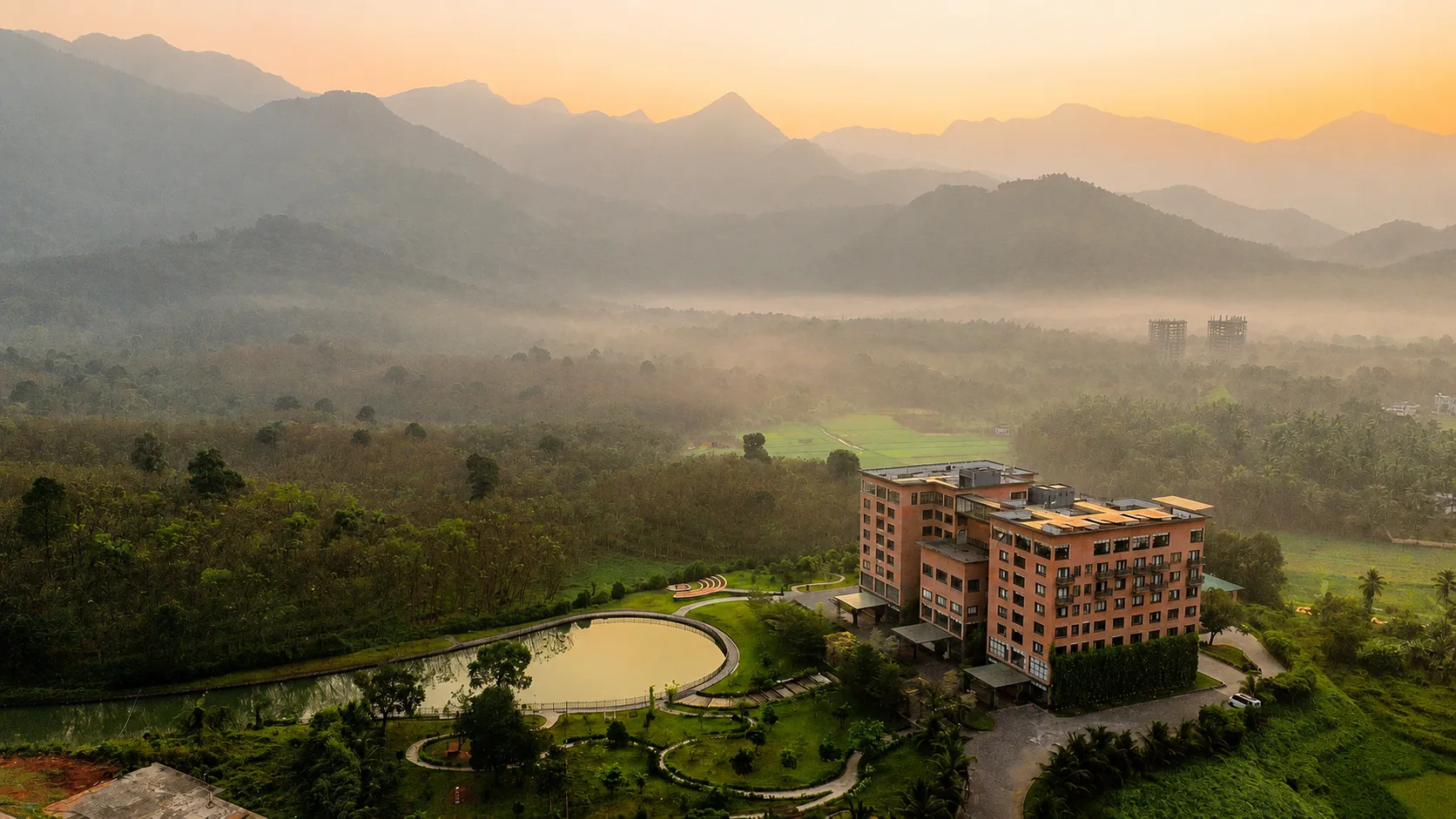
Kaithappoyil, Westghats

Bevor Sie gehen
Ein Arzt liest jede Nachricht. Vereinbaren Sie einen Termin oder senden Sie eine Anfrage – Sie erhalten noch am selben Tag eine Antwort.