
[gtranslate]
MENU
⚠️ Medical Disclaimer: High blood pressure (hypertension) is a serious medical condition that significantly increases the risk of stroke, heart attack, and kidney disease. This article is educational and does not constitute medical advice. Do not stop, reduce, or modify antihypertensive medications without explicit instruction from your prescribing physician. If you are experiencing severe hypertension, a hypertensive crisis, chest pain, visual disturbances, or severe headache, seek emergency medical care immediately. All guests at Tigris Valley undergo a comprehensive physician consultation and blood pressure assessment before any programme begins.
You’re managing hypertension — probably on medication, probably aware of your readings, and probably wondering whether an Ayurveda retreat might help rather than add another layer of risk. It’s the right question to ask, and the honest answer is not a simple yes or no. An Ayurveda retreat at a NABH-accredited, physician-supervised hospital can be not only safe but genuinely beneficial for hypertension patients — but only when specific clinical conditions are met. This article sets out exactly what those conditions are.
📋 Table of Contents
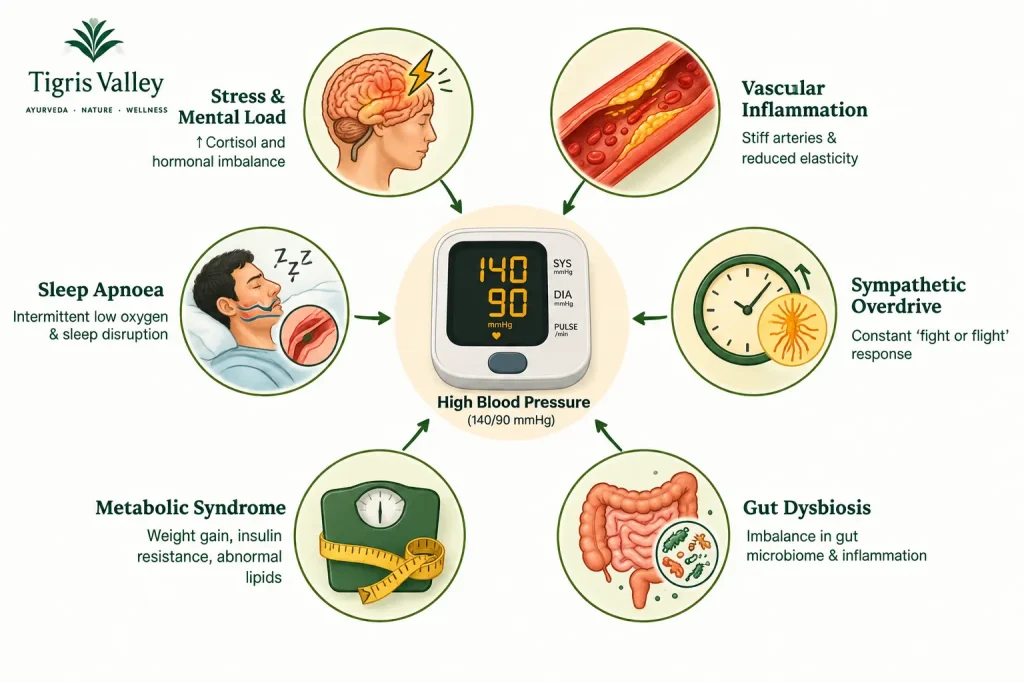
Hypertension affects over 1.28 billion adults worldwide, according to the World Health Organisation, and is the leading risk factor for cardiovascular disease globally. Standard pharmaceutical management — ACE inhibitors, ARBs, calcium channel blockers, beta-blockers, diuretics — controls blood pressure readings in most patients. What it does not do is address the upstream drivers that caused the blood pressure to rise in the first place.
The most common underlying drivers of hypertension that pharmaceuticals manage rather than resolve:
This is exactly the category of multi-system, root-cause complexity that an integrated Ayurveda and Functional Medicine approach is structurally positioned to address. The confirmed Cardio-Metabolic Health & Recovery Programme at Tigris Valley specifically lists hypertension management as a confirmed indication with “stabilize blood pressure” as a documented programme benefit.
The short answer: when the blood pressure is under reasonable control, the clinical setting provides physician supervision, and your attending physicians at home are informed and have given clearance. Specifically, the following conditions make a physician-supervised Ayurveda retreat appropriate for hypertension patients:
This section is included because honest clinical communication requires it — and because no responsible wellness programme should omit it.
Do not book or travel to an Ayurveda retreat if any of the following apply:
Tigris Valley’s pre-programme physician consultation specifically screens for all of the above. Guests presenting with any of these features are assessed individually — some may be appropriate for a modified programme; others will be advised to seek appropriate medical stabilisation before attending.
Ayurveda does not use the term “hypertension” — but its clinical architecture addresses the physiological territory of high blood pressure with remarkable precision, identifying mechanisms that modern cardiovascular medicine recognises as genuine causal pathways.
The condition most closely corresponding to hypertension in Ayurvedic clinical texts is Raktavata — a disturbance of blood (Rakta Dhatu) and Vata in the cardiovascular channels (Rasavaha and Raktavaha Srotas). Elevated Vata produces the increase in vascular tone, heart rate, and nervous system activation that we understand physiologically as sympathetic overactivation. Pitta involvement adds the inflammatory component — endothelial inflammation, heat in the cardiovascular system. Kapha involvement adds the metabolic component — viscosity, cholesterol, and vessel wall thickening.
In Ayurveda, the heart (Hridaya) is not only a physical pump — it is the seat of consciousness, the integrating centre of Prana, Tejas, and Ojas. The deep Ayurvedic insight — that the psychological state of the individual directly and mechanistically determines cardiovascular function — is now confirmed by extensive research on the HPA axis, autonomic nervous system regulation of cardiac output, and the specific role of psychological stress in endothelial dysfunction and hypertension. Shirodhara’s therapeutic action on the heart-mind-vessel connection is not metaphorical — it is physiologically specific.
Accumulated Ama — the metabolic residue of impaired digestion — contributes to vascular inflammation and blood viscosity in Ayurvedic pathophysiology. The modern parallel is the low-grade systemic inflammation driven by gut dysbiosis, insulin resistance, and oxidative stress that consistently co-occurs with hypertension in metabolic syndrome. Panchakarma’s Ama-clearing function addresses this inflammatory dimension of cardiovascular health directly.
The title question of this blog deserves a direct, specific answer. Here is what clinical supervision of a hypertension patient actually looks like at Tigris Valley — drawn from confirmed programme documentation and standard NABH clinical practice:
Tigris Valley’s Cardio-Metabolic programme is supervised by physicians with specialisation in cardiac health and Functional Medicine alongside BAMS-qualified Ayurvedic physicians. The confirmed programme documentation states: “A detailed consultation with our expert doctors specializing in cardiac health, functional medicine, and holistic care” followed by “advanced diagnostic tests to assess cardiovascular and metabolic markers.” This is not generic wellness oversight — it is specialist-level cardiovascular assessment within an integrative framework.
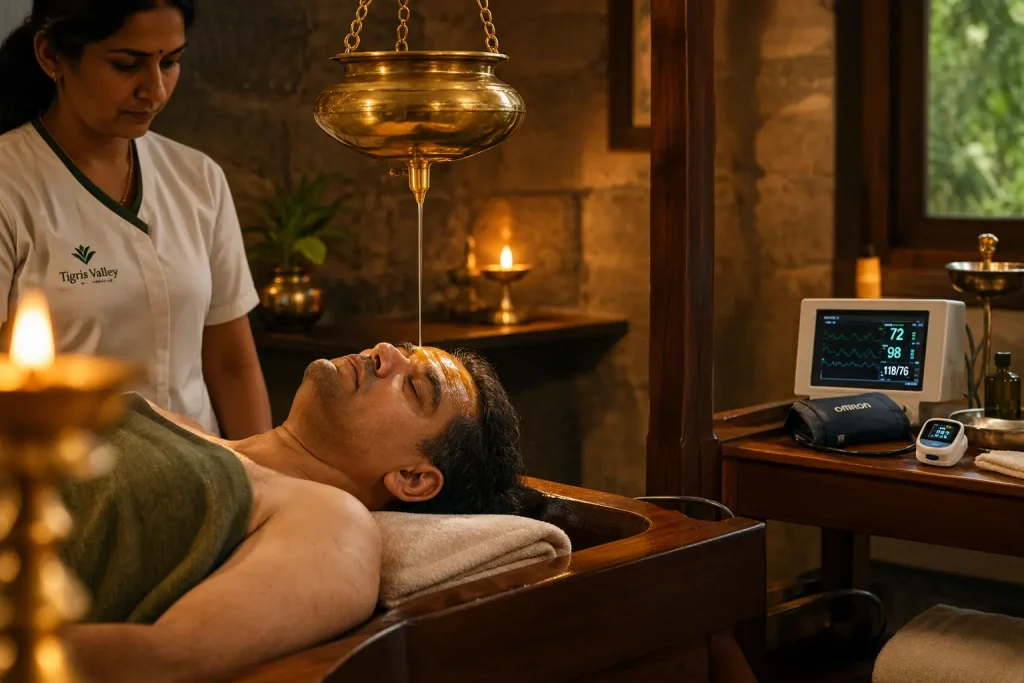
All benefits below are drawn directly from Tigris Valley’s confirmed programme documentation. No unverified claims are made.
Confirmed at Tigris Valley as: “Relieves stress and promotes heart-mind connection” within the Cardio-Metabolic Health & Recovery Programme. Shirodhara’s mechanism is directly relevant to the most common cause of resistant hypertension — sustained sympathetic nervous system activation. The continuous warm oil application to the forehead’s rich neural field induces profound parasympathetic dominance, measurably reducing cortisol, reducing heart rate variability in favour of vagal tone, and interrupting the neuroendocrine cycle that maintains elevated vascular resistance. For stress-driven hypertension, Shirodhara addresses the neurological root cause rather than the downstream blood pressure reading.
Confirmed in the Cardio-Metabolic programme as: “Abhyanga (Therapeutic Oil Massage): Improves circulation and reduces inflammation.” Both mechanisms are directly relevant to hypertension pathophysiology. Improved peripheral circulation reduces cardiac afterload; reduced systemic inflammation improves endothelial function and nitric oxide availability. Abhyanga’s vasodilatory effect through warm medicated oil and rhythmic pressure stimulation is well-recognised in both classical Ayurvedic texts and modern physiological understanding.
Confirmed in the Cardio-Metabolic programme as part of the integrated therapeutic approach. For hypertension with a metabolic syndrome component — the most common pattern in Gulf, South Asian, and North American populations — Panchakarma’s detoxification procedures reduce the Ama-driven inflammation and metabolic burden that contributes to endothelial dysfunction and insulin resistance. Programme modifications are applied for hypertensive patients: intensity of procedures and their sequence are adjusted based on current blood pressure status.
Confirmed across multiple Tigris Valley programmes for “stress management” and supporting cardiac health. Among the most consistently evidence-supported interventions for blood pressure reduction in peer-reviewed literature — yoga and controlled breathwork have documented effects on heart rate variability, baroreflex sensitivity, and cortisol reduction that directly translate to lower resting blood pressure. For hypertension patients, Pranayama is typically the first and safest mind-body intervention — with the specific techniques selected and modified based on the patient’s cardiovascular status.
Confirmed in the Cardio-Metabolic programme as: “IV infusions for antioxidants and nutrients to reduce oxidative stress.” For hypertension, the most directly relevant IV therapies include:
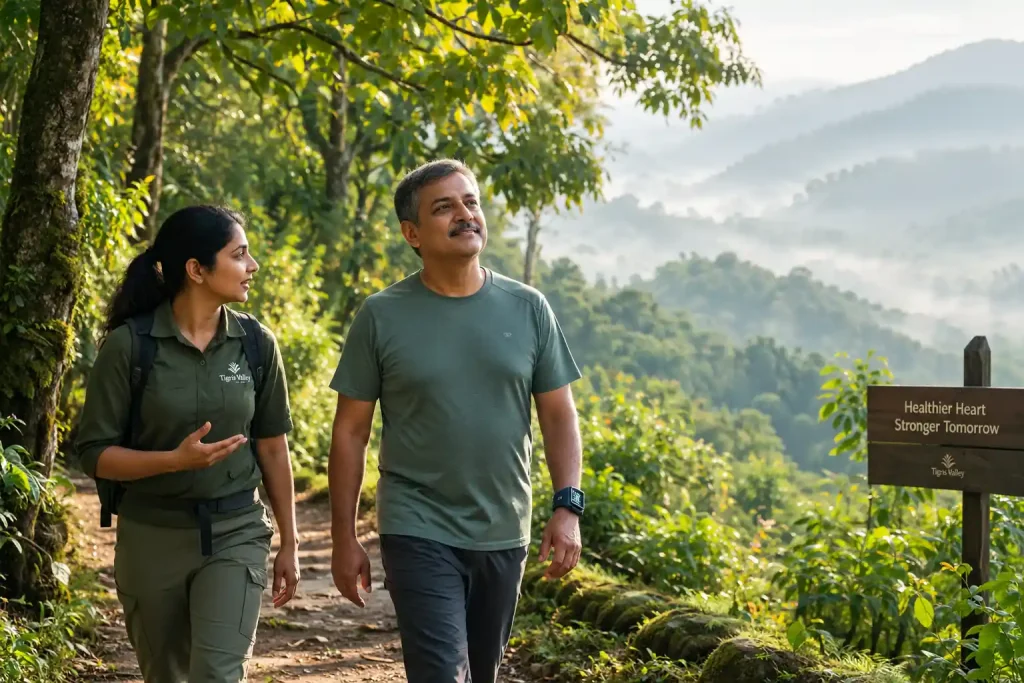
Confirmed in the Cardio-Metabolic programme as: “Guided forest walks and outdoor activities to rejuvenate mind and body. Exposure to serene mountain air, reducing stress and improving oxygenation.” Forest Bathing has documented blood pressure-lowering effects in the peer-reviewed literature — primarily through cortisol reduction, sympathetic nervous system downregulation, and the specific effects of phytoncide (natural plant compound) exposure on autonomic tone. Wayanad’s biodiversity-rich Western Ghats forest provides the therapeutic environment in which this mechanism is most active.
Confirmed in the Cardio-Metabolic programme as: “Customized formulations for heart health and detoxification.” These are physician-prescribed, personalised herbal formulations — not generic supplement products. The specific herbs are selected based on the patient’s dosha pattern, current cardiovascular status, and medication review. Critically: all herbal formulations are assessed for interactions with antihypertensive medications before being prescribed.
Clinical honesty requires stating what needs careful management for hypertension patients — not just what helps. The following require physician assessment and modification:
| Therapy | Concern in Hypertension | How Tigris Valley Manages This |
|---|---|---|
| Vigorous Swedana (Steam Bath) | Intense heat can acutely elevate blood pressure; vasodilation followed by reflex response; dehydration risk | Duration and temperature modified; BP checked before and after; withheld if BP elevated on the day |
| Virechanam (Medicated Purgation) | Fluid loss and electrolyte shift during purgation can affect blood pressure in hypertensive patients — particularly those on diuretics | BP checked morning of procedure; adequate hydration protocol; withheld if pre-procedure BP outside safe range; diuretic interaction reviewed |
| Colon Hydrotherapy | Vagal stimulation during colonic procedure can affect heart rate and blood pressure; electrolyte implications | Confirmed in Tigris Valley’s SOP: BP checked pre-procedure, during (if needed), and post-procedure; heart rate monitored; blood oxygen tracked; “History of Heart Diseases” explicitly screened on intake form |
| Snehapanam (Internal Oleation) | Large amounts of medicated ghee/oil may temporarily affect lipid metabolism — relevant context in patients with concurrent dyslipidaemia | Dose and duration calibrated to individual metabolic status; lipid panel reviewed at intake |
| Certain Ayurvedic Herbs | Some herbs may potentiate or antagonise antihypertensive medications; liquorice root (Yashtimadhu) can raise BP and must be avoided in hypertension | All herbal formulations are physician-reviewed against the patient’s current antihypertensive regimen before prescribing; no herbs administered without this review |
| Intense Physical Exercise | High-intensity exercise acutely elevates systolic blood pressure significantly; contraindicated in uncontrolled hypertension | Exercise prescription is physician-cleared and modified to moderate intensity — Yoga, walking, and Pranayama are the cardiac-safe activity modalities for hypertensive guests |
Why This List Matters: The presence of this modification list is itself an E-E-A-T signal — it demonstrates that Tigris Valley’s clinical approach is genuinely medically supervised rather than one-size-fits-all. A wellness retreat that does not modify its programme for hypertensive patients is not providing clinical care. One that has physician-reviewed protocols for each of the above is.
This is the most common concern hypertension patients express before booking — and it deserves a direct, unambiguous answer.
Your antihypertensive medications are continued unchanged throughout your programme at Tigris Valley.
No Ayurvedic physician at a properly supervised NABH-accredited facility will ask you to reduce or stop your blood pressure medications as part of an Ayurveda programme. The integrative approach works alongside your pharmaceutical management — not instead of it.
What may happen over time, as the programme’s therapeutic effects accumulate — reduced cortisol, improved vascular function, lower systemic inflammation, improved sleep, weight reduction — is that your prescribing cardiologist or GP may choose to review your medication requirement at your next consultation. This is a decision made by your physician at home, based on objective blood pressure readings, after the programme — not a decision made during the programme at the retreat.
Practical medication management at Tigris Valley:
Setting realistic expectations for hypertension patients considering a Tigris Valley programme is both honest and necessary.
| Outcome | Realistic Expectation | Timeframe |
|---|---|---|
| Blood pressure stabilisation during the programme | Consistent; stress reduction, improved sleep, and Abhyanga produce measurable parasympathetic shift within Days 5–7 | Days 5–10 |
| Reduction in stress-driven BP elevation | Significant for patients whose hypertension has a primary stress component; Shirodhara and Forest Bathing produce cortisol reduction with consistent BP effects | Week 2 onwards |
| Metabolic improvement contributing to BP | For patients with metabolic syndrome hypertension — weight reduction, improved insulin sensitivity — measurable over 14–21 days, continuing post-discharge | During and post-programme |
| Medication dose reduction | Possible over time — but this is a decision for your prescribing cardiologist based on post-programme BP readings, not a programme outcome to be expected or pursued during the retreat | Post-programme, physician decision |
| Sustained BP improvement at home | Dependent on post-discharge lifestyle adherence — the post-programme dietary, exercise, Pranayama, and sleep protocols provided at discharge are the vehicle for maintaining gains | Ongoing post-programme |
| Cure of hypertension | Not a realistic or ethical claim. Primary hypertension is a chronic condition. The goal is improved control, reduced upstream drivers, and possibly reduced pharmaceutical burden over time — not elimination | Not a programme promise |
Explore the Cardio-Metabolic Health & Recovery Programme for full details on the confirmed programme for hypertension and related cardiovascular conditions. For patients with concurrent diabetes and metabolic syndrome contributing to their blood pressure, the Metabolic Disorder Management Programme addresses these co-drivers in parallel. For those whose hypertension is primarily driven by chronic stress and burnout, the Stress & Burnout Recovery Programme provides the most directly targeted intervention. Browse all Tigris Valley programmes or explore the facilities and accommodation.
Both — but the distinction matters. Relaxation-induced blood pressure reduction is real and physiologically significant. Sustained cortisol reduction through Shirodhara and Forest Bathing measurably reduces sympathetic vascular tone — producing lower resting blood pressure through a genuine neurological mechanism, not suggestion. Beyond this, the metabolic improvements (weight reduction, insulin sensitivity improvement, inflammation reduction) from a 14–21 day integrated programme address the structural drivers of blood pressure elevation in ways that outlast the relaxation state. These are different therapeutic mechanisms operating in parallel.
Yes — and your medications continue unchanged throughout. The pre-arrival physician consultation reviews all your cardiovascular medications to assess interactions with Ayurvedic herbal formulations and dietary components. Antihypertensives, beta-blockers, ACE inhibitors, ARBs, calcium channel blockers, and diuretics are all reviewed and accommodated within the programme design. Continuing your medications is a non-negotiable condition of programme attendance for hypertensive guests.
Panchakarma procedures are individually assessed and modified for hypertensive patients. The specific procedures included, their intensity, and their sequencing are calibrated against your current blood pressure readings and cardiovascular status. Certain procedures (particularly Virechanam and vigorous Swedana) are withheld or modified if your BP on the day is outside safe parameters. Blood pressure is checked before specific procedures throughout the programme. The NABH-accredited clinical standard at Tigris Valley means these safeguards are applied systematically, not ad hoc.
For most hypertension patients, the highest-value therapies are: Shirodhara (parasympathetic activation, cortisol reduction, direct heart-mind connection — confirmed in the Cardio-Metabolic programme), Abhyanga (circulation improvement and inflammation reduction — confirmed), Pranayama (heart rate variability improvement, vagal tone enhancement — confirmed across programmes), and Forest Bathing (cortisol reduction, oxygenation — confirmed in the Cardio-Metabolic programme). IV Magnesium (natural calcium channel blocker effect, autonomic regulation — confirmed) is the most directly cardiovascular-relevant IV therapy.
With modifications — yes; without modifications — it requires caution. Vigorous steam bath duration and temperature are reduced for hypertensive patients; BP is checked before and after; and Swedana is withheld if BP is elevated on the day of the session. The key is that at Tigris Valley, this assessment happens through physician oversight — not left to the guest or therapist to judge independently.
Through four confirmed mechanisms: (1) Shirodhara’s sustained parasympathetic activation reduces the sympathetic vascular tone that elevates BP; (2) Pranayama’s controlled breathwork improves baroreflex sensitivity — the body’s own BP self-regulation mechanism; (3) Forest Bathing reduces salivary cortisol with documented cardiovascular effects; (4) CBT sessions address the psychological patterns that maintain chronic stress activation. These work on different levels of the HPA-cardiovascular axis simultaneously — producing more durable reduction in stress-driven BP elevation than any single intervention.
Yes — with important modifications. Gentle, restorative yoga and specific Pranayama techniques are among the most evidence-supported non-pharmaceutical interventions for hypertension. What hypertensive patients must avoid: inversions (headstand, shoulderstand) which raise intracranial pressure; breath-holding (Kumbhaka) which can acutely elevate BP; vigorous hot yoga sequences. At Tigris Valley, the Yoga programme for cardiovascular guests is physician-cleared and therapist-supervised — modifications are built into the prescription, not managed by the guest independently.
Yes — and this is exactly why medication review is the first step of every programme. Specific examples: herbs with stimulant properties can antagonise antihypertensives; diuretic herbs can potentiate thiazide diuretics causing excessive sodium and potassium loss; Yashtimadhu (liquorice root) raises blood pressure and must be excluded entirely in hypertensive patients. At Tigris Valley, all herbal formulations are prescribed by qualified physicians who have reviewed your current medication list. No herbal protocol is initiated without this review.
Yes. Confirmed in the Cardio-Metabolic programme: “advanced diagnostic tests to assess cardiovascular and metabolic markers” at intake; regular physician check-ins throughout; blood pressure checked before specific procedures (confirmed in clinical SOPs including the Colon Hydrotherapy protocol, which mandates pre-, during-, and post-procedure BP monitoring); and 24/7 medical assistance for any unexpected readings. Hypertensive guests are among the most closely monitored patient populations at Tigris Valley.
Contact the team at reservation@tigrisvalley.com or WhatsApp +91 9072661622. The first step is a pre-arrival physician consultation reviewing your hypertension history, current readings, medications, any cardiovascular events, and your programme goals. Please bring or send ahead: your most recent BP log if you keep one, current medication list, most recent blood tests (lipid panel, renal function, HbA1c if diabetic), and any relevant cardiac investigations (ECG, echo). Your personalised programme is designed from this clinical foundation. Use the contact page to submit an initial enquiry.
Hypertension Management That Goes Beyond the Pill
At Tigris Valley, hypertension patients receive physician-supervised blood pressure monitoring throughout their stay, alongside Shirodhara, Abhyanga, IV Magnesium, Forest Bathing, and modified Panchakarma — all coordinated by a specialist team in cardiac health and integrative medicine. Your medications continue. Your safety is the clinical foundation. The programme builds on both.
→ Explore the Cardio-Metabolic Health & Recovery Programme
→ Stress & Burnout Recovery Programme
Kaithappoyil, in the Western Ghats.
Markaz Knowledge City Road, Kaithappoyil, Adivaram, Kerala
Get directions +91 90726 61622 reservation@tigrisvalley.com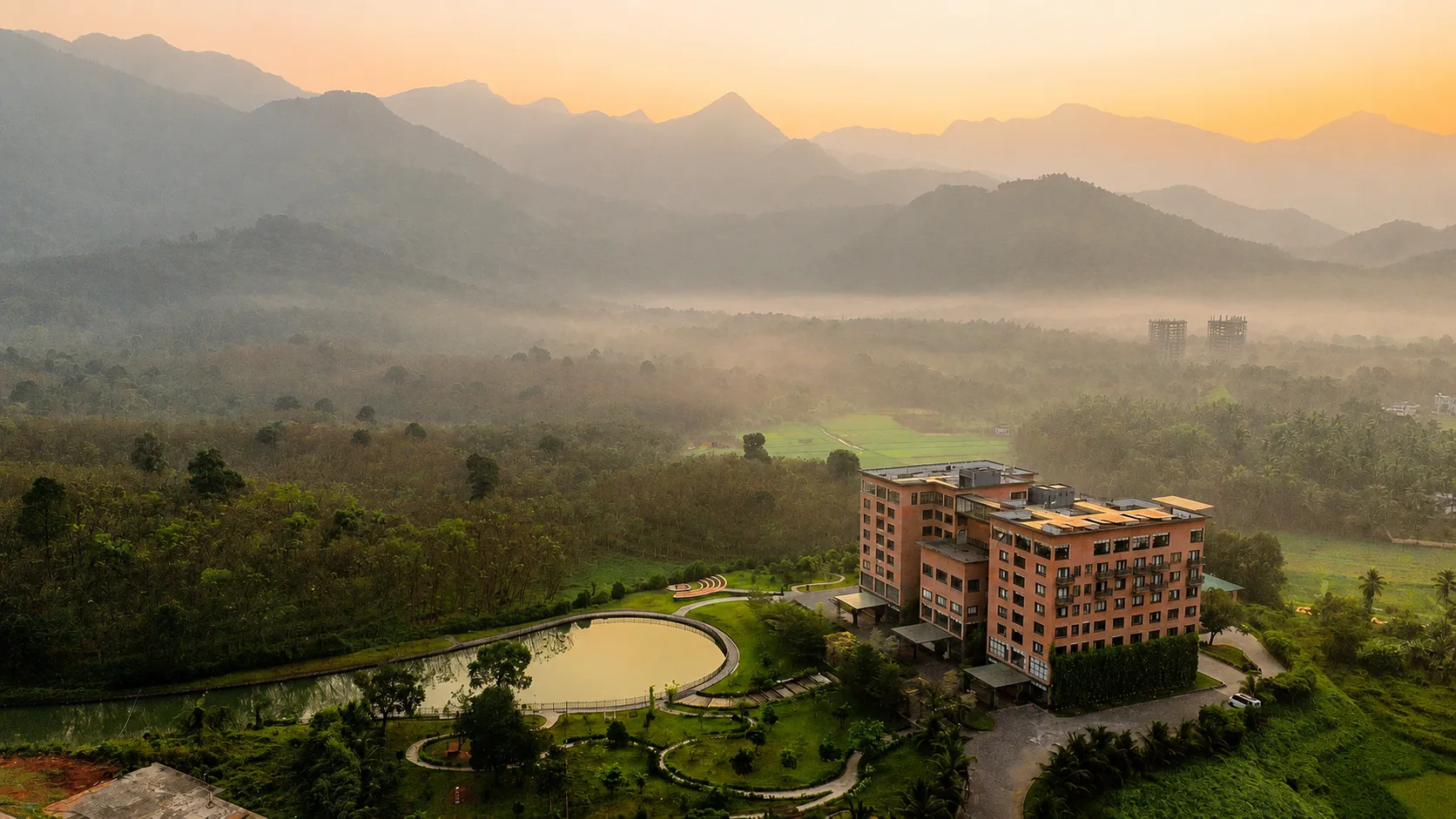
Kaithappoyil, Western Ghats

Before you leave
A physician reads every letter. Book a consultation, or send an inquiry — reservations answers the same day.