
[gtranslate]
MENÜ
⚠️ Medizinischer Haftungsausschluss: Dieser Artikel dient ausschließlich zu Informationszwecken und stellt keine medizinische Beratung dar. Die Rehabilitation nach einer Operation muss unter ärztlicher Aufsicht erfolgen. Alle Gäste im Tigris Valley durchlaufen vor Beginn einer Therapie eine umfassende medizinische Vorabuntersuchung. Reisen Sie niemals zur postoperativen Rehabilitation, ohne zuvor die Zustimmung Ihres behandelnden Chirurgen eingeholt zu haben.
Ihre Operation war erfolgreich. Das Krankenhaus hat Sie mit einem Rezept, einem Termin für die Nachuntersuchung und der Anweisung, “es ruhig angehen zu lassen”, entlassen. Aber niemand hat Ihnen gesagt, wie Sie das eigentlich wiederherstellen — wie man das Narbengewebe reduziert, die Muskulatur wieder aufbaut, den „Narkose-Nebel“ vertreibt oder den Schlaf wiederherstellt, der durch den Stress der Operation beeinträchtigt wurde. Die Schulmedizin ist bei der Operation unübertroffen. In den Wochen und Monaten danach sorgen Ayurveda, Physiotherapie und funktionelle Medizin im Zusammenspiel dafür, dass sich die Geschwindigkeit – und der Grad – Ihrer Genesung messbar verbessern.
📋 Inhaltsverzeichnis
Weltweit – ob am Golf, in Europa oder in Südasien – folgt die Lücke in der postoperativen Versorgung dem gleichen Muster. Die Operation wird präzise durchgeführt. Der Patient wird in der akuten postoperativen Phase überwacht. Und dann, innerhalb von Tagen bis Wochen, wird er in eine Welt entlassen, in der es keinen strukturierten Plan für die nächsten Schritte gibt.
Was Krankenhäuser nach der Entlassung selten ansprechen:
Diese Lücken sind kein Versagen einzelner Chirurgen oder Krankenhäuser – es handelt sich vielmehr um strukturelle Einschränkungen eines Akutversorgungssystems, das auf einen Genesungsprozess angewendet wird, der von Natur aus kein akuter ist. Genau hier setzt das Konzept von Tigris Valley an: Programm für Traumabehandlung und Rehabilitation ist dafür ausgelegt, … zu füllen.
Tigris Valley's Programm für Traumabehandlung und Rehabilitation hat sich bei Personen bewährt, die sich von einer postoperativen Genesungsphase, Sportverletzungen, Unfällen mit chronischen Schmerzen oder eingeschränkter Mobilität sowie von schweren Erkrankungen oder Herz-Kreislauf-Ereignissen erholen. Zu den Operationsarten, bei denen eine integrative postoperative Rehabilitation am häufigsten von Nutzen ist, gehören:
Das Ayurveda verfügt über ein ausgefeiltes klassisches Rahmenwerk zum Verständnis und zur Behandlung des Zustands nach Verletzungen und Operationen – entwickelt über Jahrtausende hinweg, noch bevor chirurgische Eingriffe in ihrer modernen Form existierten, das jedoch dieselben physiologischen Prozesse mit einer anderen Begriffswelt beschreibt.
Eine Operation – mit Anästhesie, Inzision, Manipulation von Gewebe und der erheblichen physiologischen Belastung durch den operativen Eingriff – führt zu massiven Vata Verschlimmerung. Vata steuert alle Bewegungen, die Nervenfunktion, die Gewebegrenzen und die Regulationsfähigkeit des Nervensystems. Ein postoperativer Vata-Überschuss äußert sich in einer Reihe von Symptomen, die die meisten Patienten wiedererkennen: Schmerzen, Unruhe, Schlaflosigkeit, Angstzustände, Verdauungsstörungen, Verstopfung, Nervenempfindlichkeit und eine beeinträchtigte Wundheilung. Die Behandlung von Vata bildet die therapeutische Grundlage jedes postoperativen Behandlungsprotokolls bei Tigris Valley.
Vollnarkosen und postoperative Medikamente (Opioide, Antibiotika, NSAIDs) führen zur Bildung von Stoffwechselrückständen — Ama — das sich in den Energiebahnen des Körpers ansammelt und die natürlichen Heilungskräfte des Körpers beeinträchtigt. Viele Patienten beschreiben den “postanästhetischen Nebel” – wochenlange kognitive Trägheit, Müdigkeit und Verdauungsschwäche –, der genau diese durch Ama verursachte Beeinträchtigung der normalen Stoffwechselfunktionen darstellt. Sanfte, schrittweise durchgeführte Panchakarma-Behandlungen (beginnend mit leichteren Vorbereitungsmaßnahmen, die dem postoperativen Zustand angemessen sind) beseitigen diese Rückstände und ermöglichen es den Heilungsmechanismen des Körpers, ohne diese angesammelte Belastung zu arbeiten.
Die sieben Gewebeschichten des Ayurveda (Sapta Dhatu) bilden den Rahmen für das Verständnis der postoperativen Heilung. Bei einem chirurgischen Eingriff werden mehrere Gewebeschichten gleichzeitig durchbrochen – Haut und Muskelgewebe werden eingeschnitten, die Fett- und Bindegewebsschichten werden manipuliert, es kommt zu Blutverlust, und Knochen können durchtrennt oder fixiert werden. Die Rasayana-Therapie – das klassische Verjüngungsprotokoll des Ayurveda – zielt speziell darauf ab, jede Gewebeschicht von innen nach außen wieder aufzubauen, und zwar mithilfe von ärztlich verschriebenen Kräuterrezepturen, die die spezifischen, durch den chirurgischen Eingriff geschädigten Gewebetypen nähren.
Das Konzept des Ayurveda von Srotas (Körperkanäle) erklärt, warum eine beeinträchtigte Durchblutung einer heilenden Operationsstelle die Genesung verzögert. Die Massage mit medizinischem Öl (Abhyanga) und die Hydrotherapie tragen dazu bei, die Durchgängigkeit der Kanäle wiederherzustellen – wodurch die Durchblutung des heilenden Gewebes verbessert, postoperative Ödeme reduziert und die in den Ölen enthaltenen Nähr- und Wirkstoffe durch transdermale Resorption direkt in die Gewebeschichten transportiert werden.
Alle nachstehend aufgeführten Leistungen stammen direkt aus den bestätigten Programmunterlagen von Tigris Valley. Es werden keine unbestätigten Angaben gemacht.
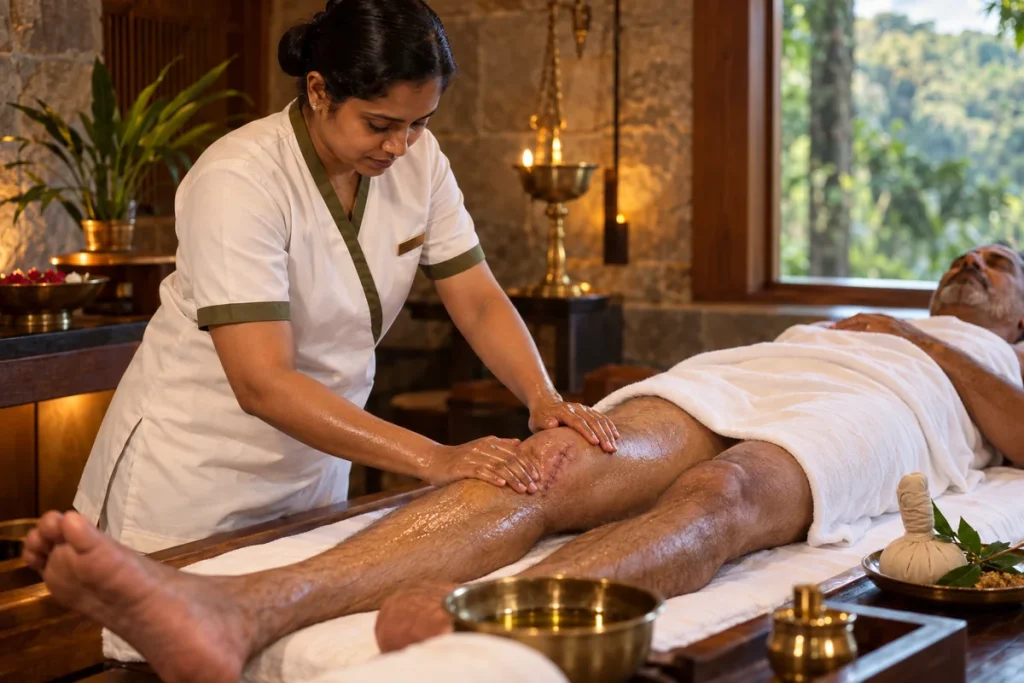
Abhyanga wird im Rahmen des Programms „Posttrauma und Rehabilitation“ bestätigt für: “Kräuterölmassage zur Schmerzlinderung und Geweberegeneration.” Die Anwendung von warmem, medizinischem Öl verbessert die Mikrozirkulation im Heilungsgewebe, reduziert postoperative Ödeme, macht sich bildendes Narbengewebe geschmeidig, bevor es zu einschränkenden Verwachsungen ausreift, und beruhigt den Vata-Überschuss, der postoperative Schmerzen und Unruhe verursacht. Die rhythmischen therapeutischen Bewegungen regen zudem den Lymphabfluss an – was insbesondere für postoperative Patienten mit Schwellungen im Bereich der Operationsstelle wichtig ist.
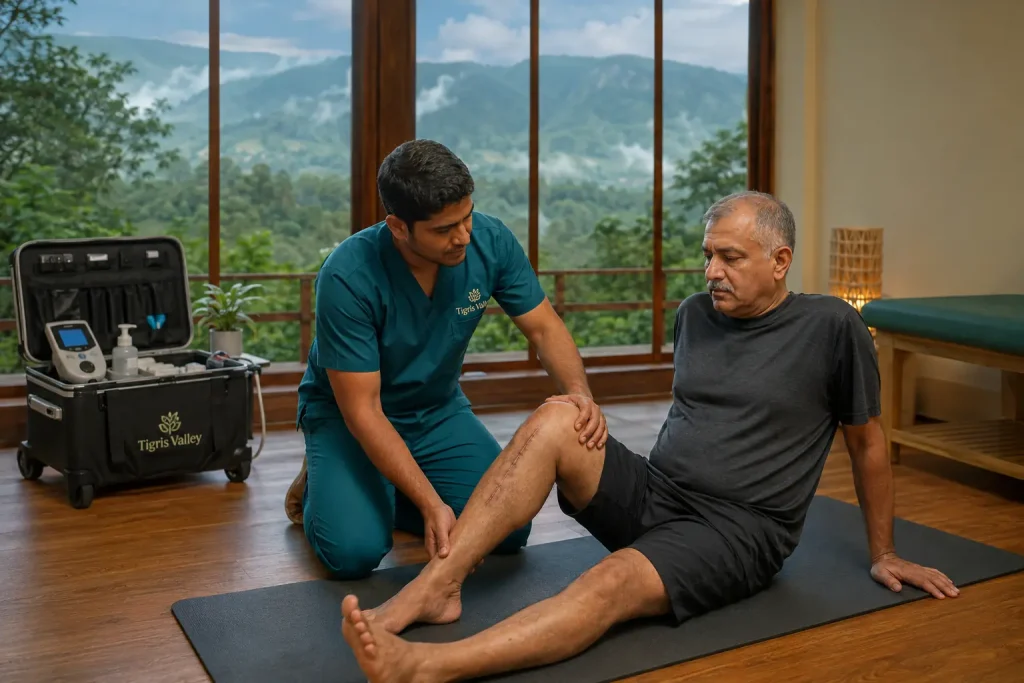
Physiotherapie wird im Programm „Posttrauma & Rehabilitation“ ausdrücklich bestätigt als: “Trainingseinheiten zur Wiederherstellung der Beweglichkeit und zum Kraftaufbau.” Im Tigris Valley ist die Physiotherapie in das ganzheitliche Programm integriert – sie wird nicht als isolierte Maßnahme angeboten. Der Physiotherapeut arbeitet eng mit dem Team aus Ayurveda-Ärzten zusammen, sodass die Steigerung der körperlichen Belastung auf den jeweiligen Fortschritt des Patienten bei der ayurvedischen Behandlung und der Ernährungsumstellung abgestimmt wird, anstatt einem allgemeinen postoperativen Protokoll zu folgen.
IV Vitamin C wird im Tigris-Tal bestätigt. In den bestätigten Unterlagen heißt es ausdrücklich: “Unverzichtbar für die Kollagenbildung. Fördert die Wundheilung.” Dies ist kein nebensächlicher Vorteil – Vitamin C ist physiologisch unverzichtbar für die Hydroxylierung von Prolin- und Lysinresten bei der Kollagensynthese. Die postoperative Gewebereparatur ist ein kollagenabhängiger Prozess. Durch die intravenöse Verabreichung von 30 g werden Blutkonzentrationen erreicht, die mit einer oralen Einnahme nicht möglich sind – wodurch die für die Wundheilung erforderliche Vorstufe direkt in den systemischen Kreislauf gelangt. Zusätzlich bestätigt: “Hilft dem Körper, Infektionen zu bekämpfen. Unterstützt die Genesung im Krankheitsfall.” — was in direktem Zusammenhang mit der Phase der postoperativen Immunschwäche steht.
Das Programm „Posttrauma und Rehabilitation“ bestätigt IV-Infusionen: “Ernährungstherapien zur Beschleunigung der Geweberegeneration und zur Energieversorgung.” Zu den spezifischen bestätigten intravenösen Therapien mit postoperativer Relevanz gehören:
Panchakarma wird im Programm „Posttraumatische Behandlung und Rehabilitation“ wie folgt bestätigt: “Entgiftungstherapien zur Reinigung und Verjüngung.” Das postoperative Panchakarma wird mit spezifischen Anpassungen durchgeführt – die Intensität und die ausgewählten Verfahren werden auf die Operationsgeschichte, das Genesungsstadium und den Zustand der Wunde des Patienten abgestimmt. Snehapanam (innere Ölbehandlung) leitet den Prozess ein, bei dem Anästhetika- und Medikamentenrückstände aus den Gewebespeichern mobilisiert werden; mildere Basti-Behandlungen wirken der postoperativen Darmstörung entgegen; medizinische Dampfbäder öffnen die Kanäle und unterstützen die systemische Ausscheidung über die Haut.
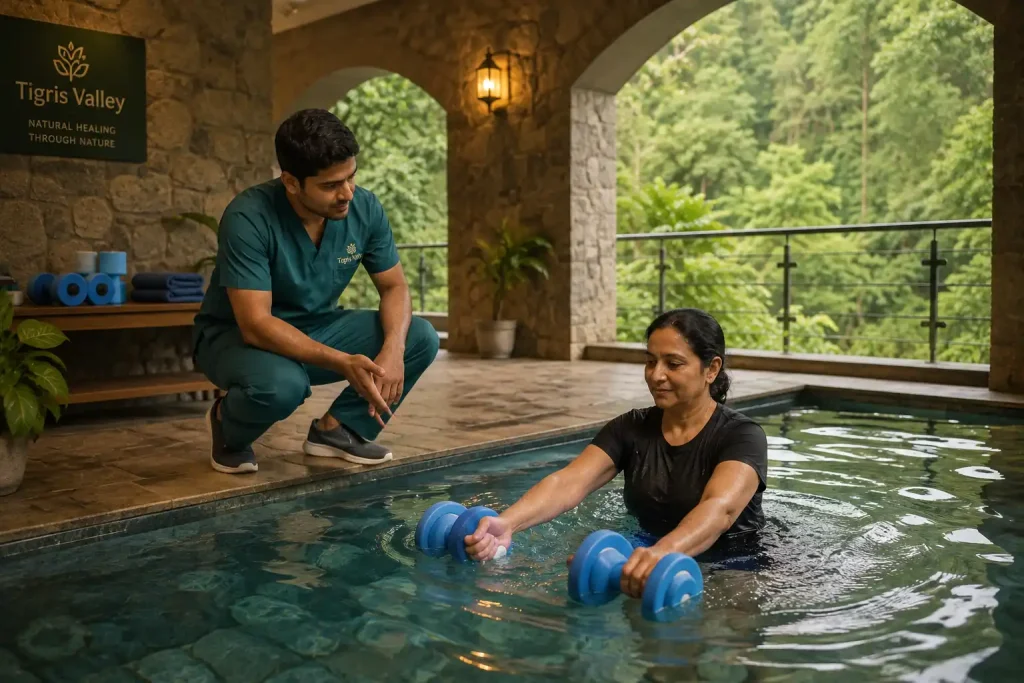
Hydrotherapie wird im Rahmen des Programms „Posttrauma und Rehabilitation“ bestätigt für: “Verbesserte Durchblutung und Schmerzlinderung.” Die Warmwasser-Hydrotherapie lindert postoperative Gelenkschmerzen, indem sie die mechanische Belastung verringert und gleichzeitig Bewegung ermöglicht – und schafft so die idealen Voraussetzungen für ein frühzeitiges Bewegungstraining bei Patienten nach einem Gelenkersatz. Zudem reduziert sie durch den hydrostatischen Druck postoperative Ödeme und regt das Lymphsystem an.
Das Programm „Posttrauma und Rehabilitation“ bestätigt: “Maßgeschneiderte Kräuteröle und Tonika zur Regeneration von Nerven und Muskeln. Energiefördernde Therapien für anhaltende Vitalität.” Bei Patienten mit postoperativen Nervenschäden, Gefühlsstörungen oder neuropathischen Schmerzen – die häufig nach Wirbelsäulenoperationen, orthopädischen Eingriffen und Resektionen in Nervennähe auftreten – decken die vom Unani-Arzt verschriebenen Präparate zur Nervenregeneration einen Bereich ab, den die herkömmliche Physiotherapie nicht abdeckt.
Ozon-Therapie wird im Tigris-Tal bestätigt, mit den unmittelbar damit verbundenen Vorteilen: “Entzündungshemmende Wirkung – hilft, Schmerzen, Schwellungen und chronische Entzündungen zu lindern” und “Antimikrobielle Wirkung – wirksam gegen Bakterien, Viren, Pilze und Parasiten.” Die postoperative Phase ist sowohl durch eine erhöhte systemische Entzündungsreaktion als auch durch eine vorübergehende Immunschwäche gekennzeichnet – der duale Wirkmechanismus der Ozontherapie wirkt beiden Faktoren entgegen. Bei Patienten mit langsam heilenden Wunden oder einem Risiko für postoperative Infektionen (nach entsprechender ärztlicher Beurteilung) bietet der antimikrobielle Wirkmechanismus der Ozontherapie zusätzliche Unterstützung.
Bestätigt im Rahmen des Programms „Posttraumatische Behandlung und Rehabilitation“ für: “Geführte Sitzungen zur Wiederherstellung des Gleichgewichts und der inneren Ruhe.” Das Yoga nach einer Operation wird an die Bewegungseinschränkungen und den Wundzustand des Patienten angepasst – es handelt sich also nicht um einen allgemeinen Yoga-Kurs, sondern um ein vom Arzt genehmigtes und von einem Therapeuten angeleitetes Programm. Pranayama unterstützt gezielt die nach einer Brust- oder Bauchoperation erforderliche Erholung der Atemwege sowie die Wiederherstellung des Gleichgewichts des autonomen Nervensystems, wodurch postoperative Ängste und Schlafstörungen verringert werden.
Rasayana-Therapie wird im Tigris-Tal als “alte Verjüngungsbehandlungen zur Steigerung von Langlebigkeit und Vitalität” bestätigt, bei denen “spezielle Mischungen zur Versorgung des Gewebes und zur Stärkung des Immunsystems” zum Einsatz kommen. Im postoperativen Kontext werden Rasayana-Behandlungen in der späteren Phase des Programms angewendet – nachdem die akute Entzündung behandelt und Medikamentenrückstände beseitigt wurden –, um gezielt die durch den Eingriff geschädigten Gewebeschichten wieder aufzubauen und die durch den Operationsstress geschwächte Immunabwehr wiederherzustellen.
Dieser Vergleich stammt direkt aus der bestätigten Programmdokumentation von Tigris Valley, in der diese Frage ausdrücklich behandelt wird:
| Dimension | Tigris-Tal | Standard-Reha im Krankenhaus |
|---|---|---|
| Wiederherstellungsansatz | Individuelle, ganzheitliche Genesungspläne | Standardisierte postoperative Protokolle |
| Therapien | Integriertes Ayurveda, Physiotherapie, intravenöse Ernährung, Unani, Naturheilkunde | In erster Linie Physiotherapie und Medikamente |
| Umwelt | Ein ruhiger Rückzugsort in den Bergen – die Wälder Keralas, frische Bergluft, eine naturbelassene Umgebung | Klinische, sterile Umgebung |
| Unterstützung im Bereich der psychischen Gesundheit | Meditation, kognitive Verhaltenstherapie (KVT), Pranayama, Waldbaden – Maßnahmen gegen postoperative Ängste und Schlafstörungen | Der Schwerpunkt liegt in erster Linie auf der körperlichen Erholung |
| Ernährungstechnische Unterstützung | IV. Ernährungstherapie + therapeutische Bio-Ernährung von der Mazra Farm | Übliche Krankenhausverpflegung; intravenöse Ernährungstherapie mit begrenztem Umfang |
| Betreuung nach der Entlassung | Individueller Ernährungsplan, pflanzliche Präparate, Trainingsprogramm, Lebensstil-Coaching | Geringer Fokus auf das Wohlbefinden nach der Entlassung |
| Medizinische Sicherheit | NABH-akkreditiert; medizinische Betreuung rund um die Uhr | Umfassende Akutversorgung auf Krankenhausniveau |
Das ist wichtig: Das Tigris Valley ist eine Einrichtung für Rehabilitation und Wellness – kein Krankenhaus für die akute chirurgische Versorgung. Es eignet sich für die Erholungsphase nach der Entlassung, nachdem ein Patient aus dem chirurgischen Krankenhaus entlassen werden durfte. Bei Komplikationen – wie Wundinfektionen, tiefen Venenthrombosen, postoperativem Fieber oder Blutungen – ist eine sofortige konventionelle Krankenhausversorgung erforderlich. Dank der rund um die Uhr verfügbaren medizinischen Betreuung im Tigris Valley werden solche Situationen umgehend beurteilt und entsprechend weitergeleitet.
| Phase | Tage | Klinischer Schwerpunkt | Wichtige Therapien |
|---|---|---|---|
| Bewertung | 1-2 | Umfassende Überprüfung der Operationsunterlagen, des Wundzustands und der Ausgangswerte zur Mobilität; Programmgestaltung | Ärztliche Beratung, physiotherapeutische Erstuntersuchung, Dosha-Analyse |
| Entzündungshemmung & sanfte Mobilisierung | 3–7 | Beruhigung des Vata; Behandlung postoperativer Entzündungen; sanfte erste Bewegungsübungen | Abhyanga, intravenöse Vitamin-C-Gabe, intravenöse Magnesiumgabe, Hydrotherapie, Ozontherapie, sanftes Pranayama |
| Aktive Rehabilitation | 8–14 | Wiederherstellung der Kraft; Regeneration der Nerven; Ausscheidung von Medikamentenrückständen; Regeneration des Darms | Physiotherapie, intravenöse ALA-Gabe (zur Unterstützung der Nervenfunktion), Basti, intravenöse Levocarnitin-Gabe, Unani-Nervenstärkungsmittel, Yoga |
| Gewebeaufbau und Wiederherstellung der Vitalität | 15–21 | Gewebeversorgung auf Basis von Rasayana; Kraftzuwachs; Schlaf und geistige Erholung | Rasayana-Therapie, fortgeschrittenes Yoga, Waldbaden, Meditation, Erstellung eines Plans für die Zeit nach der Entlassung |
Die Dauer des Programms richtet sich nach der ärztlichen Untersuchung – die Art der Operation, die seit der Operation verstrichene Zeit, der aktuelle Mobilitätsstatus und die Genesungsziele beeinflussen, ob ein 14-tägiges oder ein 21-tägiges Programm am besten geeignet ist. Alle anzeigen Programme im Tigris-Tal und die Einrichtungen und Unterkunft während Ihres Genesungsaufenthalts verfügbar.
Das ist die wichtigste praktische Frage – und diejenige, die eine besonders ehrliche klinische Beratung erfordert.
Allgemeine Richtlinien zur Reisefähigkeit nach einer Operation (bitte immer mit Ihrem operierenden Chirurgen abklären):
| Art der Operation | Übliche Mindestwartezeit vor Reiseantritt | Wichtige Anforderungen an die Freigabe |
|---|---|---|
| Knie- bzw. Hüftgelenkersatz | 6–8 Wochen nach der Operation | Wunde verheilt; DVT-Risiko beurteilt; grundlegende Mobilität erreicht; Freigabe durch den Chirurgen |
| Wirbelsäulenchirurgie | 6–12 Wochen nach der Operation | Neurologische Stabilität bestätigt; keine aktiven Wundkomplikationen; Freigabe durch den Chirurgen |
| Bauchchirurgie | 4–6 Wochen nach der Operation | Wunde vollständig verheilt; keine aktive Infektion; Darmfunktion wiederhergestellt; Freigabe durch den Chirurgen |
| Herzchirurgie (Bypass, Herzklappe) | 8–12 Wochen nach der Operation | Unbedingt kardiologische Freigabe erforderlich; stabile Herzfunktion bestätigt; Heilung des Brustbeins bei offener Operation |
| Operation nach einer Krebserkrankung | Variiert – Beurteilung durch einen Onkologen erforderlich | Sowohl der Onkologe als auch der Chirurg müssen ihre Zustimmung erteilen; während des Programms darf keine aktive Behandlung stattfinden |
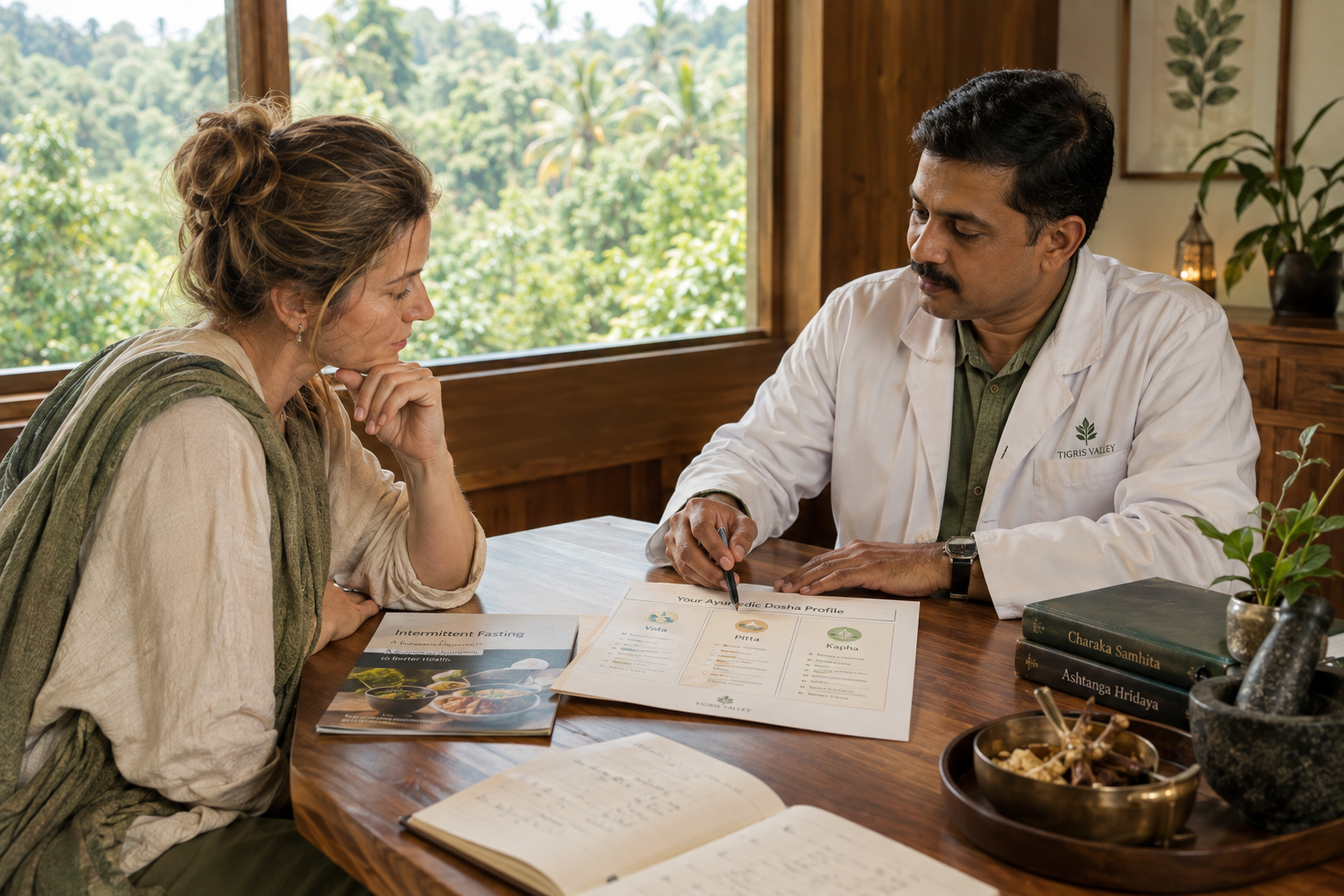
Bitte bringen Sie zu Ihrem Beratungsgespräch vor Ihrer Ankunft Folgendes mit: Operationsbericht, Entlassungsbericht, aktuellste Blutuntersuchungsergebnisse, Liste der derzeit eingenommenen Medikamente, Anmerkungen des Chirurgen zu Einschränkungen. Das Ärzteteam von Tigris Valley prüft all diese Unterlagen, bevor es Ihr Programm zusammenstellt – ohne diese klinische Grundlage wird nichts in Angriff genommen.
Die Rehabilitation nach Herzoperationen verdient besondere Erwähnung, da es sich hierbei sowohl um eine Gruppe mit hohem Versorgungsbedarf als auch um ein eindeutig etabliertes Programm im Tigris Valley handelt. Die Programm für kardiometabolische Gesundheit und Regeneration führt die Genesung nach kardiologischen Eingriffen, darunter Angioplastie und Bypass-Operationen, ausdrücklich als bestätigte Indikationen auf. Ebenfalls bestätigt: Integrierte kardiologische Rehabilitationsbehandlung im Tigris-Tal.
Patienten nach einer Herzoperation erhalten eine spezifische Behandlung, die Folgendes umfasst:
Die Kombination aus einer ruhigen natürlichen Umgebung, einer geringeren physiologischen Belastung, einer gezielten Ernährungsunterstützung und einer schrittweisen körperlichen Rehabilitation schafft Bedingungen für die Genesung nach einer Herzoperation, die eine klinische Krankenhausumgebung – aufgrund ihrer Beschaffenheit – nicht nachbilden kann.
Dies hängt von der Art des Eingriffs und der Einschätzung Ihres Chirurgen ab. Als allgemeine Richtlinie gilt: orthopädische Eingriffe (mindestens 6–8 Wochen), Wirbelsäuleneingriffe (6–12 Wochen), Baucheingriffe (4–6 Wochen) und Herzoperationen (8–12 Wochen nach Freigabe durch den Kardiologen). Im Rahmen der ärztlichen Beratung vor Ihrer Ankunft werden Ihre Operationsunterlagen geprüft und Ihre Eignung für das Programm bestätigt. Reisen Sie niemals ohne die Zustimmung des operierenden Chirurgen zur postoperativen Rehabilitation an.
Die ayurvedischen Therapien nach Operationen im Tigris Valley werden stets von einem Arzt beurteilt und an Ihre jeweilige Operationsstelle, den Zustand Ihrer Wunde und Ihr Genesungsstadium angepasst. Abhyanga wird in sicherem Abstand zu frischen Operationsstellen durchgeführt und ist speziell auf den Gewebezustand nach einer Operation abgestimmt. Keine Therapie beginnt, ohne dass das Ärzteteam Ihre Operationsunterlagen und den aktuellen Wundzustand überprüft hat. Es handelt sich hierbei nicht um eine gewöhnliche Spa-Massage – sondern um ein medizinisch überwachtes Therapieprotokoll.
In den bestätigten Unterlagen von Tigris Valley heißt es, dass intravenös verabreichtes Vitamin C “für die Kollagenbildung unerlässlich ist” und “die Wundheilung unterstützt”. Kollagen ist das wichtigste Strukturprotein bei der Heilung chirurgischer Wunden – ohne ausreichendes Vitamin C ist die Hydroxylierung von Prolin- und Lysinresten bei der Kollagensynthese beeinträchtigt. Nach einer Operation werden die Vitamin-C-Speicher des Körpers durch den oxidativen Stress des operativen Eingriffs rasch aufgebraucht. Eine intravenöse Verabreichung von 30 g erreicht Blutkonzentrationen, die mit einer oralen Einnahme nicht erzielt werden können, und führt den für die Gewebereparatur erforderlichen Nährstoff direkt in den systemischen Kreislauf.
Ja – die Genesung nach einem Gelenkersatz ist einer der häufigsten postoperativen Behandlungsfälle bei Tigris Valley. Die Kombination aus Hydrotherapie (entlastet das Gelenk mechanisch und ermöglicht gleichzeitig Beweglichkeitsübungen), Abhyanga (nachweislich wirksam bei der “Gewebereparatur”), Physiotherapie (nachweislich wirksam bei der “Wiederherstellung von Beweglichkeit und Kraft”) und intravenös verabreichtem Vitamin C (nachweislich wirksam bei der Kollagensynthese) geht auf die spezifischen Anforderungen der Genesung nach einem Gelenkersatz umfassend und koordiniert ein – auf eine Weise, die durch ambulante Physiotherapie allein nicht erreicht werden kann.
Basti (Kräuterklistiertherapie) ist im klassischen Ayurveda speziell für Erkrankungen der lumbosakralen Nervenwurzeln und des unteren Wirbelsäulenkanals indiziert – wodurch sie für die Genesung nach einer Operation an der Lendenwirbelsäule von unmittelbarer Bedeutung ist. Die Anwendung erfolgt unter ärztlicher Aufsicht und wird auf den postoperativen Zustand des Patienten abgestimmt. Die Nasya-Therapie ist bei Erkrankungen der Halswirbelsäule sowie des Kopf-Hals-Bereichs angezeigt. Beide Therapien werden auf der Grundlage der ärztlichen Beurteilung Ihres spezifischen chirurgischen Eingriffs und des aktuellen Genesungsstadiums ausgewählt und angepasst.
Ja – und diese Unterlagen sind unerlässlich, nicht optional. Bitte bringen Sie Ihren Operationsbericht, Ihr Entlassungsgutachten, die aktuellsten Bildgebungsunterlagen (Röntgen, MRT), Ihre Blutwerte, eine aktuelle Liste Ihrer Medikamente sowie alle Nachsorgeberichte Ihres Chirurgen nach der Entlassung mit. Das Ärzteteam von Tigris Valley sichtet all diese Unterlagen im Rahmen der Beratung vor Ihrer Ankunft und nutzt sie zur Erstellung Ihres individuellen Programms. Ohne die Operationsunterlagen kann der Arzt das Behandlungsprotokoll nicht sicher auf Ihren spezifischen postoperativen Zustand abstimmen.
Die von Tigris Valley bestätigten Unterlagen zur Ozontherapie beschreiben “antimikrobielle Wirkung – wirksam gegen Bakterien, Viren, Pilze und Parasiten” sowie “entzündungshemmende Wirkung – hilft bei der Linderung von Schmerzen, Schwellungen und chronischen Entzündungen”. Für Patienten nach operativen Eingriffen, bei denen Bedenken hinsichtlich eines Wundinfektionsrisikos oder langsam heilender Wunden bestehen, bietet der antimikrobielle Wirkmechanismus der Ozontherapie zusätzliche Unterstützung – stets unter ärztlicher Beurteilung hinsichtlich der Eignung für den jeweiligen Wundzustand. Sie wird nicht direkt auf offene Wunden angewendet, sondern systemisch über die bestätigten Verabreichungsformen verabreicht.
Ja – und ältere Patienten gehören zu denjenigen, die am meisten von diesem integrativen Ansatz profitieren. Eine standardmäßige Rehabilitation, die sich ausschließlich auf Physiotherapie beschränkt, reicht für ältere Patienten oft nicht aus, da sie unter einer stärkeren Grundentzündung, einer langsameren Geweberegeneration, ausgeprägteren kognitiven Nachwirkungen der Narkose und einer geringeren Ausgangskraft leiden. Die Kombination aus intravenöser Ernährungstherapie (die den Nährstoffmangel, der die Geweberegeneration bei älteren Erwachsenen beeinträchtigt, direkt behebt), sanftem Abhyanga, angepasstem Yoga und Rasayana-Therapie ist besonders gut auf das Genesungsprofil älterer Menschen nach einer Operation abgestimmt. Bei der Beratung vor der Ankunft werden alle altersbedingten Aspekte und Begleiterkrankungen berücksichtigt.
Ja – dies ist eines der spezifischen therapeutischen Ziele von Abhyanga bei der postoperativen Genesung. Eine Massage mit warmem, medizinisch wirksamem Öl, die schrittweise um (und schließlich auch auf) verheilte Operationsnarben herum angewendet wird, macht das sich bildende Narbengewebe weicher, bevor es zu einschränkenden Verwachsungen ausreift. Am wirksamsten ist dies im Zeitraum von 4 bis 12 Wochen nach der Operation, wenn das Narbengewebe noch relativ geschmeidig ist. Die verwendeten Öle werden von Ärzten aufgrund ihrer spezifischen Eigenschaften zur Verringerung der Gewebefibrose und zur Verbesserung der Dehnbarkeit von Haut und Faszien ausgewählt. Besonders relevant ist die Behandlung von Narben nach Bauch- und Herzoperationen (Sternumnarben).
Kontaktieren Sie das Team unter reservation@tigrisvalley.com oder WhatsApp +91 9072661622. Ausgangspunkt ist eine Video-Beratung mit dem Ärzteteam von Tigris Valley vor Ihrer Ankunft, bei der Ihre Operationsunterlagen, Ihr aktueller Gesundheitszustand, Ihre Medikamente und Ihre Genesungsziele besprochen werden. Auf Grundlage dieser Beratung wird noch vor Ihrer Reise Ihr individuelles Rehabilitationsprogramm erstellt. Für Patienten aus der Golfregion dauert der Flug von Dubai, Riad, Abu Dhabi und Doha nach Kozhikode (CCJ) mit Emirates, Qatar Airways oder Etihad in der Regel 4–6 Stunden, einschließlich eines Umstiegs. Für Patienten aus Europa ist Emirates über Dubai die bevorzugte Flugverbindung. Nutzen Sie die Kontaktseite um Ihre erste Anfrage zu stellen.
Die Operation hat das Problem beseitigt. Jetzt lassen Sie Ihren Körper sich erholen.
Das NABH-zertifizierte Ärzteteam von Tigris Valley kombiniert Abhyanga zur Geweberegeneration, intravenös verabreichtes Vitamin C zur Kollagensynthese und Wundheilung, Physiotherapie zur Stärkung und Verbesserung der Beweglichkeit, Ozontherapie zur Entzündungsbekämpfung sowie Rasayana-Therapie zum Wiederaufbau des Tiefengewebes – in einem individuell auf Ihre jeweilige Operation, Ihre aktuelle Genesungsphase und Ihre Ziele für die Rückkehr in den Alltag zugeschnittenen Programm.
→ Entdecken Sie das Programm für Posttraumatische Behandlung und Rehabilitation
→ Rehabilitation nach einer Herzoperation
→ Programm zur Behandlung chronischer Schmerzen und Entzündungen
Kaithappoyil, in den Westghats.
Markaz Knowledge City Road, Kaithappoyil, Adivaram, Kerala
Anfahrtsbeschreibung +91 90726 61622 reservation@tigrisvalley.com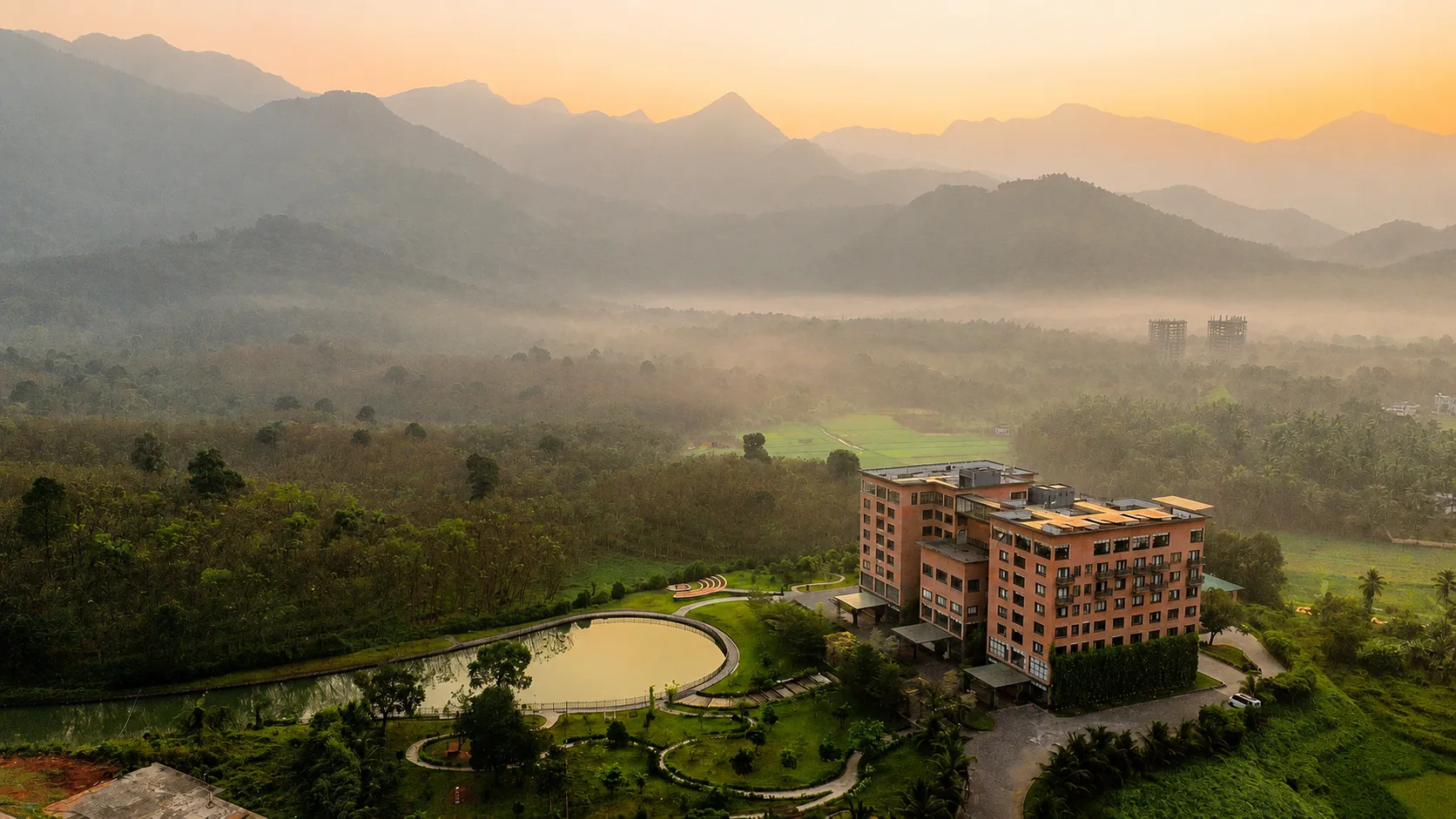
Kaithappoyil, Westghats

Bevor Sie gehen
Ein Arzt liest jede Nachricht. Vereinbaren Sie einen Termin oder senden Sie eine Anfrage – Sie erhalten noch am selben Tag eine Antwort.