
[gtranslate]
MENÜ

Sie spüren es zuerst als Morgensteifigkeit - ein tiefer Schmerz im Nacken oder im unteren Rücken, der am schlimmsten ist, wenn Sie aufwachen. Mit der Zeit hält die Steifheit an, die Körperhaltung leidet, und Bewegungen, die früher mühelos waren, werden anstrengend.
Die Spondylitis ist eine entzündliche Erkrankung der Wirbelsäule, die, wenn sie nicht behandelt wird, zu fortschreitenden Gelenkschäden und in ihrer schwersten Form sogar zur Versteifung der Wirbelsäule führen kann. Sie darf nicht mit “Spondylose” (degenerativer Verschleiß) verwechselt werden - Spondylitis ist grundsätzlich eine entzündliche Erkrankung.
Gängige Typen sind:
Zu beobachtende Schlüsselsymptome:
Die konventionelle Behandlung umfasst in der Regel NSAIDs, Biologika oder in fortgeschrittenen Fällen eine Operation. Aber Ayurvedische Behandlung der Spondylitis bietet einen ergänzenden und oft sehr wirksamen Weg - vor allem dann, wenn er begonnen wird, bevor wesentliche strukturelle Veränderungen eintreten.
Spondylitis wird im Ayurveda vor allem als eine Vata-Kapha-Störung - obwohl bei Erkrankungen wie Morbus Bechterew eine Pitta-Ama (Entzündungstoxin) Komponente ist ebenfalls in hohem Maße beteiligt.
Klassische ayurvedische Zusammenhänge:
In allen Fällen ist das Grundverständnis dasselbe: Vata wird verdorben und setzt sich in den Knochen, Gelenken und dem umgebenden Gewebe (Asthi und Snayu dhatu) fest., und verursachen Degeneration, Entzündungen und Bewegungseinschränkungen. Wenn Ama (unverdaute Stoffwechselgifte) die Gelenke überzieht, trägt es zu einer entzündlichen und “klebrigen” Qualität der Störung bei.
Dies erklärt, warum herkömmliche entzündungshemmende Medikamente zwar die akute Entzündung lindern, aber nicht die Ama-Belastung oder das zugrunde liegende Vata-Ungleichgewicht angehen - und warum die Symptome oft wiederkehren.
💡 Dreifacher EAV: Spondylitis (Entität) → hat die Ursache (Attribut) → Vata-Ama-Ungleichgewicht in Asthi dhatu (Wert)
Die Kenntnis der ursächlichen Faktoren trägt dazu bei, ein erneutes Auftreten zu verhindern und die langfristige Behandlung zu steuern:
| Ursache | Ayurvedische Erläuterung |
|---|---|
| Bewegungsarmer Lebensstil | Verlangsamt die Verdauung, erhöht Ama, verschlimmert Kapha |
| Schlechte Körperhaltung | Unterbricht den Vata-Fluss durch die Wirbelsäule |
| Exposition gegenüber Kälte und Feuchtigkeit | Verschlimmert Vata-Kapha, verschlimmert Gelenksteifheit |
| Unterdrückung der natürlichen Triebe | Stört Apana Vata, die sich nach unten bewegende Energie |
| Entzündliche Ernährung | Verarbeitete Lebensmittel, kalte Lebensmittel erhöhen die Ama-Produktion |
| Emotionaler Stress | Primärer Vata-Verschlechterer |
| Überarbeitung und Müdigkeit | Erschöpft Ojas, den Immunschild |
| Genetische Veranlagung | Im Ayurveda als Sahaja (angeborene) Faktoren anerkannt |
Die Spondylitis-Behandlung im Ayurveda ist sehr strukturiert und individuell. Die folgenden Therapien haben sich am besten bewährt:
Panchakarma ist die Grundlage der Spondylitis-Behandlung im Ayurveda, vor allem um Ama zu beseitigen und das doshische Gleichgewicht wiederherzustellen:
Zu den wichtigsten ayurvedischen Arzneimitteln, die bei Spondylitis verschrieben werden, gehören:
Erkunden Sie Unterschiede zwischen Nackenschmerzen und Halswirbelsäulenschmerzen und wie die ayurvedische Klassifizierung die Auswahl der Behandlung leitet.
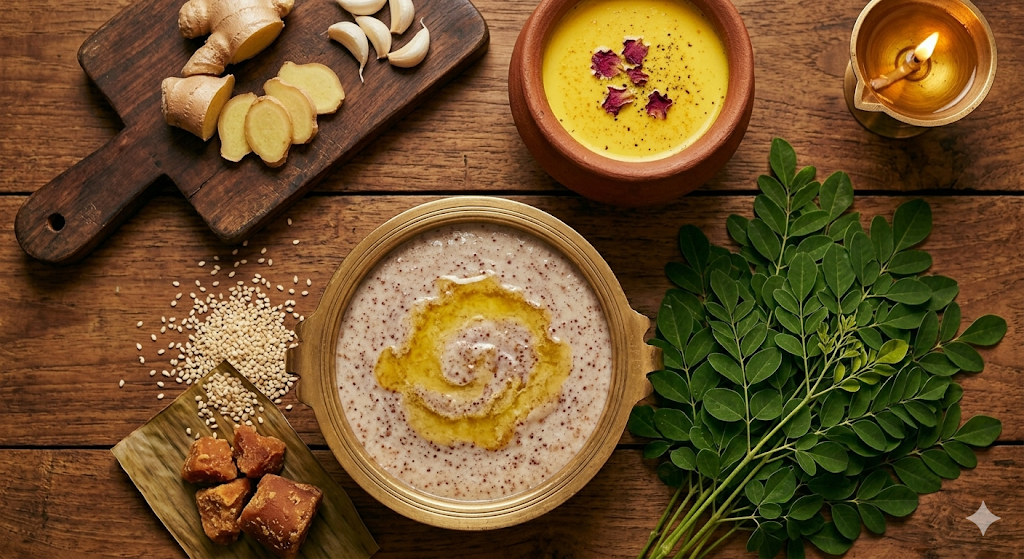
Im Ayurveda ist die Ernährung die Medizin - und bei Spondylitis kann die Wahl der richtigen Nahrungsmittel die Entzündung und die Ama-Belastung drastisch reduzieren.
Bewegung ist Medizin - aber die richtige Art von Bewegung in der richtigen Intensität. Bei Spondylitis ist Yoga die ideale Übungsform, denn sie kombiniert Beweglichkeit der Wirbelsäule, Kraft und Regulierung des Nervensystems.
Empfohlene Asanas:
Allgemeine Bewegungsprinzipien:
Yoga und Naturheilkunde im Tigris-Tal wird von qualifizierten Ausbildern geleitet, die die Übungen speziell auf den Zustand der Wirbelsäule abstimmen, um Sicherheit und therapeutischen Nutzen zu gewährleisten.
Bei fortschreitenden Erkrankungen wie Morbus Bechterew (Spondylitis ankylosans), Funktionelle Medizin fügt eine entscheidende Ebene der Präzision hinzu:
Die Überschneidung zwischen Spondylitis und Autoimmunerkrankung bedeutet auch, dass die Programm zur Behandlung von Autoimmunkrankheiten im Tigris Valley kann insbesondere für Patienten mit Morbus Bechterew von Bedeutung sein.
Siehe auch: Wasserstofftherapie bei Arthritis - ein aufstrebendes Instrument der funktionellen Medizin, das vielversprechend bei Gelenkentzündungen ist.

Tigris-Tal Wellness-Rückzug in Kerala bietet eine umfassende, multimodale Behandlungserfahrung für Spondylitis, die alte Heilmethoden mit moderner Diagnostik verbindet.
Das Genesungsprotokoll für Spondylitis im Tigris Valley umfasst:
Der Rückzugsort Programm zur Behandlung chronischer Schmerzen und Entzündungen ist das wichtigste Programm zur Behandlung von Spondylitis, das von der Programm zur Rehabilitation nach Traumata für die Behandlung von Komplikationen nach Operationen oder Verletzungen der Wirbelsäule.
Empfehlungsschreiben lesen von Gästen, die sich im Tigris-Tal von chronischen Wirbelsäulenerkrankungen erholt haben, und Erkunden Sie die Galerie um die heilende Umgebung zu sehen.
Siehe auch die entsprechende Lektüre auf Behandlung von Rückenschmerzen, ayurvedische Behandlungen für Rückenschmerzen, und Knieschmerzen mit ayurvedischen Heilmitteln - Erkrankungen, die häufig zusammen mit Spondylitis auftreten.
Ayurveda kann Entzündungen, Schmerzen und Steifheit deutlich reduzieren und in vielen Fällen eine langfristige Remission erreichen - vor allem, wenn die Behandlung beginnt, bevor wesentliche strukturelle Veränderungen auftreten. Morbus Bechterew ist eine Autoimmunerkrankung, die eine lebenslange Behandlung erfordert, aber die Lebensqualität kann erheblich verbessert werden.
Die zervikale Spondylitis entspricht Manyastambha im Ayurveda - ein Zustand von Nackensteifheit und Schmerzen, der durch verschlimmertes Vata in der Halsregion verursacht wird.
Ja. Kati Basti ist eine der gezieltesten und wirksamsten Therapien für lumbale Spondylitis. In ähnlicher Weise ist Greeva Basti bei zervikaler Spondylitis hochwirksam. Beide nähren die Bandscheiben und besänftigen lokalisiertes Vata.
Für eine sinnvolle Entgiftung und eine Ayurveda-Behandlung auf Gewebeebene wird ein Minimum von 14-21 Tagen empfohlen. Schwere oder lang anhaltende Fälle können 28 Tage oder mehr erfordern.
Mahanarayan Taila und Sahacharadi Taila sind die klassischen Mittel der Wahl. Ihr ayurvedischer Arzt wird die Wahl auf der Grundlage Ihres spezifischen doshischen Ungleichgewichts treffen.
Ja - Ayurveda, kombiniert mit Funktioneller Medizin, bietet sinnvolle Unterstützung bei Morbus Bechterew. Der Schwerpunkt liegt auf der Verringerung systemischer Entzündungen, der Beseitigung von Ama, der Bewältigung von Immunstörungen und der Erhaltung der Beweglichkeit der Wirbelsäule.
Kalte Lebensmittel, Rohkost, verarbeitete Lebensmittel, Nachtschattengewächse (Tomaten, Paprika), raffinierter Zucker und eisgekühlte Getränke sind laut Ayurveda die Hauptverursacher von Spondylitis.
Ja. Die Akupunktur hat sich zur Schmerzlinderung bei Wirbelsäulenerkrankungen bewährt und wird im Tigris Valley als ergänzendes Mittel zu ayurvedischen Therapien eingesetzt.
Die Ozontherapie reduziert systemische Entzündungsmarker, verbessert die Sauerstoffversorgung des Gewebes und hat eine direkte schmerzlindernde Wirkung, was sie zu einer wertvollen Ergänzung der integrativen Spondylitisbehandlung macht.
Ganz im Gegenteil. Lange Schreibtischarbeit, schlechte Körperhaltung und chronischer Stress tragen wesentlich zur Entstehung von Spondylitis zervikalis und lumbalis bei. Schmerzmanagement für IT-Fachleute im Tigris Valley richtet sich speziell an diese Bevölkerungsgruppe.
Verbindung mit dem Spezialistenteam von Tigris Valley und erkunden Sie einen personalisierten ayurvedischen Behandlungsplan, der mit Ihrem Körper arbeitet - nicht gegen ihn.
Kaithappoyil, in den Westghats.
Markaz Knowledge City Road, Kaithappoyil, Adivaram, Kerala
Anfahrtsbeschreibung +91 90726 61622 reservation@tigrisvalley.com
Kaithappoyil, Westghats

Bevor Sie gehen
Ein Arzt liest jede Nachricht. Vereinbaren Sie einen Termin oder senden Sie eine Anfrage – Sie erhalten noch am selben Tag eine Antwort.