
[gtranslate]
MENÜ
Über 60% der Erwachsenen weltweit leben mit mindestens einer chronischen Erkrankung. Diabetes, Bluthochdruck, Autoimmunkrankheiten, chronische Schmerzen, metabolisches Syndrom - diese Krankheiten sprechen nicht gut auf das Modell “nimm diese Pille und komm in drei Monaten wieder” an. Aber sie verschwinden auch nicht mit einem Monat Kräutertee und Yoga.
Dies ist das unbequeme Gespräch, das die Wellness-Branche vermeidet: sowohl Ayurveda als auch die moderne Medizin haben blinde Flecken wenn es um chronische Krankheiten geht. Und die Patienten, die am meisten leiden, sind diejenigen, die gezwungen sind, zwischen ihnen zu wählen.
Wenn Sie schon seit Jahren mit einer chronischen Erkrankung zu kämpfen haben, haben Sie wahrscheinlich schon beide Frustrationen erlebt. Der Kardiologe, der sich um Ihre Werte kümmert, aber nicht um Ihre Lebensqualität. Die ayurvedische Klinik, die tiefe Heilung verspricht, aber Ihre Laborwerte nicht überwacht. Keiner der beiden Ansätze allein ist vollständig.
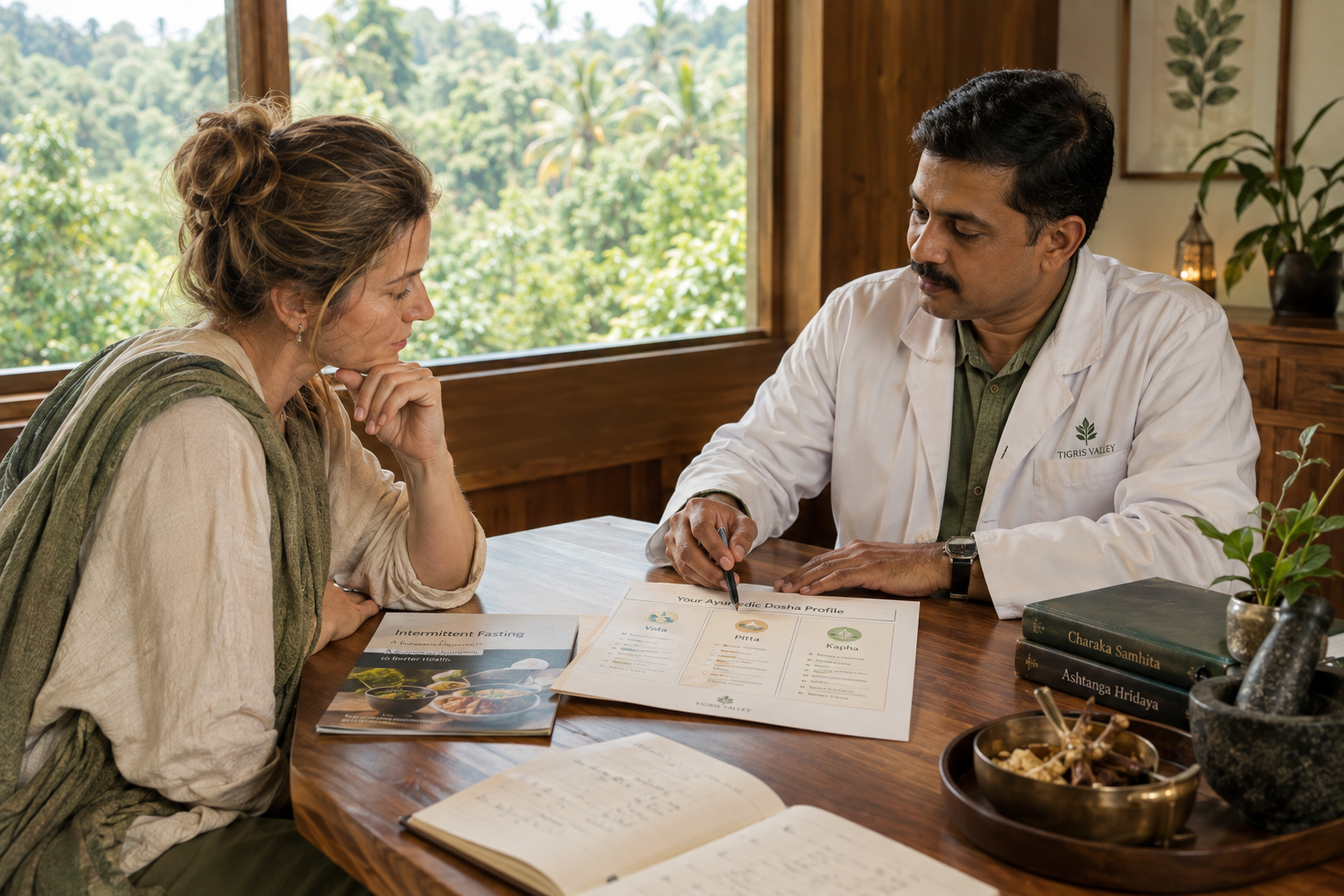
Die Erkenntnisse - und die klinische Erfahrung in Zentren wie Tigris-Tal - deutet zunehmend auf eine dritte Option hin: integrative Medizin, die die diagnostische Präzision der modernen Wissenschaft mit der heilenden Intelligenz des Ayurveda verbindet.
In diesem Artikel werden beide Systeme ehrlich aufgeschlüsselt - ihre wirklichen Stärken, ihre wirklichen Grenzen und warum die wirksamste Behandlung chronischer Krankheiten im Jahr 2025 aus beiden besteht.
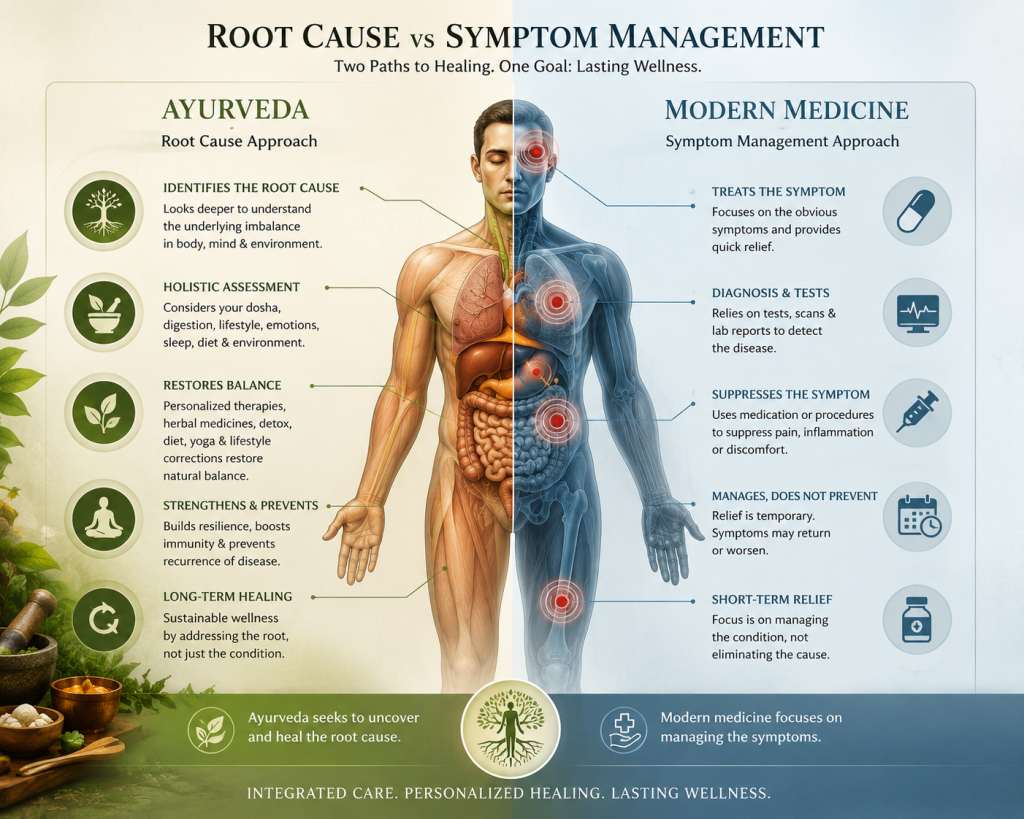
Bevor man die Ergebnisse vergleicht, muss man verstehen, dass diese Systeme nicht nur unterschiedliche Instrumente verwenden - sie gehen auch von grundlegend unterschiedlichen Prämissen aus, was Krankheiten betrifft. ist.
Im Ayurveda wird Krankheit als Folge eines langfristigen Ungleichgewichts gesehen - in Bezug auf die Ernährung, den Lebensstil, die Umwelt, den emotionalen Zustand und die Beziehung zwischen den drei leitenden Energien des Körpers (Doshas: Vata, Pitta, Kapha). Krankheit tritt nicht plötzlich auf; sie durchläuft sechs Stadien (Shatkriyakal), und ein Eingreifen im Frühstadium ist weitaus wirksamer als eine Behandlung im symptomatischen Stadium.
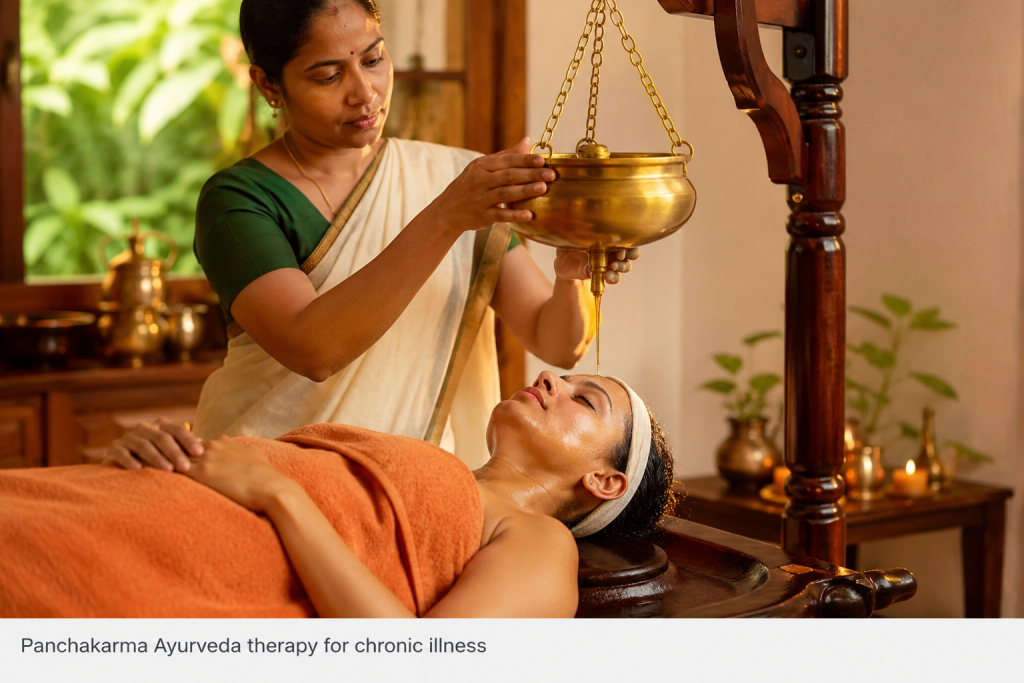
Das Ziel der Ayurvedische Behandlung ist nicht die Unterdrückung von Symptomen, sondern die die Bedingungen wiederherstellen, unter denen sich der Körper selbst heilt - durch Beseitigung der angesammelten Giftstoffe (ama), Wiederherstellung des Verdauungsfeuers (agni) und die Wiederherstellung des Gleichgewichts der Doshas durch personalisierte Ernährung, Kräutermedizin und Therapien wie Panchakarma.
Die moderne (allopathische) Medizin betrachtet Krankheiten in erster Linie durch die biomedizinische Brille - sie identifiziert pathologische Mechanismen, misst Biomarker und greift mit gezielten Medikamenten, chirurgischen Eingriffen oder Bestrahlung ein. Sie zeichnet sich aus durch Akutversorgung, Notfallmedizin und Infektionsmanagement.
Bei chronischen Erkrankungen neigt die moderne Medizin jedoch dazu, diese eher zu behandeln als zu beheben - Kontrolle des Blutdrucks, Regulierung des Blutzuckerspiegels, Unterdrückung der Autoimmunaktivität -, während sie sich nur selten mit den Ursachen der Lebensweise, der Ernährung oder der Umwelt befasst, die die Erkrankung überhaupt erst verursacht haben.
Beide Systeme beruhen auf jahrhundertelangen Beobachtungen und Verfeinerungen. Keines davon ist falsch. Sie sind lediglich für unterschiedliche Probleme optimiert.
Orientierung an der Ursache: Ayurveda fragt warum ein Patient eine hohe Entzündungsrate hat - ist sie ernährungsbedingt, emotional oder umweltbedingt? Diese Befragung führt zu individuellen Behandlungen, die modernen Protokollen nur selten entsprechen.
Langfristiges Sicherheitsprofil: Ayurvedische Kräuterrezepturen - vor allem klassische Präparate, die im klinischen Bereich eingesetzt werden - sind mit wesentlich weniger Nebenwirkungen verbunden als die langfristige Einnahme von Arzneimitteln. Patienten, die mit Autoimmunerkrankungen zu tun haben, leiden beispielsweise häufig unter schweren Nebenwirkungen von immunsuppressiven Medikamenten. Erforschen Sie, wie die Programm zur Bewältigung von Autoimmunkrankheiten setzt ayurvedische und integrative Therapien ein, um diese Belastung zu verringern.
Entgiftung als Medizin: Die Entgiftungs- und Reinigungsprogramm Konzept im Ayurveda - das Entfernen von angesammelten ama (Toxine) aus den Tiefen des Gewebes zu entfernen, hat keine wirkliche Entsprechung in der modernen Pharmakologie. Panchakarma ist nach wie vor eines der ausgeklügeltsten Entgiftungssysteme, die jemals entwickelt wurden, und die klinische Forschung unterstützt zunehmend seine entzündungshemmenden und metabolischen Vorteile.
Geistig-körperliche Integration: Ayurveda erkennt, was die moderne Psychiatrie erst jetzt aufholt: Chronische körperliche Erkrankungen und geistige Gesundheit sind untrennbar miteinander verbunden. Stress und Burnout sind nicht losgelöst von der Stoffwechselerkrankung - sie treiben sie voran.
Saisonale und präventive Pflege: Ayurvedische Protokolle wie Karkitaka Chikitsa jährliche Entgiftungsprogramme anbieten, die das langfristige Wohlbefinden fördern, anstatt auf die Entwicklung von Krankheiten zu warten.
Präzisionsdiagnostik: Blutuntersuchungen, Bildgebung, genetische Profilerstellung und Funktionstests liefern objektive, quantifizierbare Daten, die als Grundlage für Behandlungsentscheidungen dienen. Diese diagnostische Klarheit ist bei Erkrankungen wie Krebs, Herzkrankheiten und komplexen Stoffwechselstörungen unerlässlich.
Schnelle Symptomkontrolle: Für einen Patienten, der sich in einer hypertensiven Krise oder einem Autoimmunschub befindet, ist die moderne Pharmakologie unerlässlich. Tigris Valley's Programm für kardio-metabolische Gesundheit und Erholung integriert die Präzisionsdiagnostik der modernen Medizin mit ayurvedischem Langzeitmanagement - niemals auf Kosten der Sicherheit.
Evidenzbasis und Peer Review: Die moderne Medizin profitiert von einer enormen globalen Forschungsinfrastruktur und standardisierten Studienprotokollen, die den Ärzten zuverlässige Daten über die Wirksamkeit, die Dosierung und das Sicherheitsprofil von Medikamenten liefern.
Chirurgische und Notfallkapazitäten: Schlaganfallrehabilitation, Herzinterventionen, Traumaversorgung - die moderne Medizin ist in diesen Bereichen konkurrenzlos. Die Post-Trauma- und Rehabilitationsprogramm im Tigris-Tal beginnt nach die akute Phase wird von der modernen Medizin behandelt.
| Zustand | Ansatz der modernen Medizin | Ayurvedischer Ansatz | Empfohlene Strategie |
|---|---|---|---|
| Typ-2-Diabetes | Metformin, Insulin, Ernährungsberatung | Virechana, Udwarthanam, pflanzliche Blutzuckerkontrolle (Karela, Gurmar) | Integrativ: Laboruntersuchungen + ayurvedischer Stoffwechsel-Reset |
| Bluthochdruck | Betablocker, ACE-Hemmer | Panchakarma, Shirodhara, Herzkräuter (Arjuna, Sarpagandha) | Integrativ: Medikamente + Stress- und Ernährungsmanagement |
| Autoimmunerkrankungen (RA, Psoriasis) | Immunsuppressiva, Biologika | Virechana, Basti, blutreinigende Kräuter | Integrativ: Reduzierung der Medikamentenbelastung durch ayurvedische Modulation |
| Chronische Schmerzen / Fibromyalgie | NSAIDs, Opioide, Physiotherapie | Abhyanga, Kizhi, Basti, entzündungshemmende Kräuter | Integrativ: Ayurveda reduziert Medikamentenabhängigkeit |
| Ängste/Burnout | Antidepressiva, CBT | Shirodhara, Nasya, Brahmi, Ashwagandha | Integrativ: Ayurveda für die Grundursache, Medizin für akute Episoden |
| Krebshilfe | Chemotherapie, Bestrahlung, Operation | Rasayana, Panchakarma-Entgiftung, Kräuter zur Unterstützung des Immunsystems | Integrativ: Ayurveda reduziert Nebenwirkungen, unterstützt die Genesung |
Das Muster ist einheitlich: Bei akuten Interventionen und der Sicherheitsüberwachung ist die moderne Medizin führend. Bei der Beseitigung der Ursachen, der Verringerung von Nebenwirkungen und der langfristigen Lebensqualität leistet Ayurveda einen unersetzlichen Beitrag. Die wirksamste Behandlung von Ayurveda-Behandlung für chronische Krankheiten ist eine, die beides auf intelligente Weise einsetzt.
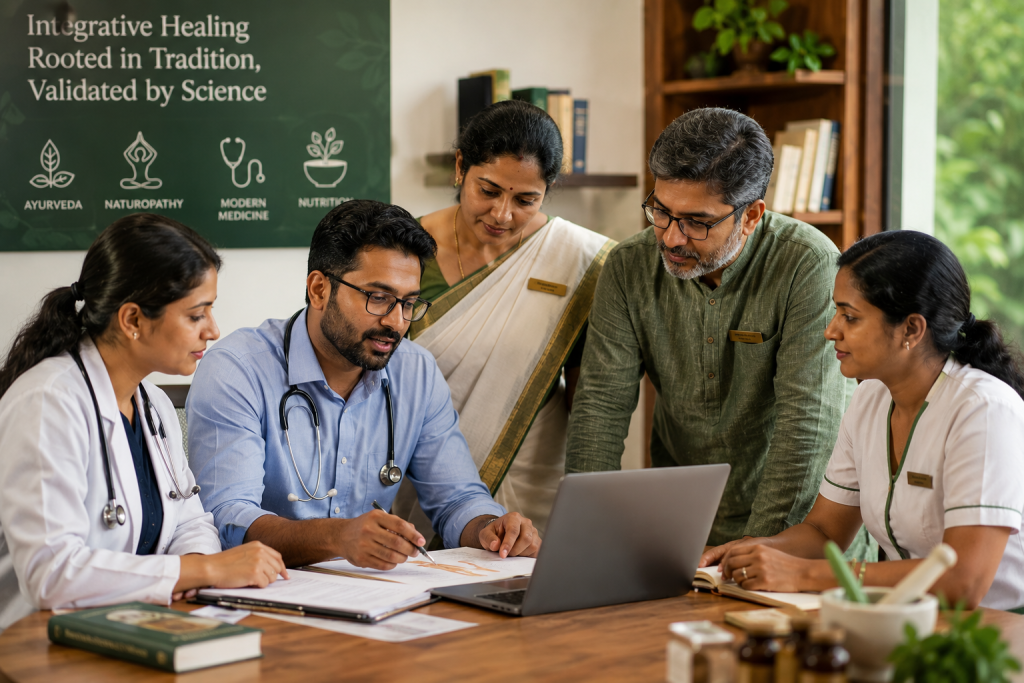
Funktionelle und integrative Medizin - die Brücke zwischen alten Heilsystemen und moderner Diagnostik - ist der weltweit am schnellsten wachsende Bereich der Behandlung chronischer Krankheiten. Sie beruht auf einem Prinzip, das sowohl Ayurveda als auch die Systembiologie teilen: der Körper ist keine Ansammlung isolierter Organe, sondern ein zusammenhängendes System, und chronische Krankheiten sind Ausdruck einer systemweiten Dysregulation.
Die wichtigsten Grundsätze der integrativen Medizin:
Genau das ist es, was das Tigris-Tal in jedes Programm einbindet - vom Anti-Aging- und Langlebigkeits-Programm die Rasayana-Therapien mit funktioneller Anti-Aging-Diagnostik kombiniert, zum Programm für Krebshilfe und Palliativmedizin das Panchakarma zur Verringerung von Behandlungsnebenwirkungen einsetzt und gleichzeitig die konventionelle Onkologie unterstützt.
Die Beweise unterstützen diese Konvergenz. In begutachteten Fachzeitschriften veröffentlichte Forschungsergebnisse zu Panchakarma-Protokollen haben eine messbare Verringerung von Entzündungs-Biomarkern (CRP, IL-6), eine Verbesserung der Blutzuckerkontrolle und eine Verringerung der Schmerzwerte bei verschiedenen chronischen Erkrankungen gezeigt - Ergebnisse, die zunehmend reproduzierbar und dokumentierbar sind.
Das Tigris Valley ist kein ayurvedisches Heilbad und auch kein Krankenhaus. Es ist ein medizinisch überwachter integrativer Wellness-Retreat das Lizenzen sowohl für moderne als auch für traditionelle Medizinsysteme besitzt - und den Patienten die seltene Möglichkeit bietet, beides in einem einzigen, koordinierten Versorgungsumfeld zu erhalten.
1. Diagnose im dualen System Jeder Patient erhält sowohl eine ayurvedische Beurteilung (Pulsdiagnose, Prakriti-Bewertung, Dosha-Analyse) als auch eine moderne Funktionsmedizin-Diagnostik (umfassende Blutbilder, Stoffwechselprofile, Entzündungsmarker). Die Behandlungsentscheidungen stützen sich auf beides.
2. Panchakarma unter ärztlicher Leitung Panchakarma im Tigris Valley wird von qualifizierten BAMS- und BUMS-Ärzten verschrieben und überwacht - nicht von Spa-Therapeuten. Die Behandlungsprotokolle ändern sich auf der Grundlage der täglichen klinischen Bewertung.
3. Krankheitsspezifische Programme mit integriertem Panchakarma Ob Sie sich nun an chronische Schmerzen und Entzündungen, Autoimmunerkrankungen, Stoffwechselstörungen, oder Rehabilitation nach einem Trauma, Panchakarma ist eingebettet in einen breiteren, krankheitsspezifischen therapeutischen Rahmen.
4. Die Natur als Medizin In den Bergen von Wayanad in Kerala gelegen - mit sauberer Luft, Wäldern, Gebirgswasser und einer jahreszeitlich bedingten Artenvielfalt - unterstützt die Umgebung selbst die Heilung in einer Weise, die keine städtische Klinik wiedergeben kann. Die Erlebnis Tigris-Tal verbindet die therapeutische Medizin mit dem therapeutischen Ort.
5. Transparente Erfolgskontrolle Labormarker, Schmerzwerte, Stimmungseinschätzungen und Indikatoren für die Lebensqualität werden während der gesamten Behandlung und bei Nachuntersuchungen nach drei Monaten verfolgt, so dass Patienten und Angehörige einen objektiven Nachweis über die Fortschritte erhalten.
Patienten, die die in diesem Buch beschriebene transformative Reise erlebt haben Kerala's beste Panchakarma-Behandlung Erfahrungsberichte kommen oft skeptisch zum Ayurveda und gehen bekehrt wieder - nicht, weil ihnen etwas verkauft wurde, sondern weil sie eine messbare Veränderung an ihrem eigenen Körper feststellen konnten.
Verifiziert lesen Patientenzeugnisse und erkunden Sie die ganze Bandbreite der Vorteile einer Ayurveda-Behandlung im Tigris-Tal dokumentiert.
Ja - in den meisten Fällen. Die Ärzte von Tigris Valley stimmen sich mit Ihrem bestehenden medizinischen Team ab, um eine sichere gemeinsame Verabreichung von Medikamenten und ayurvedischen Therapien zu gewährleisten. Bei einigen Medikamenten kann es notwendig sein, den Zeitpunkt der Einnahme an die spezifischen Behandlungen anzupassen. Dies ist ein Grund dafür, dass die ärztliche Überwachung unerlässlich ist.
Immer mehr von Experten begutachtete Forschungsergebnisse unterstützen ayurvedische Interventionen bei Diabetes, Bluthochdruck, entzündlichen Erkrankungen und neurologischer Rehabilitation. Klinische Studien über Panchakarma haben eine messbare Verringerung von Entzündungs-Biomarkern gezeigt. Die Validierung ist noch nicht abgeschlossen - die klinische Evidenzbasis allerdings auch nicht.
Nein - und verantwortungsbewusste Ayurveda-Praktiker behaupten nie etwas anderes. Ayurveda spielt eine mächtige komplementär Rolle in der Krebsbehandlung - Verringerung der Behandlungsnebenwirkungen, Unterstützung der Immunität und Verbesserung der Lebensqualität - während die konventionelle Onkologie nach wie vor die primäre Behandlungsmodalität darstellt.
Tigris Valley verfolgt sowohl subjektive Ergebnisse (Schmerzwerte, Schlafqualität, Stimmung, Energie) als auch objektive Biomarker (CRP, HbA1c, Lipidparameter, Blutdruck). Die Verbesserung sollte messbar sein, nicht nur gefühlt.
Für Programme zur Behandlung chronischer Krankheiten wird ein Mindestaufenthalt von 21 Tagen empfohlen. Dies ermöglicht eine vollständige Purvakarma-, Pradhanakarma- und Paschatkarma-Sequenz mit ausreichend Zeit für eine klinische Reaktion.
Ja. Die Programm zur Bewältigung von Autoimmunkrankheiten kombiniert Ayurveda, Unani-Medizin, funktionelle Medizin und Naturtherapie in einem klinisch überwachten Protokoll speziell für Erkrankungen wie Psoriasis, Lupus, rheumatoide Arthritis und Hashimoto-Thyreoiditis.
Klinische Nachweise und jahrhundertelange traditionelle Anwendungen unterstützen die Rolle des Ayurveda bei der Behandlung von Bluthochdruck - insbesondere durch Stressabbau, Ernährungsumstellung, spezifische Panchakarma-Protokolle und Herzkräuter wie Arjuna. Für Patienten, die ihre Medikamentenabhängigkeit mit der Zeit verringern möchten, Panchakarma für hohen Blutdruck ist ein dokumentierter, überwachter Ansatz.
Rasayana bezieht sich auf den ayurvedischen Zweig der Verjüngung - die Verwendung spezifischer Kräuterrezepturen, Ernährungsprotokolle und Lebensstilpraktiken zum Wiederaufbau der Zellgesundheit, zur Stärkung der Immunität und zur Verlangsamung degenerativer Prozesse. Sie ist besonders wertvoll für Patienten, die sich von chronischen Krankheiten erholen oder nach einer intensiven Panchakarma-Behandlung.
Sowohl Ayurveda als auch die Unani-Medizin sind traditionelle Heilsysteme, die ihre Wurzeln in der Humoral-Theorie haben, aber unterschiedliche medizinische Traditionen verwenden. Im Tigris-Tal werden sie in integrierter Weise angewandt - Unani-Kräuterrezepturen ergänzen ayurvedische Therapien, insbesondere bei Stoffwechselerkrankungen, Verdauungsstörungen und chronischen Entzündungen.
Ganz genau. Die Wellness-Retreat für Unternehmen im Tigris-Tal ist speziell auf die chronischen Erkrankungen des Lebensstils - Stoffwechselkrankheiten, Burnout, Bluthochdruck, Schmerzen des Bewegungsapparats - ausgerichtet, von denen hoch qualifizierte Fachkräfte betroffen sind. Die Programme kombinieren klinische Behandlung mit Produktivitäts- und Resilienz-Coaching.
Die Debatte zwischen Ayurveda und moderner Medizin bei chronischen Krankheiten ist ein falsches Binärsystem - ein Produkt institutioneller Silos, nicht klinischer Erkenntnisse.
Die moderne Medizin rettet Leben in akuten Situationen. Ayurveda baut sie auf lange Sicht wieder auf.
Für die 60% Menschen, die mit chronischen Krankheiten leben und mehr verdienen als eine unbegrenzte Verschreibung, ist die integrative Medizin - die in einem klinisch strengen, medizinisch überwachten Rahmen angeboten wird - keine Alternative. Sie ist die logische Weiterentwicklung der Gesundheitsversorgung.
Entdecken Sie das gesamte Programmangebot von Tigris Valley oder Kontaktieren Sie unser klinisches Team um zu besprechen, wie ein integrativer Ansatz auf Ihre spezielle Erkrankung, Ihren Zeitplan und Ihre Gesundheitsziele abgestimmt werden kann.
Kaithappoyil, in den Westghats.
Markaz Knowledge City Road, Kaithappoyil, Adivaram, Kerala
Anfahrtsbeschreibung +91 90726 61622 reservation@tigrisvalley.com
Kaithappoyil, Westghats

Bevor Sie gehen
Ein Arzt liest jede Nachricht. Vereinbaren Sie einen Termin oder senden Sie eine Anfrage – Sie erhalten noch am selben Tag eine Antwort.