
[gtranslate]
MENU
Over 60% of adults globally live with at least one chronic condition. Diabetes, hypertension, autoimmune disease, chronic pain, metabolic syndrome — these conditions don’t respond well to the “take this pill, come back in three months” model. Yet they also don’t disappear with a month of herbal tea and yoga.
This is the uncomfortable conversation the wellness industry avoids: both Ayurveda and modern medicine have blind spots when it comes to chronic illness. And the patients who suffer most are the ones forced to choose between them.
If you’ve been managing a chronic condition for years, you’ve likely experienced both frustrations. The cardiologist who manages your numbers but not your quality of life. The Ayurvedic clinic that promises deep healing but doesn’t monitor your labs. Neither approach alone is complete.
The evidence — and clinical experience at centers like Tigris Valley — is increasingly pointing toward a third option: integrative medicine that combines the diagnostic precision of modern science with the root-cause healing intelligence of Ayurveda.
This article breaks down both systems honestly — their real strengths, their real limitations, and why the most effective treatment for chronic illness in 2025 draws from both.
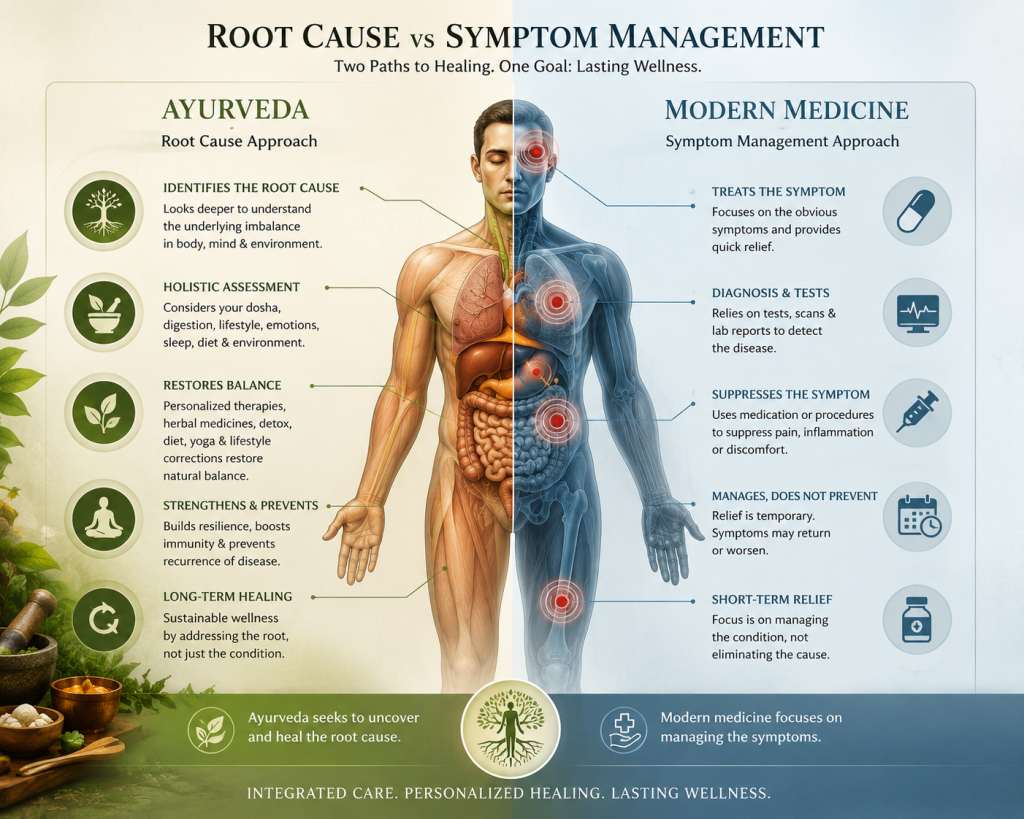
Before comparing outcomes, you need to understand that these systems don’t just use different tools — they operate from fundamentally different premises about what disease is.
Ayurveda sees disease as the downstream consequence of long-term imbalance — in diet, lifestyle, environment, emotional state, and the relationship between the body’s three governing energies (Doshas: Vata, Pitta, Kapha). Disease doesn’t happen suddenly; it progresses through six stages (Shatkriyakal), and intervention at early stages is far more effective than treatment at the symptomatic stage.
The goal of Ayurvedic treatment is not to suppress symptoms but to restore the conditions under which the body heals itself — by removing accumulated toxins (ama), restoring digestive fire (agni), and rebalancing the Doshas through personalized diet, herbal medicine, and therapies like Panchakarma.
Modern (allopathic) medicine approaches disease primarily through a biomedical lens — identifying pathological mechanisms, measuring biomarkers, and intervening with targeted drugs, surgical procedures, or radiation. It excels at acute care, emergency medicine, and infection management.
For chronic conditions, however, modern medicine tends to manage rather than resolve — controlling blood pressure, regulating blood sugar, suppressing autoimmune activity — while rarely addressing the lifestyle, nutritional, or environmental root causes that drove the condition in the first place.
Both systems are built on centuries of observation and refinement. Neither is wrong. They’re simply optimized for different problems.
Root-cause orientation: Ayurveda asks why a patient has high inflammation — is it dietary, emotional, environmental? This interrogation leads to individualized treatments that modern protocols rarely match.
Long-term safety profile: Ayurvedic herbal formulations — particularly classical preparations used in clinical settings — carry a dramatically lower side-effect burden than long-term pharmaceutical use. Patients managing autoimmune conditions, for instance, frequently suffer severe side effects from immunosuppressive drugs. Explore how the Autoimmune Disorder Management Program uses Ayurvedic and integrative therapies to reduce this burden.
Detoxification as medicine: The Detox & Cleanse Program concept in Ayurveda — removing accumulated ama (toxins) from deep tissues — has no real equivalent in modern pharmacology. Panchakarma remains one of the most sophisticated detoxification systems ever developed, with clinical research increasingly supporting its anti-inflammatory and metabolic benefits.
Mental-physical integration: Ayurveda recognizes what modern psychiatry is only now catching up to: chronic physical conditions and mental health are inseparable. Stress and burnout are not separate from metabolic disease — they drive it.
Seasonal and preventive care: Ayurvedic protocols like Karkitaka Chikitsa provide annual detoxification frameworks that support long-term wellness rather than waiting for disease to develop.
Precision diagnostics: Blood panels, imaging, genetic profiling, and functional testing provide objective, quantifiable data that guides treatment decisions. This diagnostic clarity is essential for conditions like cancer, cardiac disease, and complex metabolic disorders.
Rapid symptom control: For a patient in a hypertensive crisis or autoimmune flare, modern pharmacology is essential. Tigris Valley’s Cardio-Metabolic Health & Recovery Program integrates modern medicine’s precision diagnostics with Ayurvedic long-term management — never at the expense of safety.
Evidence base and peer review: Modern medicine benefits from an enormous global research infrastructure and standardized trial protocols — giving clinicians reliable data on drug efficacy, dosing, and safety profiles.
Surgical and emergency capability: Stroke rehabilitation, cardiac intervention, trauma care — modern medicine has no peer in these domains. The Post-Trauma & Rehabilitation Program at Tigris Valley begins after the acute phase is managed by modern medicine.

| Condition | Modern Medicine Approach | Ayurvedic Approach | Recommended Strategy |
|---|---|---|---|
| Type 2 Diabetes | Metformin, insulin, diet advice | Virechana, Udwarthanam, herbal glycemic control (Karela, Gurmar) | Integrative: labs + Ayurvedic metabolic reset |
| Hypertension | Beta-blockers, ACE inhibitors | Panchakarma, Shirodhara, cardiac herbs (Arjuna, Sarpagandha) | Integrative: medication + stress & diet management |
| Autoimmune (RA, Psoriasis) | Immunosuppressants, biologics | Virechana, Basti, blood-purifying herbs | Integrative: reduce drug burden with Ayurvedic modulation |
| Chronic Pain / Fibromyalgia | NSAIDs, opioids, physiotherapy | Abhyanga, Kizhi, Basti, anti-inflammatory herbs | Integrative: Ayurveda reduces pharmaceutical dependency |
| Anxiety / Burnout | Antidepressants, CBT | Shirodhara, Nasya, Brahmi, Ashwagandha | Integrative: Ayurveda for root cause, medicine for acute episodes |
| Cancer Support | Chemotherapy, radiation, surgery | Rasayana, Panchakarma detox, immune support herbs | Integrative: Ayurveda reduces side effects, supports recovery |
The pattern is consistent: for acute intervention and safety monitoring, modern medicine leads. For root-cause resolution, side-effect reduction, and long-term quality of life, Ayurveda adds irreplaceable value. The most effective management of ayurvedic treatment for chronic diseases is one that intelligently deploys both.
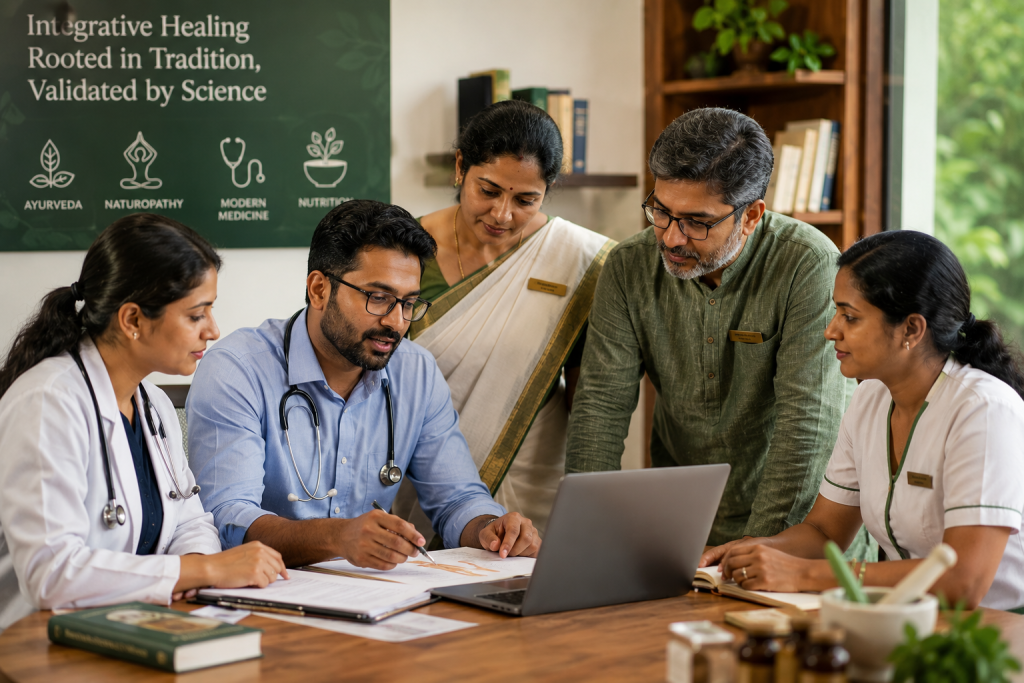
Functional and integrative medicine — the bridge between ancient healing systems and modern diagnostics — is the fastest-growing area of chronic disease management globally. It operates from a principle that both Ayurveda and systems biology share: the body is not a collection of isolated organs but an interconnected system, and chronic disease reflects system-wide dysregulation.
Key integrative medicine principles:
This is precisely what Tigris Valley embeds into every program — from the Anti-Aging & Longevity Program that combines Rasayana therapies with functional anti-aging diagnostics, to the Cancer Support & Palliative Care Program that uses Panchakarma to reduce treatment side effects while supporting conventional oncology.
The evidence supports this convergence. Research published in peer-reviewed journals on Panchakarma protocols has demonstrated measurable reductions in inflammatory biomarkers (CRP, IL-6), improvements in glycemic control, and reductions in pain scores across multiple chronic conditions — outcomes that are increasingly reproducible and documentable.
Tigris Valley is not an Ayurvedic spa, and it’s not a hospital. It’s a medically supervised integrative wellness retreat that holds licenses across both modern and traditional medicine systems — giving patients the rare ability to receive both in a single, coordinated care environment.
1. Dual-system diagnosis Every patient receives both an Ayurvedic assessment (pulse diagnosis, Prakriti evaluation, Dosha analysis) and modern functional medicine diagnostics (comprehensive blood panels, metabolic profiling, inflammation markers). Treatment decisions draw from both.
2. Physician-led Panchakarma Panchakarma at Tigris Valley is prescribed and monitored by qualified BAMS and BUMS physicians — not spa therapists. Treatment protocols change based on daily clinical assessment.
3. Condition-specific programs with Panchakarma integrated Whether you’re addressing chronic pain and inflammation, autoimmune conditions, metabolic disorders, or post-trauma rehabilitation, Panchakarma is embedded within a broader, condition-specific therapeutic framework.
4. Nature as medicine Set in Kerala’s Wayanad mountains — clean air, forest environment, mountain water, and seasonal biodiversity — the environment itself supports healing in ways no urban clinic can replicate. The Tigris Valley experience combines therapeutic medicine with therapeutic place.
5. Transparent outcomes tracking Lab markers, pain scores, mood assessments, and quality-of-life indicators are tracked throughout treatment and at 3-month follow-ups — giving patients and families objective evidence of progress.
Patients who’ve experienced the transformative journey described in Kerala’s best Panchakarma treatment testimonials often arrive skeptical of Ayurveda and leave converted — not because they were sold something, but because they witnessed measurable change in their own bodies.
Read verified patient testimonials and explore the full range of Ayurveda treatment benefits documented at Tigris Valley.
Yes — in most cases. Tigris Valley’s physicians coordinate with your existing medical team to ensure safe co-administration of medications and Ayurvedic therapies. Some medications may need timing adjustments relative to specific treatments. This is one reason physician supervision is essential.
A growing body of peer-reviewed research supports Ayurvedic interventions for diabetes, hypertension, inflammatory conditions, and neurological rehabilitation. Clinical studies on Panchakarma have demonstrated measurable reductions in inflammatory biomarkers. Validation is ongoing — but so is the clinical evidence base.
No — and responsible Ayurvedic practitioners never claim otherwise. Ayurveda plays a powerful complementary role in cancer care — reducing treatment side effects, supporting immunity, and improving quality of life — while conventional oncology remains the primary treatment modality.
Tigris Valley tracks both subjective outcomes (pain scores, sleep quality, mood, energy) and objective biomarkers (CRP, HbA1c, lipid panels, blood pressure). Improvement should be measurable, not just felt.
A minimum 21-day stay is recommended for chronic illness management programs. This allows for full Purvakarma, Pradhanakarma, and Paschatkarma sequencing with adequate time for clinical response.
Yes. The Autoimmune Disorder Management Program combines Ayurveda, Unani medicine, functional medicine, and nature therapy in a clinically supervised protocol specifically for conditions like psoriasis, lupus, rheumatoid arthritis, and Hashimoto’s thyroiditis.
Clinical evidence and centuries of traditional application support Ayurveda’s role in hypertension management — particularly through stress reduction, dietary modification, specific Panchakarma protocols, and cardiac herbs like Arjuna. For patients looking to reduce pharmaceutical dependency over time, Panchakarma for high blood pressure is a documented, supervised approach.
Rasayana refers to the Ayurvedic branch of rejuvenation — using specific herbal formulations, dietary protocols, and lifestyle practices to rebuild cellular health, boost immunity, and slow degenerative processes. It is particularly valuable for patients in recovery from chronic illness or after intensive Panchakarma treatment.
Both Ayurveda and Unani medicine are traditional healing systems sharing a root in humoral theory but using distinct medicinal traditions. At Tigris Valley, they are used in an integrated manner — Unani herbal formulations complement Ayurvedic therapies, particularly for metabolic conditions, digestive disorders, and chronic inflammation.
Absolutely. The Corporate Wellness Retreat at Tigris Valley is specifically designed to address the chronic lifestyle conditions — metabolic disease, burnout, hypertension, musculoskeletal pain — that affect high-functioning professionals. Programs combine clinical treatment with productivity and resilience coaching.
The debate of Ayurveda vs modern medicine for chronic illness is a false binary — a product of institutional silos, not clinical evidence.
Modern medicine saves lives in acute situations. Ayurveda rebuilds them over the long term.
For the 60% of people living with chronic conditions who deserve more than indefinite prescription management, integrative medicine — delivered in a clinically rigorous, medically supervised setting — is not an alternative. It’s the logical evolution of healthcare.
Explore Tigris Valley’s full range of programs or reach out to our clinical team to discuss how an integrative approach can be designed around your specific condition, timeline, and health goals.
Kaithappoyil, in the Western Ghats.
Markaz Knowledge City Road, Kaithappoyil, Adivaram, Kerala
Get directions +91 90726 61622 reservation@tigrisvalley.com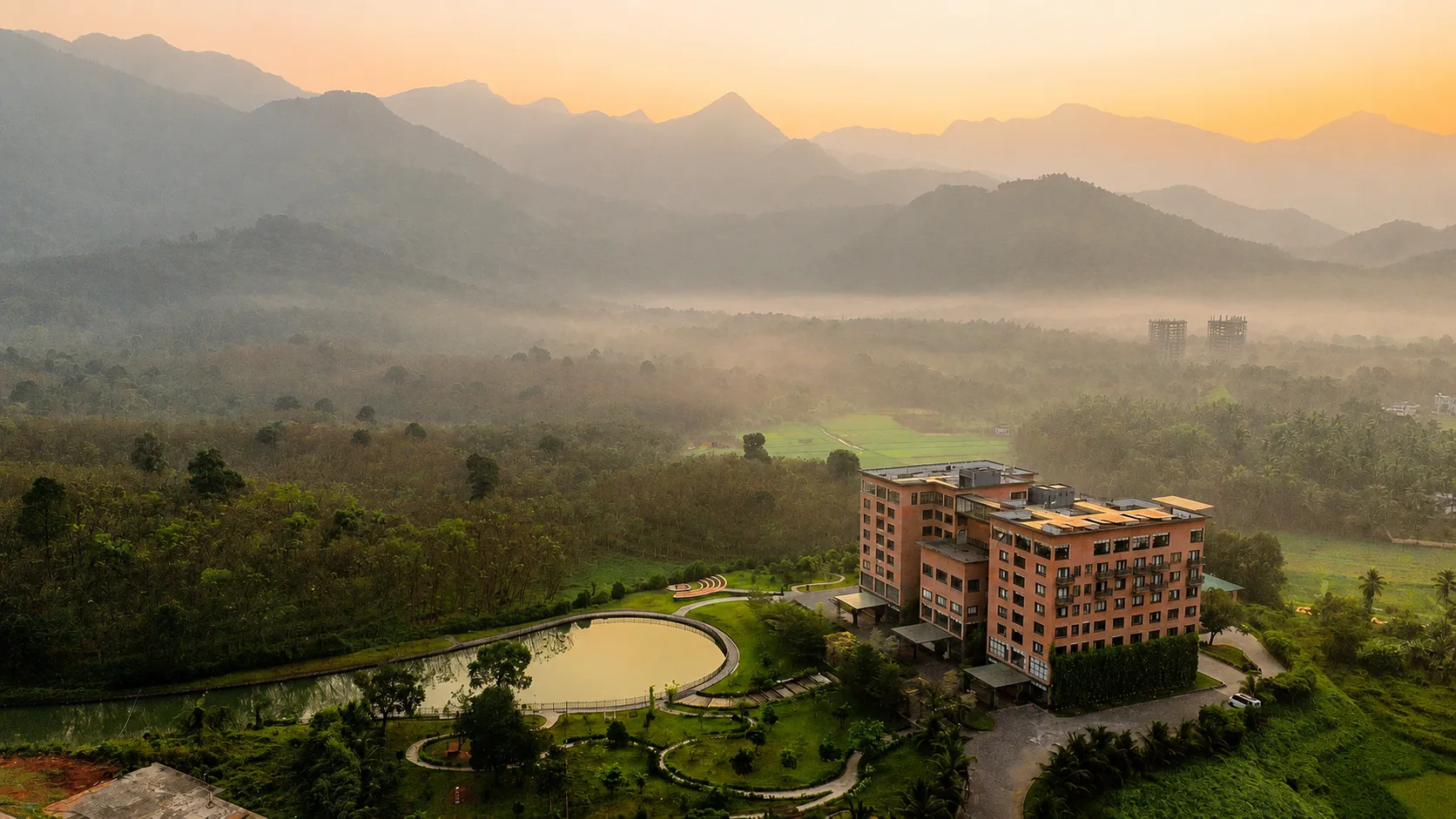
Kaithappoyil, Western Ghats

Before you leave
A physician reads every letter. Book a consultation, or send an inquiry — reservations answers the same day.