
[gtranslate]
MENU
You’ve decided Kerala is where you want your Ayurveda detox to happen — but you’re looking at twelve months of calendar, two weeks of European annual leave, the Kerala monsoon, and three different opinions from three different websites. Timing a Panchakarma visit from Europe isn’t complicated — but it does require understanding three variables that most travel guides confuse or ignore: Kerala’s actual seasonal experience, the classical Ayurvedic ideal for detox, and the practical reality of European travel windows. This guide gives you all three, integrated.
Table of Contents
Most “best time to visit Kerala” guides collapse a nuanced question into a simple answer — typically “October to March.” That is useful but incomplete for someone planning a clinical Ayurveda detox from Europe. The real answer depends on three variables:
Key Insight: The classical Ayurvedic ideal (monsoon) and the most comfortable visitor experience (October–March) are different seasons. Both are valid — the right choice depends on your priorities. Tigris Valley’s Detox & Cleanse Program and all clinical programs run year-round with excellent outcomes in every season.
Kerala has three distinct seasons, each offering a genuinely different experience. For Europeans comparing these to familiar climate references:
| Season | Months | Wayanad Climate | Detox Suitability | European Travel Comfort |
|---|---|---|---|---|
| Monsoon (Karkidakam) | June – August | 24–27°C, high humidity, daily rain, cool, lush | Highest (classical) — channels open, optimal oil absorption | Rain limits outdoor excursions; retreat immersion is high; forest is spectacularly alive |
| Post-Monsoon / Cool Season | September – February | 20–28°C, moderate humidity, clear days, very lush | Excellent — still warm and humid enough for deep detox; outdoor activities possible | Best overall for first-time visitors; comfortable days, spectacular landscapes, forest bathing ideal |
| Summer / Pre-Monsoon | March – May | 28–34°C, drier, hazy, warmer | Good — still humid; heat can intensify Pitta for some guests | Warm for Europeans; retreat environment remains comfortable; Easter leave window aligns well |
At Wayanad’s elevation, temperature extremes are significantly moderated compared to Kerala’s coastal areas. Even the summer months (March–May) are considerably cooler in Wayanad than in coastal Kochi or Thiruvananthapuram — an important distinction for European travelers concerned about heat.
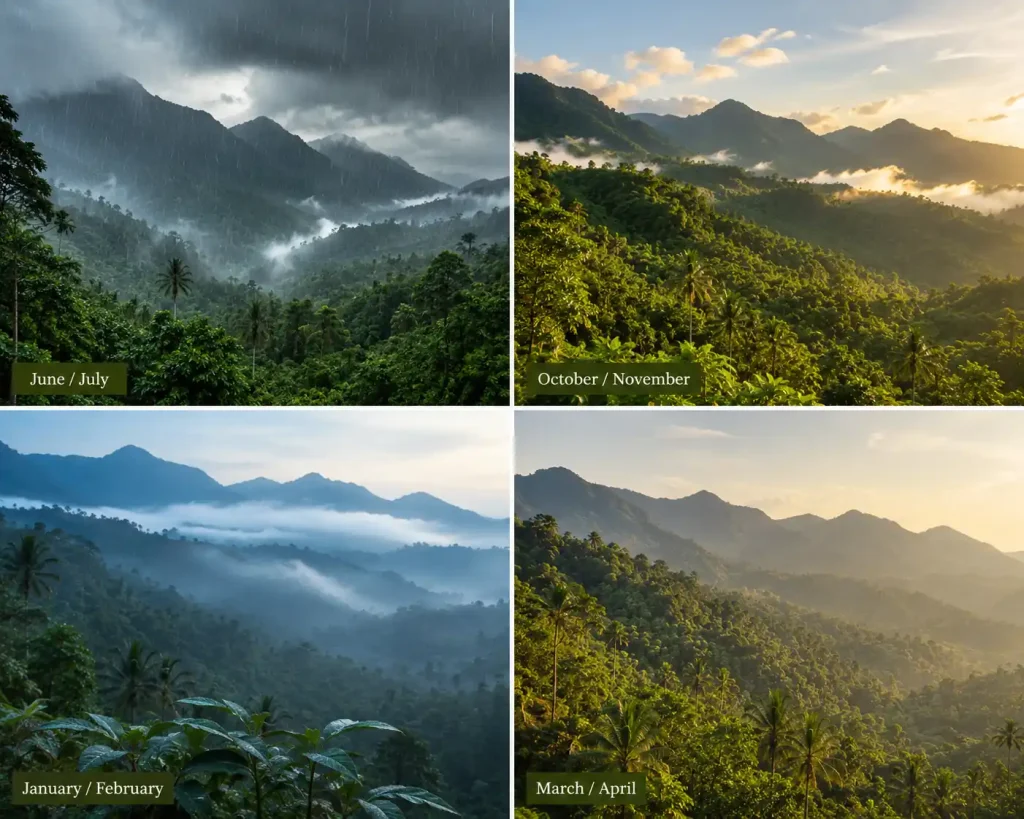
Here is a practical month-by-month assessment — written specifically for European travelers planning a clinical Panchakarma or detox program at Tigris Valley:
| Month | Wayanad Conditions | Detox Rating | European Travel Context |
|---|---|---|---|
| January | Cool (18–25°C), clear, low humidity, beautiful | ⭐⭐⭐⭐⭐ Excellent | Peak season; book 8–10 weeks ahead. Escape European winter darkness — high motivation window. |
| February | Cool-warm (20–27°C), clear, pleasant | ⭐⭐⭐⭐⭐ Excellent | Strong month. Post-holiday European detox motivation. Good flight availability. |
| March | Warming (24–30°C), drier, sunny | ⭐⭐⭐⭐ Very Good | Easter leave window — 2 weeks available for many Europeans. Pre-summer detox ideal. |
| April | Warm (26–33°C), pre-monsoon humidity building | ⭐⭐⭐⭐ Very Good | Excellent for Europeans — warm weather appeals; lower visitor numbers; good program availability. |
| May | Hot (28–34°C), high humidity, pre-monsoon | ⭐⭐⭐ Good | Warmer; Wayanad elevation moderates coastal heat. Good for those tolerant of warm weather. |
| June | Monsoon onset (24–28°C), heavy rain, cool | ⭐⭐⭐⭐⭐ Classically optimal | Coincides with European summer holiday — planning possible. Deep immersion experience; few tourists. |
| July | Peak monsoon (23–27°C), dramatic rain, lush | ⭐⭐⭐⭐⭐ Classically optimal | European summer peak leave window. Kerala at maximum therapeutic and botanical potency. Ideal for committed detox travelers. |
| August | Monsoon tapering (24–28°C), frequent rain | ⭐⭐⭐⭐⭐ Classically optimal | August leave popular in Germany, France. Combines classical detox timing with summer availability. |
| September | Post-monsoon transition (24–28°C), clearing, green | ⭐⭐⭐⭐⭐ Excellent | Hidden gem month — landscapes extraordinarily green and fresh, fewer visitors, excellent conditions. |
| October | Ideal (22–28°C), clear, lush post-rain | ⭐⭐⭐⭐⭐ Excellent | Strong choice — European autumn leave; peak conditions; book 6 weeks ahead. |
| November | Very pleasant (21–27°C), some northeast monsoon rain, lush | ⭐⭐⭐⭐⭐ Excellent | Excellent window — Europeans escaping early winter; short northeast monsoon showers don’t disrupt programs. |
| December | Cool-comfortable (19–25°C), clear, festive Kerala | ⭐⭐⭐⭐⭐ Excellent | High demand — Christmas/New Year European travel peak. Book earliest for this window. |
The classical Ayurvedic text Ashtanga Hridayam — the foundational reference for Kerala’s Panchakarma tradition — explicitly identifies the monsoon season (Varsha Ritu) as the optimal window for therapeutic detoxification. The physiological reasoning is precise and worth understanding:
According to Kerala Tourism’s official resources on Ayurveda, the Karkidakam (monsoon month, typically mid-July to mid-August in the Malayalam calendar) is recognised as the traditional period when Ayurvedic treatments are considered most effective — a practice deeply embedded in Kerala’s cultural calendar. You can read more on the Kerala Tourism Ayurveda page.
For European travelers willing to embrace the monsoon experience — cool air, dramatic rain, extraordinary forest greenness, and a retreat environment intensified by the season — June, July, and August at Tigris Valley represent the authentic Panchakarma experience at its most classical.
European annual leave patterns create predictable planning windows. Here is how they align with Kerala’s optimal detox seasons:
| European Leave Window | Typical Dates | Kerala Season | Verdict |
|---|---|---|---|
| Christmas / New Year | Dec 20 – Jan 5 | Cool, clear, dry — peak season | ✅ Excellent — most comfortable; high demand; book 10+ weeks ahead |
| January – February Extended Leave | Jan – Feb (flexible) | Cool, clear — ideal conditions | ✅ Excellent — European winter escape; optimal conditions; widely available flights |
| Easter / Spring Break | March – April (2 weeks) | Warm, pre-monsoon — very good | ✅ Very Good — 14-day program fits perfectly; warmer but manageable at Wayanad elevation |
| Summer (July–August) | July – Aug (2–4 weeks) | Monsoon — classically optimal | ✅ Best for classical Panchakarma; rain-embracing travelers get the authentic experience |
| Autumn (October–November) | Oct – Nov (1–2 weeks) | Post-monsoon — spectacular | ✅ Hidden gem — Kerala at its most beautiful; excellent detox conditions; lower demand than peak |
Best overall recommendation for European first-timers: October–February for the most comfortable, accessible experience with excellent detox outcomes. July–August for those specifically seeking the classical monsoon Panchakarma window and willing to embrace the rain.

Most Kerala travel guides are written primarily about the coast — Kochi, Thiruvananthapuram, and the backwaters. Wayanad, where Tigris Valley is located, is a fundamentally different climate zone and seasonal experience. This distinction matters significantly for European travelers:
Wayanad sits at 700–2100 metres above sea level in the Western Ghats. This means temperatures are typically 5–8°C cooler than coastal Kerala at the same time of year. For European travelers concerned about heat — particularly in the March–May window — Wayanad is substantially more comfortable than any coastal Kerala destination.
Wayanad’s monsoon is more dramatic and immersive than the coast — heavier, more consistent rainfall that transforms the landscape into extraordinary vivid green. For European travelers who choose the classical monsoon window for Panchakarma, Wayanad’s mountainous forest setting intensifies the retreat experience in a way coastal locations cannot. The forest bathing component of the Stress & Burnout Recovery Program reaches its peak during these months — the Wayanad forest is at its most biodiverse, aromatic, and therapeutically active.
October and November in Wayanad are perhaps the most visually spectacular months — the forest still intensely green from the monsoon but with clearer skies, comfortable temperatures, and the full biodiversity of the Western Ghats in active bloom. Forest Bathing in this window is extraordinary. The Nearby Escapes to Wayanad’s waterfalls, wildlife sanctuaries, and spice plantations are best experienced in October–November.
December through February, Wayanad is genuinely cool by tropical standards — morning temperatures can drop to 15–18°C at elevation. European travelers in this window often describe it as the most pleasant physical environment they’ve experienced — warm enough for outdoor yoga and forest walks, cool enough for deep, restorative sleep, and with crisp mountain air that Europeans find immediately revitalising after months of European winter.
Practical Note on Altitude: Guests with significant respiratory conditions should mention this in their pre-arrival consultation. For the vast majority of European guests, Wayanad’s elevation is an asset — cleaner air, better sleep, reduced allergic load — not a concern.
Practical flight information that connects to your season decision:
The closest major international airport to Tigris Valley — approximately 60–90 minutes by road. Hub airline connections from Europe:
More European direct routes; approximately 4.5–5 hours’ road transfer to Tigris Valley. Worth considering for better fares, particularly in peak season when Kozhikode flights book early.
Full arrival and transfer guidance — including road, rail, and recommended routing options — is available on the Getting to Tigris Valley page.
The quality of your detox program outcomes is influenced by what you do in the 2–4 weeks before arriving. Tigris Valley’s pre-arrival consultation covers this in detail, but here are the consistent recommendations for European travelers:
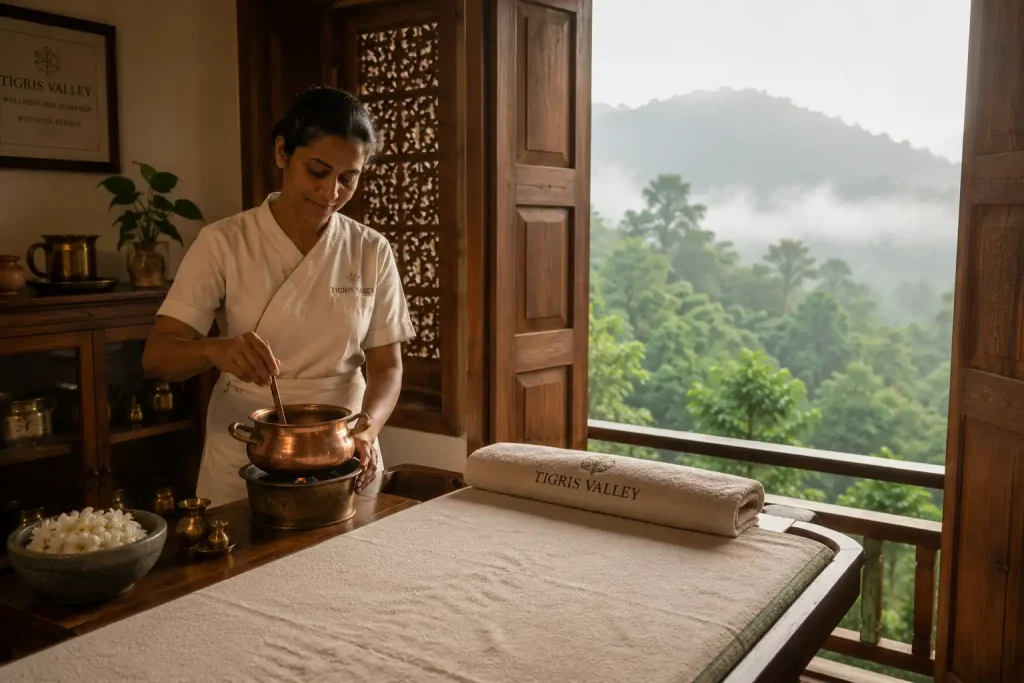
Yes. Wayanad and the broader Kerala highlands experience regular, predictable rainfall during the monsoon — not cyclonic weather or flooding at the retreat’s location. Tigris Valley operates its full clinical program year-round, including during the monsoon months. The main practical adjustment is that outdoor excursions and day trips are rain-dependent; the retreat experience itself is fully uninterrupted.
Classical Ayurvedic texts indicate that Panchakarma achieves its greatest depth during the monsoon due to optimally open body channels and heightened herbal oil absorption. In practice, highly effective and clinically meaningful Panchakarma outcomes are achieved year-round at Tigris Valley — particularly for European guests whose baseline toxin accumulation and doshic imbalance is significant enough to generate deep therapeutic response in any season.
Based on the European market profile, the most popular months are October through February — with December, January, and October consistently highest in demand. July and August attract a smaller but growing cohort of European travelers specifically seeking the classical monsoon Panchakarma window.
Yes — and many European guests choose exactly this window. A program beginning around December 22–26 and completing in mid-January covers both the holiday period and into the New Year, allowing a complete program without sacrificing the typical Christmas leave window. Advanced booking (October at the latest) is essential for this highly demanded window.
Wayanad is 5–8°C cooler than coastal Kerala at any given time of year, due to its elevation in the Western Ghats. This makes it more comfortable for European travelers sensitive to heat, and means even the summer months (March–May) are manageable. The cool season (December–February) can feel refreshingly crisp — temperatures at elevation drop to 15–18°C at night.
Book the retreat first — or simultaneously. Tigris Valley’s pre-arrival consultation and program design process takes 2–4 weeks and may shape your optimal arrival date. Flexible flight dates are easier to adjust than retreat program start dates, particularly in peak months. Contact the team at Tigris Valley’s contact page to begin the process before finalising flights.
No airlines currently operate direct non-stop services from European capitals to Kerala airports. All routes involve one connecting stop — most commonly Dubai (Emirates), Abu Dhabi (Etihad), or Doha (Qatar Airways). Total journey time from major European capitals is typically 11–14 hours including the connection, which most European travelers find very manageable.
EU citizens, UK nationals, Swiss, and Norwegian citizens can apply for India’s e-Tourist Visa (eTV) online at indianvisaonline.gov.in. The application takes approximately 15 minutes; processing is typically 48–72 hours; the fee is payable by card. The eTV is valid for 90 days from date of arrival with double-entry. Tigris Valley can provide a stay confirmation letter when required to support the application.
Yes. The Tigris Valley team can discuss program extension options during your stay based on your therapeutic progress and goals. Many European guests who budget 14 days choose to extend to 21 once they experience the program’s depth. Planning for a possible extension is easier when initially booked on a flexible return flight.
Email the team at reservation@tigrisvalley.com or WhatsApp/call +91 9072661622. The team works across time zones and typically responds within 24 hours. For peak season bookings (October–February), initiating the process 8–10 weeks ahead is strongly recommended to secure your preferred dates and program.
Plan Your Kerala Detox — Any Season, Maximum Outcomes
Tigris Valley’s clinical team runs medically supervised detox programs year-round. Whether you choose the classical monsoon window or the spectacular post-monsoon cool season, your program is designed around your health — not the calendar page.
→ Explore the Detox & Cleanse Program
→ Explore Our Detox Retreat in India for Europeans

Kaithappoyil, in the Western Ghats.
Markaz Knowledge City Road, Kaithappoyil, Adivaram, Kerala
Get directions +91 90726 61622 reservation@tigrisvalley.com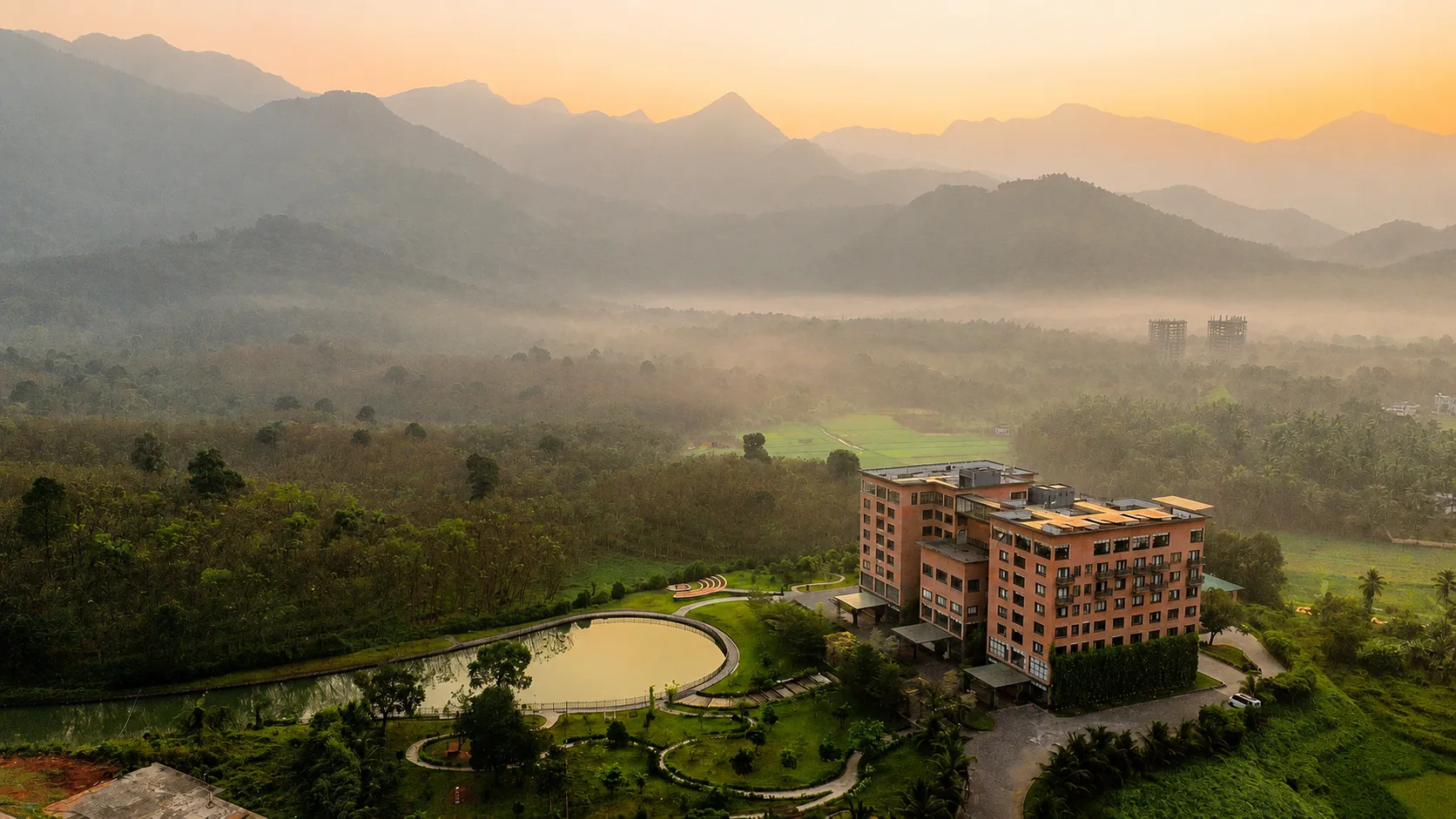
Kaithappoyil, Western Ghats

Before you leave
A physician reads every letter. Book a consultation, or send an inquiry — reservations answers the same day.