
[gtranslate]
MENU
Medical Disclaimer: This article is educational and does not constitute medical advice. Chronic insomnia can be a symptom of serious underlying conditions including depression, sleep apnoea, thyroid disorder, and cardiovascular disease. Please seek physician assessment if you have significant or worsening sleep disturbance. Tigris Valley’s physician team conducts a comprehensive medical assessment before any programme begins.
You’ve tried the sleep hygiene advice. You’ve tried the pills. Some nights they work; most nights they don’t — and when they do, the sleep doesn’t feel restorative. Chronic insomnia is not simply a habit problem or a stress response that a sleeping pill can fix. It has specific physiological causes — dysregulated cortisol, depleted brain chemistry, autonomic nervous system overactivation, and often underlying metabolic conditions — that respond to a completely different approach. This guide explains what that approach is and why it works when medication alone does not.
Table of Contents
Clinically, chronic insomnia is defined as difficulty falling asleep, staying asleep, or waking too early — occurring at least three nights per week for at least three months — despite adequate opportunity for sleep, and producing daytime impairment. It affects a person’s ability to function, not just their comfort.
It is important to distinguish the main presentations:
| Type | Pattern | Primary Mechanism | Ayurvedic Parallel |
|---|---|---|---|
| Sleep-onset insomnia | Can’t fall asleep; lies awake for hours | Cortisol elevation; hyperactive sympathetic nervous system | Vata excess — hyperactivation of mind channels |
| Sleep-maintenance insomnia | Falls asleep but wakes repeatedly (often 2–4am) | Blood sugar dysregulation; cortisol surge at night; liver metabolic burden | Pitta excess — liver/gallbladder peak time (1–3am) |
| Early waking insomnia | Wakes at 4–5am, cannot return to sleep | Elevated morning cortisol; HPA axis dysregulation; depression | Vata aggravation in pre-dawn period (Brahma Muhurta) |
| Non-restorative sleep | Sleeps 7–8 hours but wakes exhausted | Poor sleep architecture; sleep apnoea; mitochondrial dysfunction | Tarpaka Kapha depletion — insufficient brain nourishment |
The pattern matters clinically — both for conventional diagnosis and for Ayurvedic treatment selection. Identifying which type you are experiencing is the first step in the pre-arrival consultation at Tigris Valley.
Insomnia is underreported across the Gulf — partly because seeking help for sleep problems carries less social urgency than physical illness, and partly because sleeping pills are readily available without consultation in many GCC countries, creating a self-medication pattern that masks the underlying condition without addressing it.
The structural drivers of insomnia in Gulf populations are specific:
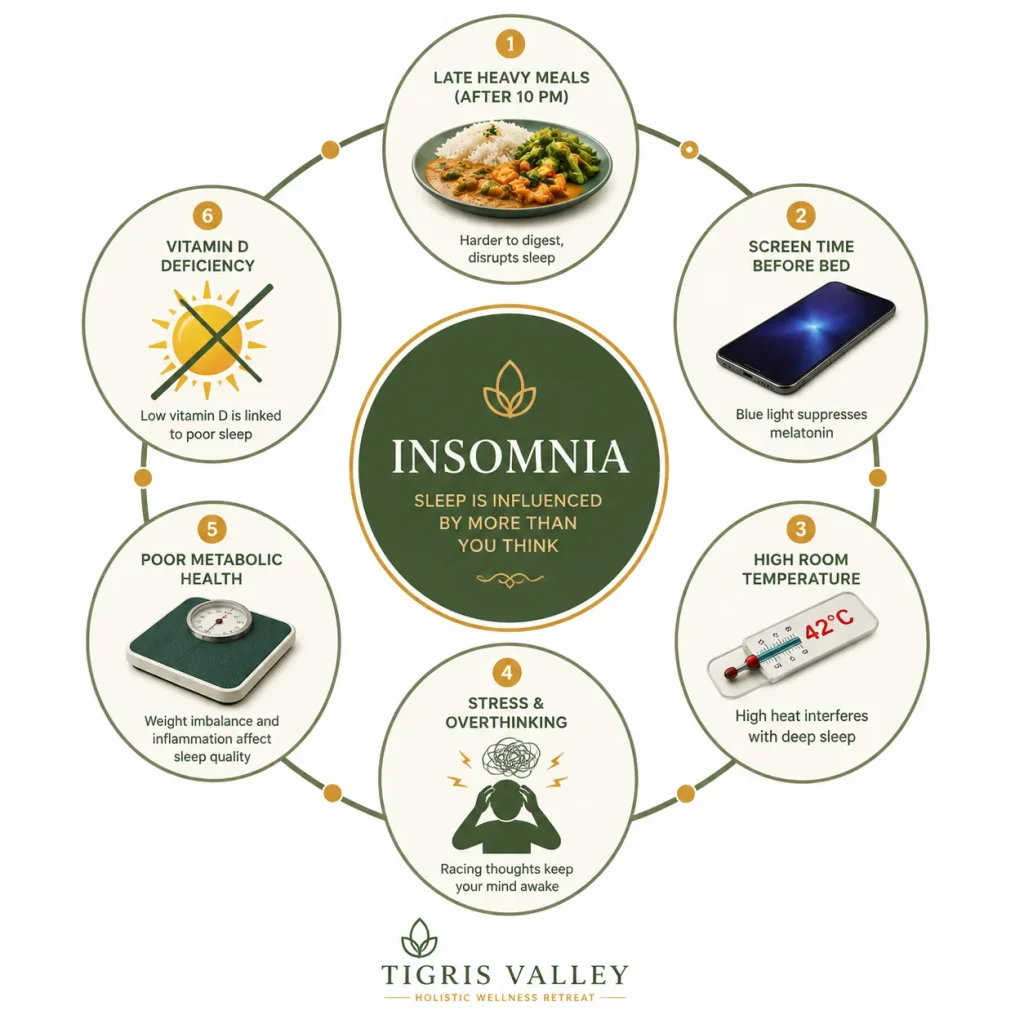
Sleeping pills — whether benzodiazepines, Z-drugs (zolpidem, zopiclone), or antihistamine-based sleep aids — produce sedation, not physiological sleep. This distinction matters clinically.
Natural deep sleep involves specific neurological cycles — slow-wave sleep (deep restoration and glymphatic brain clearance) and REM sleep (memory consolidation, emotional processing, hormonal restoration). Most pharmaceutical sleep aids suppress slow-wave and REM sleep architecture — producing unconsciousness but not the restorative cycling that the body requires.
The practical consequences:
Cognitive Behavioural Therapy for Insomnia (CBT-I) is the only intervention with consistent evidence for producing lasting improvement in sleep architecture rather than pharmacological sedation. Tigris Valley integrates CBT sessions within its confirmed Stress & Burnout Recovery Programme — complementing the Ayurvedic and Functional Medicine approach with the single most evidence-based psychological intervention for chronic insomnia.
Cortisol follows a natural diurnal rhythm — high in the morning (activating), declining through the day, lowest at night (enabling sleep). In chronic stress, this rhythm inverts: cortisol remains elevated in the evening, directly inhibiting melatonin production and sleep onset. This is the most common mechanism in Gulf professionals with work-related insomnia.
Approximately 90% of the body’s serotonin — the precursor to melatonin — is produced in the gut. Gut dysbiosis disrupts serotonin synthesis and alters tryptophan metabolism, directly impairing the neurochemical foundations of sleep. This is why many chronic insomnia patients also report digestive symptoms — they share the same upstream cause.
Sleep is an energy-intensive neurological process requiring adequate mitochondrial ATP production to sustain the complex cycling between sleep stages. Mitochondrial dysfunction — caused by oxidative stress, nutritional deficiency, or post-viral illness — produces the non-restorative sleep pattern in which patients wake feeling no better than when they went to bed, regardless of hours slept.
Magnesium is required for over 300 enzymatic reactions, including those governing GABA production (the brain’s primary inhibitory neurotransmitter responsible for sleep initiation), muscle relaxation, and autonomic nervous system parasympathetic activation. Deficiency — extremely common in Gulf populations due to dietary patterns — directly produces sleep-onset insomnia, restless legs, and light, fragmented sleep.
Both hypothyroidism and hyperthyroidism produce sleep disruption — hypothyroidism through excessive daytime somnolence and fragmented nighttime sleep, hyperthyroidism through hyperactivation and difficulty sleeping. Thyroid dysfunction is consistently underdiagnosed in Gulf populations and should be excluded in all chronic insomnia presentations.
In Ayurvedic medicine, accumulated Ama (unprocessed metabolic toxins) specifically obstructs the channels governing the nervous system and mind. This obstruction impairs the natural withdrawal of consciousness into sleep that Ayurveda describes as the movement of Prana inward. This mechanism — which corresponds to the neuroinflammatory impairment of sleep regulatory circuits documented in modern sleep medicine — is directly addressed by Panchakarma’s multi-channel Ama clearance.
Ayurveda’s understanding of sleep (Nidra) is one of its most clinically precise contributions — it places sleep alongside food and celibacy as one of the three foundational pillars of life (Trayopastambha), and dedicates significant classical text to its physiological mechanisms and therapeutic restoration.
Tarpaka Kapha is the specific Kapha sub-type responsible for nourishing and protecting the brain and nervous system. When Tarpaka Kapha is depleted — through chronic stress, inadequate nutrition, sustained illness, or excessive mental exertion — the brain loses its buffering capacity and the mind cannot settle into sleep. This maps with precision onto what modern neuroscience describes as depleted neurochemical sleep reserves and impaired glymphatic brain clearance.
Elevated Vata — the dosha governing the nervous system and all movement — produces the racing thoughts, physical restlessness, and inability to “switch off” that characterise sleep-onset insomnia. Vata excess is driven by irregular routines, excessive stimulation, chronic stress, inadequate nutrition, and the specific lifestyle patterns common in Gulf professional environments.
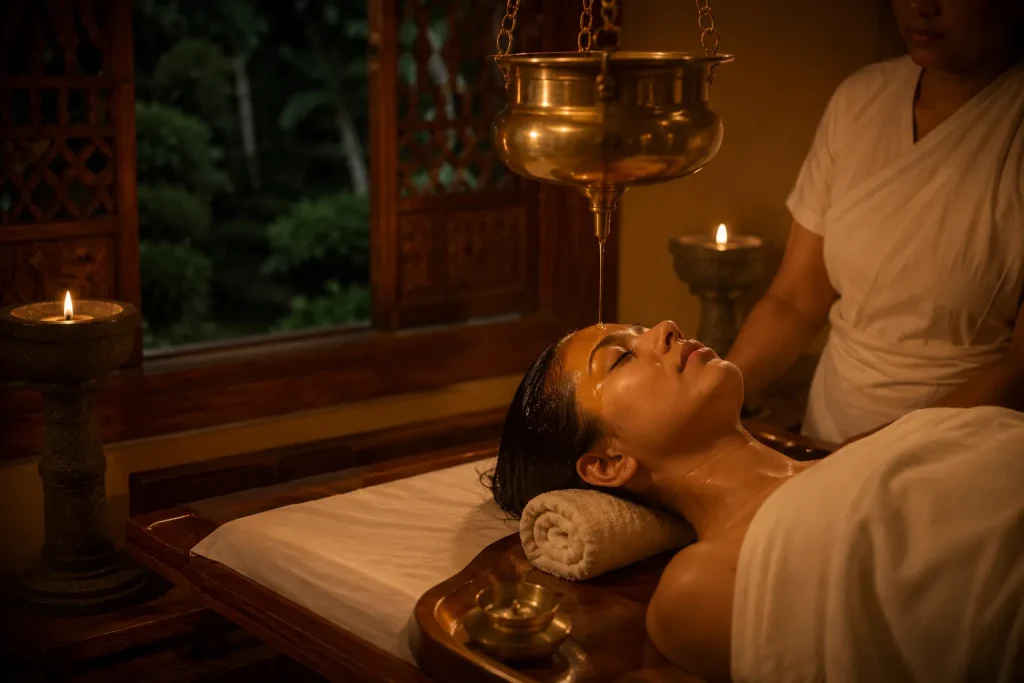
Shirodhara — the continuous warm herbal oil flow over the forehead — is Ayurveda’s most specifically neurological treatment for Vata-driven sleep disorders. Its mechanism involves sustained stimulation of the forehead’s rich neural network, inducing profound parasympathetic activation and interrupting the sympathetic hyperactivation loop that maintains insomnia. It is the most commonly described Ayurvedic therapy for insomnia in classical literature — and the one most consistently reported by patients as producing the deepest sleep of their experience on the same night it is administered.
Every claim below is sourced directly from Tigris Valley’s confirmed programme and treatment documentation.
Confirmed at Tigris Valley as calming “the nervous system with a warm herbal oil flow” and contributing to reduced “mental fog” and improved “mental sharpness.” Within the Mindfulness & Mental Clarity Package, Shirodhara is specifically confirmed as part of “Ayurvedic sleep therapies to restore genuine, restorative sleep.” Most guests report the deepest sleep of their adult lives on the night following their first Shirodhara session.
IV Magnesium is confirmed at Tigris Valley for “autonomic nervous system regulation, sleep restoration, and muscle function.” IV delivery achieves tissue saturation that oral magnesium supplementation rarely achieves — bypassing the absorption limitations that make oral magnesium ineffective for significant deficiency. For Gulf patients with sleep-onset insomnia and muscle tension, IV Magnesium addresses both the neurological and physical components of sleep disruption simultaneously.
Personalised herbal formulations are confirmed across multiple Tigris Valley programmes. For insomnia, the physician-prescribed herbal protocol is designed to support Tarpaka Kapha, pacify elevated Vata, and address the specific pattern identified in the guest’s dosha assessment — whether this is sleep-onset, sleep-maintenance, or early-waking insomnia. These are not generic supplements; they are prescription-level herbal protocols.
Cognitive Behavioural Therapy sessions are confirmed within the Stress & Burnout Recovery Programme at Tigris Valley. CBT-I (CBT for Insomnia) is the single most evidence-based psychological intervention for chronic insomnia, producing lasting improvements in sleep architecture rather than temporary sedation. At Tigris Valley, CBT is integrated alongside Ayurvedic therapies — addressing the psychological pattern alongside the physiological root causes simultaneously.
Confirmed across multiple Tigris Valley programmes for “emotional balance and mental clarity” and “regulating stress responses.” Daily Pranayama practice has documented effects on heart rate variability, autonomic nervous system parasympathetic activation, and cortisol reduction — directly addressing the HPA axis dysregulation that maintains sleep-onset insomnia. At Tigris Valley, Pranayama is a daily structured session, not a single introduction.
Confirmed at Tigris Valley for “cortisol reduction and mental clarity” within the Stress & Burnout Recovery Programme. Forest Bathing (Shinrin-yoku) has an established evidence base — primarily from Japanese research institutions — demonstrating measurable reductions in salivary cortisol following guided forest immersion. Reduced evening cortisol directly improves sleep onset by allowing the natural melatonin rise to occur without cortisol suppression.
Abhyanga is confirmed at Tigris Valley. For insomnia specifically, its most relevant mechanism is Vata pacification — warm medicated oil applied to the body directly calms the nervous system’s hyperactive signalling, releasing physical holding patterns and physical tension that maintain sympathetic arousal. Classical Ayurvedic texts specifically recommend Abhyanga before sleep as a daily Dinacharya (daily routine) practice.
Confirmed at Tigris Valley with mechanisms including “immune modulation” and “anti-inflammatory effects.” For insomnia with an underlying neuroinflammatory or gut-driven component — particularly common in post-viral insomnia and metabolic insomnia — Ozone Therapy addresses the systemic inflammatory driver that maintains sleep disruption at the physiological level.
Honest clinical guidance requires stating clearly when a wellness programme is not the right first step:
Seek physician assessment before any wellness programme if your insomnia is accompanied by:
Tigris Valley’s pre-programme physician consultation screens for all of the above. The NABH-accredited clinical standard means this assessment happens before any therapy begins — not as a formality but as a clinical safeguard.
| Phase | Days | Clinical Focus | Key Therapies |
|---|---|---|---|
| Assessment | 1–2 | Insomnia pattern identification; dosha analysis; sleep apnoea screening; hormonal and metabolic profiling | Physician consultation, lab work, sleep history assessment |
| Nervous System Reset | 3–8 | Cortisol regulation; Vata pacification; initial sleep improvement | Shirodhara, Abhyanga, IV Magnesium, Forest Bathing, Pranayama, herbal formulations |
| Root Cause Treatment | 9–15 | Gut-brain axis restoration; Ama clearance; neurochemical rebuilding | Panchakarma (Basti for Vata), Ozone Therapy, CBT sessions, Guided Meditation, Colon Hydrotherapy |
| Sleep Architecture Consolidation | 16–21 | Sleep pattern stabilisation; Tarpaka Kapha restoration; sustainable daily practice | Rasayana Therapy, graduated Yoga, sound therapy sessions, post-discharge sleep protocol design |
Upon discharge, every guest receives a post-programme sleep protocol: a personalised daily routine (Dinacharya) aligned to their dosha and sleep pattern, herbal formulations to continue at home, Pranayama practice guide, dietary recommendations for sleep-supportive evening nutrition, and guidance on sustainable sleep hygiene specific to the Gulf environment.
Explore the Stress & Burnout Recovery Programme and the Mindfulness & Mental Clarity Package for the programmes most directly addressing sleep restoration. The Emotional Healing & Mental Health Programme is available for guests whose insomnia has a significant mood or anxiety dimension.

Yes — when the root cause is identified and addressed rather than the symptom sedated. CBT-I (Cognitive Behavioural Therapy for Insomnia) has the strongest evidence base of any insomnia intervention and produces lasting improvements that sleeping pills cannot. Combined with Ayurvedic nervous system restoration, Functional Medicine correction of nutritional deficiencies, and gut-brain axis repair — as at Tigris Valley — most patients with functional chronic insomnia achieve durable sleep restoration without long-term pharmaceutical dependence.
Shirodhara involves a continuous, calibrated stream of warm herbal oil poured over the forehead — an area densely innervated with sensory nerves connecting to the prefrontal cortex and hypothalamus. This sustained therapeutic stimulation induces profound parasympathetic nervous system dominance — the physiological state that enables sleep. It interrupts the sympathetic hyperactivation loop that maintains sleep-onset insomnia. Most guests at Tigris Valley report the deepest sleep of their adult lives on the night following their first Shirodhara session.
Waking between 1–3am is classically associated with liver-gallbladder metabolic activity (the Pitta time in Ayurveda — when the liver performs its peak detoxification). In modern physiological terms, this pattern often reflects blood sugar dysregulation (hypoglycaemic drop triggers cortisol release), liver metabolic burden (from fatty liver or high toxin load), or elevated nocturnal cortisol from HPA axis disruption. The Tigris Valley physician consultation identifies which mechanism is primary for each patient and targets treatment accordingly.
Benzodiazepine and Z-drug (zolpidem, zopiclone) dependence requires physician-supervised gradual tapering — stopping abruptly is dangerous and can cause severe withdrawal including seizures. Tigris Valley’s physician team reviews all current medications including sleeping pills during the pre-arrival consultation and works within a safe tapering framework alongside the integrative sleep restoration programme. Never stop sleeping pills abruptly without physician guidance.
IV Magnesium achieves tissue saturation significantly faster and more completely than oral supplementation. Oral Magnesium has a dose-limited absorption ceiling — above a certain oral dose, the remainder is excreted rather than absorbed. IV delivery bypasses this entirely, delivering therapeutic concentrations directly to muscle, nerve, and brain tissue. For established Magnesium deficiency producing sleep-onset insomnia and muscle tension, IV delivery produces results that months of oral supplementation cannot replicate.
The critical difference at Tigris Valley versus a standard wellness retreat is the post-discharge protocol. The programme is designed to shift the nervous system’s baseline — not just provide temporary relief in a beautiful environment. The 14–21 day residential period is long enough to produce neurological adaptation (the HPA axis recalibration that follows sustained cortisol normalisation). The post-discharge Pranayama, herbal, and lifestyle protocol maintains this baseline on return. Guests who follow the discharge protocol consistently report sustained sleep improvement for months after their programme.
Yes — significantly. The liver’s peak detoxification occurs during deep sleep (11pm–3am), and poor sleep quality worsens fatty liver — and vice versa. Insulin resistance, which drives NAFLD, also disrupts sleep architecture through nocturnal blood sugar instability. If your insomnia pattern includes 2–3am waking and you also have metabolic syndrome or fatty liver, these conditions share upstream causes and benefit from combined treatment through the Metabolic Disorder Management Programme.
Yes. The programme adapts to Ramadan fasting schedules — IV therapies and active treatments are scheduled after Iftar, and the therapeutic approach during fasting includes specific herbal Suhoor preparations to support sleep quality. Many Gulf patients actually find that the structured programme during Ramadan produces additional spiritual-emotional benefit alongside the clinical outcomes. Discuss your specific Ramadan timing needs during the pre-arrival consultation.
Insomnia has gender-specific drivers: in women, hormonal fluctuation (perimenopausal oestrogen/progesterone decline, PCOS-related hormonal disruption, and menstrual cycle cortisol patterns) are major contributors. In Gulf men, work pressure, sleep apnoea related to obesity, and late-night eating patterns are primary drivers. Tigris Valley’s physician assessment identifies gender-specific hormonal and metabolic patterns and tailors the programme accordingly — including hormonal profiling where relevant, available through the Anti-Aging & Longevity Programme for perimenopausal women.
Contact the team at reservation@tigrisvalley.com or WhatsApp +91 9072661622. Your pre-arrival consultation — a video call with the physician team — reviews your insomnia pattern, duration, current medications, and any underlying conditions. Your personalised programme is designed from this consultation before you travel. Flight routing from Dubai, Riyadh, Abu Dhabi, and Doha to Kozhikode (CCJ) via Emirates, Qatar Airways, or Etihad typically takes 4–6 hours including one connection. Use the contact page to submit an initial enquiry.
You Deserve More Than a Pill That Makes You Unconscious
Tigris Valley’s NABH-accredited physician team addresses the actual root causes of your insomnia — cortisol dysregulation, Magnesium deficiency, gut-brain disruption, Vata excess — through a personalised combination of Shirodhara, IV Magnesium, CBT, Pranayama, Panchakarma, and Forest Bathing. Your pre-arrival consultation is where it starts.
Explore the Stress & Burnout Recovery Programme
Kaithappoyil, in the Western Ghats.
Markaz Knowledge City Road, Kaithappoyil, Adivaram, Kerala
Get directions +91 90726 61622 reservation@tigrisvalley.com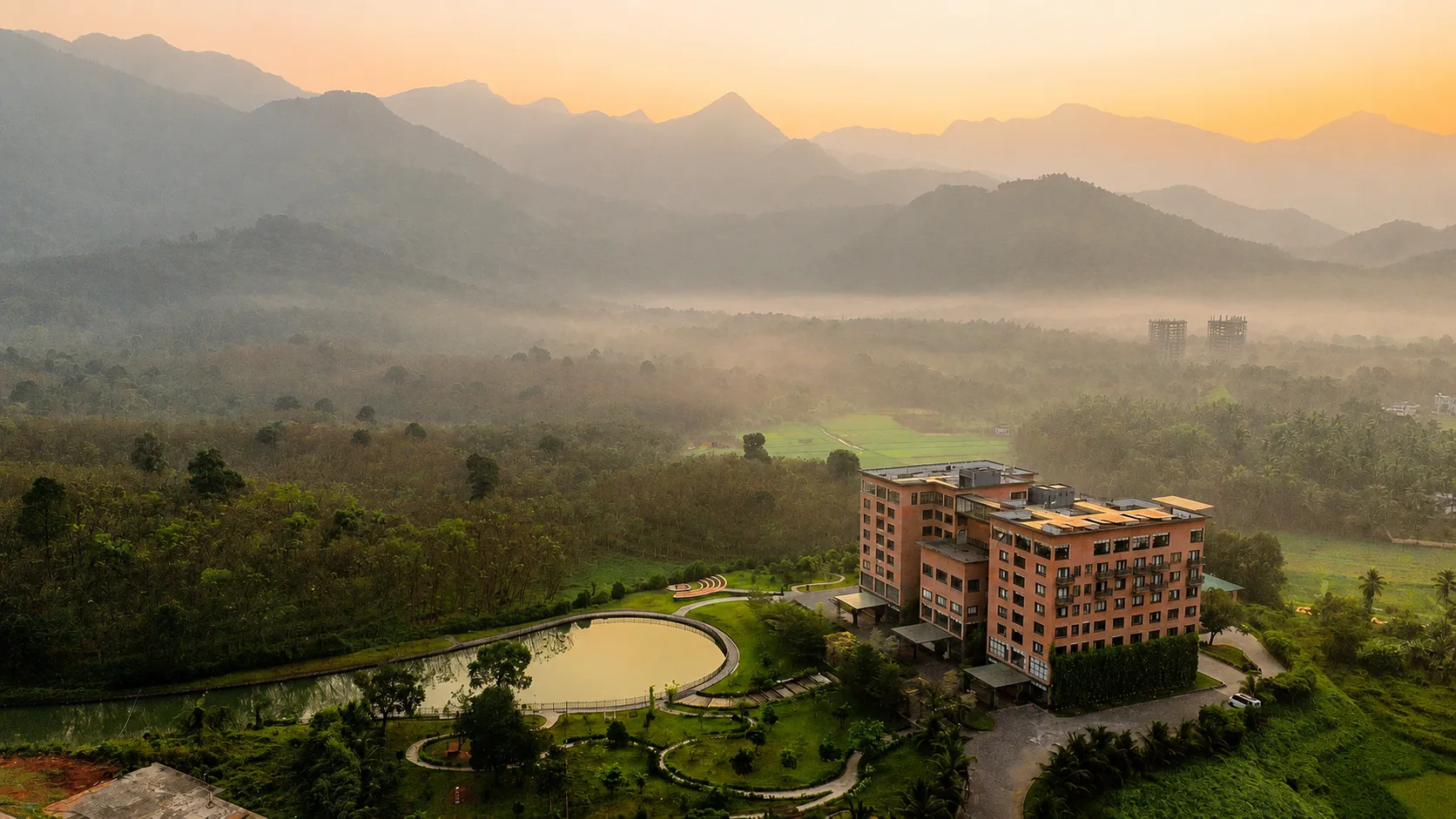
Kaithappoyil, Western Ghats

Before you leave
A physician reads every letter. Book a consultation, or send an inquiry — reservations answers the same day.