
[gtranslate]
MENU
The global wellness industry is the subject of extraordinary market projections, impressive-sounding numbers, and broad claims about Ayurveda’s growth. But numbers without context are noise. What actually matters is what the data reveals about why people are choosing Ayurveda retreats over conventional spa holidays — and what distinguishes a clinically meaningful wellness program from a luxury experience in ayurvedic clothing. This guide presents the key statistics, interprets what they mean for informed health consumers, and explains what to look for in a retreat that delivers on the promise the data reflects.
Table of Contents
Editorial Note on Statistics: This article references publicly available market research from recognised global wellness and medical tourism industry bodies. Where specific figures are cited, the source category is indicated. Individual clinical outcome claims for Ayurveda therapies are drawn from peer-reviewed Ayurvedic medicine literature rather than from Tigris Valley directly. Readers are encouraged to consult original sources for the most current data.
The Global Wellness Institute (GWI) defines the wellness economy as industries that enable consumers to incorporate wellness activities and lifestyles into their daily lives. This is a broader category than healthcare — it encompasses physical activity, nutrition, personal care, preventive medicine, wellness tourism, and workplace wellness.
The wellness economy has been one of the fastest-growing segments of the global economy for the better part of two decades. Wellness tourism — travel undertaken primarily for wellness purposes — is one of the sector’s highest-growth sub-categories, outpacing conventional leisure tourism by a significant margin in the years preceding and following the COVID-19 pandemic.
| Wellness Sector | Key Characteristic | Relevance to Retreat Seeker |
|---|---|---|
| Wellness Tourism | Travel primarily for physical or mental health improvement | Growing demand for destinations offering medically meaningful outcomes, not just relaxation |
| Medical Wellness Tourism | Wellness travel with physician-supervised clinical programming | Fastest-growing sub-category; driven by chronic disease burden in high-income markets |
| Preventive Health Tourism | Travel for prevention-focused programs before illness occurs | Growing among 35–55 age group in European and Gulf markets |
| Chronic Disease Management Tourism | Travel for integrative treatment of conditions inadequately addressed at home | Drives significant portion of India-bound wellness tourism from the Middle East and Europe |

The global Ayurveda market encompasses Ayurvedic products (herbal supplements, cosmetics, foods), Ayurvedic services (clinical treatments, retreats, consultations), and institutional Ayurveda (hospitals, research institutions). It is one of the traditional medicine categories experiencing the fastest mainstream adoption in high-income international markets.
Several structural forces are driving the Ayurveda market’s growth that go beyond trend or fashion:
India holds the dominant global position in Ayurvedic clinical services — not merely as a country of origin but as the only jurisdiction where the full clinical Panchakarma protocol can be practiced under appropriate regulatory oversight. Within India, Kerala is recognised as the region of highest clinical authenticity and practitioner expertise.
Medical tourism — travel for healthcare treatment — and wellness tourism are increasingly converging in the category of medical wellness tourism: travel for physician-supervised programs that address chronic conditions, preventive health, and systemic rejuvenation. India’s AYUSH system (Ayurveda, Yoga, Unani, Siddha, Homeopathy) positions it uniquely in this space.
India is the only country where the AYUSH system is formally regulated, institutionally accredited (through bodies like NABH), and integrated with modern medicine at the hospital level. This regulatory and institutional framework is what makes India — and specifically Kerala — the credible global destination for clinical Ayurveda. When guests choose Tigris Valley — confirmed as South Asia’s largest AYUSH-integrated, NABH-accredited wellness hospital — they are choosing within the highest tier of this framework.
The flow of medical and wellness tourists from GCC countries (Saudi Arabia, UAE, Kuwait, Bahrain, Oman, Qatar) to Kerala represents one of the most established wellness travel corridors in Asia. The drivers are consistent across source markets:

The relevant question for any prospective guest is not just “how large is the Ayurveda market?” but “why are people like me choosing Ayurveda retreats over other wellness options?” The research and anecdotal evidence from retreat demographics converge on several consistent motivations:
| Motivation | What Ayurveda Offers | What Conventional Wellness Misses |
|---|---|---|
| Root-cause resolution | Identifies and addresses the doshic imbalance generating symptoms | Manages symptoms without identifying underlying drivers |
| Lasting outcomes | Panchakarma physically removes accumulated toxins; changes persist post-program | Temporary relief; symptoms return when the program ends |
| Personalisation | Constitution-specific therapy sequencing based on individual dosha analysis | Standardised packages; same treatments for all guests |
| Systemic approach | Addresses mind, body, and lifestyle simultaneously | Addresses either physical or mental wellbeing, rarely both |
| Post-program protocol | Personalised diet, herbal kit, yoga practice, lifestyle guidance | Program ends at checkout with no structured continuation |
One of the most important distinctions in wellness tourism — and one that market data is beginning to reflect — is the gap between spa-based Ayurveda experiences and clinical Ayurveda programs. This distinction matters because it determines whether a guest receives meaningful health outcomes or a pleasant holiday with Ayurvedic aesthetics.
The shift toward clinical standards is visible in the wellness travel market’s evolving demand profile:
Key Insight: The wellness tourism market’s fastest-growing segment is medical wellness tourism — guests seeking physician-supervised programs for measurable health outcomes, not just relaxation. This is the segment that NABH-accredited integrative hospitals like Tigris Valley are specifically built to serve. The shift from spa to clinical is not a niche development — it reflects a fundamental maturation of the informed wellness consumer.
Ayurveda is increasingly subject to formal clinical research — both within India’s government-funded AYUSH research institutions and through collaborative studies with international universities. While a comprehensive literature review is beyond this article’s scope, several areas of documented evidence are relevant to guests considering an Ayurveda retreat for health outcomes:
Published studies in peer-reviewed Ayurvedic medicine journals have examined Panchakarma’s effects on metabolic markers — blood glucose regulation, lipid profiles, inflammatory markers (CRP, IL-6), and cortisol levels. The consistent finding is that complete Panchakarma protocols — specifically those including Virechanam and Basti in sequence — produce measurable reductions in systemic inflammatory load. This aligns with Tigris Valley’s Metabolic Disorder Management Program and Cardio-Metabolic Health & Recovery Program.
Shirodhara has been the subject of clinical studies examining its effects on stress hormones, autonomic nervous system function, and sleep quality. Consistent findings include significant reductions in serum cortisol, improvements in HRV (heart rate variability — a reliable marker of parasympathetic nervous system function), and subjective improvements in anxiety and sleep quality. These findings support the clinical rationale for Shirodhara’s prominent role in the Stress & Burnout Recovery Program.
The evidence base for Yoga and Pranayama in clinical health outcomes is perhaps the most robust within the integrative medicine literature — with multiple randomised controlled trials demonstrating measurable effects on cardiovascular risk, metabolic markers, HPA axis regulation, and inflammatory biomarkers. Tigris Valley’s confirmed inclusion of Yoga & Naturopathy across all programs reflects this evidence base.
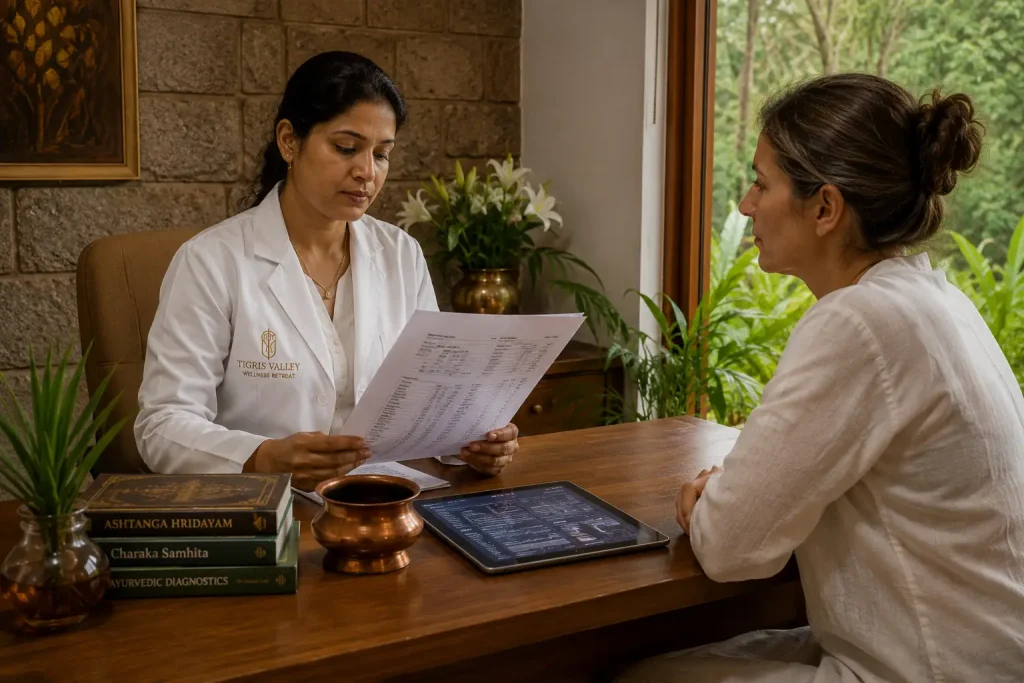
Understanding who is travelling to Kerala for Ayurveda — and why — helps prospective guests contextualise their own decision.
The market context matters because it clarifies what to look for. The wellness tourism industry’s fastest-growing segment is medical wellness tourism — guests seeking physician-supervised programs in accredited facilities with measurable health outcomes. This is not the majority of wellness tourism; it is the most clinically meaningful portion of it.
Tigris Valley — as South Asia’s largest AYUSH-integrated, NABH-accredited wellness hospital — occupies the highest tier of this clinical standard. The facility combines:
| Standard | Tigris Valley | Typical Ayurveda Retreat |
|---|---|---|
| Accreditation | NABH-accredited | No accreditation or self-certification |
| Medical Systems | Ayurveda + Unani + Siddha + Yoga + Homeopathy + Functional Medicine | Ayurveda + massage; limited integration |
| Physician Oversight | 24/7 medical support; BAMS-qualified physicians | Therapists; periodic physician availability |
| Diagnostics | Advanced lab testing + dosha assessment integrated | Dosha questionnaire only |
| International Access | Arabic language support; direct Gulf flights; travel guidance | English-only; no Gulf-specific infrastructure |
| Post-Program Protocol | Personalised diet plan, herbal formulations, yoga practice guidelines | General advice at discharge; no structured protocol |
For guests considering their first Ayurveda retreat — or for experienced wellness travellers upgrading from a spa retreat to a clinical program — the evidence and market context converge on the same conclusion: the outcomes you are seeking require the clinical standard. Browse the full wellness programs, explore accommodation options, and review the facilities at Tigris Valley.
Ayurveda is increasingly subject to formal clinical research within India’s government-funded AYUSH research institutions and through international collaborative studies. Several core Ayurvedic interventions — including Panchakarma’s effects on inflammatory markers, Shirodhara’s effects on cortisol and HRV, and Yoga’s effects on cardiovascular and metabolic health — have peer-reviewed evidence supporting their clinical effects. The evidence base is growing but not yet at the RCT volume of pharmaceutical medicine.
Kerala preserved the most complete classical Panchakarma tradition through hereditary practitioner lineages, developed Kerala-specific therapeutic procedures, and created the residential multi-week program model that constitutes a genuine clinical Ayurveda intervention. Its climate, medicinal plant biodiversity, and regulatory framework for AYUSH practice collectively make it the globally recognised benchmark for authentic Panchakarma.
NABH (National Accreditation Board for Hospitals and Healthcare Providers) is India’s national healthcare accreditation body — equivalent in function to JCI internationally. NABH accreditation confirms that a facility meets defined standards for medical safety, clinical governance, patient rights, and quality management. For wellness tourists, it is the most reliable signal that a Kerala retreat operates at a clinical rather than commercial standard.
Functional Medicine brings evidence-based diagnostics (advanced lab testing, biomarker analysis) and nutritional interventions (IV Nutritional Therapy, targeted supplementation) that complement Ayurveda’s constitution-based assessment and herbal interventions. Together they address conditions at both the Ayurvedic (doshic, systemic) level and the biochemical (cellular, metabolic) level — producing more comprehensive outcomes than either system alone. Explore Functional Medicine at Tigris Valley.
Ozone Therapy has a growing evidence base in integrative medicine — particularly for its effects on cellular oxygenation, immune modulation, and reduction of oxidative stress. It is used at Tigris Valley as a complement to classical Ayurvedic detox procedures, providing cellular-level support for the elimination processes that Panchakarma initiates at the tissue level.
Medical tourism traditionally refers to travel for surgical procedures or diagnostic treatment. Wellness tourism refers to travel for health maintenance and improvement. Medical wellness tourism — the fastest-growing sub-category — is travel for physician-supervised programs that address chronic conditions, preventive health, and systemic rejuvenation without surgery. This is the category that NABH-accredited integrative retreats like Tigris Valley serve.
In a clinical setting like Tigris Valley — where pre-program and post-program diagnostic assessment is conducted — improvements in inflammatory markers, metabolic indicators, sleep quality, pain scores, and cortisol levels can be objectively measured. This is one of the key advantages of a medically supervised integrative program over a generic wellness retreat.
Yes. The Corporate Wellness Retreat at Tigris Valley is specifically designed for organisations seeking to address burnout, chronic stress, and lifestyle disease burden in their workforce. It combines the clinical depth of individual programs with group wellness programming appropriate for corporate cohorts.
NABH accreditation can be verified directly through the NABH website (nabh.co). When contacting a retreat, ask specifically for the NABH certificate number and accreditation status. Tigris Valley’s NABH-accredited status is a confirmed institutional credential.
Contact the reservations team at reservation@tigrisvalley.com or call/WhatsApp +91 9072661622. Arabic-language support is available. Journey details for international guests are on the Getting to Tigris Valley page.
The Data Points Here. Your Decision Starts Here.
The global shift toward integrative, medically supervised Ayurveda programs is not a trend — it is the recognition that chronic conditions require more than symptom management. At Tigris Valley, that recognition is built into every program.
→ Explore the Detox & Cleanse Program
Kaithappoyil, in the Western Ghats.
Markaz Knowledge City Road, Kaithappoyil, Adivaram, Kerala
Get directions +91 90726 61622 reservation@tigrisvalley.com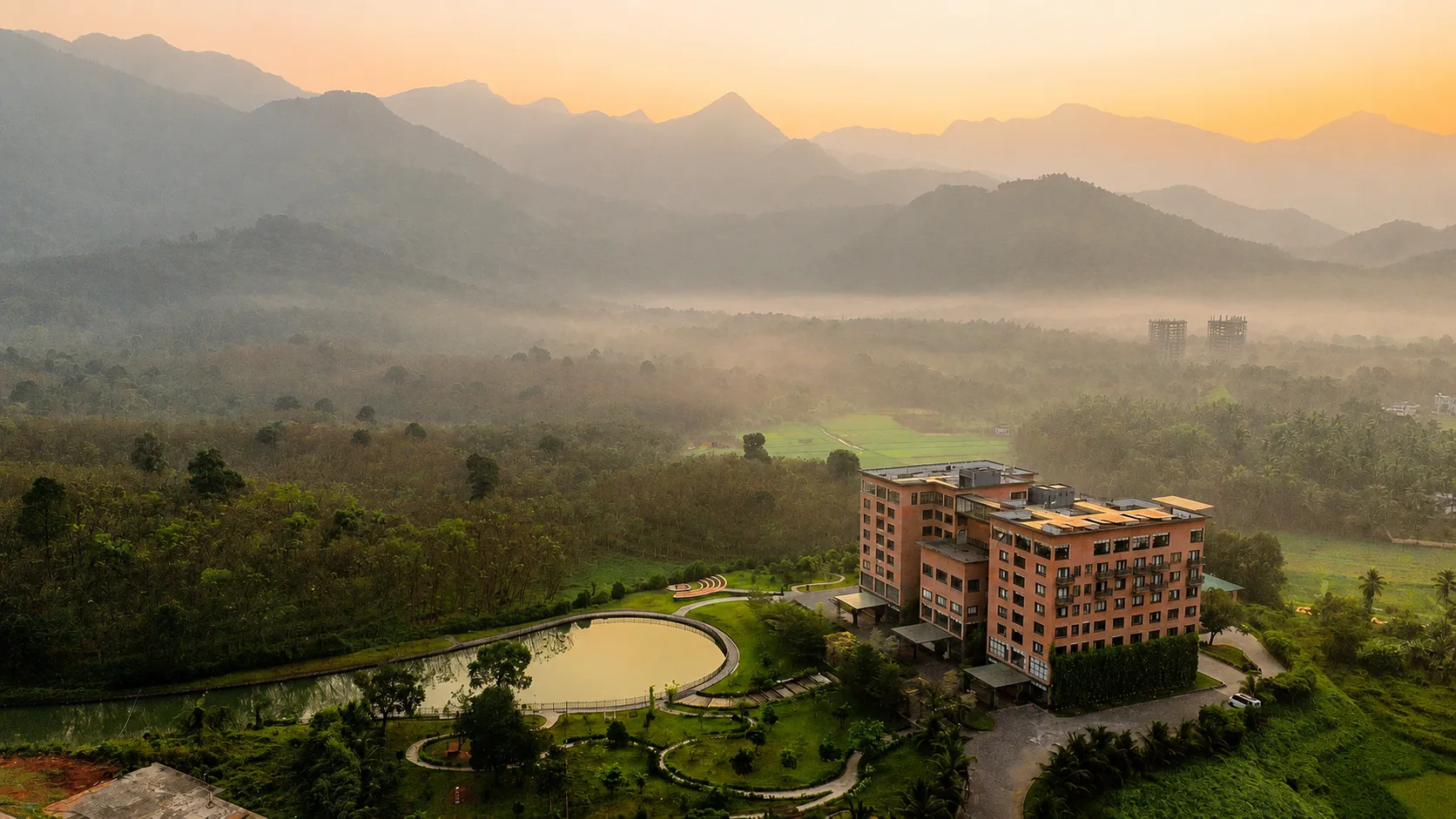
Kaithappoyil, Western Ghats

Before you leave
A physician reads every letter. Book a consultation, or send an inquiry — reservations answers the same day.