[gtranslate]
MENU
You have made the decision — a genuine Ayurvedic retreat in Kerala, not a day spa session or a hotel massage with a herbal label. You have shortlisted your destination. Now the question every serious wellness traveller eventually asks: when do I go?
“Monsoon is best” — three words that fill every article on the subject. That is true, but incomplete. The best time for Ayurvedic treatment in Kerala depends on your specific health goal, which therapies your physician recommends, your tolerance for rain and heat, and what kind of experience you want around your program. This guide gives you the seasonal intelligence to make that decision deliberately — grounded in Ayurvedic science and the specific context of Tigris Valley, located in the Wayanad mountains of Kerala.
Most people plan a wellness trip the way they book a beach holiday — pick a free week, search for flights, go. Ayurveda has a different position on this.
The classical Ayurvedic text Ashtanga Hridayam dedicates an entire chapter to Ritucharya — the science of living in alignment with seasons. The underlying principle is straightforward: the human body is not a closed system. It continuously responds to changes in temperature, humidity, atmospheric pressure, and the quality of available food and water. Each of these environmental variables influences which of the three doshas — Vata, Pitta, and Kapha — is naturally elevated or depleted at a given time of year.
That doshic state determines which therapeutic interventions will produce their maximum effect. Three seasonal phases govern this:
A practical example: Vata accumulates during summer heat, aggravates during monsoon, and naturally pacifies in post-monsoon autumn. This sequence explains why joint pain, sciatica, back pain, and nerve conditions — all Vata-driven — tend to worsen in July and August, and why Vata-pacifying therapies like Abhyanga and Panchakarma are maximally effective in that same window.
At Tigris Valley, your physician adapts your treatment protocol based on the current season regardless of when you visit — so every stay is therapeutically appropriate. This guide helps you understand when your condition is most receptive to the deepest results.
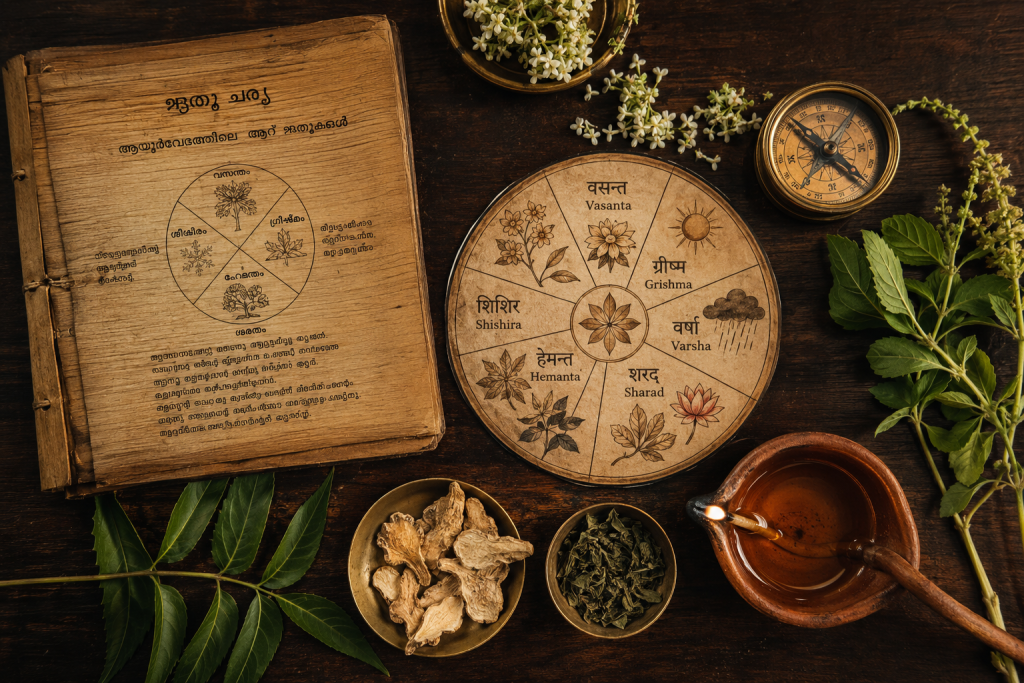
Kerala does not follow a standard four-season pattern. Its climate is shaped by two monsoons and the dramatic elevation change from the coastal plains to the Western Ghats. Wayanad — where Tigris Valley sits — is at an elevation that keeps temperatures meaningfully cooler than coastal Kerala throughout the year.
| Season | Approx. Months | Climate in Wayanad | Dominant Dosha |
|---|---|---|---|
| South-West Monsoon | June–September | Heavy rain, high humidity, cooler mountain air | Vata aggravation |
| Post-Monsoon | October–November | Clearing skies, vivid green landscape, pleasantly cool | Pitta aggravation |
| Winter | December–February | Cool and dry, minimal rain, comfortable days | Kapha accumulation; strong Agni |
| Spring / Pre-Monsoon | March–May | Warming, dry, comfortable at Wayanad altitude | Kapha aggravation; Pitta building |
Why Wayanad’s elevation matters: Coastal Kerala in April–May reaches 34–38°C — uncomfortable for many guests. In Wayanad, the same months are significantly cooler due to the altitude. This makes every season more clinically accessible at Tigris Valley than at a lower-altitude coastal retreat.
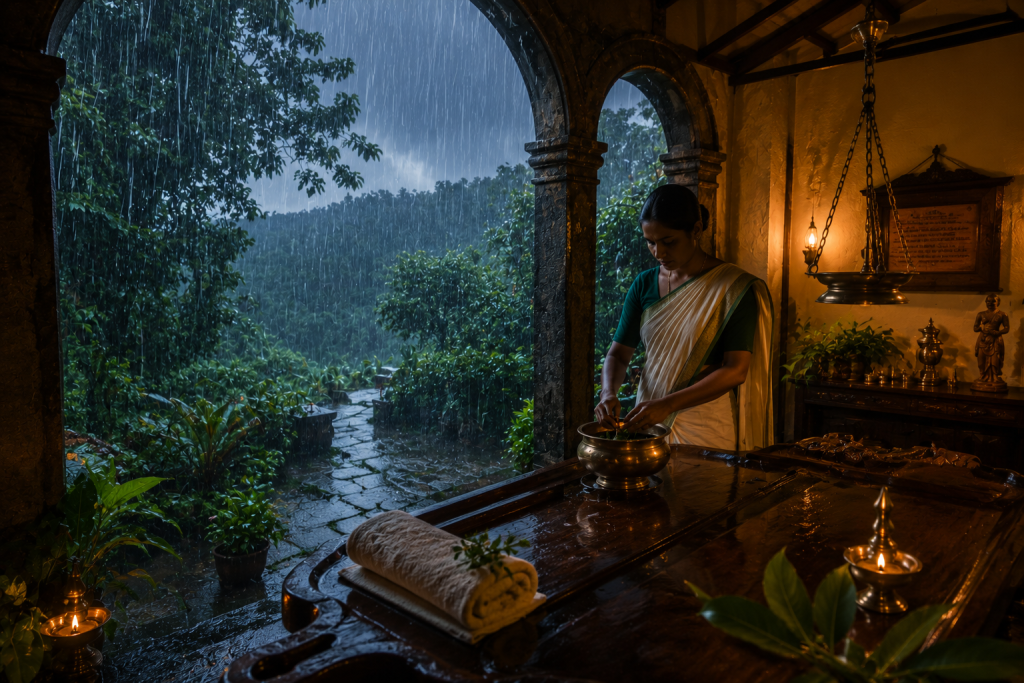
If a classically trained Kerala Ayurvedic physician has one free week to choose their own treatment season, they will almost always choose the monsoon. There are specific, physiological reasons for this — not tradition alone.
Skin pore conductivity: Continuous ambient humidity softens the outer skin layer and expands the body’s micro-channels (srotamsi). Transdermal absorption of medicated oils during Abhyanga is measurably higher in high-humidity conditions — the therapeutic compounds reach deeper tissue layers more effectively than in dry air.
Peak Vata aggravation = peak responsiveness: Because Vata is at its maximum aggravation during monsoon, Vata-pacifying therapies produce their most dramatic clinical results. The body is most “open” to therapeutic correction precisely because the imbalance is most acute.
Herb potency: Medicinal plants reach the highest concentration of their active compounds immediately following the monsoon rains. Freshly prepared herbal formulations made from monsoon-season herbs are pharmacologically more potent than those prepared from dry-season harvests.
Forced stillness: The rain creates a natural environment of retreat. Fewer distractions, no temptation for extended sightseeing, and a psychological readiness for inward healing. Long-term Ayurvedic patients describe monsoon as the season when it is easiest to fully surrender to the treatment process.
Booking note: Monsoon is Tigris Valley’s most requested season. Book 4–6 months in advance for July–August programs. The Wayanad forests and waterfalls in the surrounding Nearby Escapes are strikingly beautiful during this season.
As the monsoon withdraws in October, Kerala transforms dramatically. The rain lightens, the skies open, and the landscape is at its most vivid — waterfalls at full roar, air cool and crystalline. From a clinical perspective, this period is dominated by Pitta aggravation — the accumulated heat and inflammatory activity from the summer now expresses itself in skin conditions, inflammatory joint flares, and burning pain patterns.
Ayurvedic science views winter as the season of strongest Agni — digestive fire. The body’s metabolism runs at its most efficient, appetite is robust, and the capacity to assimilate nourishing, strengthening treatments is at its peak. This makes winter the optimal season for restorative and anti-ageing programs where the goal is tissue nourishment and vitality rather than aggressive purification.
Booking note: December and January are peak tourist months across Kerala. Book 4–6 months in advance for Christmas and New Year period programs.
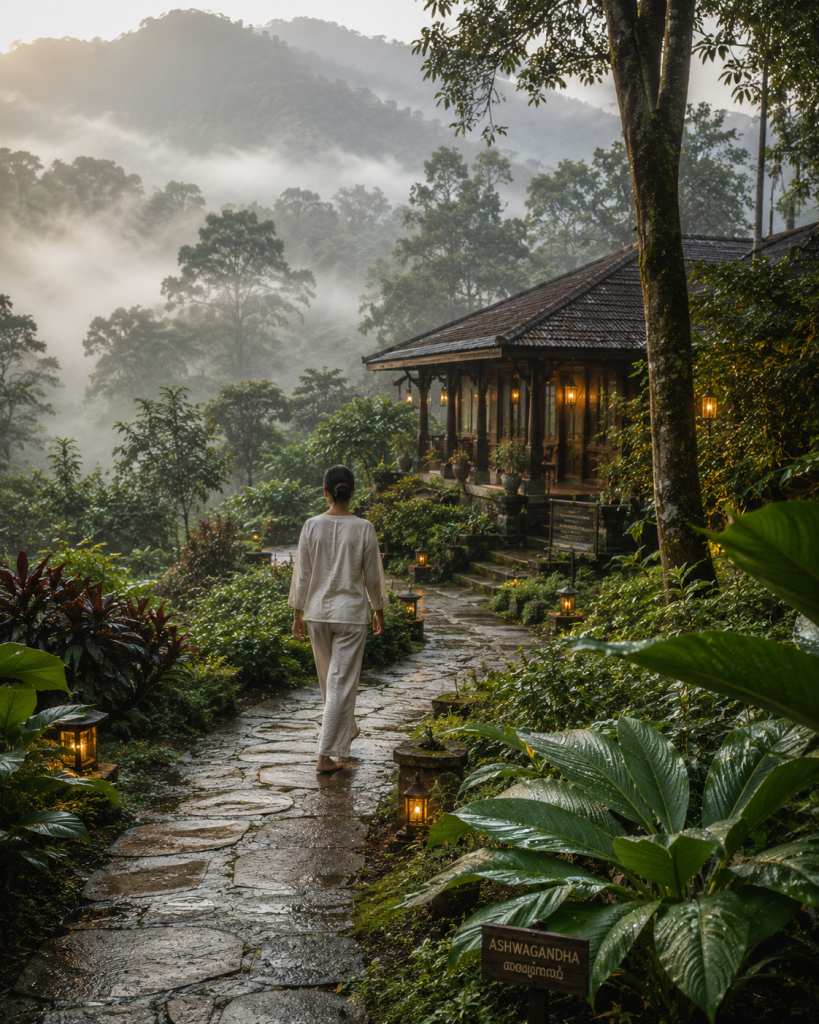
As winter transitions into spring (Vasanta Ritu), Kapha dosha reaches its aggravation peak. The body begins “melting” its winter reserves, triggering sluggishness, respiratory congestion, allergies, and the heaviness of excess Kapha accumulation. This makes spring the optimal season for Kapha-clearing programs — lighter, stimulating treatments that mobilise and clear accumulated Kapha before it causes deeper disease.
Booking advantage: March and April represent the lowest occupancy months at most Kerala retreats. Program availability is flexible, the environment is quiet and private, and guests who value an unhurried, exclusive setting will find spring genuinely rewarding.

Use this table to match your health goal to the optimal visiting season at Tigris Valley.
| Health Goal / Program | Best Season | Key Reason |
|---|---|---|
| Chronic joint pain, arthritis, back pain, sciatica | Monsoon (Jun–Sep) | Peak Vata aggravation = maximum responsiveness to Abhyanga and Panchakarma |
| Full Panchakarma deep detox | Monsoon or Winter (Jan–Feb) | Monsoon for Vata; Winter for metabolic conditions with strong Agni |
| Fibromyalgia and nerve pain | Monsoon, Post-Monsoon | Shirodhara most potent in high-humidity conditions; nervous system reset |
| Rheumatoid Arthritis and autoimmune inflammation | Post-Monsoon (Oct–Nov) | Pitta aggravation season; Ozone Therapy and immune modulation most effective |
| Detox & Cleanse | Monsoon or Spring | Maximum herb potency in monsoon; Kapha-clearing energy supports spring detox |
| Anti-ageing and rejuvenation | Winter (Nov–Feb) | Strongest Agni; herbal absorption and Rasayana efficacy at annual peak |
| Stress, burnout, and pain amplification | Post-Monsoon or Winter | Cooling, calming season supports Shirodhara and nervous system reset |
| Weight management and metabolic reset | Spring (Mar–May) | Kapha-clearing season; most responsive period for metabolic interventions |
| Immune strengthening | Spring (Mar–May) | Builds resilience ahead of the monsoon Vata aggravation cycle |
| Corporate wellness retreat | Winter (Dec–Jan) | Best climate for team activities, outdoor sessions, and group programs |
| Post-trauma rehabilitation | Monsoon or Post-Monsoon | Stillness and humidity support both tissue repair and psychological recover |
Most well-known Kerala Ayurveda destinations are on or near the coast. These have excellent clinical traditions. But Wayanad, at the elevation where Tigris Valley sits, offers specific therapeutic advantages that coastal locations cannot replicate.
The consistent elevation-driven temperature differential between Wayanad and coastal Kerala is clinically relevant. Medicated steam baths (Swedana) can be administered at higher therapeutic intensities without cardiovascular strain. Outdoor yoga and forest bathing are possible during months when coastal Kerala is prohibitively hot. Guests from cooler climates — Europe, UK, North India — acclimatise more comfortably, reducing the physiological stress that would otherwise attenuate early treatment results.
The Western Ghats forests surrounding Tigris Valley are a therapeutic environment, not just scenic background. Research shows that phytoncides — airborne compounds released by dense forest trees — measurably reduce cortisol levels and pro-inflammatory compounds. For guests with chronic pain, stress-driven inflammation, or autoimmune conditions, the daily forest bathing sessions included in multiple programs are a genuine clinical intervention — not an optional leisure activity.
The Tigris Valley website references the Mazra Organic Farm on site — a source of fresh seasonal produce used in therapeutic meal plans. Fresh, locally sourced ingredients directly affect the quality of anti-inflammatory and therapeutic meals prepared throughout your program.
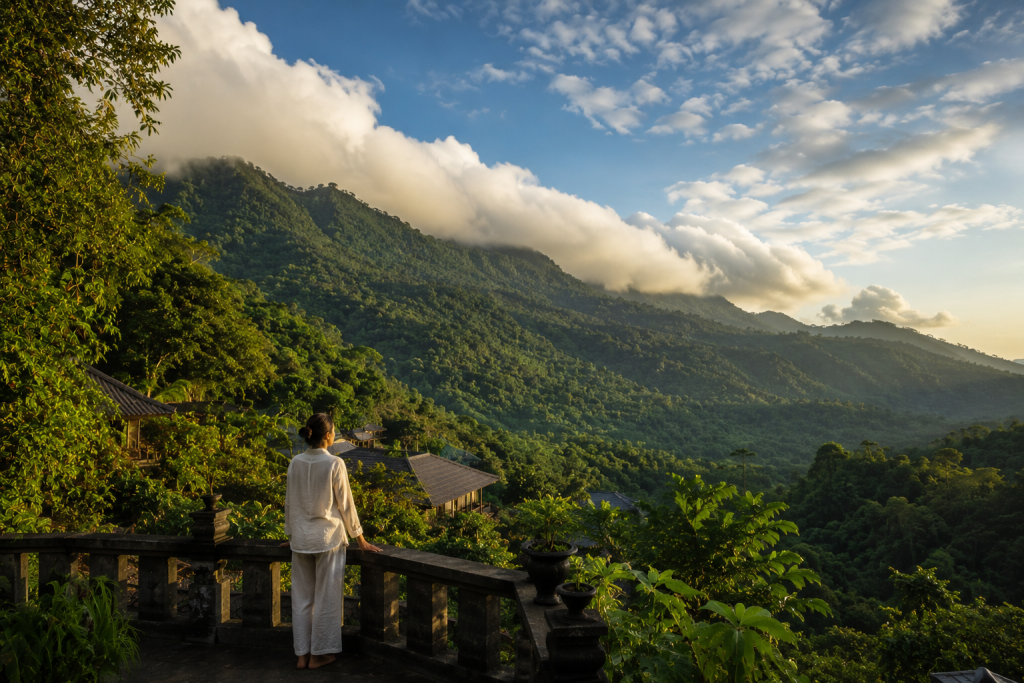
Address: Markaz Knowledge City Road, Kaithappoyil, Adivaram, Kerala
Phone / WhatsApp: +91 9072661622
Email: reservation@tigrisvalley.com
Nearest airport: Calicut (Kozhikode) International Airport — Tigris Valley confirms direct international flights from Riyadh, Dammam, and Jeddah to Calicut Airport. Full directions are on the Getting to Tigris Valley page.
Arabic language support: Tigris Valley explicitly offers Arabic translators, Arabic-speaking support staff, and Arabic-friendly food and accommodation for UAE and Middle East guests.
| Season | Demand Level | Recommended Booking Lead Time |
|---|---|---|
| Monsoon peak (Jul–Aug) | Very High | 4–6 months in advance |
| Christmas / New Year (Dec–Jan) | High | 4–6 months in advance |
| Post-Monsoon (Oct–Nov) | High | 3–4 months in advance |
| Winter (Feb–Mar) | Medium | 6–8 weeks |
| Spring (Mar–May) | Low–Medium | 2–4 weeks possible |
The clinical basis is genuine. High ambient humidity during monsoon measurably increases transdermal absorption of medicated oils — the therapeutic compounds in Abhyanga reach deeper tissues more effectively. Medicinal herbs harvested immediately post-monsoon contain the highest concentrations of their active phytochemicals. And peak Vata aggravation creates the highest responsiveness to Vata-pacifying treatments. That said, the “monsoon only” position overstates the case — every season has specific therapeutic strengths, and the Tigris Valley medical team adapts your protocol to whichever season you visit.
For Rheumatoid Arthritis — a Pitta-dominant, inflammatory condition — post-monsoon (October–November) is actually the sharper fit. Pitta aggravation in that period makes anti-inflammatory therapies like Ozone Therapy, IV Nutritional Therapy, and immune-modulating herbal formulations most effective. If you cannot visit in October–November, any season will produce good results with the clinical team’s seasonal adaptation of your protocol.
December falls in the winter (Hemanta) period — excellent for the Longevity & Anti-Aging Program, the Stress & Burnout Recovery Program, or the Cardio-Metabolic Health Program. The climate is comfortable, the landscape is at its most scenic, and Agni is strong enough to assimilate nourishing therapies effectively. Book early — December fills quickly.
Confirmed facilities include: private accommodation, a fully equipped gym with personal trainers, a yoga and meditation room, a dental studio, laundry services, the Ruhe Café serving organic wellness meals, the Mazra Organic Farm, an amphitheatre, walking tracks and gazebos, sprawling gardens, indoor swimming pools, a health spa, a physiotherapy and rejuvenation centre, a meditation hall, herbal baths, steam therapy, sauna, and Jacuzzi. Full details are on the Facilities page.
Yes, with planning. Intensive Panchakarma phases require rest and restrict major physical activity. However, before and after core procedures — and for guests on lighter rejuvenation programs — the Nearby Escapes include spectacular waterfalls, forest trails, wildlife areas, and cultural sites. The team factors your interests into the program schedule during the initial consultation.
NABH (National Accreditation Board for Hospitals & Healthcare Providers) is the apex accreditation body for healthcare organisations in India. Tigris Valley’s NABH accreditation means its clinical processes, practitioner qualifications, patient safety protocols, and treatment standards have been independently audited and certified — a meaningful distinction from non-accredited wellness spas. Tigris Valley is confirmed as South Asia’s largest AYUSH-integrated, NABH-accredited wellness hospital.
Contact the Tigris Valley reservations team at reservation@tigrisvalley.com or WhatsApp/call +91 9072661622. The Contact Us page has a booking enquiry form where you can describe your health concerns and preferred dates. The medical team will recommend the program and timing that best fits your needs.
Every season at Tigris Valley is a genuine healing environment. What changes is which season aligns most powerfully with your specific health goal. The team is ready to help you find that alignment.