
Stroke Rehabilitation · Kerala, India

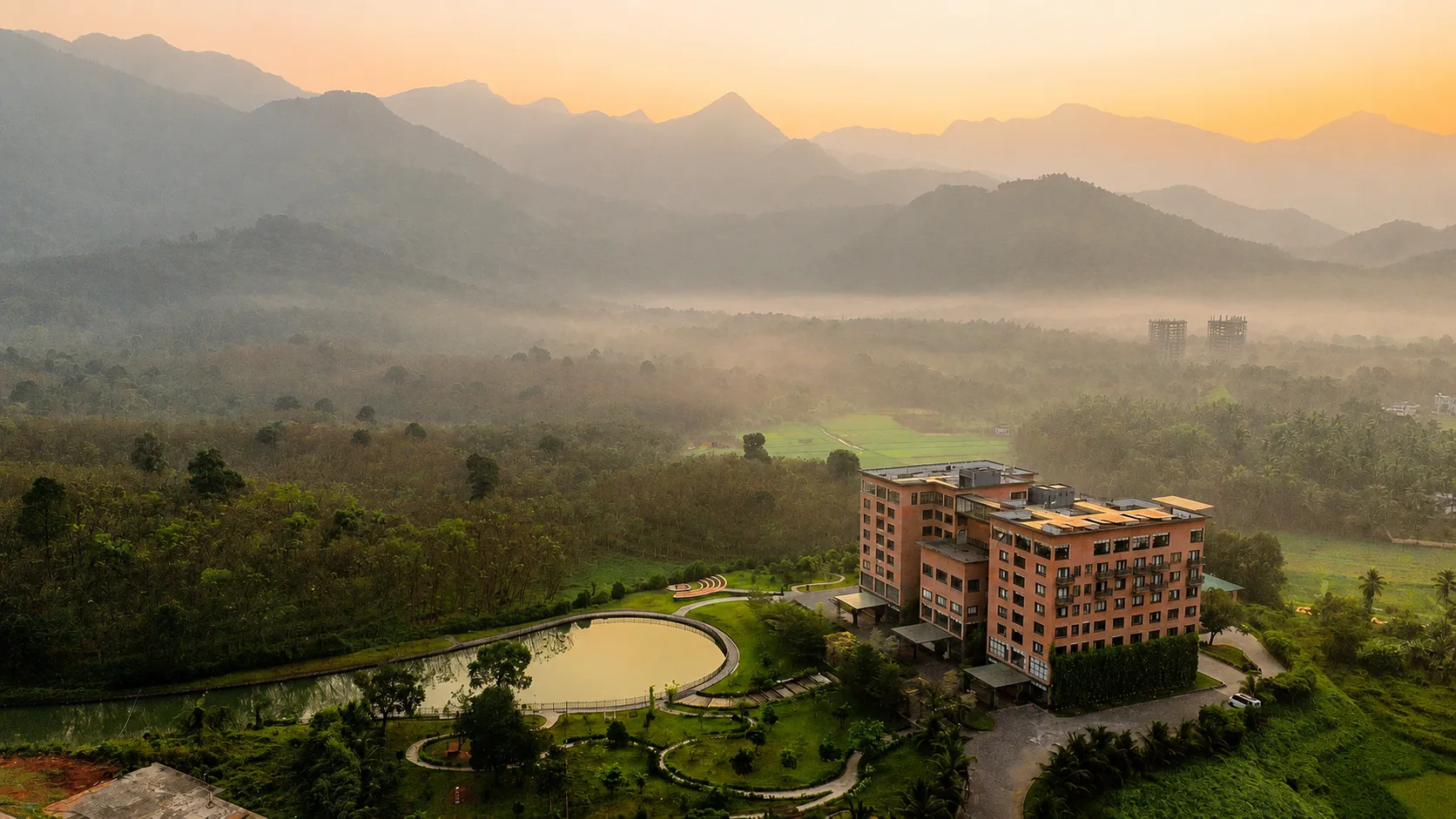
Stroke Rehabilitation in Kerala - Ayurveda & Neurological Rehab at Tigris Valley

NABH-accredited stroke rehabilitation combining Ayurvedic nerve therapies, physiotherapy, occupational and speech therapy - guided by one coordinated care team.
The first weeks after a stroke are frightening - for the patient, and even more for the family searching for the right place to recover. Every day spent comparing hospitals is a day the brain's natural window for repair keeps narrowing. We test, assess and treat - bringing stroke rehabilitation together with Navara Kizhi, Pizhichil and structured physiotherapy under one roof.
  • NABH Accredited
  • 40+ Countries
  • Multi-Disciplinary Team
  • Doctor-Supervised
  • Classical Kerala Protocol
  • AYUSH Recognised

5,000+

PATIENTS TREATED

20+

SPECIALIST DOCTORS

30+

PROGRAMS OFFERED

8

HEALING SYSTEMS

5,000+

PATIENTS TREATED

20+

SPECIALIST DOCTORS

30+

PROGRAMS OFFERED

8

HEALING SYSTEMS

You're Searching for Care for Someone You Love

If several of these feel familiar, you're exactly who this stroke rehabilitation programme is built for

Choosing a stroke rehabilitation centre for a parent, spouse or sibling is one of the heaviest decisions a family makes — usually under pressure, often far from home. If you recognise yourself in two or more of the following, it's worth talking to a coordinator before deciding anything.
  • You're reading hospital comparisons late at night, across multiple time zones.
  • You're translating medical terms into decisions your whole family can agree on.
  • You want a structured programme for the months ahead, not a single procedure.
  • You've been told "wait and see" and aren't sure that's the right answer.
  • You need a team that explains things clearly, in a time zone that works for you.
  • You're hoping rehabilitation starts soon enough to matter, not after the window has passed.
  • You're the one coordinating care while also holding the family together.
  • You want to see a recovery plan, not just be told "it depends."
Our stroke rehabilitation coordinator's first job isn't to sell you a programme. It's to understand your family member's case, your timeline and your worries — before recommending anything.
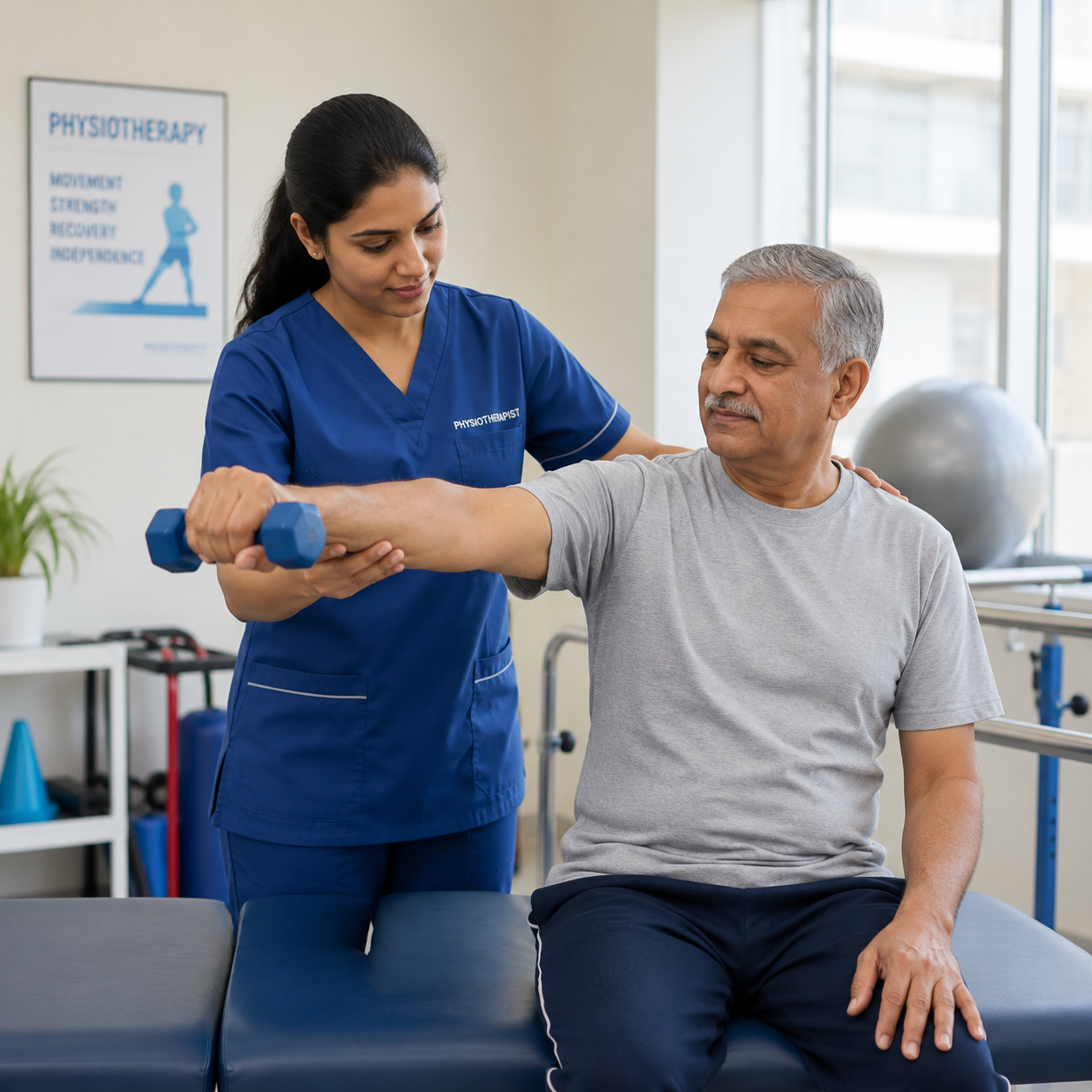
Patient undergoing physiotherapy session with a therapist assisting in rehabilitation exercises using light weights.

Why Structured Rehabilitation Works Better Than Recovery at Home Alone

Time alone does not rebuild a damaged motor pathway. The stiffness, the speech difficulty, the loss of independence - these rarely improve on their own without targeted, repeated, professionally guided intervention.
Tigris Valley – Comparison Section
Recovering at Home Alone
Tigris Valley Stroke Rehabilitation Our approach
Relies on whatever mobility naturally returns
Active therapy targets specific motor and speech deficits
No structured assessment of what's affected
Joint assessment maps exact functional deficits
Family manages care without training
Care team trains family in safe daily carryover
Therapy intensity is inconsistent
Daily structured Ayurvedic and clinical sessions
No way to track real progress
Functional reassessment tracks progress against goals
Easy to stop too early
Stage-based programme protects against early plateau
Stroke recovery depends heavily on neuroplasticity — the brain's ability to reroute function through new neural pathways. This process responds to repetition, sensory input, circulation and a calm nervous system, which is exactly where structured rehabilitation outperforms unguided rest at home.

The Stroke Rehabilitation Protocol Behind Your Recovery

Every stroke rehabilitation programme at Tigris Valley begins with a clinical assessment — because no two strokes affect the brain the same way. Ayurvedic nerve therapies and modern rehabilitation are combined deliberately, never applied as one fixed package, and always reviewed alongside the patient's treating neurologist.
Patient undergoing physiotherapy session with a therapist assisting in rehabilitation exercises using light weights.
Physiotherapy
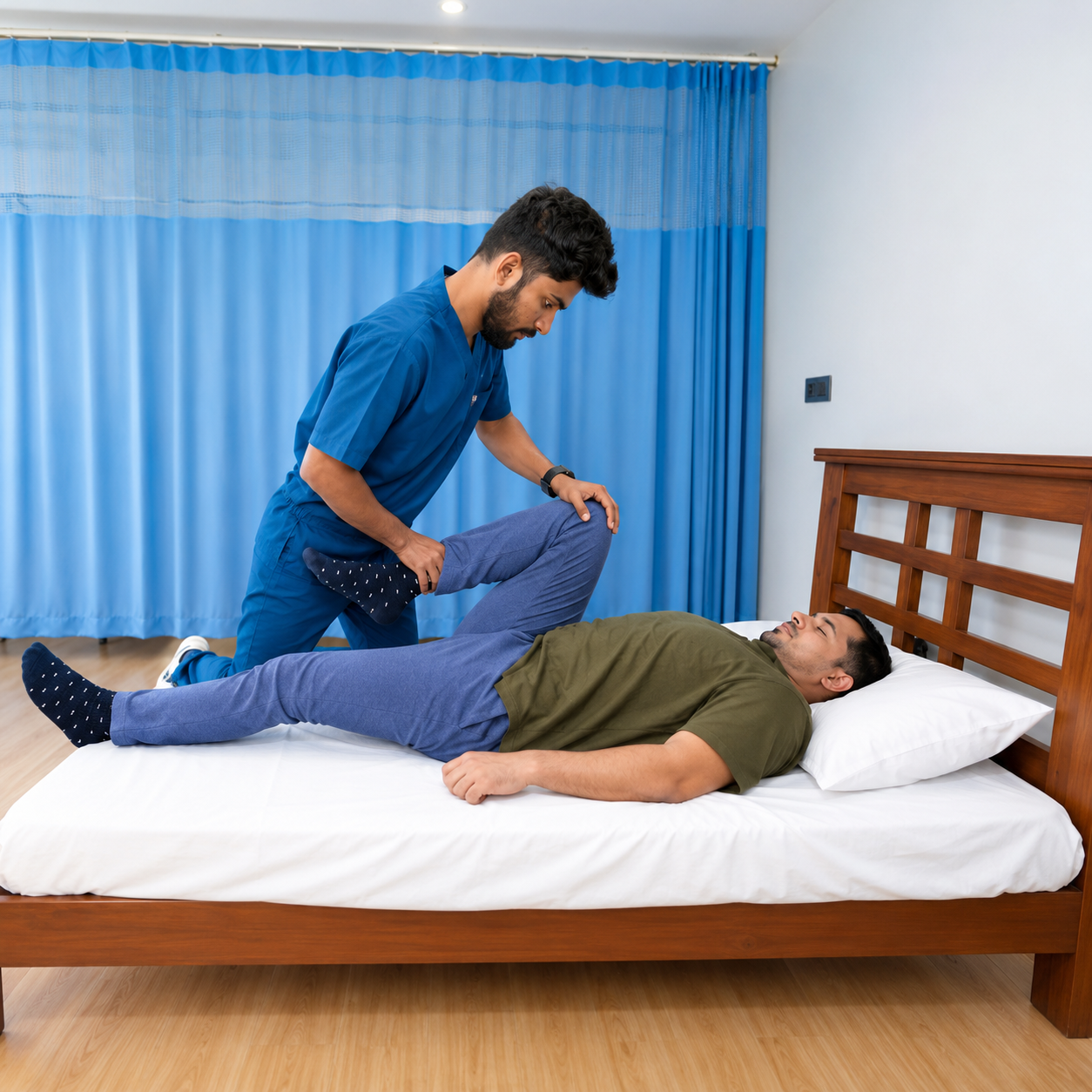
Structured daily sessions rebuilding strength, balance and motor control, with exercise intensity adjusted as the patient progresses from passive movement to active, task-specific training.
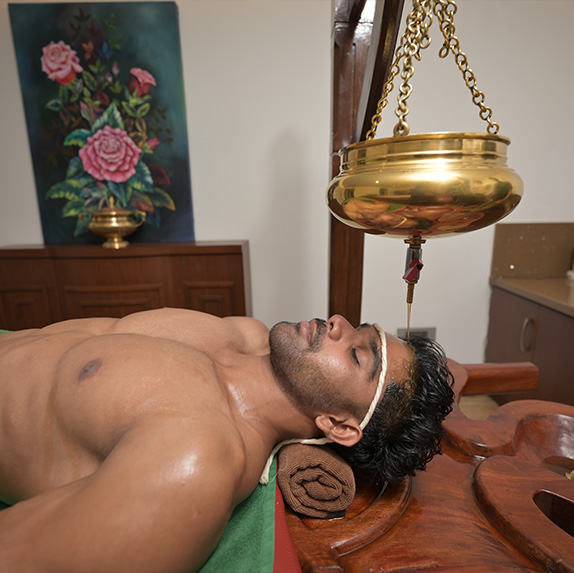
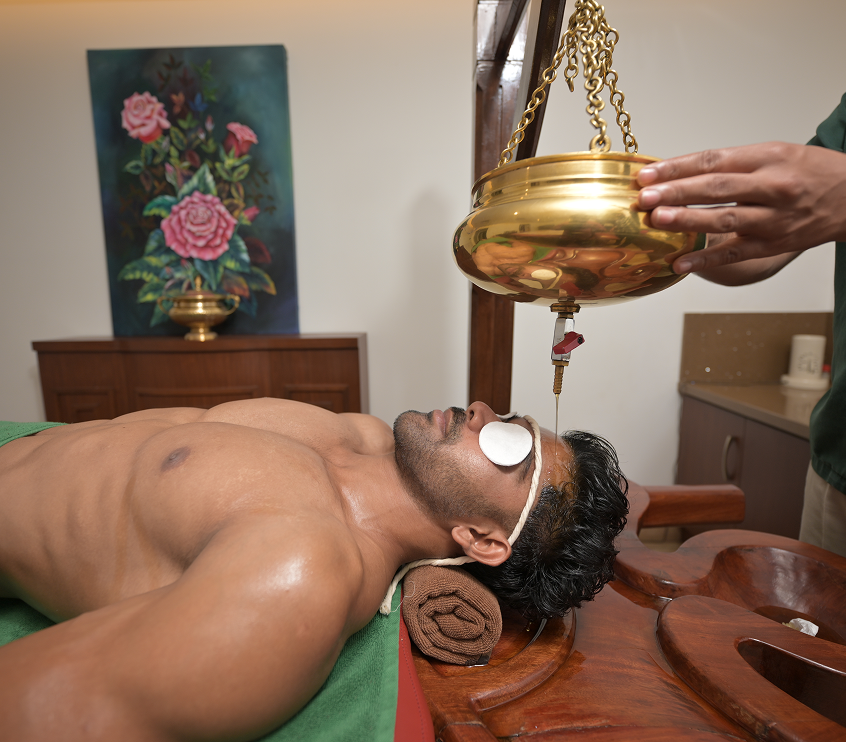
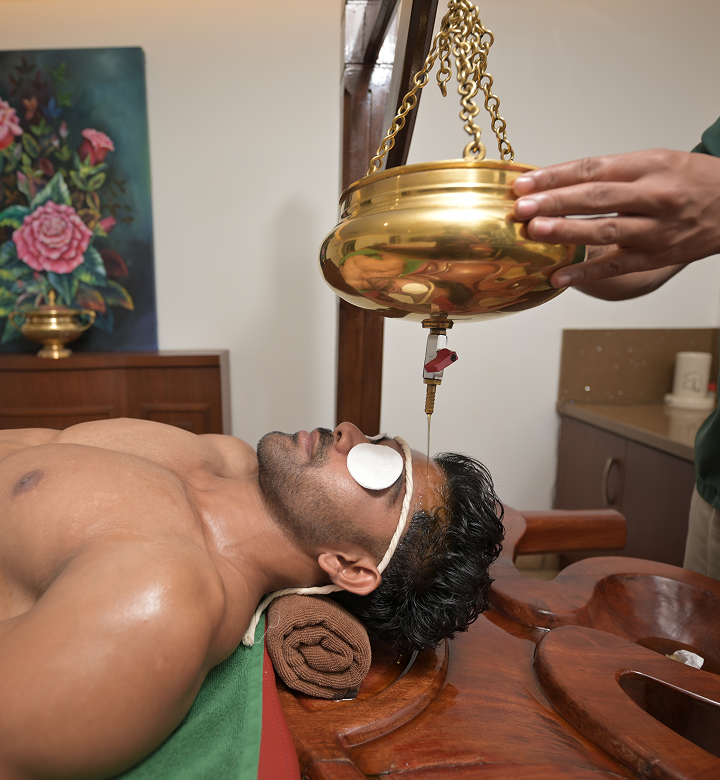
Shirodhara
A steady, warm stream of medicated oil across the forehead, easing the anxiety, disturbed sleep and emotional strain that frequently accompany stroke recovery for both patients and caregivers.
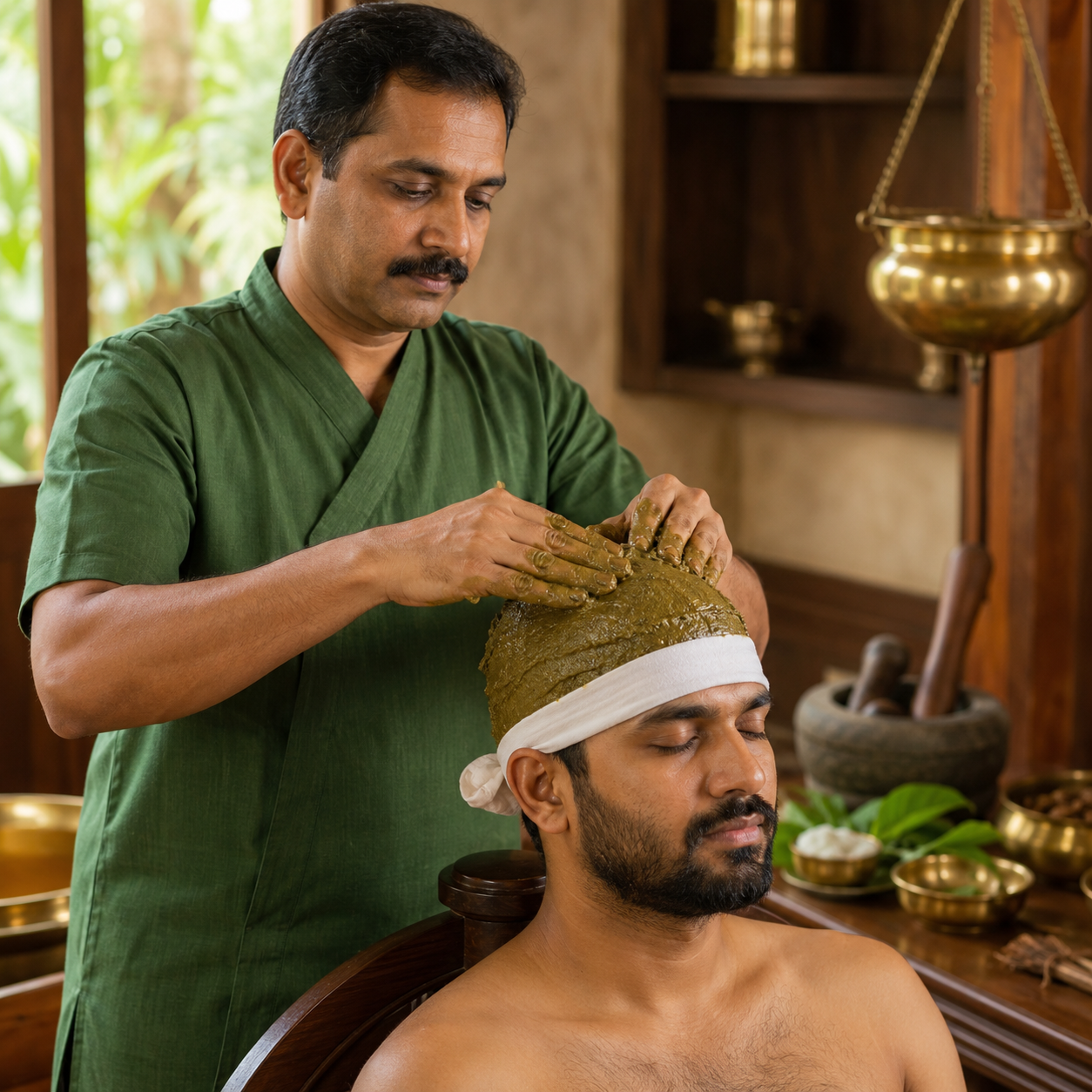
Ayurvedic Thalam therapy with herbal paste applied to the scalp for neurological recovery support
Thalam
A herbal paste applied to the scalp to support healthy circulation to the head, commonly used to settle an overactive nervous system in the period following a neurological event.
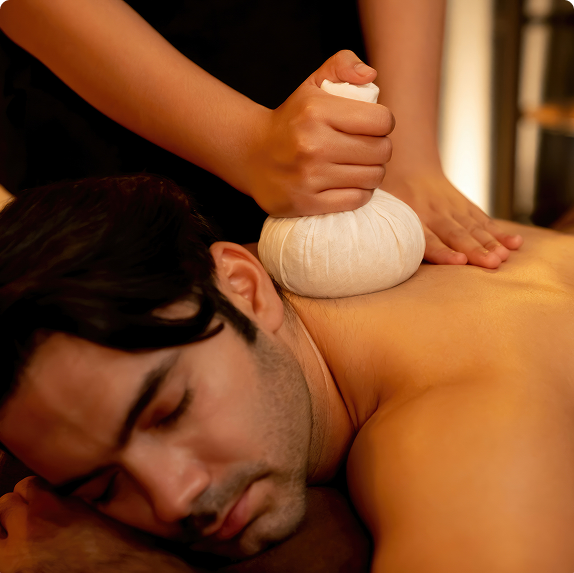
Ayurvedic therapist performing Navarakizhi therapy, gently massaging the body with warm herbal rice boluses tied in cloth, used to nourish muscles, improve circulation, and support recovery in a traditional clinical wellness setting.
Navara Kizhi
Warm boluses of medicated rice, wrapped in cloth and massaged rhythmically over affected limbs to ease stiffness, support circulation and gently stimulate weakened muscle tone in paralysed areas.
Ayurvedic detox therapy session with herbal steam treatment in traditional Panchakarma wellness center
Pizhichil
Continuous streams of warm medicated oil poured over the body in coordinated strokes, calming an overstressed nervous system while nourishing fatigued muscles and joints affected by reduced mobility.
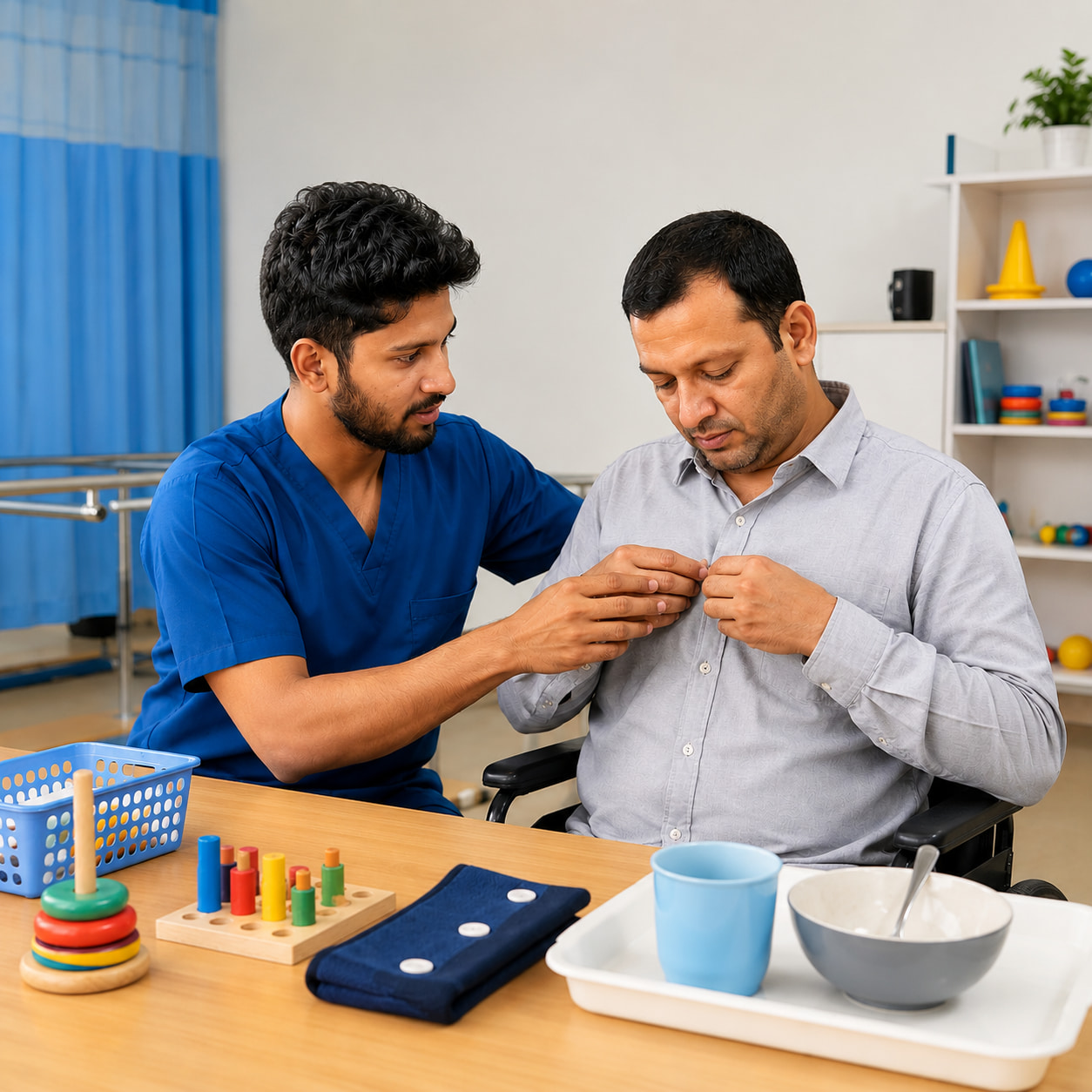
Occupational therapy patient practicing shirt buttoning and eating tasks with therapist guidance during rehabilitation session.
Occupational Therapy
Practical retraining for everyday tasks such as dressing, eating and bathing, helping patients rebuild functional independence and dignity, one skill at a time.
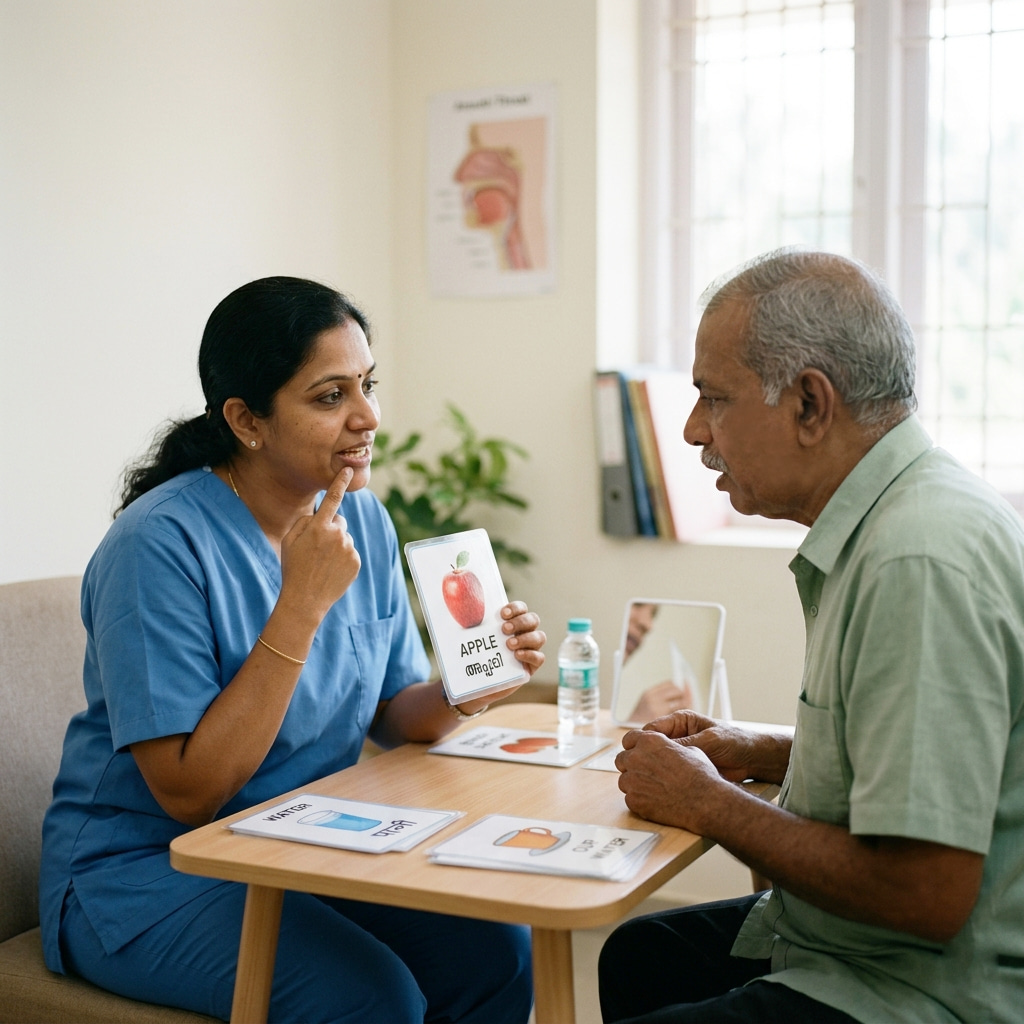
Speech and swallow therapy session for stroke rehabilitation with therapist guiding communication and articulation exercises
Speech & Swallow Therapy
Targeted exercises addressing slurred speech, word-finding difficulty and unsafe swallowing — common after a stroke affecting the brain's language and motor-control centres, and a core part of post-stroke physiotherapy and rehabilitation Kerala families ask about most.
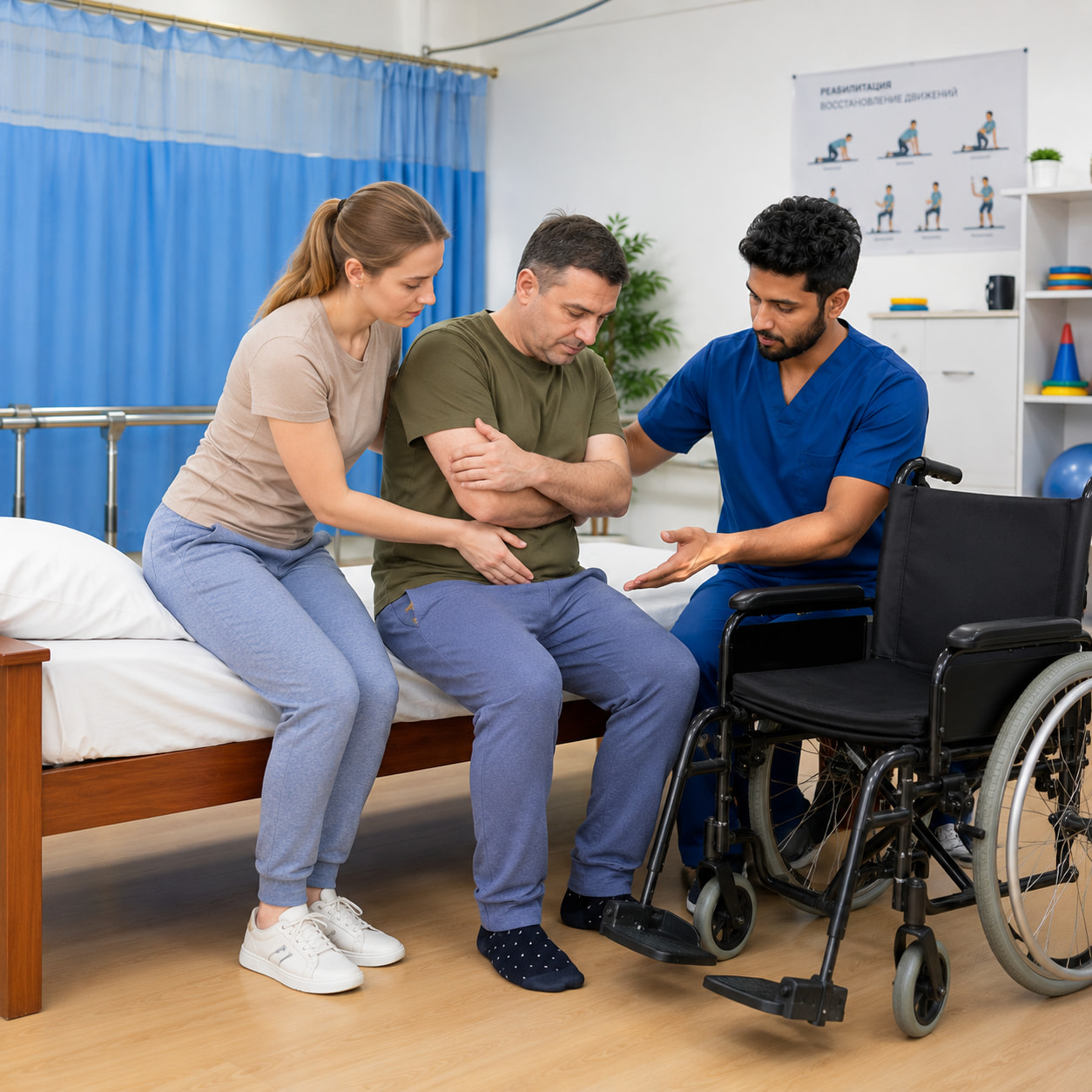
Stroke rehabilitation therapist teaching a family caregiver safe patient transfer techniques from bed to wheelchair during caregiver training session in Kerala
Caregiver Training & Support
Hands-on guidance for the family member accompanying the patient, covering safe transfers, home exercise carryover, and what to watch for after discharge.

The Three Pillars of Stroke Recovery at Tigris Valley

Outcomes are tracked through clinical assessment at the start and end of every programme.
Pillar 1

Motor & Mobility Recovery

Rebuilding strength, balance and coordination in affected limbs through physiotherapy combined with Navara Kizhi and Pizhichil, addressing muscle tone and circulation together.
Pillar 2

Speech, Swallow & Cognitive Function

Restoring communication, safe eating and word-finding ability through speech therapy paired with Ayurvedic nerve-support therapies that calm an overstimulated nervous system.
Pillar 3

Emotional Stability & Caregiver Support

Supporting the anxiety, low mood and disrupted sleep that affect both patients and the families caring for them, through Shirodhara, check-ins and caregiver training.

Stroke Recovery Stage Programs

Stroke recovery doesn't follow a straight line, but it does follow stages — and the approach that helps in month one is rarely the one needed at month eight.

3

WEEK PROGRAMME
Early Stabilisation
For: Acute stage, 0–3 months post-stroke, recently discharged and cleared for structured rehab.
  • Full neurological and functional assessment
  • Personalised Ayurvedic and physiotherapy plan
  • Gentle circulation therapies — Navara Kizhi, Thalam
  • Early passive-to-active physiotherapy sessions
  • Caregiver training for safe home transfers
  • Discharge report with home continuation plan
Recommended

14

DAY PROGRAMME
Intensive Recovery
For: Sub-acute stage, 3–6 months post-stroke — typically the fastest window of visible change.
  • Everything in the 3-week programme
  • Full Ayurvedic protocol — Pizhichil, Shirodhara, Navara Kizhi
  • Daily physiotherapy, occupational and speech therapy
  • Mid-programme functional reassessment
  • Caregiver coordination sessions
  • Extended home protocol with telehealth follow-up

21

DAY PROGRAMME
Maintenance & Refinement
For: Chronic stage, 6+ months post-stroke, working on functional independence and protecting progress.
  • Everything in the 6-week programme
  • Fine motor and functional independence focus
  • Periodic Ayurvedic nerve-support blocks
  • Long-term physiotherapy and OT maintenance plan
  • Family caregiving review session
  • Scheduled telehealth follow-ups

21-Day Stroke Rehabilitation Progression

Most international families follow a structured 14 to 21 day intensive block. Here's how a typical Intensive Recovery stay is sequenced — each phase building on the one before it.

Days 1–3

Assessment & Baseline

Neurological and functional assessment, scan review with the consulting neurologist, and a personalised protocol designed around your family member's specific case.
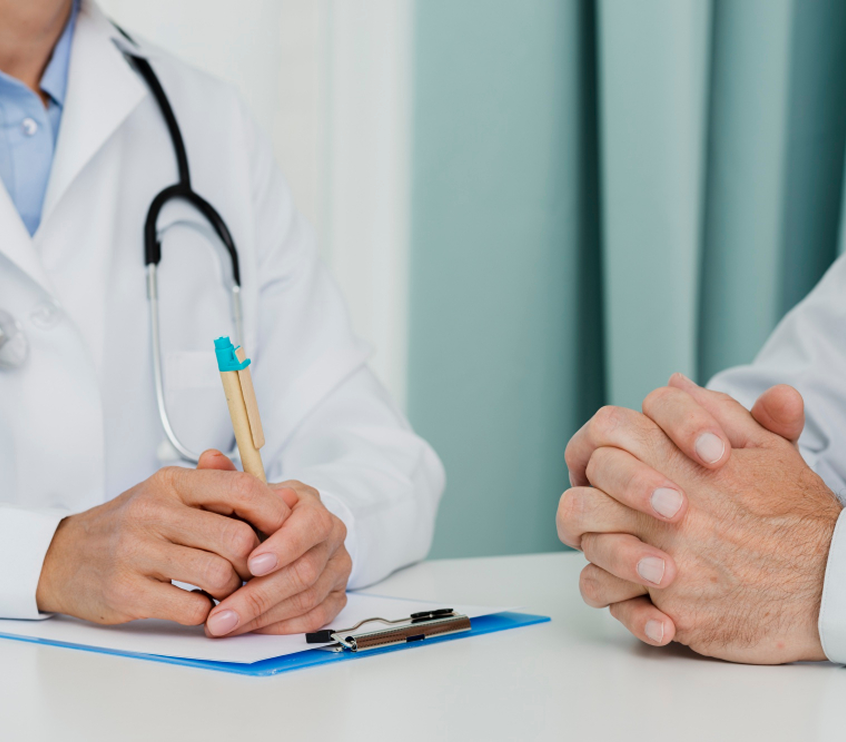
Patient consultation for comprehensive diagnostic health assessment in integrative medicine clinic
Ayurvedic therapist performing Navarakizhi therapy, gently massaging the body with warm herbal rice boluses tied in cloth, used to nourish muscles, improve circulation, and support recovery in a traditional clinical wellness setting.

Days 4–7

Preparation Phase

Gentle Ayurvedic circulation therapies — Navara Kizhi and Thalam — begin alongside early physiotherapy, building tolerance before intensity increases.

Days 8–14

Intensive Phase

The full protocol is active — Pizhichil, Shirodhara, daily physiotherapy, occupational therapy and speech therapy all running at programme intensity.
Ayurvedic shiorodhara with herbal steam treatment in traditional ayurveda wellness center
Nutrition and wellness consultation

Days 15–21

Reassessment & Discharge

Functional reassessment against initial goals, caregiver training finalised, and a home continuation protocol prepared before you travel back.

Structured Stroke Recovery for German and Russian Families

Structured, long-stay stroke rehabilitation for international patients with coordinated care, multilingual support, and clinical documentation.
Die Tigris Valley Stroke-Reha
A Familiar Structure, in a New Setting
In Germany, structured post-stroke Reha — supervised, time-bound and clinically documented — is a familiar part of recovery. Tigris Valley's stroke rehabilitation programme follows the same principle: dedicated time, medical oversight and a structured therapeutic environment, with the addition of Ayurvedic nerve therapies developed over centuries in Kerala.
  • Direct flights from Frankfurt to Kozhikode — approximately 9 hours via Dubai or Doha, with Lufthansa connections through Gulf hubs.
Patient Questions & Answers

Tigris Valley is NABH-accredited — India's highest hospital quality certification, recognised internationally by ISQua. All treatments are administered by qualified AYUSH-registered physicians and documented to clinical standards.

We can arrange German-language documentation and a German-speaking point of contact for logistics upon request. Your coordinator manages all arrangements from enquiry to discharge.

As a privately funded medical stay, costs may be partially reimbursable depending on your insurer and policy. We provide full medical documentation, including clinical summaries, to support any claim you submit.
Реабилитация после инсульта в Керале
A Residential Alternative for Structured Rehabilitation
Families from Russia often reach out after finding limited capacity for structured, long-stay neurological rehabilitation at home. Tigris Valley offers a residential alternative — a dedicated stroke rehabilitation programme combining Ayurvedic nerve therapies with physiotherapy, occupational therapy and speech therapy, coordinated in Russian from your first enquiry.
  • Direct and one-stop connections from Moscow to Kozhikode, typically via Dubai or Doha, with arrival coordination from the airport.
Patient Questions & Answers

Да. Наш координатор сопровождает семью на русском языке — от первого обращения до выписки и последующих рекомендаций.

Tigris Valley аккредитована NABH — высшим стандартом качества больниц в Индии, признанным международной организацией ISQua.

Experiences from Patient & Family

Experiences Shared by Families We've Supported
Your path to renewed vitality and cellular regeneration begins with a single step. At Tigris Valley, we're committed to guiding you through transformative rejuvenation experiences that honor traditional wisdom while delivering measurable results in a luxurious, healing environment.

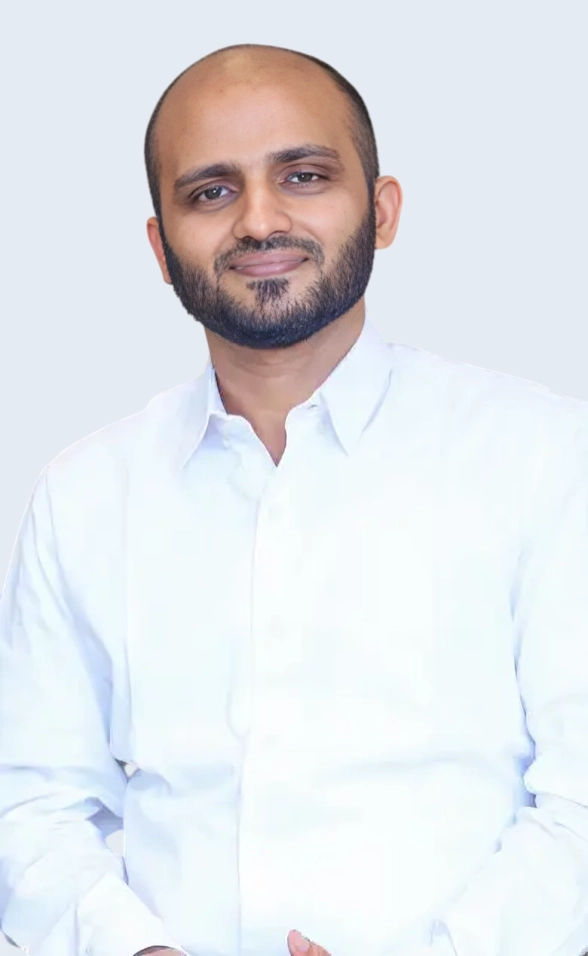
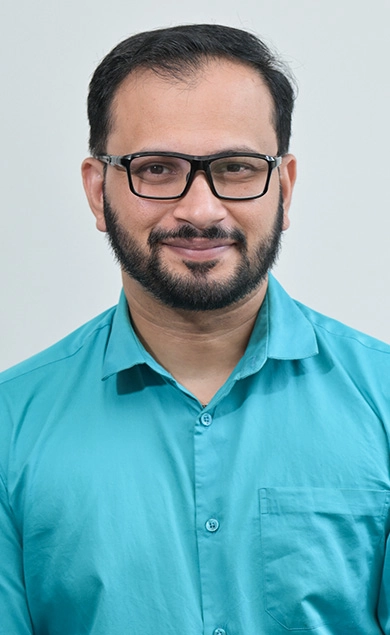
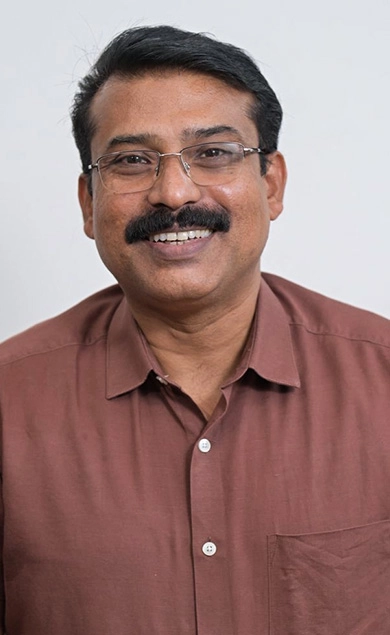
Meet the Team Coordinating Your Recovery

Stroke recovery isn't one specialist's job. Our integrative team plans each programme together, working alongside your consulting neurologist throughout the stay.
  • 1,400 years of Islamic healing tradition
  • Treats root cause — not just symptoms
  • Recognised by India's Ministry of AYUSH

FAQs

As soon as your neurologist confirms the patient is medically stable — often within days of the stroke, sometimes still during hospital recovery. Earlier mobilisation is generally associated with better outcomes, though the exact starting point is always a clinical decision made with your treating doctor, not a fixed rule.

It depends on the type and severity of the stroke, the area affected, and how soon rehabilitation began. Many patients see their fastest visible gains in the sub-acute stage. Rather than promising a fixed outcome, our team sets specific functional goals with your family and reviews them regularly throughout the programme.

Most families begin with a 3 to 6 week programme, extended or adjusted based on how the patient responds. Some international families combine an initial intensive block with shorter follow-up stays in later recovery stages. Your coordinator recommends a realistic duration after reviewing the patient's medical reports.

Yes. The rehabilitation protocol is adapted to the stroke type, its severity, and the patient's current medical status, and is reviewed with the treating neurologist throughout the stay rather than applied as one standard package for every patient.

Send whatever you have — a discharge summary and recent scan are usually enough for an initial review. Our coordinator will tell you if anything else is needed before your family member travels, so missing paperwork doesn't have to delay getting started.

Book Your Stroke Rehabilitation Programme

Speak with our specialist about your condition, current medications, and the most suitable integrative protocol for your recovery.
Home Contact Form

Choose Your Wellness program