
[gtranslate]
MENU
Chronic pain is more than physical discomfort — it steals your sleep, drains your energy, and quietly dismantles your quality of life. Conventional medicine often addresses the symptom while ignoring what generates it. Ayurvedic chronic pain management takes a fundamentally different approach: identify the imbalance, remove the root cause, and restore lasting harmony to the body. This complete guide covers the Ayurvedic framework, the specific therapies offered at Tigris Valley, and what the integrative approach can achieve for conditions from arthritis to fibromyalgia.
Table of Contents
Chronic pain is defined as pain persisting for longer than three months, often outlasting the original injury or illness that triggered it. It is one of the leading causes of disability and reduced quality of life globally — and it is one of the conditions most inadequately served by conventional medicine’s symptom-suppression model.
In Ayurveda, chronic pain is not a localised event. It is a systemic signal of imbalance in the body’s three governing energies — Vata, Pitta, and Kapha — and a consequence of accumulated metabolic toxins (Ama) blocking the body’s natural healing channels. The science of Ayurveda identifies where the imbalance originates, which tissues are involved, and what sequence of interventions will clear the root cause rather than simply quieting the signal.
This framework directly addresses conditions that conventional medicine struggles to resolve:
Before any therapy can be effective, an Ayurvedic physician must identify which of three core mechanisms is driving the patient’s pain — because the treatment for each is fundamentally different.
Ama is undigested metabolic waste that builds up when digestive fire (Agni) is weakened — by poor diet, chronic stress, irregular routine, or long-term illness. This sticky toxic residue accumulates in tissues and joint spaces, blocking circulation and creating the deep aching, stiffness, and swelling of conditions like Rheumatoid Arthritis (Amavata). Clearing Ama is always the first priority before any nourishing or strengthening therapy begins. Panchakarma detox is the primary tool for this.
Vata is the dosha governing movement, the nervous system, and joint lubrication. When it accumulates in excess — through overexertion, chronic stress, cold exposure, or poor diet — it creates dryness in joint spaces, nerve hypersensitivity, stiffness, and the sharp, shooting, or radiating pain characteristic of conditions like Osteoarthritis, sciatica, and neuropathy. Vata-pacifying therapies like Abhyanga and Shirodhara directly address this mechanism.
Excess Pitta (fire element) generates systemic inflammation — the driver behind burning sensations, inflamed and swollen joints, and conditions like gout or inflammatory arthritis. Cooling, anti-inflammatory approaches — including specific herbal formulations and Ozone Therapy — are used to bring Pitta back to balance and reduce the inflammatory load on affected tissues.
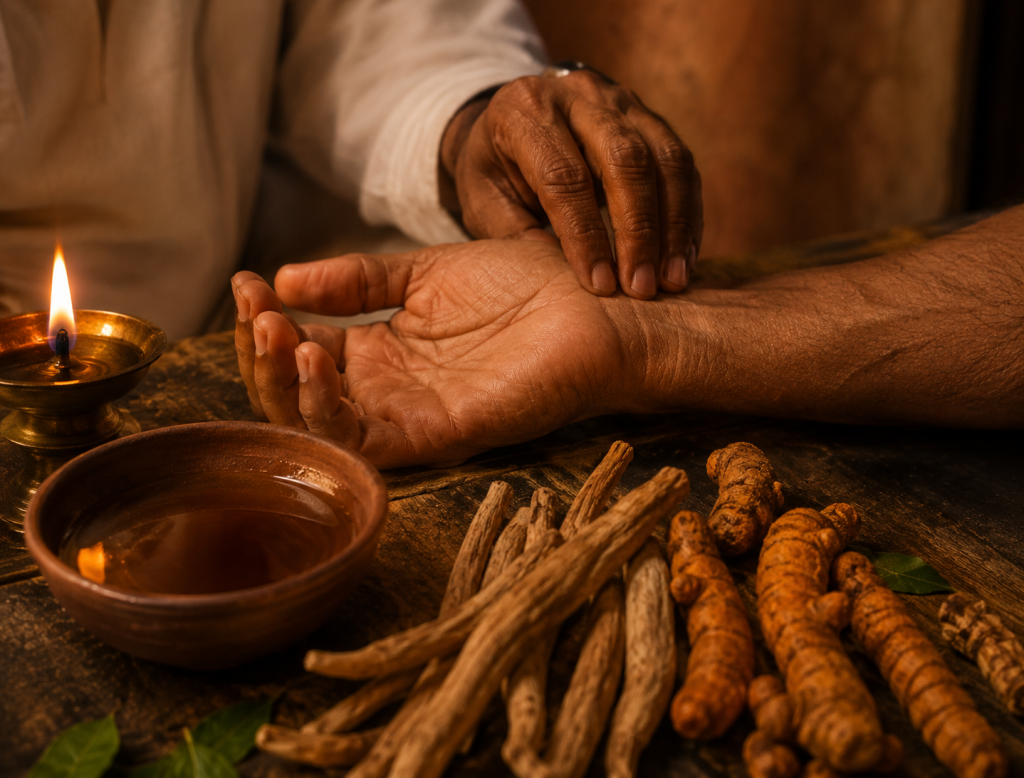
Key Insight: Ayurvedic diagnosis (Nadi Pariksha — pulse diagnosis) maps your unique doshic imbalance before recommending any therapy. This personalised assessment is a critical advantage over one-size-fits-all pain management protocols. At Tigris Valley, it is the non-negotiable first step in every program.
The following therapies are confirmed on Tigris Valley’s Chronic Pain & Inflammation Management Program page and the clinic’s verified Ayurveda treatments page.
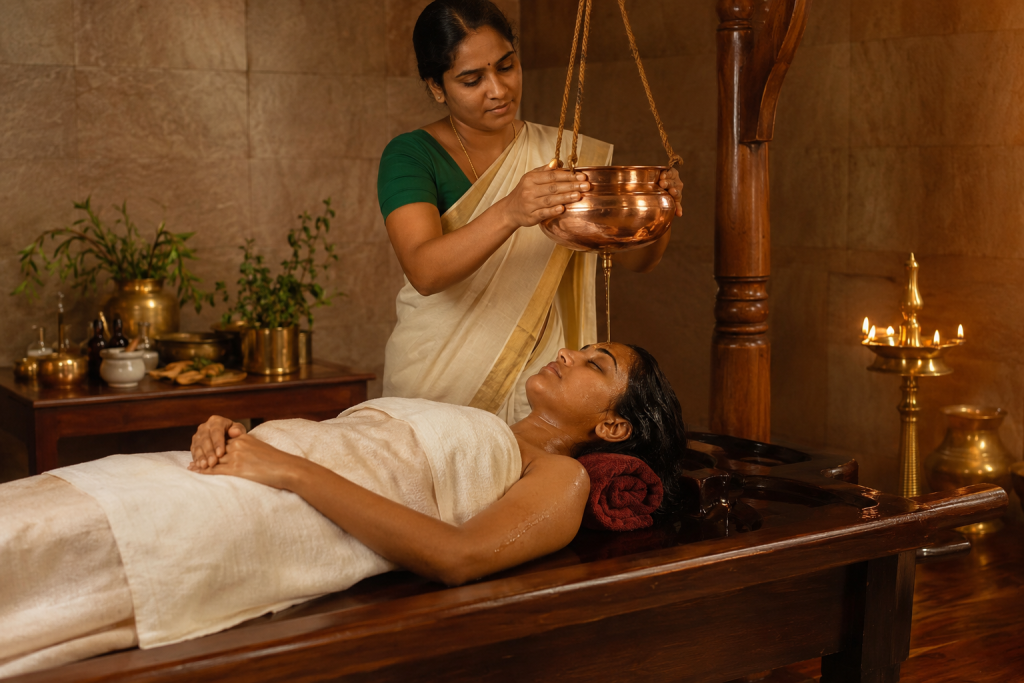
Abhyanga is described by Tigris Valley as “Nourishment and relaxation tailored to your dosha.” In clinical practice for chronic pain, it is far more than a massage. Warm medicated herbal oils — selected based on your specific constitution and condition — are applied across the entire body and affected joints in deliberate, rhythmic therapeutic strokes.
For joint conditions, Abhyanga lubricates dry joint spaces, improves circulation in chronically inflamed tissue, releases the muscle guarding that perpetuates pain cycles, and calms the sympathetic nervous system overdrive that amplifies chronic pain signals. It is also the essential preparatory therapy (Purvakarma) before Panchakarma procedures.
Best for: Arthritis, back pain, neck pain, joint stiffness, fibromyalgia, and post-injury recovery.
Shirodhara involves a continuous, gentle stream of warm herbal oil flowing over the forehead and the third eye region for 30–45 minutes. In chronic pain management, its primary value is addressing central sensitisation — the neurological process by which the nervous system becomes chronically hyperactivated and begins amplifying pain signals beyond the level of actual tissue damage.
This mechanism is clinically documented in fibromyalgia, Rheumatoid Arthritis, and chronic back pain. Patients with disproportionate pain — who have “tried everything” — are often experiencing this. Shirodhara directly interrupts the pain-amplification cycle, improves sleep quality, and reduces anxiety around pain.
Best for: Fibromyalgia, stress-amplified pain, chronic neck pain, migraine-associated pain, and burnout-related physical symptoms.
Nasya involves the administration of medicated herbal oils through the nasal passages — described on the Tigris Valley Ayurveda page as “Herbal oils administered nasally to clear sinuses and improve mental clarity.” In pain management, it is specifically indicated for conditions above the clavicle: cervical spondylosis, neck stiffness, cervicogenic headaches, and referred shoulder pain from the cervical spine.
Panchakarma — literally “five actions” — is Ayurveda’s most comprehensive therapeutic system. Tigris Valley describes it as “Intensive cleansing therapies to remove toxins and restore balance.” For chronic pain, it is the backbone of any protocol aiming at lasting, root-cause results rather than symptom management.
The Tigris Valley Detox & Cleanse Program specifies three core Panchakarma procedures:
| Procedure | What It Does | Best For |
|---|---|---|
| Snehapanam (Therapeutic Oil Ingestion) | Internal oleation with medicated ghee that saturates deep tissues and mobilises Ama from joint spaces back into the digestive tract for elimination | Degenerative joint conditions, deep tissue Ama accumulation, preparation for further procedures |
| Virechanam (Therapeutic Purgation) | Controlled elimination of accumulated Pitta (inflammatory metabolites) from the liver and digestive system — the systemic root of inflammatory arthritis and gout | Rheumatoid Arthritis, gout, inflammatory bowel-related pain, systemic inflammation |
| Basti (Medicated Enema) | Medicated oils or herbal decoctions administered through the colon — considered the most powerful procedure for Vata-driven conditions. The colon is the primary seat of Vata in Ayurvedic anatomy | Back pain, sciatica, degenerative arthritis, nerve pain, Vata-dominant conditions |
Why Panchakarma produces lasting results: Conventional pain management suppresses the inflammatory signal, but the Ama generating it remains in the tissue. Panchakarma physically removes that Ama through the body’s natural elimination channels. The result is not temporary relief but a genuine reduction in the inflammatory and toxic burden — translating to sustained improvement in pain, mobility, and energy.
Panchakarma is preceded by a preparatory phase (Abhyanga and medicated steam baths) to ensure the body can safely release toxins, and followed by a post-treatment dietary protocol that rebuilds Agni and prevents re-accumulation. Explore the full Detox & Cleanse Program for more details.
One of Tigris Valley’s most significant advantages over a standalone Ayurveda clinic is its genuinely integrative model. Chronic pain is rarely one-dimensional — it involves inflammatory biochemistry, neurological sensitisation, psychological distress, and lifestyle factors. Tigris Valley addresses each of these dimensions through distinct but coordinated systems.
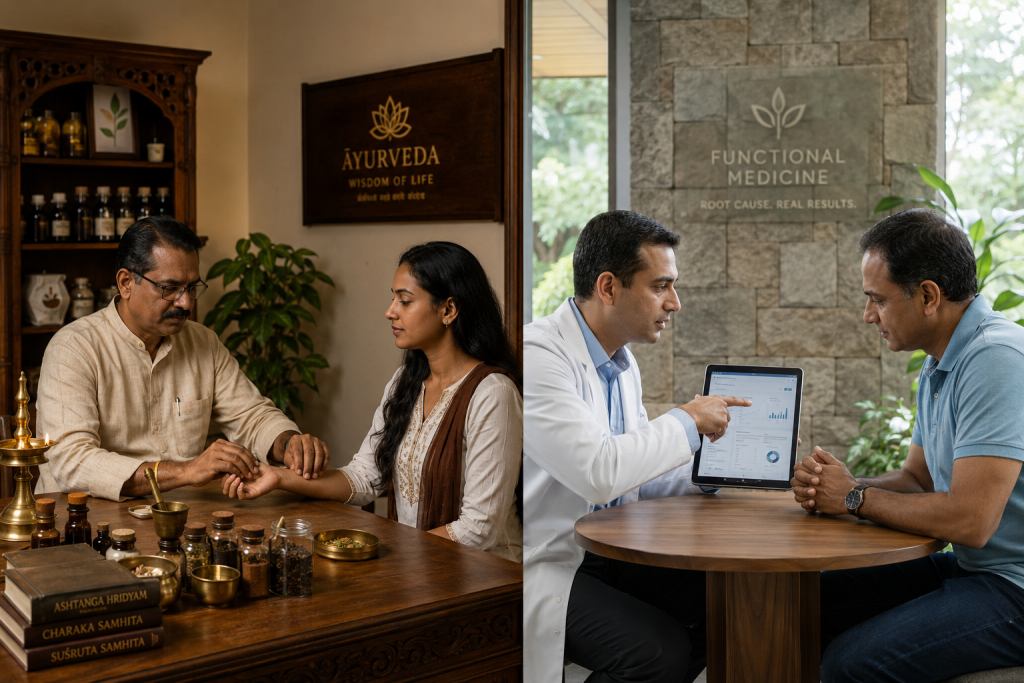
Tigris Valley’s AYUSH programme includes Unani medicine — specifically Hijama (wet cupping therapy), which is confirmed on the Chronic Pain program page. Hijama creates controlled negative pressure on the skin and soft tissue over painful areas, achieving localised decompression of tight fascia, improved microcirculation in ischaemic tissue, and removal of stagnant metabolic waste from chronically inflamed regions. It is particularly effective for neck, shoulder, lumbar, and hip pain patterns.
The program also includes customised Unani herbal medicines — described on the program page as “specialised herbal medicines based on centuries-old traditions” — prepared specifically for each patient’s condition.
The Functional Medicine component adds evidence-based diagnostics and nutritional interventions that classical Ayurveda alone cannot provide. At Tigris Valley, this includes:
Acupuncture at Tigris Valley provides an additional pain modulation dimension. It stimulates the body’s natural analgesic response, modulates the gate-control mechanism of pain signal transmission, and reduces central sensitisation — the nervous system over-amplification that underlies fibromyalgia and chronic regional pain syndromes. The website also confirms Qi Gong as part of the Chinese Medicine offering for vitality and healing.
The Tigris Valley Chronic Pain program explicitly includes anti-inflammatory meal plans, herbal infusions and teas, and personalised dietary adjustments — confirming that food is treated as a core therapeutic intervention, not a lifestyle afterthought.
In Ayurveda, the anti-inflammatory diet is built around pacifying the dominant dosha driving your pain and eliminating Ama-forming foods. The program’s nutritional approach is guided by these principles:
Practical note: At Tigris Valley, meals throughout your stay are prepared by expert chefs using organic, locally sourced ingredients aligned with your therapeutic protocol. Post-discharge, you receive a personalised diet plan to sustain the improvements made during your program.
The Chronic Pain & Inflammation Management Program explicitly includes outdoor yoga and meditation, Pranayama (breathwork), Cognitive Behavioural Therapy (CBT), and forest bathing as structured therapeutic components — not optional extras.

Therapeutic yoga at Tigris Valley is practiced outdoors in the Wayanad mountain environment. The combination of targeted asana practice — improving joint mobility, muscle strength, and postural alignment — with the cortisol-lowering effect of forest exposure creates compounding benefits. For chronic pain patients, yoga is not about flexibility; it is about rebuilding the functional movement patterns that pain has progressively restricted.
Pranayama techniques directly shift the autonomic nervous system from sympathetic (fight-or-flight, pain-amplifying) to parasympathetic (rest-and-digest, pain-reducing) dominance. Regular practice measurably reduces the cortisol-inflammation cycle that perpetuates chronic pain. The program includes Pranayama as a daily coaching component, with techniques that guests can continue independently after discharge.
The inclusion of CBT in a chronic pain program reflects clinical sophistication. Pain catastrophising — the mental pattern of expecting and amplifying pain — is a well-documented mechanism that worsens chronic pain outcomes independently of the physical pathology. CBT directly addresses this cognitive pattern and is recommended in international clinical guidelines for fibromyalgia, chronic back pain, and arthritis. Tigris Valley’s integration of CBT alongside Ayurvedic therapies distinguishes it from retreats offering only physical treatment.
Forest bathing is confirmed as a structured therapeutic activity in both the Chronic Pain program and the Stress & Burnout Recovery Program. Research shows that phytoncides released by dense forest trees measurably reduce cortisol and inflammatory cytokine concentrations — making the Wayanad forest setting an active therapeutic environment, not merely a beautiful backdrop.
Tigris Valley — described on its website as South Asia’s largest AYUSH-integrated, NABH-accredited wellness hospital — offers the Chronic Pain & Inflammation Management Program as a personalised, residential program in the Wayanad mountains of Kerala.
| Condition Category | Examples |
|---|---|
| Chronic Pain Conditions | Arthritis (Osteoarthritis, Rheumatoid Arthritis), back pain, neck pain, joint pain, Fibromyalgia |
| Post-Injury Pain | Lingering pain or inflammation after injuries or surgeries |
| Inflammatory Disorders | Autoimmune-related inflammation, chronic conditions like gastritis or colitis |
| Unresolved Pain Syndromes | Persistent pain with limited results from conventional treatments |
Personalised Consultation & Diagnostic Assessment:
Holistic Therapeutic Approach:
Customised Diet & Nutritional Plans:
Emotional & Mental Wellness Support:
| Tigris Valley | Conventional Hospital |
|---|---|
| Root-cause Ayurvedic diagnosis (Nadi Pariksha + lab testing) | Symptom-focused pharmaceutical management |
| Integrative: Ayurveda + Unani + Functional Medicine + Nature Therapy | Typically mono-system: pharmaceuticals or surgery |
| Immersive residential program in healing mountain environment | Outpatient appointments (typically 15–20 minutes) |
| Comprehensive post-discharge protocols — diet, herbal kit, yoga practice | Minimal post-discharge wellness guidance |
| NABH-accredited; South Asia’s largest AYUSH-integrated wellness hospital | Standard hospital accreditation |
For guests whose pain has an autoimmune component, the Autoimmune Disorder Management Program provides additional targeted immune modulation. Those recovering from injury or surgery will find the Post-Trauma & Rehabilitation Program highly relevant. And for those where stress is driving or amplifying pain, the Stress & Burnout Recovery Program directly addresses the cortisol-inflammation loop. See all wellness programs at Tigris Valley.

Ayurveda aims to eliminate the root cause of pain — Ama accumulation and doshic imbalance — rather than suppress symptoms. Many patients experience substantial and lasting relief following a complete Panchakarma program combined with post-discharge lifestyle modification. Outcomes depend on the chronicity and severity of the condition, compliance with post-treatment protocols, and individual constitution.
Tigris Valley is a NABH-accredited wellness hospital — not a spa. Every program begins with a medical consultation and advanced diagnostic testing. Therapies are administered by qualified registered practitioners under active physician supervision. The integration of Functional Medicine, IV Nutritional Therapy, CBT, and Ozone Therapy alongside classical Ayurvedic therapies is what distinguishes a clinical integrative program from a wellness retreat.
In most cases, yes. The medical team reviews all current medications during the initial consultation and coordinates any necessary adjustments. Certain herbal formulations require screening for interactions with blood thinners or disease-modifying drugs (DMARDs) — the clinical team manages this. The long-term goal for many patients is a medically supervised reduction in pharmaceutical dependence, not an abrupt substitution.
Diet is treated as a core therapeutic intervention. The program includes anti-inflammatory meal plans designed by nutritional experts using seasonal organic ingredients, herbal infusions served throughout the day, and personalised dietary adjustments based on your constitution and condition. A post-discharge diet plan is provided to sustain the improvements made during your program.
Yes — Fibromyalgia is explicitly listed as a target condition on the Chronic Pain program page. The multi-modal approach — combining Abhyanga, Shirodhara, Panchakarma, Ozone Therapy, outdoor yoga, Pranayama, and CBT — is well-suited to fibromyalgia’s multi-system nature, addressing musculoskeletal pain, central sensitisation, sleep disruption, and cortisol-amplified pain simultaneously.
Yes, comprehensively. The program includes guided meditation, CBT, and breathwork (Pranayama) as confirmed structured components — directly targeting the cortisol-pain amplification cycle and pain catastrophising patterns. For those with significant burnout-driven pain, the Stress & Burnout Recovery Program elements can be integrated or pursued separately.
The program includes a comprehensive post-discharge protocol: a personalised diet plan, herbal formulation kit, yoga and breathing practice instructions, and lifestyle guidance. The goal is to give you the tools to sustain and deepen the improvements made during the residential program.
Yes — post-injury pain, including pain following surgeries, is explicitly listed as a target condition. Patients in post-operative rehabilitation may also benefit from the Post-Trauma & Rehabilitation Program, which places additional emphasis on mobility restoration, physiotherapy, and tissue repair.
Confirmed facilities at Tigris Valley include: private accommodation with mountain views, a fully equipped gym with personal trainers, a yoga and meditation room, a dental studio, laundry services, the Ruhe Café serving organic wellness meals, the Mazra Organic Farm, an amphitheatre, walking tracks and gazebos, indoor swimming pools, a health spa, herbal baths, steam therapy, sauna, Jacuzzi, a physiotherapy and rejuvenation centre, and a meditation hall. Full details on the Facilities page.
Tigris Valley is located at Markaz Knowledge City Road, Kaithappoyil, Adivaram, Kerala — near Calicut (Kozhikode) International Airport, with direct flights from Riyadh, Dammam, and Jeddah. Contact the team at reservation@tigrisvalley.com or call/WhatsApp +91 9072661622. Arabic-language support is available for UAE and Middle East guests. Travel directions are on the Getting to Tigris Valley page.