
[gtranslate]
MENU
You’ve considered Bali, you’ve researched Switzerland, you’ve read every review of European spa hotels — and none of it quite answers what you’re looking for. Authentic, medically meaningful, root-cause healing. Not a luxury holiday with herbal tea. The good news: India — specifically Kerala — has been delivering exactly that to European travelers for decades, and its credentials have only strengthened. This guide covers everything you need to plan a wellness retreat in India with confidence: what to expect, which programs match European health priorities, how to travel, and why Tigris Valley in Wayanad stands at the top of the clinical standard.
Table of Contents
The question Europeans frequently ask is not whether India is a credible wellness destination — it clearly is. The question is whether the clinical quality, comfort, and safety standards match what they expect. The answer, for NABH-accredited integrative hospitals like Tigris Valley, is unambiguously yes.
But there are structural reasons why India — and Kerala specifically — offers something no European wellness destination can replicate:

European travelers — particularly those from Germany, France, the Netherlands, Scandinavia, the UK, and Switzerland — bring a distinctive set of health priorities and expectations to a wellness retreat. Understanding this profile helps clarify why not every Kerala retreat is the right choice.
| European Health Priority | What It Looks Like | What the Retreat Must Offer |
|---|---|---|
| Burnout & Chronic Fatigue | Exhaustion that sleep doesn’t fix; years of high-performance work | Physician-assessed protocol; Shirodhara, Abhyanga, Rasayana, Ozone Therapy |
| Autoimmune Conditions | Psoriasis, Rheumatoid Arthritis, Hashimoto’s — inadequately managed at home | Panchakarma detox, Ozone Therapy, IV Nutritional Therapy, personalised herbal formulations |
| Preventive Rejuvenation | Healthy 40–60 year-olds seeking annual deep reset | Anti-Aging & Longevity program; full Panchakarma cycle; Rasayana Therapy |
| Digestive & Metabolic Issues | IBS, sluggish metabolism, blood sugar instability, weight management | Basti, Virechanam, therapeutic diet, Functional Medicine diagnostics |
| Mental & Emotional Restoration | Anxiety, insomnia, emotional numbness from sustained professional pressure | Shirodhara, Guided Meditation, CBT, Forest Bathing, Pranayama |
| Clinical Evidence & Accreditation | Demand for verified credentials, not marketing claims | NABH accreditation; BAMS-qualified physicians; 24/7 medical oversight |
The critical filter for European travelers is the last row. Having experienced sophisticated healthcare systems at home, European guests are quick to distinguish genuine clinical quality from retreat marketing. NABH accreditation — India’s national hospital accreditation standard — is the single most reliable external verification of clinical quality available to international guests researching Kerala retreats.
India offers wellness experiences across many states and traditions — and European travelers are sometimes uncertain why the Kerala recommendation is so consistent. The answer comes down to four factors that distinguish Kerala from every other Indian wellness destination:
Kerala’s Ashtavaidya families preserved the most complete and clinically rigorous Panchakarma tradition. The full protocol — including the three core procedures of Snehapanam, Virechanam, and Basti in medically sequenced combination — is practiced at its most authentic in Kerala. This is not available at the same standard elsewhere in India.
Kerala’s warm, humid climate keeps the body’s elimination channels open and the skin’s pores maximally receptive to herbal oil absorption — a clinically meaningful advantage for deep Panchakarma detoxification. The cool, dry air of Rishikesh or Rajasthan works against this physiological requirement.
Kerala has the highest density of NABH-accredited AYUSH hospitals in India. This regulatory maturity means European travelers can verify credentials independently — something rarely possible with retreat centres in Goa or Rajasthan that may present as “Ayurvedic” without clinical substance.
The medicinal plant foundation of Ayurveda requires fresh, biodiverse, climatically appropriate herbs at therapeutic potency. The Western Ghats provides this at a level no other Indian state can match — directly affecting the quality and efficacy of the herbal preparations used in your treatment.
Key Insight for European Travelers: Rishikesh is India’s yoga capital — ideal for a spiritual yoga retreat. Goa offers beach wellness and spa treatments. Kerala is India’s clinical Ayurveda capital — the destination when measurable health outcomes from Panchakarma are the objective. These are different products serving different needs. Be clear which you are seeking before booking.
Tigris Valley’s full program portfolio is designed around the chronic conditions and wellness objectives that drive international guests to Kerala. The following are the programs with strongest resonance for European travelers:
The Detox & Cleanse Program is the entry point for most first-time European guests. It combines full Panchakarma (Snehapanam, Virechanam, Basti), Infrared Sauna, Ozone Therapy, Lymphatic Drainage Massage, and a therapeutic organic diet drawn from the retreat’s Mazra Organic Farm. It addresses the toxin accumulation, sluggish digestion, and systemic fatigue that characterises modern European professional life.
The Stress & Burnout Recovery Program is the most frequently booked program by European guests from high-pressure industries. Available in 7, 14, or 21-day durations, it combines Shirodhara, Abhyanga, Ozone Therapy, IV Nutritional Therapy, Forest Bathing, daily Pranayama, Guided Meditation, and CBT sessions — addressing both the physiological and psychological dimensions of burnout that European medicine typically treats in isolation.
The Anti-Aging & Longevity Program resonates strongly with European preventive health culture — particularly guests in the 40–65 age range who approach wellness as a proactive investment rather than crisis intervention. Rasayana Therapy (classical Ayurvedic rejuvenation), IV Glutathione, IV Vitamin C, and Panchakarma work together to support cellular renewal, hormonal balance, and sustained vitality.
The Autoimmune Disorder Management Program serves a significant cohort of European guests — those with Psoriasis, Lupus, Rheumatoid Arthritis, Hashimoto’s Thyroiditis, and inflammatory bowel conditions who have reached the limits of pharmaceutical management and seek an integrative root-cause approach. Panchakarma detox, Ozone Therapy, and IV Nutritional Therapy form the clinical backbone.
For European guests managing musculoskeletal pain, cervical or lumbar conditions, and arthritis, the Chronic Pain & Inflammation Management Program delivers what conventional European physiotherapy and pharmaceutical management frequently cannot: root-cause doshic assessment followed by Abhyanga, Basti, Nasya, IV Nutritional Therapy, Acupuncture, and physical therapy in a coordinated residential program.
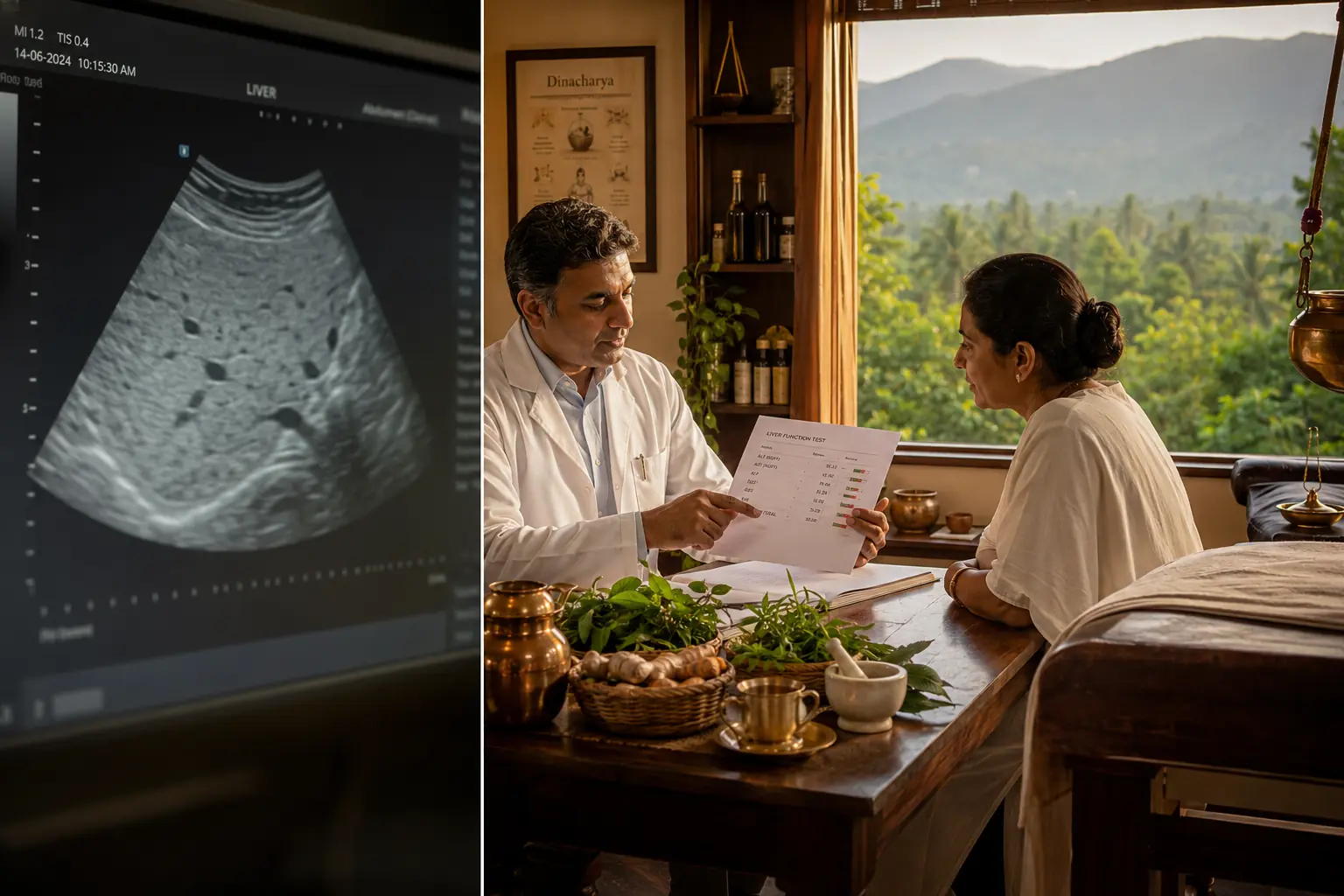
Understanding the confirmed therapeutic menu at Tigris Valley helps European guests arrive with clear expectations rather than vague images from wellness marketing:
| Therapy | System | What It Does | European Health Goal It Serves |
|---|---|---|---|
| Abhyanga | Ayurveda | Full-body warm medicated oil massage; loosens toxins, calms nervous system | Burnout, muscle tension, fatigue, stress |
| Shirodhara | Ayurveda | Warm oil stream on forehead; nervous system reset | Insomnia, anxiety, brain fog, emotional dysregulation |
| Panchakarma | Ayurveda | 5-action detoxification: Snehapanam, Virechanam, Basti, Nasya, Abhyanga | Systemic detox, chronic disease root cause, preventive longevity |
| Ozone Therapy | Functional Medicine | Cellular oxygenation, immune modulation, inflammation reduction | Autoimmunity, chronic fatigue, inflammatory conditions |
| IV Nutritional Therapy | Functional Medicine | Direct infusion: Omega-3, Magnesium, Vitamin D, Vitamin C, Glutathione | Deficiency correction, cellular energy, immune rebuilding |
| Rasayana Therapy | Ayurveda | Customised herbal rejuvenation; rebuilds tissue vitality | Anti-aging, post-illness recovery, deep Ojas rebuilding |
| Forest Bathing | Nature Therapy | Guided immersion in Wayanad forest; cortisol reduction | Stress, anxiety, burnout, immune restoration |
| CBT + Guided Meditation | Mind-Body | Cognitive restructuring + nervous system regulation | Burnout, anxiety patterns, emotional numbness |
| Acupuncture & Qi Gong | Chinese Medicine | Pain modulation, energy balance, nervous system regulation | Chronic pain, fibromyalgia, fatigue syndromes |
The full confirmed therapy list — including Kalari Massage, Deep Tissue Massage, Aromatherapy, Lymphatic Drainage, Infrared Sauna, Hydrotherapy, Physiotherapy, Yoga & Naturopathy, and Pranayama — is available on the AYUSH treatments page.
Practical logistics are a legitimate concern for European first-timers. Here is the direct information:
The nearest major international airport to Tigris Valley is Calicut (Kozhikode) International Airport (CCJ). Current direct or one-stop connections from major European cities include:
Citizens of all EU member states, the UK, Switzerland, and Norway are eligible for India’s e-Tourist Visa (eTV), applied for online at indianvisaonline.gov.in. Processing typically takes 48–72 hours. Tigris Valley’s reservations team can provide a stay confirmation letter to support applications when required.
Tigris Valley is located at Markaz Knowledge City Road, Kaithappoyil, Adivaram, Wayanad, Kerala — approximately 60–90 minutes from Kozhikode Airport. Airport transfers can be arranged through the retreat. Full journey options are on the Getting to Tigris Valley page.
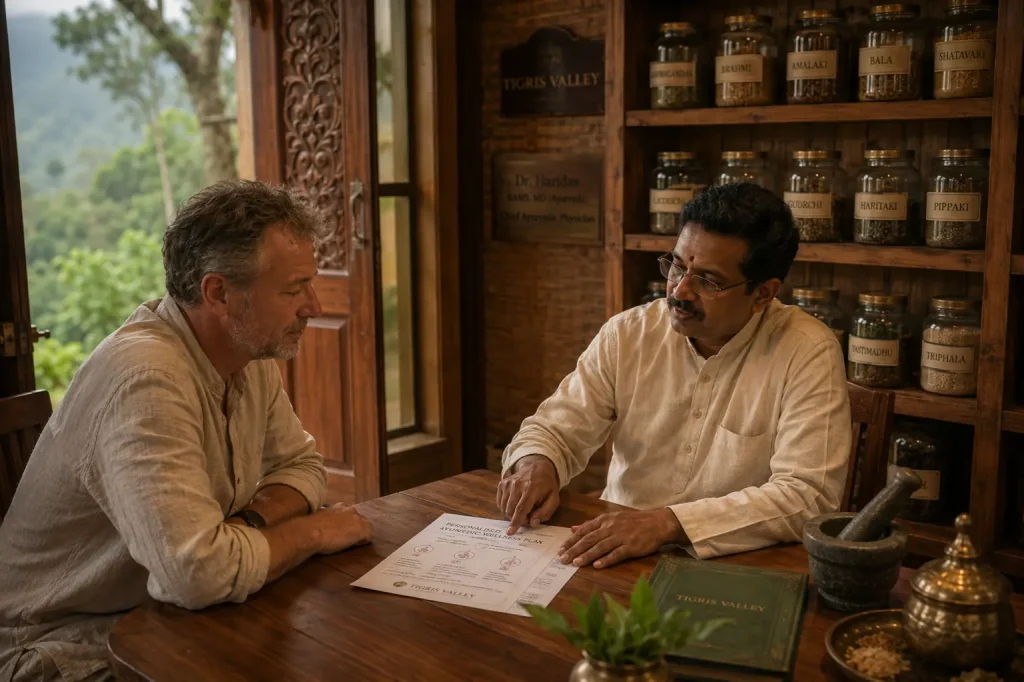
Tigris Valley conducts a pre-arrival medical consultation with all international guests — reviewing health history, current medications, and wellness objectives before designing your personalised program. This typically happens via video call 2–4 weeks before your arrival date. Contact the team at reservation@tigrisvalley.com or +91 9072661622 to initiate the process.
European travelers often arrive uncertain about daily rhythms inside an Ayurveda retreat. Here is a representative daily structure during a standard program stay:
| Time | Activity |
|---|---|
| 6:00 – 7:00 AM | Outdoor Yoga, Pranayama & morning meditation in Wayanad mountain setting |
| 7:30 AM | Herbal tea & therapeutic morning drink; physician check-in if required |
| 9:00 – 11:30 AM | Primary treatment session: Abhyanga, Shirodhara, Swedana, or assigned Panchakarma procedure |
| 12:30 PM | Therapeutic Ayurvedic lunch — organic, seasonal, dosha-aligned; Ruhe Café dining |
| 2:00 – 3:30 PM | Rest, physician consultation, or optional facility use (sauna, pool, walking tracks) |
| 4:00 PM | Secondary session: Ozone Therapy, Nasya, Infrared Sauna, IV Nutritional Therapy, or Acupuncture |
| 5:30 – 6:30 PM | Forest Bathing walk or Qi Gong; Guided Meditation or CBT session |
| 7:30 PM | Light therapeutic dinner; herbal tea for sleep support |
| 9:00 PM | Rest — restorative sleep supported by herbal formulations |
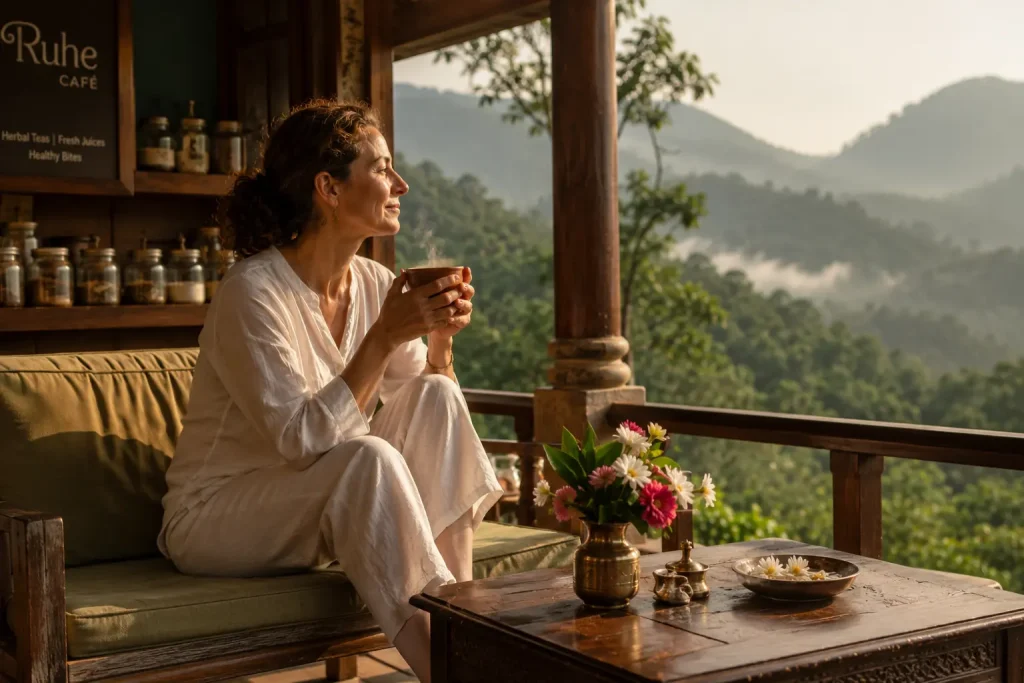
Between treatment sessions, guests have access to the full confirmed facilities at Tigris Valley: indoor swimming pools, sauna, Jacuzzi, herbal baths, gym with personal trainers, walking tracks, gazebos, amphitheatre, meditation hall, and the Ruhe Café. Optional excursions to Wayanad’s natural attractions are available through the Nearby Escapes program on designated rest days.
The Kerala wellness retreat market ranges from genuine NABH-accredited clinical hospitals to beautiful resorts that have added “Ayurvedic massage” to their spa menu. For European travelers who have done their research, the distinction is non-negotiable. Here is where Tigris Valley stands:
| Standard | Tigris Valley | Generic Kerala Retreat |
|---|---|---|
| Accreditation | NABH-accredited — South Asia’s largest AYUSH-integrated hospital | Self-described; no independent accreditation |
| Physician Qualification | BAMS-qualified Ayurvedic physicians; 24/7 medical oversight | Trained therapists; part-time consulting physician |
| Medical Systems | Ayurveda + Unani + Siddha + Yoga + Acupuncture + Functional Medicine | Ayurveda + massage; limited integration |
| Personalisation | Pre-arrival consultation + dosha assessment + advanced diagnostics | Package selection from fixed menu |
| In-House Preparations | Customised herbal formulations prepared on-site for each guest | Commercial branded Ayurvedic products |
| Food Source | Mazra Organic Farm on-site; seasonal, dosha-specific meals | Standard catering with “Ayurvedic” labelling |
| Post-Discharge | Personalised diet plan, herbal kit, yoga practice, lifestyle protocol | No structured post-program guidance |
| Accommodation | Luxury rooms and suites with mountain views; European comfort standards | Variable; may not meet European comfort expectations |
Not at all. A significant proportion of European guests at Tigris Valley arrive in good health and seek Panchakarma as a preventive annual reset — clearing accumulated toxins before they generate disease, and rebuilding vitality that modern life gradually depletes. The Anti-Aging & Longevity Program is specifically designed for this preventive orientation.
Tigris Valley’s therapeutic diet is built on organic, locally sourced seasonal food from the Mazra Organic Farm — primarily plant-based, with clean proteins included where clinically appropriate. The culinary team at Ruhe Café accommodates common European dietary preferences and allergies. Pre-arrival, your dietary requirements are noted during the consultation process.
English is the primary language for all medical consultations, program briefings, and guest communication at Tigris Valley. All physicians and the core guest services team are fully English-proficient. This is standard practice across leading Kerala clinical wellness hospitals serving international guests.
First-time European guests most commonly choose 14 or 21 days — long enough to complete a meaningful Panchakarma cycle with visible, measurable outcomes. The 7-day program is a genuine introduction but produces more limited detoxification depth. For preventive health goals, 14 days is the practical minimum; for chronic condition management, 21 days is standard.
The structure of a residential Panchakarma program requires consistent daily attendance during the active treatment phase. On designated rest days, Tigris Valley’s Nearby Escapes program provides guided access to Wayanad’s remarkable natural and cultural attractions. Many European guests add independent India travel before or after their retreat stay.
Certain conditions — including pregnancy, acute infections, very advanced age with significant frailty, and specific cardiovascular conditions — require modified protocols or preclude certain procedures. The pre-arrival physician consultation identifies any such considerations and designs an appropriate program. This is precisely why NABH accreditation and 24/7 physician oversight matter.
Light, loose, natural-fibre clothing (cotton or linen) is ideal for the Kerala climate. Tigris Valley provides robes, towels, and treatment garments. Bring current prescription medications and a summary of your medical history in English for the physician consultation. Your pre-arrival briefing will include a complete packing and preparation guide.
Tigris Valley’s herbal formulations are prepared in-house under physician supervision, using sourced medicinal plants from the Western Ghats and cultivated in the Mazra Organic Farm. NABH accreditation requires documented quality management protocols for all medicinal preparations — this is the institutional standard that distinguishes a clinical hospital from an unaccredited retreat.
Tigris Valley provides a comprehensive post-discharge protocol: a personalised diet plan, herbal formulation kit to continue at home, a Yoga and Pranayama practice guide, and lifestyle guidance tailored to your specific program outcomes. The goal is to ensure the improvements made during your residential stay are sustained and deepened in the weeks and months following your return.
Contact the reservations team at reservation@tigrisvalley.com or call/WhatsApp +91 9072661622. The first step is a pre-arrival consultation call to discuss your health history, objectives, and program options. For peak months (October–March), booking 6–8 weeks in advance is recommended.
Your Wellness Retreat in India Begins Here
From burnout recovery to autoimmune support to preventive longevity — Tigris Valley’s NABH-accredited team designs a program around your health, not a package around your budget. European guests welcome. English-speaking team. Pre-arrival consultation included.