[gtranslate]
MENU
Three weeks feels like a long time to commit to anything — especially when you’re not sure what’s actually going to happen to you. You’ve read the theory. You know Panchakarma involves oil and steam and probably some dietary restrictions. But nobody has told you what Day 4 feels like in your body, what shifts somewhere around Day 11, or why guests who complete the full 21 days consistently describe it as a dividing line in their lives. This is that account which deals with what 21 days of Ayurveda can do!
📋 Table of Contents
The 21-day duration isn’t arbitrary — and it isn’t marketing. It’s rooted in Ayurvedic physiology that has a surprisingly precise modern parallel.
Ayurveda recognises seven tissue layers (Sapta Dhatu) — plasma, blood, muscle, fat, bone, nerve, and reproductive tissue. Each layer takes approximately 5–7 days to be adequately prepared, cleansed, and nourished. A 7-day program reaches the surface layers; a 14-day program reaches into the middle; the full 21-day Panchakarma experience in Kerala is what allows the process to penetrate to the deepest levels — bone marrow, neurological tissue, and the reproductive system where chronic disease and deep-seated fatigue so often originate.
The three phases of the program — Purva Karma (preparation), Pradhana Karma (main cleanse), and Paschat Karma (rejuvenation) — each require time to complete. Rushing one compresses the next. The guests who say 21 days changed their lives are not exaggerating; they’re reporting what happens when each phase is given its full biological window.
Key Insight: Research in cell biology confirms that many human cells complete their functional renewal cycle over 21–28 days. This is not coincidence — Ayurveda’s classical knowledge of tissue renewal timelines and modern cellular biology describe the same reality from different vantage points. A 21-day Ayurveda program works with these cycles, not against them.
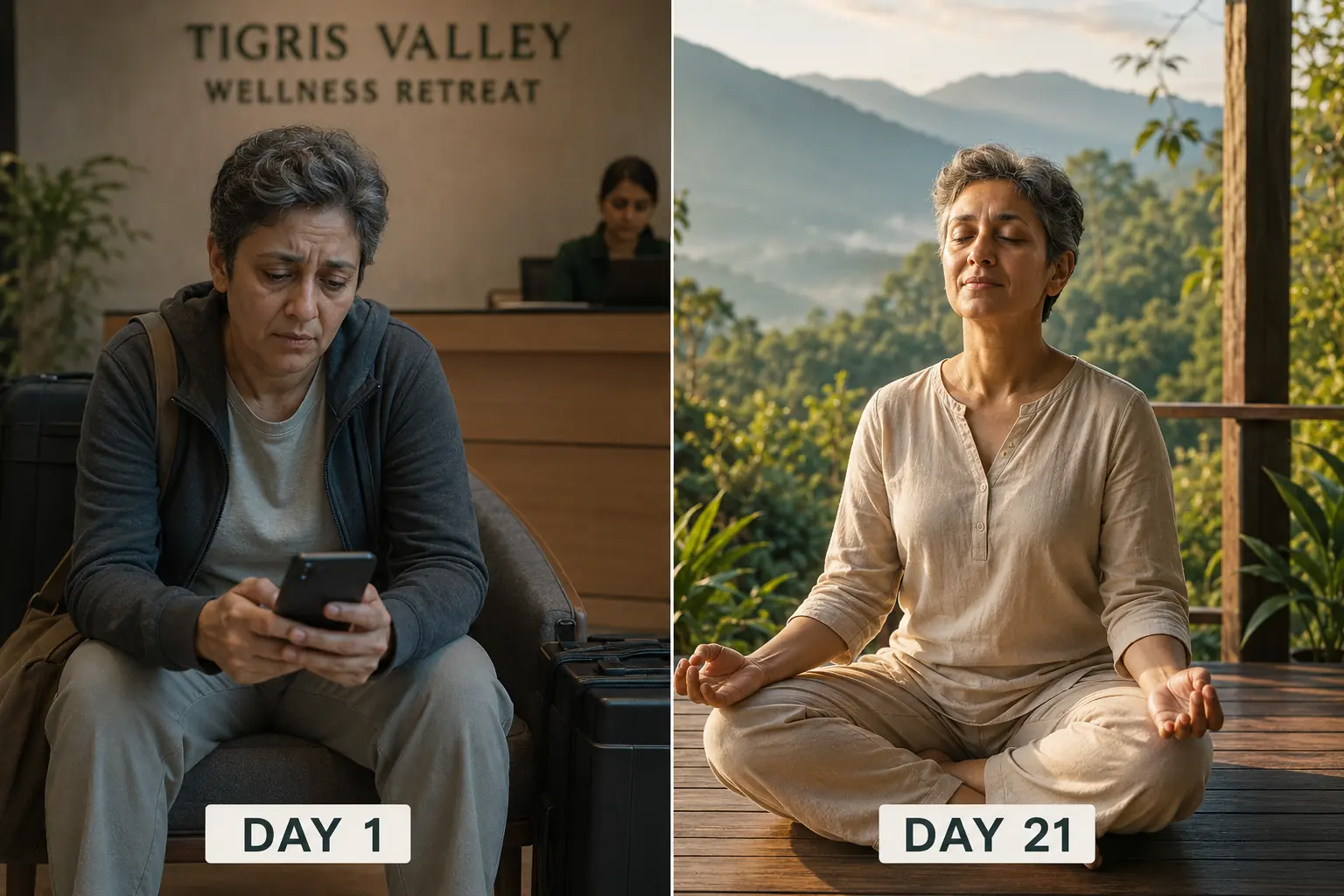
Most guests arrive carrying more than their luggage. They carry years of deferred rest, accumulated tension, the residue of lives lived too fast. The first thing Week One does is ask you to put it all down.
Your first substantive interaction at Tigris Valley is a physician consultation — not a welcome drink. The doctor reviews your health history in clinical detail: every diagnosis, every medication, every symptom pattern that has been quietly accumulating. For many guests, this is the first time anyone has asked about the whole picture rather than the presenting complaint. Some guests find it quietly emotional before a single therapy has begun.
Your dosha analysis follows — identifying your constitutional type and the nature of the current imbalance. Your personalised 21-day protocol is built from this. Nothing is standardised. Nothing is assumed.
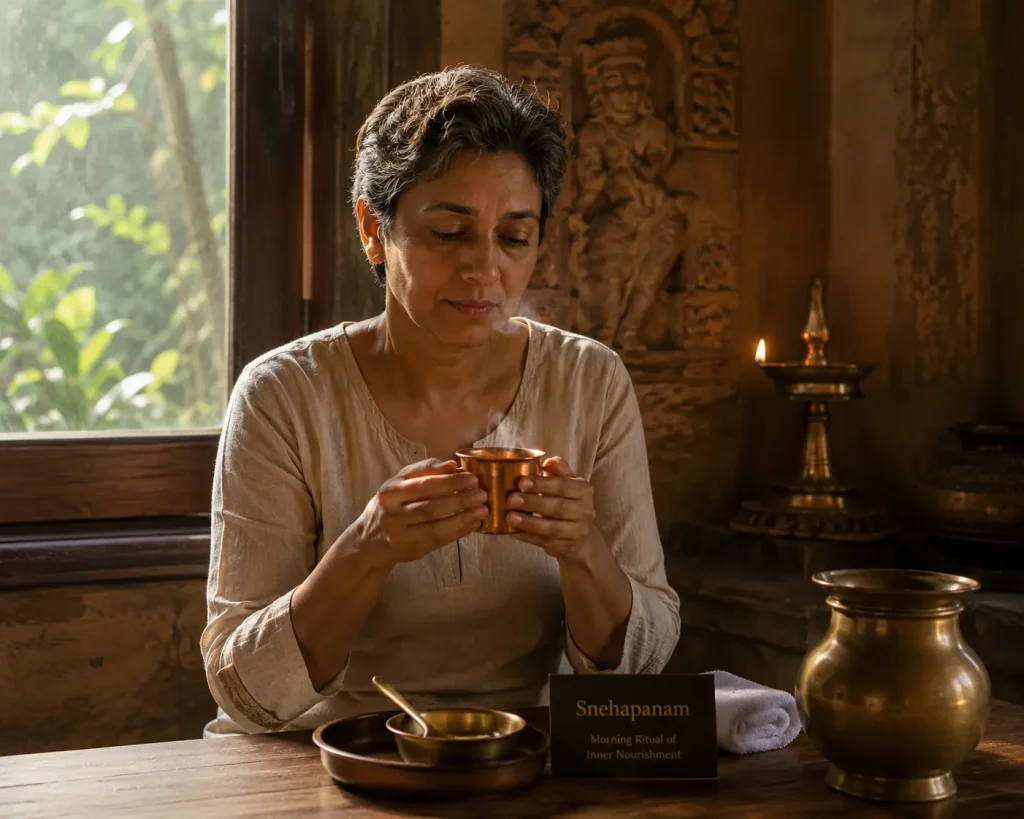
Snehapanam begins — the medicated ghee or oil ingestion protocol that starts the preparation phase. You take it in the morning, warm, in an amount that increases each day under physician guidance. It tastes unfamiliar. The effects are subtle at first: a slight loosening in the gut, an unexpected sense of internal warmth. What’s actually happening is profound — the oil is penetrating the body’s channels, softening and mobilising toxins embedded in tissues that have been holding them for years.
Daily Abhyanga starts simultaneously. Two therapists work in rhythmic synchrony across your body with warm medicated oil — not a Swedish massage, not spa-style pressure work, but a deliberate, methodical process of drawing toxins toward the body’s elimination pathways. After the first session, most guests report a heaviness they didn’t know they were carrying beginning to lift.
Medicated Steam Baths (Swedana) follow each Abhyanga — the heat opening the skin’s channels and driving the oil deeper. Around Days 6–7, many guests notice what practitioners call the “detox response”: unusual fatigue, emotional surfacing, changes in sleep, sometimes mild headaches. This is not a bad sign. It is exactly what the preparation phase is designed to produce — evidence that loosening is occurring at the tissue level. The physician team monitors this daily and adjusts the protocol as needed.
Most guests also begin to notice something else around Day 7: they stop checking their phones with urgency. The first genuine exhale. The nervous system is beginning to understand it has been given permission to stop holding.
Week Two is where the clinical work intensifies — and where most guests experience the shifts that they later describe as the defining turning point of the program.
Virechanam — medicated purgation — is performed on a carefully timed day determined by your physician. It clears the small intestine, liver, and gallbladder of accumulated Pitta-based toxins and inflammatory burden. The process is medically supervised from start to finish. Most guests describe it as less dramatic than they anticipated — and the day after as one of the most extraordinary physical sensations of the program: a lightness that is difficult to describe to someone who hasn’t experienced it. Years of digestive sluggishness can resolve in a single session.
Basti — herbal enema therapy — is considered the most therapeutically powerful of all Panchakarma procedures. The warm herbal preparation introduced into the colon is absorbed systemically, reaching tissue levels beyond the digestive system. Classical Ayurveda uses Basti to address the full spectrum of Vata-driven conditions: joint pain, nerve disorders, chronic constipation, lower back conditions, and the nervous system dysregulation that underlies so much of what modern medicine calls anxiety. Multiple Basti sessions may be administered across this phase.
Shirodhara during Week Two becomes increasingly potent as the body’s channels clear. A continuous, perfectly calibrated stream of warm herbal oil pours over the forehead in an arc — and the effect on the nervous system is unlike anything most guests have previously experienced. The hyperactive mental loop that has been running on autopilot for years — the internal monologue, the planning, the reviewing — simply pauses. Guests report that Shirodhara in Week Two feels qualitatively different from Day 3. The body is ready to receive it.
Nasya Therapy clears the head, neck, and sinus channels. For guests who arrived with chronic migraines, sinus congestion, or the specific kind of frontal brain fog that accumulates with long-term stress, Nasya’s effects are often described as a literal clearing of the head — as if something that had been blurring the view for years is finally removed.
What guests say about Day 14: The single most commonly reported observation at the midpoint of a 21-day Ayurveda program is this — “I can’t remember the last time I felt this way.” Not euphoric. Not drugged. Simply: clear, rested, and present. This is what the removal of accumulated Ama actually feels like from the inside.
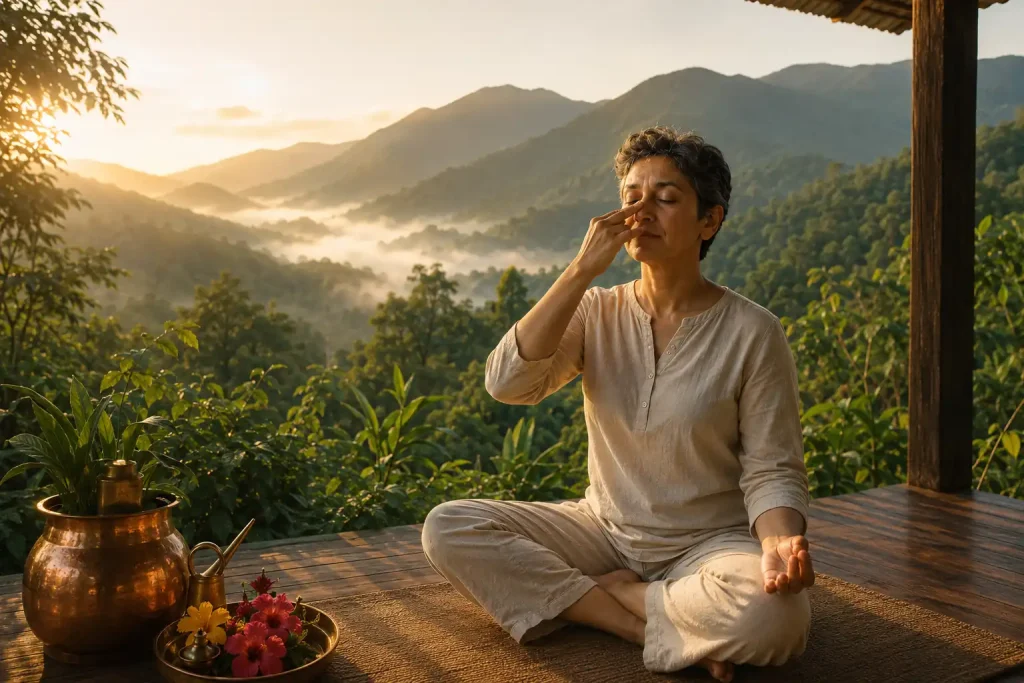
Week Three is the phase that is most consistently underestimated — and most consistently cited as the most meaningful in retrospect. After the cleansing of the first two weeks, the body exists in a state of heightened cellular receptivity. What is put in now matters more than at any other point. What is practised now sets the pattern for what comes next.
Rasayana Therapy — Ayurveda’s classical rejuvenation protocol — begins. Customised herbal formulations prepared in-house are administered to rebuild each tissue layer from the inside out. The herbs used are specific to your dosha analysis and the outcomes of your cleansing phase. This is not a generic supplement. It is a prescriptive, physician-designed restoration of the specific tissue systems that your cleanse has cleared and opened.
Many guests notice skin changes during this phase — a clarity and glow that isn’t cosmetic but metabolic. The skin is the body’s most visible tissue layer, and when internal restoration reaches it, the change is visible from the outside.
The daily Outdoor Yoga and Pranayama practice — which has been gentler and more recovery-paced in Weeks One and Two — deepens considerably in Week Three as the body’s energy reserves rebuild. Guests who arrived unable to sustain 30 minutes of gentle movement find themselves capable of hour-long practice with ease. This is not fitness improvement — it is Ojas restoration. The difference is qualitative.
Guided Meditation and CBT sessions in Week Three address the cognitive and emotional patterns that the physical cleanse has surfaced. Many guests experience insight during this phase — clarity about lifestyle habits, relationships, or work patterns that the sustained noise of their pre-retreat life had been drowning out. This is not a side effect of the program. It is a goal.
The final days are deliberately paced — not dramatic. Dietary reintroduction is graduated, allowing the newly restored digestive fire to strengthen before returning to full eating. The physician conducts a final review, noting changes and designing the post-discharge protocol. Most guests describe an ambivalence at this point: gratitude for what has happened, and something close to reluctance to leave.
This section is written without exaggeration. Not every guest experiences every outcome below — individual constitutional factors, health history, and the specific conditions someone arrived with all influence the picture. These are the changes most consistently reported across the 21-day Ayurveda retreat experience:
| What You Arrive With | What Typically Changes by Day 21 |
|---|---|
| Chronic fatigue — the kind sleep doesn’t fix | Sustained energy throughout the day without stimulants; restorative sleep patterns re-established |
| Sluggish, irregular digestion; bloating; food sensitivities | Regular, comfortable digestion; reduced bloating; significantly expanded food tolerance |
| Brain fog; difficulty concentrating; word-finding problems | Measurably sharper cognitive function; sustained concentration; improved recall |
| Anxiety; racing thoughts; inability to genuinely relax | Nervous system baseline shifted; capacity for genuine rest restored; reduced anxiety reactivity |
| Chronic muscle tension; joint pain; stiffness | Reduced pain scores; improved joint mobility; muscle holding released |
| Skin issues — dullness, inflammation, acne, psoriasis flares | Skin clarity and glow; reduced inflammatory skin conditions; improved tone |
| Insomnia; waking at 2–3 AM; unrefreshing sleep | Deeper, uninterrupted sleep; natural sleep-wake rhythm restored |
| Emotional numbness or volatility | Emotional range restored; reactions proportionate; sense of groundedness |
| Excess weight; metabolic sluggishness | Metabolism stimulated; healthy weight reduction as secondary outcome; reduced cravings |
These outcomes are not guaranteed for every individual — they are the patterns consistently seen across guests completing the full 21-day Ayurveda transformation. The physician consultation at intake identifies which are most likely for your specific constitution and health history.
One of the most common questions asked before a 21-day program is: “What happens when I go back to my normal life?” It is exactly the right question — and one Tigris Valley takes seriously enough to build a complete post-discharge system around.
Every guest leaves with:
The 21 days at Tigris Valley are the catalyst. The post-discharge protocol is the compound interest on that investment — ensuring the outcomes continue to develop, not deteriorate, in the months after returning home.
The full 21-day program is not for everyone at every moment — and being honest about this is more useful than broad enthusiasm.
The 21-day program is the right investment when:
The 7 or 14-day programs are appropriate when:
Tigris Valley’s specific programs that offer the 21-day format include the Detox & Cleanse Program, the Stress & Burnout Recovery Program, the Anti-Aging & Longevity Program, the Autoimmune Disorder Management Program, and the Chronic Pain & Inflammation Management Program. Browse the full programs page and explore the facilities and accommodation that frame the 21-day experience at Tigris Valley’s Wayanad mountain sanctuary.
Briefly, possibly — and this is clinically normal. During Days 5–8 of the preparation phase, as loosened toxins mobilise through the body’s channels before being eliminated, many guests experience temporary fatigue, mild headaches, emotional surfacing, or changes in digestion. This is a sign the process is working, not an indication something is wrong. Tigris Valley’s physician team monitors your response daily and adjusts the protocol to ensure this phase remains manageable.
Weight loss is a common secondary outcome — not the primary therapeutic goal. The metabolic restoration that occurs through Panchakarma, combined with a therapeutic Ayurvedic diet, frequently results in meaningful reduction in excess weight and inflammation-related fluid retention. Guests specifically seeking weight management results alongside their program can explore the Weight Management Package as a complementary element.
Yes — with the post-discharge protocol Tigris Valley provides. The herbal formulation kit, dietary plan, and daily Pranayama practice are specifically designed to extend and consolidate the program’s gains. Guests who follow the post-discharge guidance consistently report that the benefits deepen over the 6–8 weeks following the program, not decline.
Rasayana Therapy is Ayurveda’s classical rejuvenation protocol — administered in Week Three after the cleansing phase has created cellular receptivity. It involves personalised herbal formulations prepared in-house at Tigris Valley, specific dietary components that support tissue rebuilding, and therapeutic practices (Yoga, Pranayama, guided meditation) that sustain the restoration process. It is tailored entirely to your dosha analysis and the specific tissue layers most depleted by your health history.
Not at all — in fact, many experienced practitioners argue that first-timers benefit most from the full 21-day format precisely because their accumulated Ama load is greatest and the preparation phase requires adequate time. First-time guests at Tigris Valley are guided every step of the way; every procedure is explained before it begins; and the program pacing is adjusted to your individual response. The physician consultation at intake ensures the program is appropriate for your current health status.
Light movement — gentle walks, the daily therapeutic Yoga and Pranayama — is built into the program. Vigorous exercise is not recommended, particularly during the active cleansing phase, as it diverts the body’s resources away from elimination and recovery. Working remotely during the program is possible but significantly undermines the therapeutic value — the nervous system reset that drives many of the program’s outcomes requires genuine disengagement. Most guests report that disconnecting is the hardest and most transformative part of the first week.
Therapeutic and deeply nourishing — not punishment. Meals at Tigris Valley are prepared from organic, seasonal produce sourced from the on-site Mazra Organic Farm, adjusted to your dosha and the specific phase of your program. The early phases involve lighter, more easily digestible foods; the rejuvenation phase introduces greater variety and richness. The Ruhe Café provides additional options. Most guests are surprised by how satisfying and flavourful the therapeutic diet is — and by how dramatically their food preferences shift by Day 21.
Rarely — and typically only in the first few days before the program’s rhythm establishes itself. The treatment schedule, daily Yoga and meditation sessions, Forest Bathing walks, physician consultations, rest periods, and the Wayanad natural environment create a full and purposeful day. By Week Two, most guests describe a quality of absorbed inner attention — the opposite of boredom — that they haven’t experienced since childhood. Optional cultural excursions through the Nearby Escapes program provide variety on rest days.
The conditions showing the most consistent and significant improvement across the full 21-day program include: chronic digestive disorders (IBS, SIBO-like presentations, sluggish metabolism), autoimmune inflammatory conditions, stress-related burnout and anxiety, chronic fatigue, sleep disorders, chronic musculoskeletal pain, and skin conditions with an inflammatory basis. Guests with these conditions are encouraged to discuss their specific presentation during the pre-arrival physician consultation to understand what outcomes are realistic for their individual case.
Contact the team at reservation@tigrisvalley.com or call/WhatsApp +91 9072661622. The first step is a pre-arrival consultation — a conversation with Tigris Valley’s physician team about your health history, current condition, and program goals. Your personalised 21-day protocol is designed from this consultation before you arrive. Use the contact page to submit an initial enquiry.
21 Days. A Different Person on the Other Side.
Not metaphorically. Physiologically. The 21-day Ayurveda program at Tigris Valley — South Asia’s largest NABH-accredited AYUSH-integrated wellness hospital — is designed to reach the tissue depth where chronic conditions, sustained fatigue, and accumulated stress actually live. Your consultation is the first step.
→ Explore the Detox & Cleanse Program