

[gtranslate]
MENU
⚡ Quick Facts
You slept eight hours, you drank your coffee, and by 2 p.m. you’re running on empty again. When exhaustion becomes your baseline, it’s easy to blame “just being busy” — but constant tiredness is a signal, not a personality trait. Ignored long enough, it drains your focus, mood, metabolism, and immunity. This guide unpacks 12 hidden causes of chronic fatigue — and the practical, root-cause fixes that actually restore your energy.

Normal tiredness has an obvious cause and improves with rest — a late night, a hard workout, a stressful week. Chronic fatigue is different:
If you wake up unrefreshed, crash every afternoon, and feel “wired but tired” for weeks on end, you’re likely dealing with an underlying driver — often more than one. The good news: most of these drivers are identifiable and treatable once you know where to look.
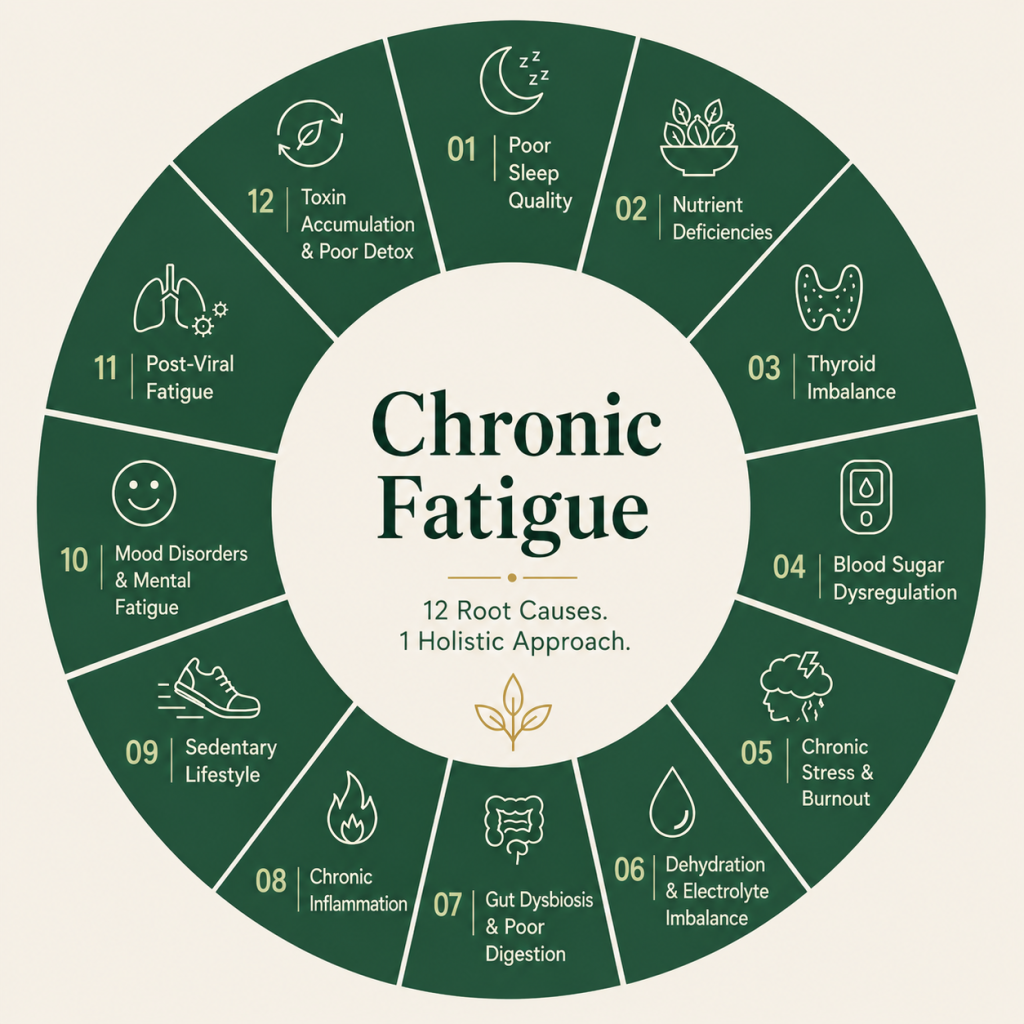
You can spend eight hours in bed and still get poor-quality sleep. Sleep apnoea, late screens, alcohol, and an irregular schedule all fragment deep sleep — the phase that actually restores you. If falling or staying asleep is the issue, these natural Ayurvedic treatments for insomnia and better sleep target the root of restless nights rather than just sedating symptoms.
Low iron, vitamin B12, vitamin D, and magnesium are among the most common — and most missed — causes of persistent tiredness. Iron deficiency (especially in menstruating women and vegetarians) starves your cells of oxygen, while low B12 and D quietly drain energy and mood.
An underactive thyroid (hypothyroidism) slows your entire metabolism, producing fatigue, weight gain, cold intolerance, and brain fog. Thyroid issues are frequently undiagnosed. Because thyroid and blood-sugar problems often travel together, Tigris Valley’s metabolic disorder management programme for thyroid and diabetes assesses these drivers as a connected system.
Diets high in sugar and refined carbs cause energy to spike and crash all day. Each crash triggers a fresh wave of fatigue and cravings. Stabilising blood sugar with balanced, whole-food meals is one of the fastest energy wins available.
Long-term stress keeps cortisol elevated until the system eventually dysregulates — leaving you exhausted, anxious, and unable to relax. This “burnout” state is now epidemic among professionals. A dedicated stress and burnout recovery programme in Kerala uses therapies like Shirodhara, guided meditation, and nature immersion to reset an overloaded nervous system.
Even mild dehydration reduces alertness and increases perceived fatigue. Many people mistake thirst for tiredness and reach for caffeine, which dehydrates further. Aim for steady water intake before you feel thirsty.
A disrupted gut microbiome impairs nutrient absorption and drives inflammation — both of which sap energy. In Ayurveda, weak digestive fire (Agni) producing toxic residue (Ama) is considered a primary root of fatigue, dullness, and heaviness.
Persistent inflammation is metabolically expensive — your body burns energy fighting a fire that never goes out. This is why fatigue so often travels with autoimmune and inflammatory conditions. Understanding the shared inflammatory roots behind chronic diseases explains why “tired all the time” and chronic illness so often appear together.
Both extremes cause fatigue. Too little movement leaves the body deconditioned and sluggish; too much, without recovery, depletes it. The sweet spot is regular, moderate movement — walking, yoga, and strength work your body can recover from.
Mental health and energy are inseparable. Depression and anxiety are leading causes of chronic fatigue, often showing up as tiredness before any low mood is obvious. Addressing this directly through integrated emotional healing and mental-health support is often the missing piece in unexplained exhaustion.
After infections — including COVID-19 — many people experience lingering fatigue that lasts months. This “post-viral” exhaustion needs immune support and gradual, paced recovery rather than pushing through. Structured immune rebuilding, as in the immune strengthening package at Tigris Valley, is designed for exactly this recovery phase.
Environmental toxins, poor diet, alcohol, and a strained liver create a metabolic burden that shows up as fatigue, brain fog, and heaviness. When the body’s natural detox pathways are overwhelmed, energy is one of the first things to go
Key Insight: Chronic fatigue is almost never a single-cause problem. It’s usually two or three of these drivers stacked together — say, poor sleep + low iron + chronic stress. That’s exactly why “just drink more coffee” or “just take a vitamin” so rarely works, and why a whole-system assessment does.
Book a professional assessment if your fatigue:
Fatigue lasting over six months with no clear explanation may point to chronic fatigue syndrome (ME/CFS) and deserves proper evaluation. The goal isn’t to alarm you — it’s to make sure a treatable cause isn’t being missed.

Because fatigue is multi-factorial, lasting recovery works on several fronts at once:
For persistent cases, a residential, doctor-led reset addresses all of these together. Tigris Valley’s mindfulness and mental clarity package pairs nervous-system recovery with clarity-building practices — helpful when brain fog and mental fatigue dominate.
✅ Key Takeaways
Sleep quality matters as much as quantity. Sleep apnoea, alcohol, late screens, stress, or nutrient deficiencies can all fragment deep sleep, so you wake unrefreshed despite enough hours in bed.
Low iron, vitamin B12, vitamin D, and magnesium are the most common. Iron deficiency in particular is a frequent, easily missed cause of persistent fatigue, especially in women and vegetarians.
Yes. Chronic stress keeps cortisol elevated until the system dysregulates, leaving you exhausted, “wired but tired,” and unable to properly rest or recover.
No. Chronic fatigue is a symptom with many possible causes. Chronic fatigue syndrome (ME/CFS) is a specific diagnosis of unexplained, disabling fatigue lasting over six months that worsens with exertion.
Fatigue plus weight gain, cold intolerance, dry skin, constipation, or brain fog can point to an underactive thyroid. A simple blood test (TSH, T3, T4) confirms it.
Definitely. Diets high in sugar and refined carbs cause energy spikes and crashes all day, while poor nutrient intake starves your cells of what they need to produce energy.
Menstrual iron loss, thyroid conditions, hormonal shifts (PCOS, perimenopause), and higher rates of certain autoimmune conditions all make unexplained fatigue more common in women.
Yes. Even mild dehydration reduces alertness and increases tiredness. Many people mistake it for hunger or sleepiness and reach for caffeine, which worsens dehydration.
Yes. Poor gut health impairs nutrient absorption and drives inflammation, both of which sap energy. In Ayurveda, weak digestion producing toxic residue (Ama) is a classic root of fatigue.
It varies — from a few weeks to several months. Recovery is best supported with immune support, paced activity, good nutrition, and rest, rather than pushing through.
Fix sleep, hydrate, stabilise blood sugar with whole-food meals, get morning sunlight, and add moderate movement. These give the quickest wins while deeper causes are addressed.
Seek medical review if fatigue is severe, lasts weeks, follows an infection, or comes with weight change, breathlessness, a racing heart, or persistent low mood.
Tired of Being Tired? Find the Real Cause.
Endless caffeine and “push through it” don’t fix chronic fatigue. At Tigris Valley in Kerala, our doctors run functional diagnostics and build a personalised reset across sleep, nutrition, stress, hormones, and detox — so your energy returns at the root.
This article is for general educational purposes and is not a substitute for personalised medical advice. If you are experiencing persistent or severe fatigue, please consult a qualified doctor for proper evaluation.
Kaithappoyil, in the Western Ghats.
Markaz Knowledge City Road, Kaithappoyil, Adivaram, Kerala
Get directions +91 90726 61622 reservation@tigrisvalley.com
Kaithappoyil, Western Ghats

Before you leave
A physician reads every letter. Book a consultation, or send an inquiry — reservations answers the same day.