[gtranslate]
MENU
You eat reasonably well. You’re not dramatically unwell. But something is consistently off — the afternoon energy slump that coffee doesn’t fix, the skin that flares without explanation, the infections that seem to find you first, the bloating that shows up uninvited. These are not unrelated symptoms of unlucky biology. In most cases, they share a single upstream cause — a gut that is not functioning as it should. This guide explains about Gut health- exactly how, and what to do about it.
📋 Table of Contents
For most of medical history, the gut was treated as a plumbing system — food goes in, waste comes out, and what happens in between is logistics. The last two decades of research have overturned this entirely.
The gut contains approximately 100 million neurons — more than the spinal cord. Neuroscientist Dr Michael Gershon famously termed this the “second brain,” demonstrating that the enteric nervous system governing the gut operates largely autonomously, communicating with the brain via the vagus nerve in both directions. When the gut is disrupted, the brain knows — and responds with fatigue, mood changes, and cognitive impairment.
The gut is also home to the gut microbiome — approximately 38 trillion microorganisms whose collective metabolic activity influences inflammation, hormone production, neurotransmitter synthesis (including 90% of the body’s serotonin), immune regulation, and even gene expression. Disruption to this ecosystem — through poor diet, antibiotics, stress, or environmental toxins — does not produce isolated digestive symptoms. It produces systemic effects across every major body system.
This is why gut health is not a niche wellness topic. It is the upstream variable that determines how well everything else in the body functions.
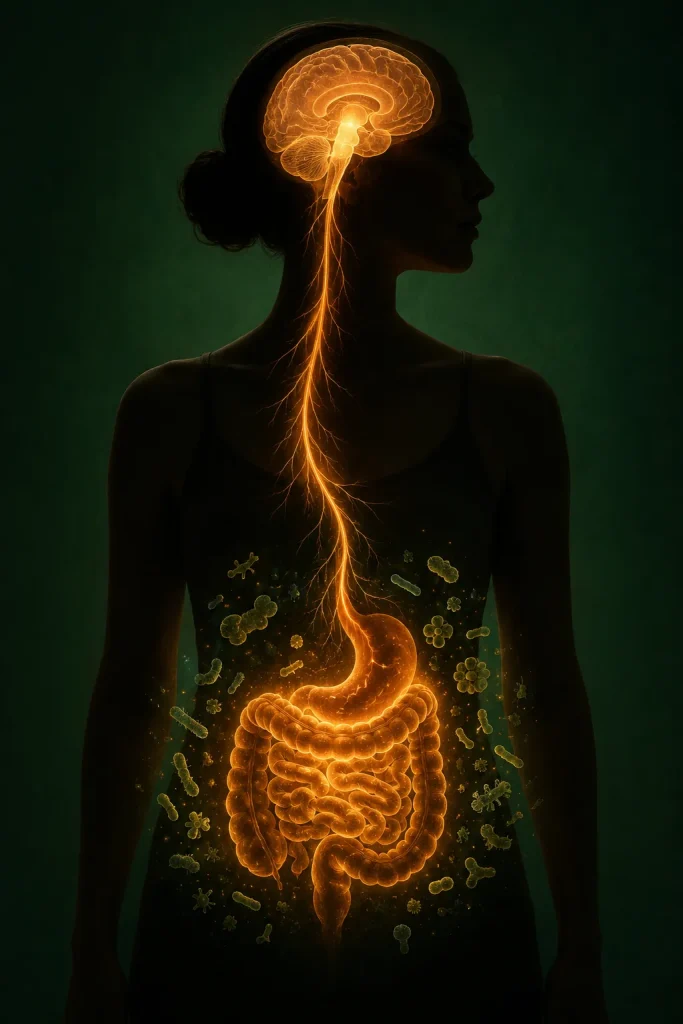
The gut communicates its dysfunction in a language most people don’t recognise as digestive. The following symptoms — grouped by system — are among the most consistent indicators of gut imbalance:
Key Insight: If you recognise three or more of the above symptoms, particularly spanning multiple categories, the likelihood that gut dysfunction is the common upstream driver is high. These symptoms appearing in isolation might have other causes — appearing together, across energy, skin, and immunity simultaneously, they point reliably to the gut.
The connection between gut function and energy levels is direct, biochemical, and measurable — not metaphorical.
The small intestine’s primary function is to absorb nutrients through its villi — finger-like projections that massively increase surface area. When the gut lining is inflamed, the villi flatten and their absorptive capacity is dramatically reduced. Iron, B12, magnesium, zinc, and vitamin D — all critical for cellular energy production — pass through incompletely absorbed. The result is a person who eats adequately but whose cells are running on nutritional deficit.
Gut dysbiosis — an imbalance in the microbiome’s bacterial composition — produces metabolic byproducts that directly impair mitochondrial function. The mitochondria are the cell’s energy factories; when they are compromised by inflammatory compounds from the gut, the entire body’s energy production capacity is reduced. This is why post-COVID fatigue, chronic fatigue syndrome, and burnout all show microbiome disruption as a consistent biomarker.
A disrupted gut microbiome directly alters glucose metabolism — impairing the body’s ability to regulate blood sugar after meals. The result is the post-meal energy crash familiar to millions: the 2pm slump, the inability to sustain concentration after lunch, the craving for sugar that perpetuates the cycle.
The relationship between gut health and skin health is sufficiently well-established in current research that dermatologists increasingly ask about digestive symptoms as part of skin consultations. The mechanisms are multiple and bidirectional:
| Gut Condition | Mechanism | Skin Manifestation |
|---|---|---|
| Increased intestinal permeability (leaky gut) | Incompletely digested proteins enter bloodstream, triggering immune response | Eczema, urticaria, acne, rosacea flares |
| Gut dysbiosis | Excess pathogenic bacteria produce inflammatory compounds that circulate systemically | Inflammatory acne, psoriasis exacerbation, skin redness |
| Reduced short-chain fatty acid production | Fewer beneficial bacteria = less butyrate = reduced gut barrier integrity | Dull, dry, prematurely aged skin; poor wound healing |
| Constipation / toxic load | Accumulated waste increases systemic toxin burden; skin compensates as backup elimination organ | Congested pores, dullness, breakouts across jaw and forehead |
| Gut-driven cortisol dysregulation | Microbiome influences HPA axis; dysbiosis raises baseline cortisol | Oily skin, hormonal acne, accelerated collagen breakdown |
This is why skincare products applied externally produce limited results for gut-driven skin conditions. The inflammation is being generated internally — addressing it requires restoring the gut first. Tigris Valley’s Detox & Cleanse Program explicitly lists skin improvement — “glowing, clearer skin” and “reduced puffiness and inflammation” — as documented outcomes of gut-directed detoxification.
Approximately 70–80% of the body’s immune tissue is located in the gut — specifically in the gut-associated lymphoid tissue (GALT). This is not an architectural coincidence. The gut is the body’s primary interface with the external environment — everything you eat, drink, and inhale brings potential pathogens and foreign particles into contact with the gut lining.
The gut’s immune function operates on several levels simultaneously:
The practical consequence: guests who arrive at Tigris Valley with frequent infections, autoimmune conditions, or post-COVID immune dysfunction are, in most cases, presenting with gut-driven immune compromise — and the gut is where their program begins.
Modern science arrived at the gut-brain-immune connection in the late 20th century. Ayurveda built its entire clinical architecture around it five millennia ago.
Agni is Ayurveda’s central concept in understanding gut and metabolic health. Translated as “digestive fire,” it encompasses not just the stomach’s acid production but the body’s complete capacity to transform — food into nutrients, experience into wisdom, toxins into eliminated waste. When Agni is strong (Sama Agni), digestion is efficient, nutrients are absorbed fully, and waste is eliminated completely. When Agni is weak (Vishama, Mandagni, or Tikshna Agni), the process breaks down at each stage.
When Agni fails to complete its transformation, the incompletely processed material becomes Ama — a sticky, toxic residue that accumulates in the gut and migrates through the body’s channels. Ayurveda identifies Ama as the root cause of the vast majority of chronic disease. Its description — sticky, heavy, obstructing channels, causing fatigue, clouding the mind, dulling the skin — maps precisely onto what modern medicine describes as the consequences of gut dysbiosis, increased intestinal permeability, and systemic low-grade inflammation.
In Ayurvedic anatomy, the colon is the primary seat of Vata — the governing principle of the nervous system, movement, and all bodily functions driven by air and space. When the colon is overburdened with accumulated waste (purisha) and Ama, Vata becomes dysregulated — and its dysregulation cascades into anxiety, insomnia, joint pain, dry skin, cognitive fog, and immune suppression. Restoring colon health, in Ayurveda, is restoring Vata — and by extension, restoring the nervous system, the immune response, and the body’s overall regulatory capacity.
Tigris Valley‘s approach to gut health restoration is multi-channel — addressing the gut simultaneously through Ayurvedic procedures, Functional Medicine interventions, and dietary protocols. Here are the confirmed, clinically administered therapies:
Basti — Ayurveda’s herbal enema therapy — is considered the single most therapeutically potent Panchakarma procedure, specifically because of its direct action on the colon and its systemic reach through the colon’s absorptive pathways. Warm herbal preparations are introduced into the colon, where they simultaneously cleanse accumulated waste, deliver therapeutic plant compounds systemically, restore the mucosal lining, and directly pacify Vata. Classical Ayurveda credits Basti with treating conditions far beyond the digestive system — joints, nervous system, skin, immunity — precisely because the colon’s reach is systemic.
Virechanam — medicated purgation therapy — clears the small intestine, liver, and gallbladder of accumulated Pitta-based toxins and inflammatory burden. For guests with gut-driven skin conditions (inflammatory acne, psoriasis, rosacea), Virechanam is classically indicated — clearing the internal fire that is expressing itself at the skin’s surface.
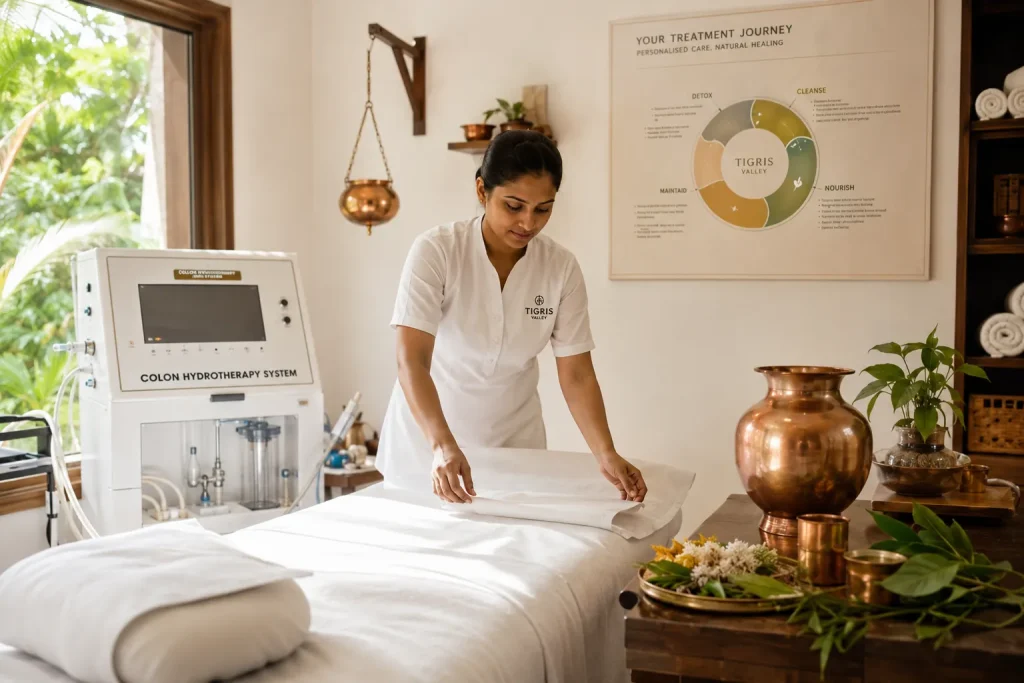
Tigris Valley’s confirmed Colon Hydrotherapy protocol uses warm, filtered water to flush out accumulated waste, gas, mucus, and toxins from the large intestine. The confirmed benefits include:
The procedure is gentle, non-invasive, and administered under clinical supervision — not to be confused with home enema kits or unmonitored commercial colonic centres.
Tigris Valley’s confirmed Ozone Therapy offers a specific mechanism highly relevant to gut health: anti-microbial action — confirmed effective against bacteria, viruses, fungi, and parasites. For guests whose gut dysbiosis includes bacterial or fungal overgrowth (a pattern common in post-antibiotic, post-COVID, and sugar-heavy dietary histories), Ozone Therapy works alongside dietary and Ayurvedic protocols to shift the microbiome balance by reducing pathogenic load.
Tigris Valley’s Autoimmune Disorder Management Program and Detox & Cleanse Program both explicitly include Gut Health Restoration — strengthening the gut microbiome to improve immune responses — as a confirmed program component. This includes IV Nutritional Therapy (delivering nutrients directly to bypass compromised gut absorption), dietary protocols specific to microbiome restoration, and herbal formulations targeting gut lining integrity.
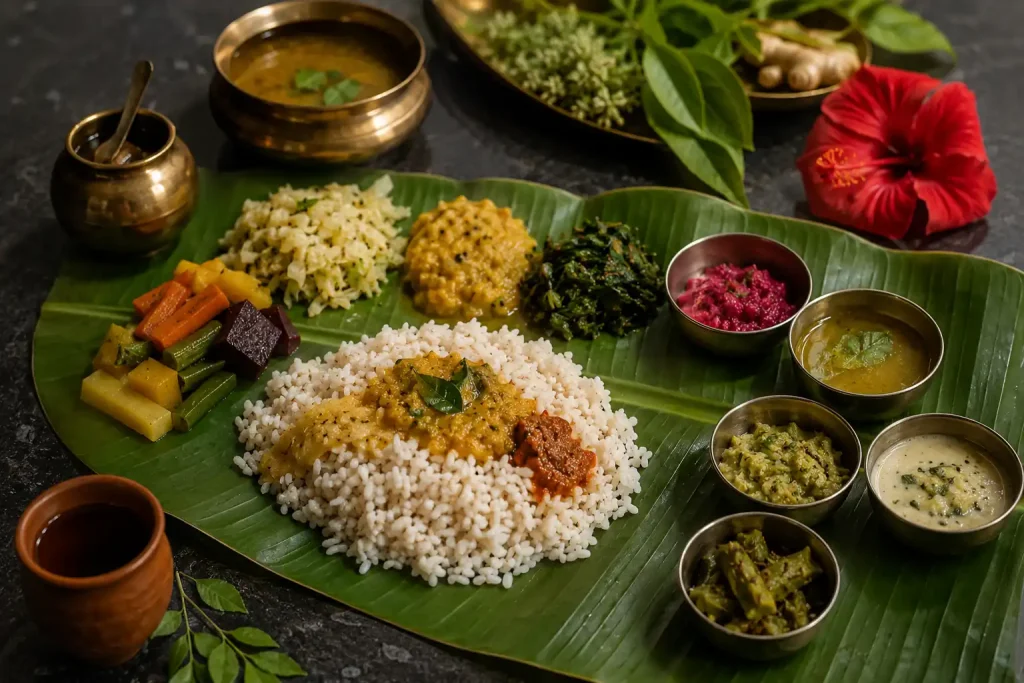
Diet is a gut therapy, not just nutrition. Every meal at Tigris Valley is prepared from organic, seasonal produce sourced from the on-site Mazra Organic Farm — free from the pesticide residues, preservatives, and ultra-processed compounds that are among the most potent drivers of microbiome disruption. The dosha-specific, phase-specific therapeutic diet served throughout any program is itself a clinical gut restoration tool — not a pleasant side feature.
The Tigris Valley program addresses the clinical restoration of gut health — but what happens in the months and years before and after a program is determined by daily choices. Here is what the evidence — both modern and Ayurvedic — consistently identifies as the most impactful variables:
| Habit | Gut-Building Version | Gut-Destroying Version |
|---|---|---|
| Meal timing | Largest meal at midday when Agni is strongest; light dinner before 7pm | Heavy meals late at night; skipping breakfast then overeating in the evening |
| Food quality | Warm, cooked, seasonal, organic foods that are easy to digest | Cold, raw, processed, ultra-preserved foods that challenge digestive capacity |
| Stress management | Daily Pranayama, meditation, or walks; adequate transition time between work and eating | Eating while working, anxious, or distracted; chronic sympathetic nervous system activation |
| Antibiotic use | Used only when clinically necessary; followed by active microbiome restoration | Repeated courses without microbiome restoration; prophylactic use |
| Sleep | Consistent sleep before 10:30pm; 7–8 hours; complete darkness | Irregular sleep; screen exposure until midnight; sleep debt accumulation |
| Hydration | Warm water throughout the day; herbal teas aligned to dosha | Cold water (suppresses Agni); excessive coffee; alcohol |
| Movement | Daily moderate movement that stimulates peristalsis; post-meal walks | Sedentary all day then intense exercise; sitting for extended periods after meals |
These lifestyle interventions are not optional supplements to a gut health program — they are its daily maintenance. Tigris Valley’s post-discharge protocol explicitly includes dietary, sleep, hydration, and daily routine guidance specific to your dosha constitution and the gut patterns identified during your program. Explore the full program range or begin with the Detox & Cleanse Program for a comprehensive gut restoration starting point.
For those managing autoimmune conditions with gut-immune drivers, the Autoimmune Disorder Management Program provides targeted gut health restoration alongside immune recalibration. For guests whose gut issues have produced skin and metabolic consequences, the Metabolic Disorder Management Program addresses the full downstream cascade.
The pattern to look for is fatigue appearing alongside at least one other system — skin issues, frequent infections, digestive irregularity, or brain fog. Fatigue in isolation may have other causes; fatigue appearing with these co-symptoms, particularly post-meal energy crashes and difficulty concentrating, is a reliable indicator of gut-driven metabolic disruption. A physician consultation at Tigris Valley begins with a comprehensive assessment that identifies whether gut function is the primary driver.
Yes — and this is not cosmetic marketing. Tigris Valley’s confirmed Colon Hydrotherapy documentation explicitly notes that “a clean gut often reflects in clearer, healthier-looking skin” — because detoxification reduces the systemic toxin burden that the skin compensates for as an accessory elimination organ when the colon is sluggish. Skin conditions with an inflammatory basis — particularly acne and eczema — show consistent improvement when gut-directed detoxification is the primary intervention.
“Leaky gut” is a colloquial term for increased intestinal permeability — a condition in which the tight junctions between intestinal epithelial cells loosen, allowing incompletely digested food particles, bacterial endotoxins, and other compounds to pass into the bloodstream. This is measurable and real. It is associated with chronic inflammation, food sensitivities, autoimmune conditions, and skin disorders. Basti, Virechanam, and dietary restoration at Tigris Valley address this mechanism directly.
Basti is one of Panchakarma’s most clinically established procedures, administered by trained Ayurvedic physicians using warm herbal preparations introduced into the colon. It is not uncomfortable in the way an emergency enema might be — it is a gentle, therapeutically calibrated procedure. At Tigris Valley, Basti is administered under physician supervision with individual protocol design. Colon Hydrotherapy is a distinct, modern-equipment procedure available separately, also confirmed at Tigris Valley.
Immediate improvements in bloating, constipation, and abdominal comfort are often reported within the first week of a combined Panchakarma and Colon Hydrotherapy protocol. Deeper improvements — microbiome rebalancing, reduced skin inflammation, immune function improvement — unfold over 14–21 days of sustained treatment and continue to develop for 4–8 weeks post-discharge when the dietary and herbal protocol is followed.
Yes — directly and measurably. The enteric nervous system and the brain communicate bidirectionally via the vagus nerve. Sustained stress activates the sympathetic nervous system, which inhibits gut motility, reduces digestive enzyme secretion, alters gut permeability, and shifts the microbiome composition toward pathogenic species. This is why the gut-directed programs at Tigris Valley consistently include stress-reduction therapies — Shirodhara, Forest Bathing, Pranayama, Guided Meditation — alongside the gut-specific clinical interventions.
Tigris Valley’s pre-arrival consultation will provide specific dietary preparation guidance based on your health profile. General preparation that consistently improves program outcomes: reduce alcohol, caffeine, ultra-processed foods, cold drinks, and late-night eating in the 10–14 days before arrival. This allows the therapeutic diet to begin working from the first day rather than spending the early program days managing acute dietary transition.
Yes. Ozone Therapy’s confirmed anti-microbial mechanism — effective against bacteria, viruses, fungi, and parasites — is directly relevant to gut dysbiosis driven by microbial imbalance. Its immune modulation action supports immune recalibration in gut-driven autoimmune and allergic presentations. At Tigris Valley, Ozone Therapy is integrated within the clinical protocol rather than used as a standalone intervention, ensuring it complements rather than disrupts the broader therapeutic sequence.
Tigris Valley’s programs are designed for adults. Parents seeking gut health support for children should discuss this directly with the medical team during the pre-arrival consultation — specific programs and therapy modifications may be appropriate depending on the child’s age and condition.
Contact the team at reservation@tigrisvalley.com or call/WhatsApp +91 9072661622. Your pre-arrival consultation — a video call with Tigris Valley’s physician team — reviews your digestive history, symptom pattern, current medications, and health goals. The program is designed from this conversation before you arrive. Use the contact page to submit an initial enquiry.
Your Energy, Skin & Immunity Start in Your Gut
Tigris Valley’s NABH-accredited medical team combines Basti, Colon Hydrotherapy, Ozone Therapy, Virechanam, and therapeutic organic diet in a personalised residential program — addressing gut health at every layer, from the microbiome to the mucosal lining to the systemic inflammatory load it drives.
→ Explore the Detox & Cleanse Program