[gtranslate]
MENU
Shirodhara or Shiro Dhara is a word comprising of 2 terms, Shiro meaning head, Dhara meaning pouring in stream or sprinkling. Thus shirodhara treatment means pouring the liquid medicines in a stream over the head of the patient (or healthy person) for a stipulated amount of time.
Synonyms
Sirodhar, Shirodhar, Shiro dharam. Shiro Seka (means almost the same as Shiro Dhara), Shirodhara comprises of pouring of cold and or warn fluids but in Shiro Seka, essentially warm fluids are poured Shiro Sechana (same meaning as Shiro Seka)
Ayurvedic treatment considers the human body as an inverted tree where the roots are at the top and the branches pointing downwards. If the human body is considered to be a tree -The head of the human body will be considered to be the roots of this tree, The central portion of the body made up of the thorax and abdomen is said to be the trunk of this tree and The limbs (upper and lower) are considered to be the branches of this tree. Just like the roots nurture and controls all the activities and well-being of the tree, the head is the operational centre of the entire body. The head comprises of all the components and machinery to control the entire body mechanics and dynamics.
The head is an abode of the remote control of the entire body – The Brain and nerves and all the components which keep us attached and attracted to this material world – The Sense Organs. For these reasons, the head is called “Uttamanga – The best organ of the lot in the body’.
The head is made up of the brain and sense organs which manipulate the whole body and mind functions and keep us healthy when they are in a frame of wellbeing. The head thus forms a control station for all our life activities. When we take care of the control station properly, the whole body factory will function smoothly.
On the other hand, to get rid of any, body or mind-related illness we need to go back to the control station (uttamanga) called head and address it with suitable treatments and medications.
This also gives us an impression that the best Ayurvedic wellness centre in India very well knew that most of our diseases occur due to a disturbed mind or exacerbated by a disturbed mind. Healing the body or mind alone is not a comprehensive medical approach. They should be handled as a single entity.
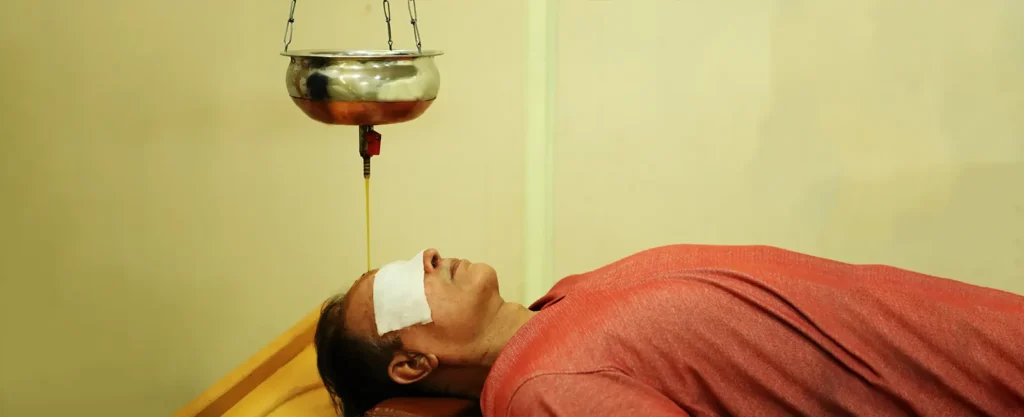
Ayurvedic shirodhara treatment at Tigris Valley, wellness hospital in Kerala is advised for the prevention of many psychosomatic disorders. Prevention of diseases pertaining to the body, mind and sense organs is the first indication.
Below mentioned are the indications of Shiro Dhara (in general):
• Boils in the head (scalp)
• Pricking pain in the head
• Burning sensation in the head
• Suppuration in the head (inflammation leading to formation of pus or pus pockets)
• Boils wounds or ulcers in the head
When the head gets injured it causes one or the other of –
• Stiffness of neck, and nape (Cervical spondylosis, torticollis)
• Facial paralysis, Bell’s Palsy
• Deviation of eye, squint
• Loss of consciousness
• Loss of activities
• Cough
• Dyspnoea, breathlessness
• Lockjaw
• Dumb
• Stammering of speech
• Difficulty in opening the eyes
• Pulsating sensation or pulsations or twitching in the cheeks
• Yawning
• Excessive salivation
• Total loss of voice
Other indications-
⦁ Different types of headaches and diseases pertaining to head
⦁ Hemiplegia, paralysis
⦁ Sleeplessness
⦁ Vata prakopa to control the vitiated Vata
⦁ Diseases of Vata origin, mainly degenerative diseases
⦁ Diseases of Pitta origin, mainly inflammatory diseases
⦁ Dryness of the head
⦁ Itching in the scalp
⦁ Hypertension
⦁ Premature greying of hairs
⦁ Tiredness, fatigue
⦁ Low immunity
⦁ Cracks and fissures in the hands (palm) and foot (sole)
⦁ Diseases of the ear, eye
⦁ Psoriasis
⦁ Migraine headache
⦁ Loss of memory/Alzheimer’s disease
⦁ Hair loss and hair fall
⦁ Dandruff
⦁ Diabetic neuropathy
⦁ Paralysis
⦁ Depression
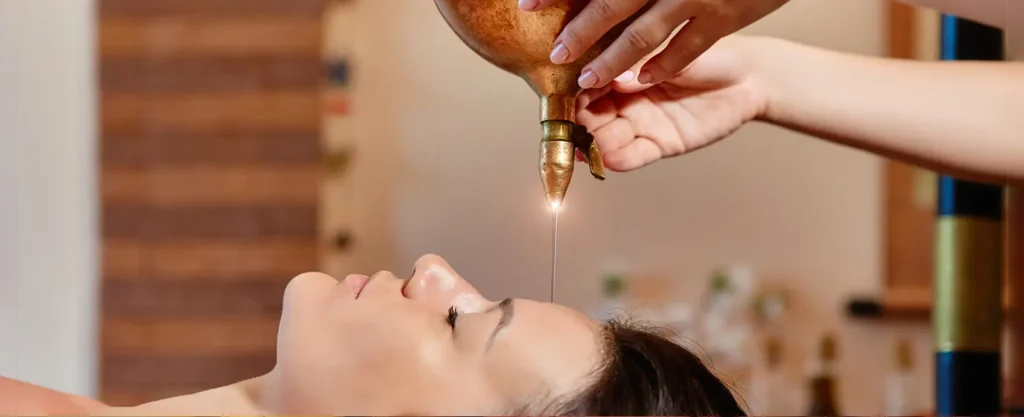
There are various types of Shirodhara treatments, depending on the health condition of the receiver, as well as the treatment they are seeking Rajah Ayurveda takes pride in offering all four types of Shirodharas to its patrons, which as follows
Kashaya Shirodhara (Herbal Decoction): The Shirodhars that uses medicated herbal decoction is called Kashayadhara, where the type of oil and herbs are chosen depending upon the condition of the receiver that they would like the treatment for.
Thailadhara (Medicated oil): A popular treatment often found in luxury wellness retreats in India The Shirodhara that uses medicated oil in the process is called Thailadhara.
Ksheera Shirodhara (milk infused with herbs): Ksheerdhara uses medicated milk in its Shirodhara process, which is infused with the relevant herbs like Dashamula (10 roots), Musta (Cyperus rotundus). The temperature of the milk is kept lukewarm at the beginning of the process and then maintained at room temperature.
Takra Shirodhara (buttermilk infused with herbs): Takradhara is a type of Shirodhara in which herb-infused buttermilk for takra), made by mixing equal quantities of a herbal decoction and buttermilk, is poured from a specific bright and for a specific time period continuously and rhythmically, allowing the takra to run through the scalp and into the hair.
Ghrita Shiro Dhara – Medicated ghee is also used for stream pouring over the head in cases of Pitta and or Rakta (blood) vitiation and the diseases having their origin from them. Plain ghee of cow can also be used.
If Shiro dhara is being done as a part of treatment At Tigris Valley Ayurvedic wellness retreat, for some ailment or is part of a big treatment package oriented towards some major health issue, the following restrictions shall be followed – Keep away from:
⦁ Excessive indulgence in sexual pleasures
⦁ Strenuous physical exercises
⦁ Exposure to sunlight
⦁ Exposure to cold or intake of cold food substances
⦁ Smoking, alcohol consumption
⦁ Excessive sleeping
⦁ Standing in cool breezy or dusty areas for long time
⦁ Forcibly withholding the natural urges or reflexes of the body like those of defecation, urination, hunger, thirst, sleep, sneeze etc
⦁ High or low levelled pillows while sleeping
⦁ Stress, Grief and anger
⦁ Keeping awakened till late nights
⦁ Walking for long distances
⦁ Speaking or shouting in excess, speaking loudly etc.
⦁ Keep the mind free from stress, in a pleasant condition
⦁ The patient is advised to take a break from the work if possible (during treatment).
Shiro Dhara can be done for a period of 45 minutes to 60 minutes at a stretch (1 sitting) depending on the nature and severity of the disease (for which Dhara is being done) or depending on the constitution of the patient
Shirodhara is usually done for a period of 7 to 14 days or as recommended by the physician. The relief of complaints and betterment in the values of blood pressure is taken as a parameter for fixing and limiting the number of days of treatment to be done at a stretch.
It can also be done for 7, 14, 21 or 28 days or longer period of time in chronic and stubborn cases. Generally, a small time gap is provided between 2 schedules and often not continued beyond 3 weeks of time.
Time: Shirodhara is usually done in the early hours of the morning (preferably between 6 am and 10 am). In high Pitta conditions, it can be done in the afternoon also.

Relaxing and coolant effect on the brain – Shiro Dhara has a relaxing effect (and coolant effect in treatments like Takra shiro dhara) on the brain and the whole nervous system and hence releases the stress and anxiety stagnant in the chief controlling station of our body. As we know the brain controls all the functions of the body.
The master gland Pituitary gland and hypothalamus associated with many physical and mental functions are located in the head. When all these are relaxed, the body functions including the heart functions take place in a relaxed manner. The circulation of blood and nutrients take place in a proper way.
The peripheral resistance is reduced. The channels of the body open up. The cells start flushing the toxins and overall metabolism gets improved. Shirodhara also relieves stress to a great extent. When we get de-stressed the psychosomatic balance is established. The brain will start controlling the body’s mechanics in a better and efficient way. We will feel at bliss and at best of body-mind health.
• It prevents head ache
• It prevents baldness
• It prevents premature greying of hair
• It prevents hair fall
• It helps hairs to get deep rooted, long and dense, look beautiful and pitch black in colour
• It keeps the sense organs in a healthy condition
• It helps in improving the glow and complexion of the face
• It helps in inducing good sleep
• It provides happiness and pleasantness of mind, relieves stress
• Rejuvenates and energizes the body
• Establishes the normalcy of digestive fire and corrects metabolism
• Soothes the nerves and improves blood circulation
• Stress relaxation & relaxes mind.
• Improves neuro-muscular conduction
• Relaxes and rejuvenates the mind and senses.
• Delays ageing
• Provides longevity of life
• Controls and creates equilibrium in all the doshas
• Acts as an aphrodisiac
• Relieves pain and stiffness caused due to extreme stress and mental disorders
• Improves circulation to skin, improves colour and complexion ,provides and establishes proper colour
• Brings about lightness and a feeling of health in the afflicted joints, muscles and soft tissues.
Vata Dosha:
Properties of Vata: Vata is associated with the elements of air and space. It governs movement, communication, and the nervous system.
Effect of Shirodhara Therapy on Vata: Shirodhara has a calming and grounding effect on Vata dosha. The continuous flow of warm oil soothes the nervous system, reduces anxiety, and promotes relaxation. This helps balance the excess mobility and erratic tendencies associated with elevated Vata.
Pitta Dosha:
Properties of Pitta: Pitta is associated with the elements of fire and water. It governs digestion, metabolism, and energy production.
Effect of Shirodhara Therapy on Pitta: Shirodhara treatment has a cooling and pacifying effect on Pitta dosha. The gentle stream of oil helps alleviate excess heat and inflammation, promoting a sense of calmness. This is beneficial for individuals with increased Pitta, who may experience symptoms such as irritability, anger, or inflammation.
Kapha Dosha:
Properties of Kapha: Kapha is associated with the elements of earth and water. It governs structure, stability, and lubrication in the body.
Effect of Shirodhara Therapy on Kapha: Shirodhara has a stimulating and invigorating effect on Kapha dosha. The warm oil helps to disperse stagnation and congestion, promoting circulation and vitality. This is particularly beneficial for individuals with excess Kapha, who may experience symptoms such as lethargy, congestion, or a lack of motivation.