

[gtranslate]
MENU
You’ve searched “Ayurveda detox retreat” a dozen times, saved the photos, and still haven’t pulled the trigger — because nobody explains what actually happens once you check in. The treatments sound unfamiliar, the dietary rules seem strict, and the question of whether it’s worth several weeks of your life and budget is very real. This guide answers all of it — phase by phase, therapy by therapy — drawing on exactly what a medically supervised Ayurveda detox retreat looks and feels like at Tigris Valley in Wayanad, Kerala.
An Ayurveda detox retreat is not a juice fast dressed up in Sanskrit terminology. It is a structured, medically guided process rooted in one of the world’s oldest health systems — designed to identify and eliminate the accumulated metabolic waste (ama) that Ayurveda associates with the root cause of most chronic disease and premature ageing.
The centrepiece is Panchakarma — Ayurveda’s classical five-action purification system — combined at Tigris Valley with modern Functional Medicine diagnostics, Unani medicine, and evidence-informed therapies. The result is an Ayurveda detox retreat that is simultaneously ancient and contemporary.
What distinguishes a genuine retreat from a commercial spa package is three things: a qualified physician assessing your individual constitution (prakriti), therapies sequenced in a clinically meaningful order, and dietary and lifestyle protocols that support the detoxification process at every hour of every day — not just during treatment sessions.
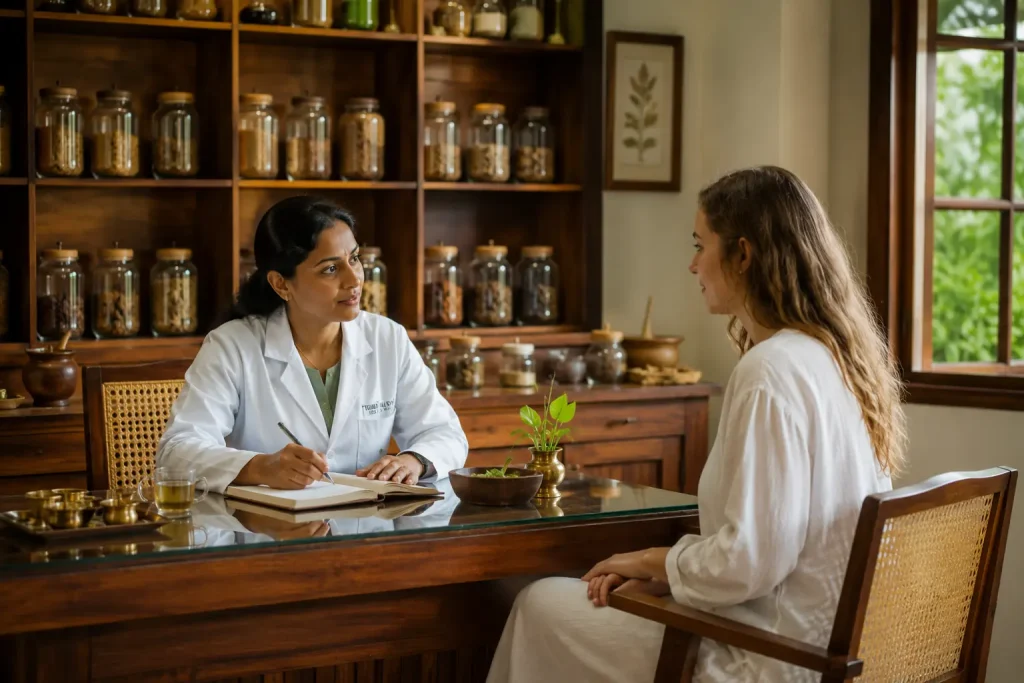
The first phase of your Ayurveda detox retreat begins before any therapy table is involved. On arrival at Tigris Valley, you undergo a detailed physician consultation covering:
This assessment is not a formality. It determines which Panchakarma procedures will be used, in what sequence, for how many days — and which therapies need to be modified or avoided based on your health status. At Tigris Valley, this is carried out by qualified AYUSH physicians within a NABH-accredited framework.
Once your protocol is designed, the preparation phase — Purva Karma — begins. This phase has two components:
This preparation phase typically spans 3–7 days depending on your constitution and the depth of detox required. Skipping or rushing it is the single most common reason detox retreats fail to produce lasting results.
This is the phase most people picture when they think of an Ayurveda detox retreat — and it is the most intensive. The main cleansing procedures (Pradhana Karma) are selected from Panchakarma’s five classical actions based on your individual protocol:
A medically supervised purgation therapy that clears the small intestine, liver, and gallbladder of accumulated pitta-based toxins. It is administered after the body has been adequately prepared through oleation. The process is typically completed in a single well-timed session, followed by a prescribed rest and dietary period.
Widely considered the most powerful of all Panchakarma therapies, Basti introduces medicated herbal preparations into the colon. It addresses vata imbalances — the category associated with pain, neurological issues, bone disorders, and irregular digestion. The colon’s unique absorptive capacity means Basti has systemic effects far beyond the local tissue.
Medicated oils or herbal preparations are administered through the nasal passages to cleanse the head and neck region — addressing conditions related to sinuses, migraines, scalp health, and clarity of the sense organs. It is a precise procedure carried out by trained therapists.
A continuous warm herbal oil stream poured in a gentle arc over the forehead. Shirodhara’s primary action is on the nervous system — it is profoundly calming, and is used for stress, anxiety, insomnia, and nervous system dysregulation. Most guests describe it as the most powerful relaxation experience of the retreat.
| Therapy | Primary Action | Key Conditions Addressed |
|---|---|---|
| Snehapanam | Internal oleation / tissue preparation | Deep toxin mobilisation, joint conditions, dry tissues |
| Abhyanga | External oleation / lymphatic movement | Fatigue, circulation, stress, skin health |
| Virechanam | Pitta elimination via GI tract | Liver, skin, digestive disorders, inflammation |
| Basti | Vata pacification via colon | Pain, neurological issues, bone health, constipation |
| Nasya | Head & neck channel cleansing | Sinusitis, migraines, scalp, clarity |
| Shirodhara | Nervous system regulation | Anxiety, insomnia, stress, burnout |
Complementing these classical procedures, Tigris Valley’s Detox & Cleanse Program integrates modern modalities including Infrared Sauna sessions, Ozone Therapy, Lymphatic Drainage Massage, and IV Nutritional Therapy — providing cellular-level detoxification support alongside the classical Ayurvedic approach.
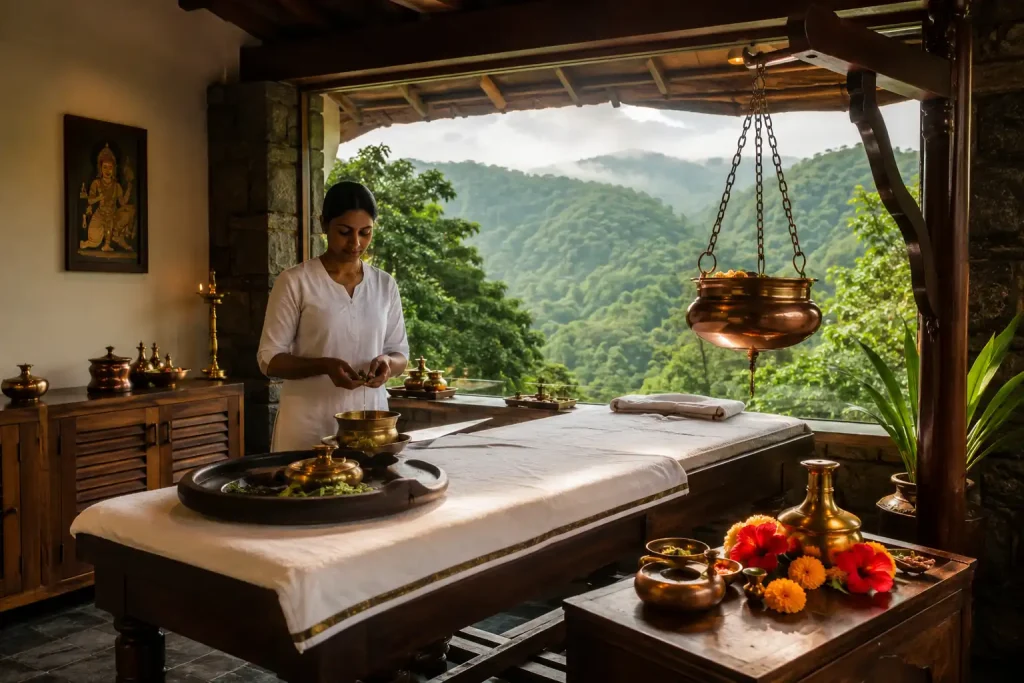
The cleansing phase leaves the body’s tissues in a state of heightened receptivity — effectively emptied and ready to receive nourishment. The final phase, Paschat Karma, is where the rebuilding happens:
This phase is not an afterthought. It is what converts a temporary cleanse into a lasting physiological shift. Guests who complete all three phases consistently report that the cumulative effects — improved sleep, clearer thinking, reduced inflammation, better digestion — continue to develop for weeks after returning home.
Food during an Ayurveda detox retreat is not a side feature — it is a primary therapy. Every meal at Tigris Valley is:
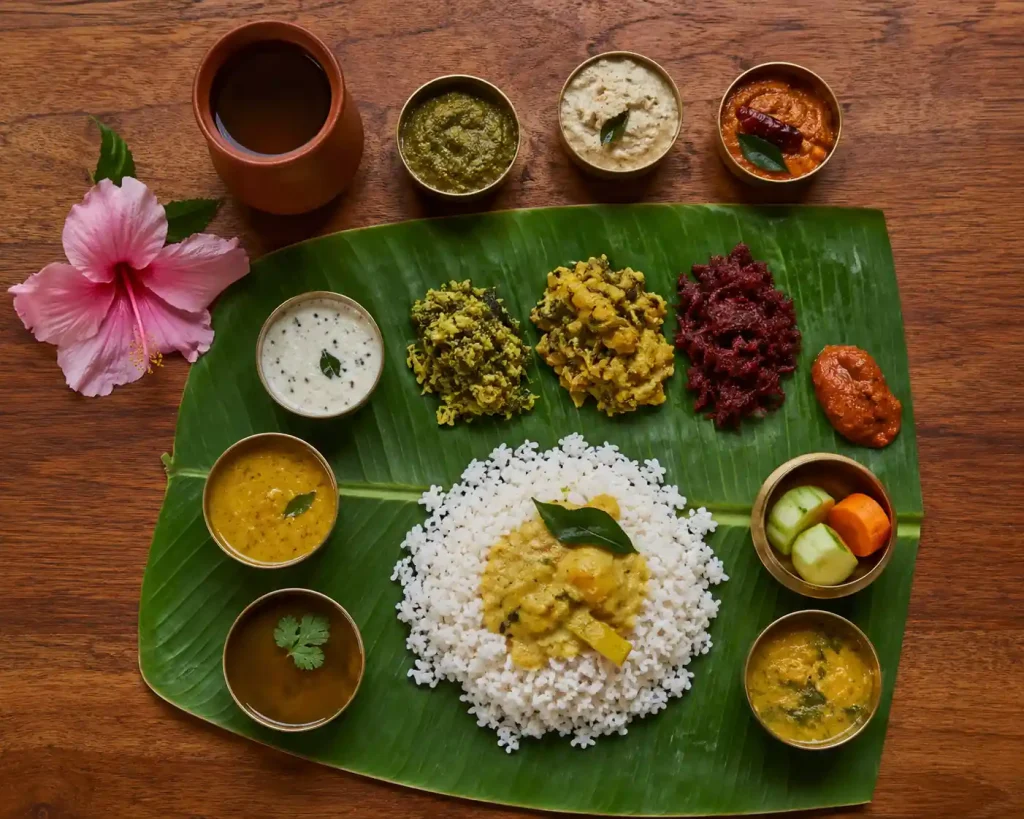
General dietary principles during the active detox phase include avoiding raw, cold, fermented, and processed foods. The classic Ayurvedic peya (thin rice gruel) and kichadi (rice and lentil preparation) feature prominently — not because they are restrictive, but because they are profoundly easy on the digestive system while it directs its energy toward elimination rather than heavy digestion.
An Ayurveda detox retreat is not 8 hours on a treatment table with 16 hours of waiting. The hours between formal therapies are intentionally structured for the body’s natural processing and the mind’s healing. At Tigris Valley, this means:
While an Ayurveda detox retreat is valuable for virtually anyone, the outcomes are most pronounced for:
Choosing where to undergo an Ayurveda detox retreat is as important as the decision to go. Tigris Valley’s credentials as South Asia’s largest AYUSH-integrated wellness hospital with NABH accreditation mean your detox is conducted within a clinically accountable framework — not as a lifestyle product sold to tourists.
| What You Need | What Tigris Valley Provides |
|---|---|
| Medical supervision | NABH-accredited hospital; 24/7 medical team |
| Authentic Ayurveda | Qualified vaidyas, classical Kerala-tradition therapies |
| Integrated healing | AYUSH + Functional Medicine + Unani + Nature Therapy |
| Healing environment | Wayanad mountain sanctuary with medicinal forests |
| Organic food | Mazra Organic Farm on-site; seasonal, dosha-aligned meals |
| International accessibility | Arabic language staff; English consultations; travel guidance |
Explore the full range of available treatments at Tigris Valley’s AYUSH treatment centre, review the complete wellness programs, and plan your travel with the Getting Here guide.
Duration depends on your health objectives and the depth of cleansing required. Programs typically span 7, 14, or 21 days. The 21-day duration is considered the most comprehensive as it allows all three Panchakarma phases to be completed fully.
A spa retreat offers relaxation therapies with Ayurvedic aesthetics. A clinical detox retreat — like those at Tigris Valley — involves physician assessment, dosha-specific protocols, medically supervised procedures like Virechanam and Basti, and therapeutic dietary management. The outcomes and depth of detoxification are fundamentally different.
Panchakarma is the core clinical procedure within a full Ayurveda detox retreat. A retreat includes Panchakarma as its foundation but also encompasses diet, lifestyle, nature therapy, yoga, and rejuvenation — making it a more complete experience.
Many people specifically seek Ayurveda detox retreats to address chronic conditions — including inflammatory disorders, metabolic disease, and autoimmunity. All guests at Tigris Valley undergo a thorough pre-program medical assessment to ensure therapies are appropriate and safe.
Hijama (Cupping Therapy from the Unani tradition) is available at Tigris Valley as part of its detox protocols. It removes morbidities, reduces inflammation, and enhances circulation — and is particularly effective as a complementary detox tool for guests from Middle Eastern backgrounds where the practice is well known.
Ozone Therapy enhances cellular oxygenation, boosts immune function, and supports the body’s toxin elimination at the biochemical level — acting as a modern functional medicine complement to the classical Ayurvedic detox procedures.
Your pre-arrival consultation with Tigris Valley’s team will include specific guidance. Generally, reducing alcohol, caffeine, heavily processed foods, and late-night eating in the week before arrival prepares the digestive system and allows the preparation phase to begin more effectively.
Some guests experience weight reduction as a secondary effect of improved metabolism and elimination. However, weight loss is not the primary goal of Panchakarma — systemic detoxification, restored digestion, and dosha balance are. Guests specifically targeting weight should also explore the Weight Management Package.
Yes. Tigris Valley has Arabic language support staff and experience with guests from the Gulf region. The retreat integrates Unani medicine — a healing system with deep roots in the Arabic and Islamic medical tradition — alongside Ayurveda, making it a particularly resonant choice for Middle Eastern guests.
Many guests find that physical detoxification surfaces suppressed emotions — this is considered a natural and healthy part of the process in Ayurveda. Tigris Valley offers Guided Meditation, CBT sessions, and emotional wellness support as part of the retreat to help you navigate this aspect safely and productively.
Your personalised Ayurveda detox retreat starts with a single conversation. Tigris Valley’s medical team will assess your needs and design a program built around your health — not a generic package.
Kaithappoyil, in the Western Ghats.
Markaz Knowledge City Road, Kaithappoyil, Adivaram, Kerala
Get directions +91 90726 61622 reservation@tigrisvalley.com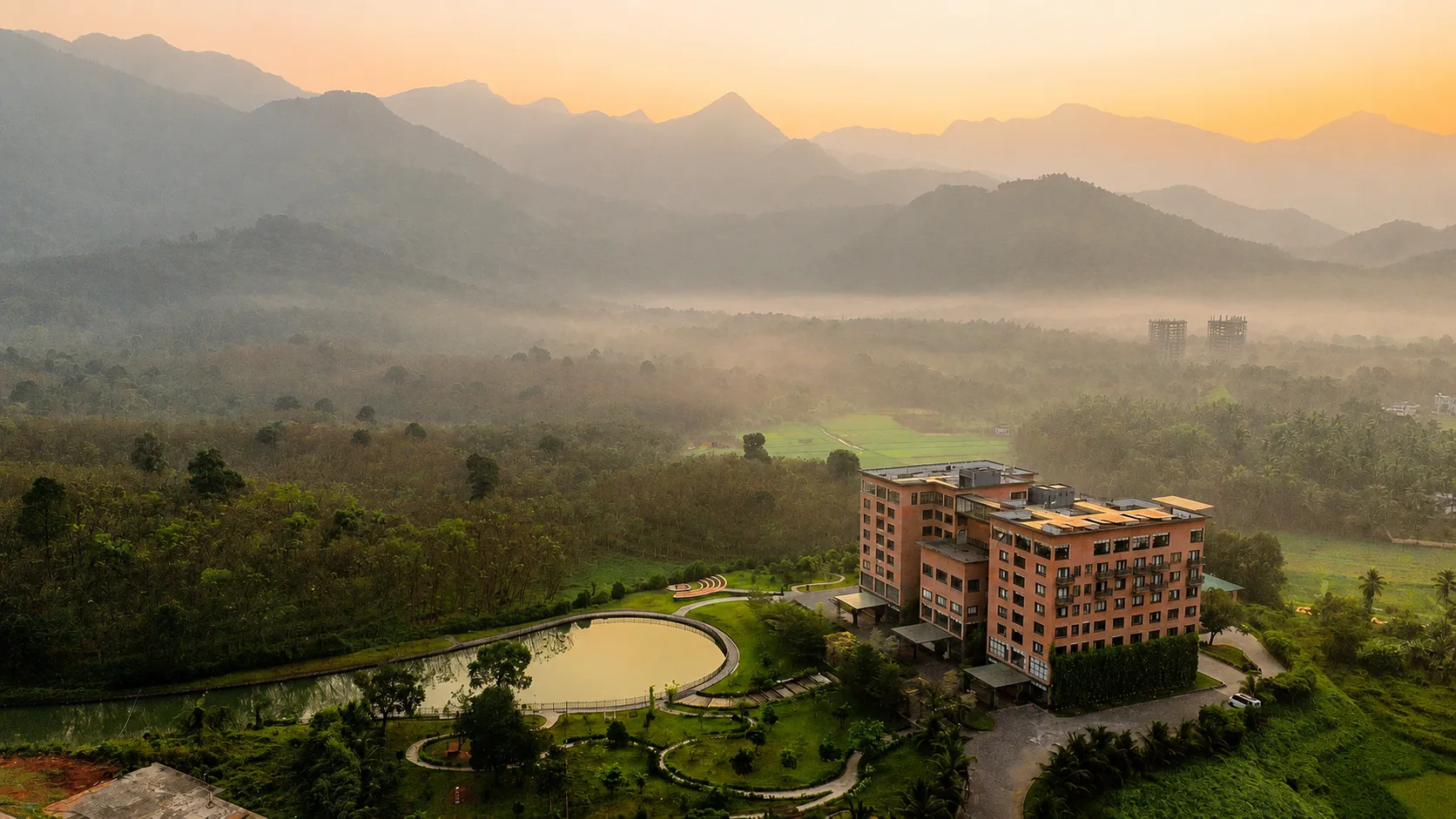
Kaithappoyil, Western Ghats

Before you leave
A physician reads every letter. Book a consultation, or send an inquiry — reservations answers the same day.