
[gtranslate]
MENU
Ayurveda may help support healthy blood pressure through stress management, dietary changes, herbs such as Arjuna and Ashwagandha, yoga, and lifestyle modifications. A growing body of preliminary research supports several of these approaches — though Ayurveda should complement, not replace, prescribed medication. Always consult a qualified healthcare professional before starting any herbal treatment.
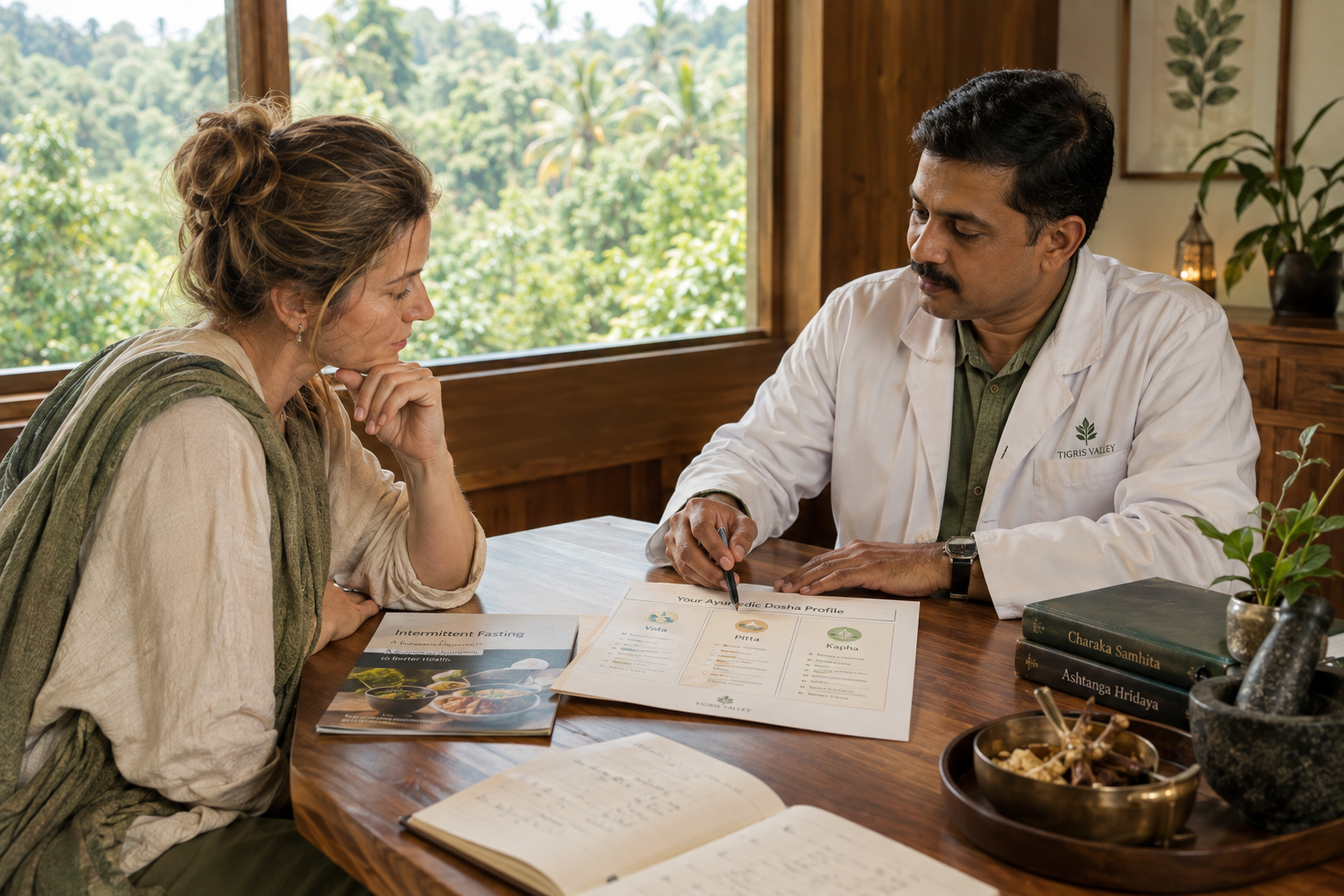
According to Ayurveda, high blood pressure (hypertension) is linked to an imbalance in the three doshas — Vata, Pitta, and Kapha. When these energies are disturbed by poor diet, stress, or lifestyle, they can manifest as elevated blood pressure.
At Tigris Valley Wellness Retreat, we address these root imbalances through personalized Ayurvedic protocols. Our Cardio-Metabolic Health & Recovery Program integrates ancient wisdom with modern diagnostics.
Hypertension is one of the most under-diagnosed conditions in the world. According to the World Health Organization’s most recent global fact sheet, an estimated 1.4 billion adults aged 30–79 had hypertension in 2024 — about a third of that age group globally — and nearly half remain unaware they have it. WHO also reports that only around 23% of people with hypertension have it under proper control, even with treatment available. That gap is exactly where lifestyle- and herb-based support, used alongside medical monitoring, has the most room to help.
Among the classical Ayurvedic herbs used for cardiovascular support, Terminalia arjuna (Arjuna) has the most clinical documentation. A published clinical study of stage III hypertensive patients found that adding an Arjuna bark decoction (“Arjuna Kwath”) to standard antihypertensive treatment produced a statistically significant additional reduction in both systolic and diastolic blood pressure compared to standard treatment alone. This is consistent with Arjuna’s long-documented cardioprotective and mild antihypertensive pharmacology in the broader phytomedicine literature.
A snapshot of the most-used herbs — dosages are illustrative and should always be individualized by a qualified practitioner.
| Herb | Typical Dosage | Best For | Evidence | Key Caution |
|---|---|---|---|---|
| Arjuna | 500 mg powder before meals | Heart strength, circulation | Moderate¹ | With BP meds |
| Ashwagandha | 300–500 mg twice daily | Stress-related BP | Moderate² | Thyroid meds, pregnancy |
| Garlic | 1–2 raw cloves/day | Mild hypertension | Good³ | Blood thinners |
| Hibiscus | Tea, twice daily | BP regulation | Good⁴ | — |
| Brahmi | As directed | Anxiety-driven BP | Moderate⁵ | Sedatives |
| Sarpagandha | Practitioner only | Resistant hypertension | Moderate | Strict supervision |
| Punarnava | As directed | Fluid retention (Kapha) | Limited | Kidney conditions |
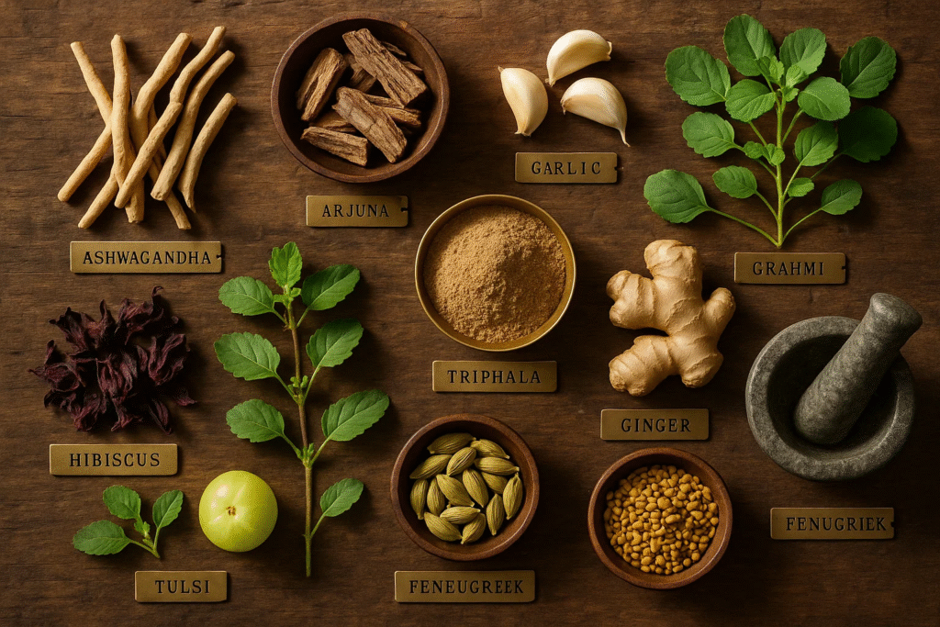
This adaptogen reduces cortisol and stress-induced hypertension. Take 300–500 mg twice daily with warm milk or water. A randomized controlled trial found significant reductions in serum cortisol among chronically stressed adults, which is relevant to Vata-type, stress-driven blood pressure.²
Terminalia arjuna is the cornerstone of Ayurvedic cardiac care. Pharmacological reviews describe cardioprotective, antioxidant and mild blood-pressure-supporting effects.¹ Consume 500 mg of Arjuna powder with warm water before meals.
Known for neuroprotective and anti-stress properties, Brahmi reduces the mental stress that contributes to elevated blood pressure.⁵ Our Stress & Burnout Recovery Program incorporates Brahmi-based formulations.
This classical three-fruit formulation supports digestion, detoxification and healthy cholesterol. Take one teaspoon with warm water before bedtime.
Raw garlic helps dilate blood vessels and reduce arterial stiffness. Meta-analyses report a modest but consistent reduction in systolic and diastolic blood pressure with regular garlic intake.³ Allicin acts as a natural ACE-inhibitor-like agent.
This warming combination improves circulation and reduces inflammation. Boil fresh ginger and cardamom, strain, and drink twice daily — especially supportive during our Detox & Cleanse Program.
A Himalayan herb with calming, sedative properties that reduce stress-driven BP fluctuations — effective for Vata-type hypertension with anxiety and insomnia.
Rauwolfia serpentina contains reserpine, a natural alkaloid historically used to reduce heart rate and blood pressure. This potent herb must only be used under professional supervision at facilities like Tigris Valley’s Ayurveda center. (See safety section.)
A diuretic herb that reduces water retention and supports kidney function — particularly useful for Kapha-type hypertension with fluid retention.
Consume 4–5 fresh leaves daily or as tea. Its eugenol content helps relax blood vessels while supporting immunity. Complements our Immune Strengthening Package.
Soak a tablespoon overnight; drink the strained water in the morning to help flush excess sodium and support kidney function.
Rich in Vitamin C and antioxidants; strengthens blood vessels, supports healthy cholesterol and heart health. Consume as fresh juice or powder daily.
Hibiscus anthocyanins act as natural ACE inhibitors. A clinical trial found that hibiscus tea lowered blood pressure in pre- and mildly hypertensive adults.⁴ Steep dried flowers 10 minutes; drink twice daily.
Soak overnight and consume on an empty stomach. High soluble fiber helps manage cholesterol and blood sugar, indirectly supporting healthy BP.
Contain thymol, which supports vessel dilation and circulation. Chew half a teaspoon with water daily or drink ajwain water.
This is essential reading — never combine herbs with prescription medication without medical guidance.
At Tigris Valley, every herbal protocol is supervised and paired with modern blood-pressure monitoring for safety. → Speak to our team.
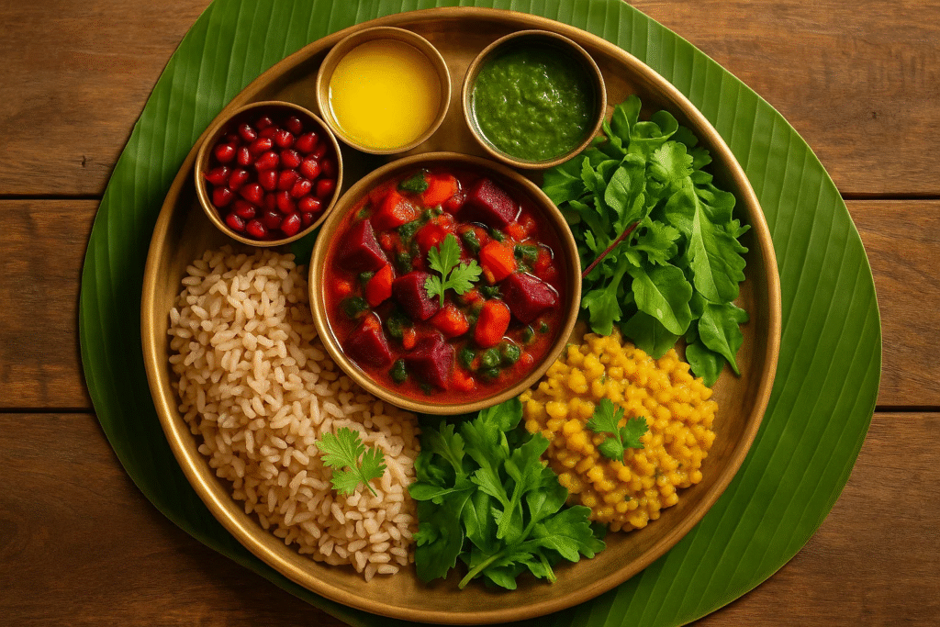
Foods to include:
This aligns with mainstream evidence too: the DASH dietary pattern and reduced sodium intake are among the best-established non-drug ways to lower blood pressure.⁶
Foods to avoid: excess salt, processed/packaged foods, red meat, caffeine, alcohol, refined sugar, deep-fried foods.
Our Anti-Aging & Longevity Program builds these therapeutic foods into personalized meal plans.

Stress management: meditation (15–20 min daily), pranayama, digital detox, and time in nature. Our Stress & Burnout Recovery Program combines these systematically.
Systematic reviews suggest regular yoga can modestly lower blood pressure, particularly when it emphasizes slow breathing and relaxation.⁷
Beneficial asanas: Shavasana, Vajrasana, Paschimottanasana, Baddha Konasana, Viparita Karani. Avoid intense inversions that can spike BP. Our Yoga & Naturopathy program offers supervised practice for cardiovascular concerns.
Pranayama: Anulom Vilom (5–10 min twice daily), Bhramari, and Shitali calm the nervous system and support autonomic balance.
All formulations should be prescribed and dosed by a qualified practitioner.

Our Detox & Cleanse Program delivers personalized Panchakarma based on your constitution.
Seek professional consultation when:
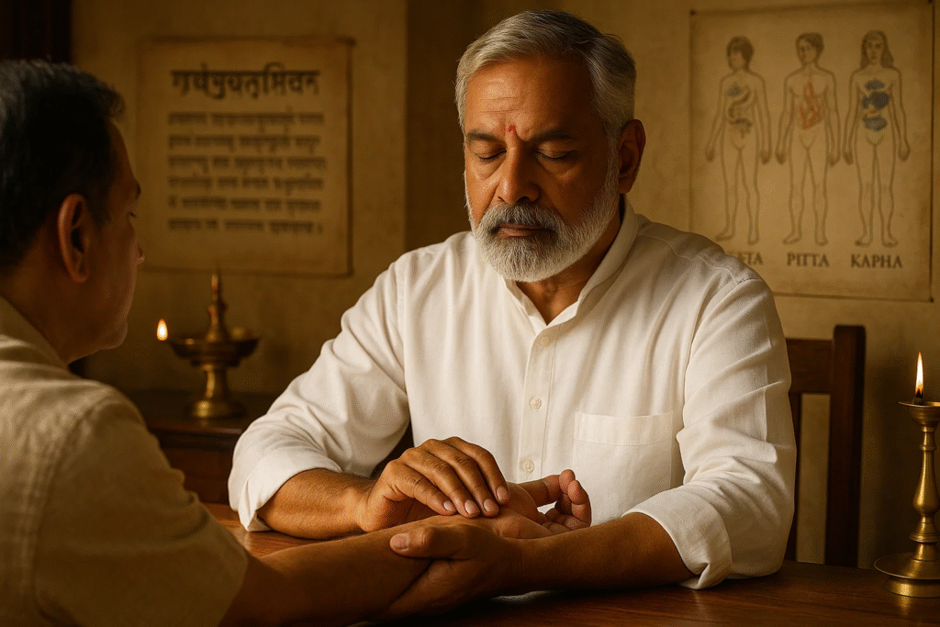
Our practitioners conduct Prakriti (constitution) analysis, Vikruti evaluation, Nadi Pariksha, and modern diagnostics to build a personalized protocol through the Cardio-Metabolic Health & Recovery Program.
| Category | Reading (mmHg) |
|---|---|
| Normal | Below 120/80 |
| Elevated | 120–129 / <80 |
| Stage 1 | 130–139 / 80–89 |
| Stage 2 | 140+ / 90+ |
Our integrative healing approach combines:
For related concerns, see our Metabolic Disorder Management Program and Chronic Pain & Inflammation Management Program.
Ayurveda can help manage mild-to-moderate hypertension and may reduce reliance on medication in some cases, but it should not be presented as a guaranteed permanent cure. Consistent lifestyle change is essential, and you should never stop prescribed medication without medical advice.
Most people see measurable change over 4–12 weeks when herbs, diet, yoga and stress management are followed consistently under guidance.
It can complement conventional care and may reduce dependency in milder cases, but medication should never be discontinued without consulting your doctor. An integrative approach is safest.
Many can be combined under supervision, but interactions exist — garlic with blood thinners, Sarpagandha with antihypertensives, and liquorice which can raise BP. Always inform your doctor.
Arjuna-based formulations such as Arjunarishta are among the most cited, but the best choice is individualized by dosha and prescribed by a qualified practitioner.
Arjuna, Ashwagandha, Sarpagandha, Punarnava and Jatamansi are most used — targeting cardiac strength, stress, fluid balance and nervous-system calming respectively.
A low-sodium plant-based diet, daily yoga and pranayama, stress management, healthy weight, limited alcohol/caffeine, and supportive herbs like garlic, hibiscus and Arjuna under guidance.
Emphasize fresh fruits, vegetables, whole grains and healthy fats; include potassium-rich foods; avoid excess salt, processed food, red meat and stimulants.
Gentle asanas (Shavasana, Vajrasana, Paschimottanasana, Baddha Konasana) are safe and effective; avoid intense inversions.
Anulom Vilom, Bhramari and Shitali calm the nervous system, reduce stress hormones and improve autonomic balance, helping lower BP with regular practice.
Yes — stress triggers adrenaline and cortisol, temporarily raising BP, and chronic stress drives habits that worsen hypertension. Meditation, yoga, exercise and sleep help.
It addresses physical, mental and emotional health together — diet, herbs, stress management, yoga, sleep and environment — treating the person, not just the numbers.
🔍 Key Insights:
Get a personalized, doctor-supervised Ayurvedic plan for your constitution at Tigris Valley Wellness Retreat — where ancient healing meets modern diagnostics in the serene mountains of Kerala.
Book Your Free Consultation →No obligation · Personalized guidance · Integrative care

Kaithappoyil, in the Western Ghats.
Markaz Knowledge City Road, Kaithappoyil, Adivaram, Kerala
Get directions +91 90726 61622 reservation@tigrisvalley.com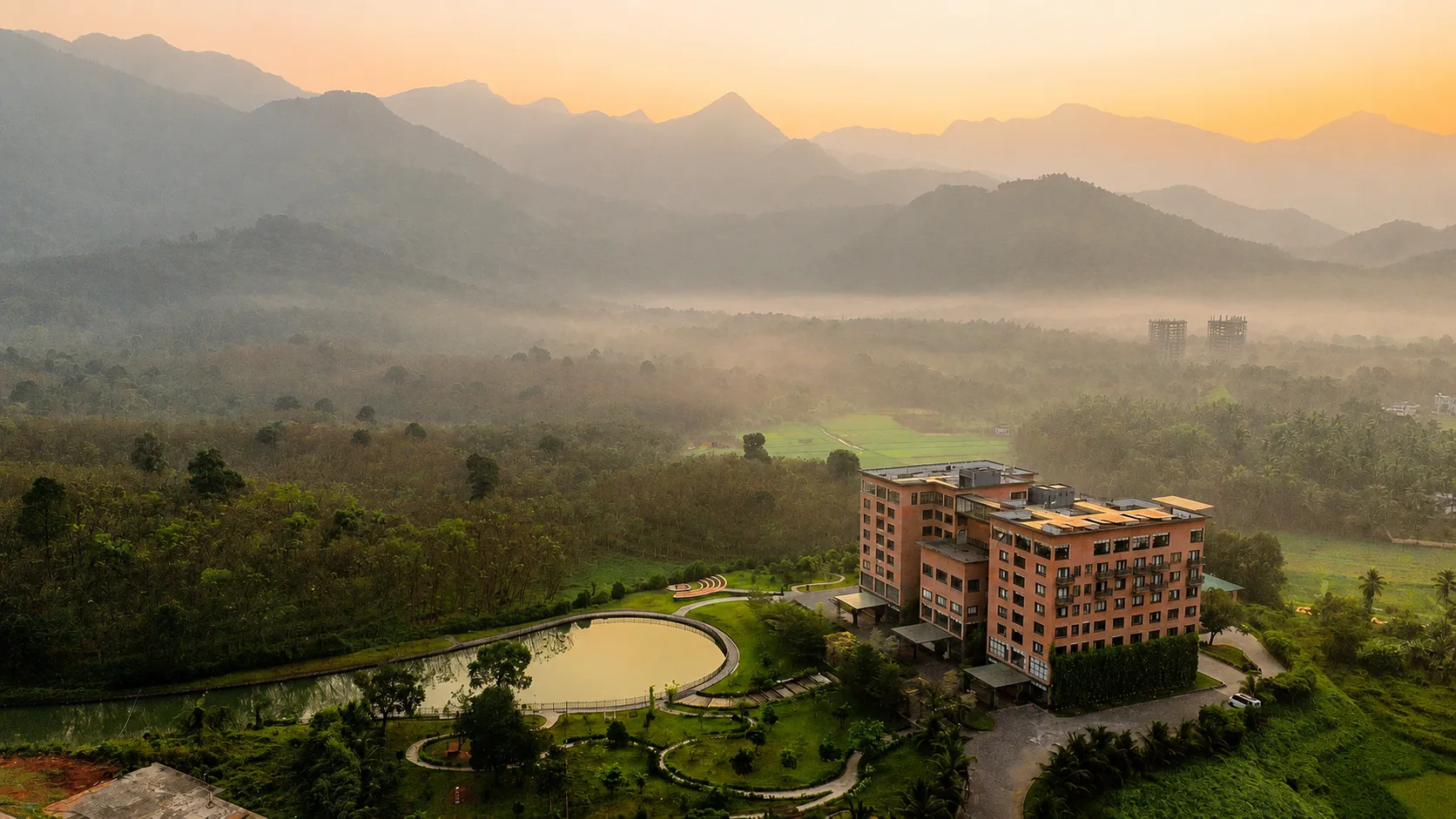
Kaithappoyil, Western Ghats

Before you leave
A physician reads every letter. Book a consultation, or send an inquiry — reservations answers the same day.