

[gtranslate]
MENU
⚡ Quick Facts: Metabolic Syndrome
Feeling constantly tired, carrying stubborn belly fat, and watching your blood sugar creep up? These aren’t random annoyances — together they may signal metabolic syndrome , a silent cluster of conditions that quietly multiplies your risk of diabetes, heart attack, and stroke. Left unchecked, it worsens year after year. The good news: with the right root-cause plan, metabolic syndrome can often be managed and even reversed naturally.
Metabolic syndrome is a cluster of five interconnected health conditions that occur together and dramatically raise your risk of type 2 diabetes, heart disease, and stroke. It is not a single disease — it is a warning label your body wears when its energy-processing systems start breaking down.
You are diagnosed with metabolic syndrome when you have three or more of these five markers:
The reason these appear as a group is that they share one underlying driver: insulin resistance. When your cells stop responding properly to insulin, the whole metabolic chain — blood sugar, fat storage, blood pressure, and cholesterol — begins to malfunction at once. That’s why treating one number in isolation rarely works. A whole-system, root-cause approach — the foundation of Tigris Valley’s Metabolic Disorder Management Program — targets the shared cause rather than chasing each symptom separately.
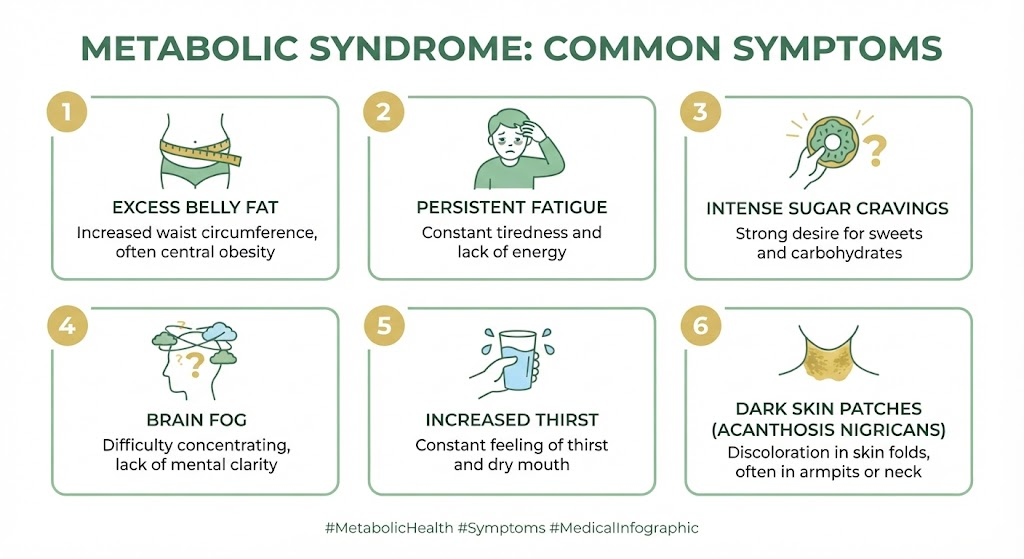
Here’s the catch that makes metabolic syndrome so dangerous: it is often silent. Many people feel “fine” for years while the damage builds. Still, there are early warning signs worth watching for.
Visible and physical signs:
How you may feel day to day:
If several of these sound familiar, it’s worth checking your numbers. Many of these same symptoms overlap with early insulin resistance, PCOS, and pre-diabetes — conditions addresses through its natural diabetes reversal programme and Ayurvedic approach to PCOD and hormonal balance.
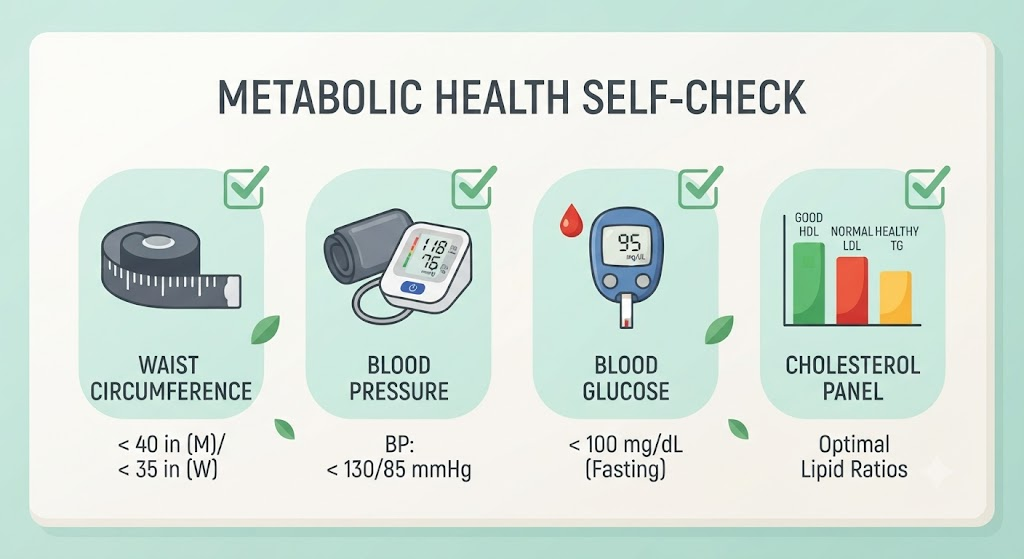
Doctors diagnose metabolic syndrome using measurable thresholds. Use this table as a self-awareness checklist — but remember, only a clinician can confirm a diagnosis.
| Marker | “At-Risk” Threshold | What It Signals |
|---|---|---|
| Waist circumference | >40 in (M) / >35 in (W) | Visceral (organ) fat, active inflammation |
| Blood pressure | ≥130/85 mmHg | Strain on heart and arteries |
| Fasting blood glucose | ≥100 mg/dL | Early insulin resistance / pre-diabetes |
| Triglycerides | ≥150 mg/dL | Excess circulating fat |
| HDL cholesterol | <40 mg/dL (M) / <50 mg/dL (W) | Reduced protective cholesterol |
💡 Key Insight: Metabolic syndrome is a spectrum, not an on/off switch. Most people spend years drifting toward it — which is also the window in which it is easiest to reverse. Early, root-cause intervention beats late-stage medication.
The central engine of metabolic syndrome is insulin resistance. When cells become “deaf” to insulin, the pancreas pumps out more of it, fat storage increases, blood sugar rises, and inflammation spreads. But insulin resistance itself is driven by everyday lifestyle factors:
This is why our practitioners treat metabolic syndrome as a system problem. Their functional and root-cause healing approach maps your specific drivers — gut, hormones, stress, and inflammation — instead of applying a one-size-fits-all prescription.
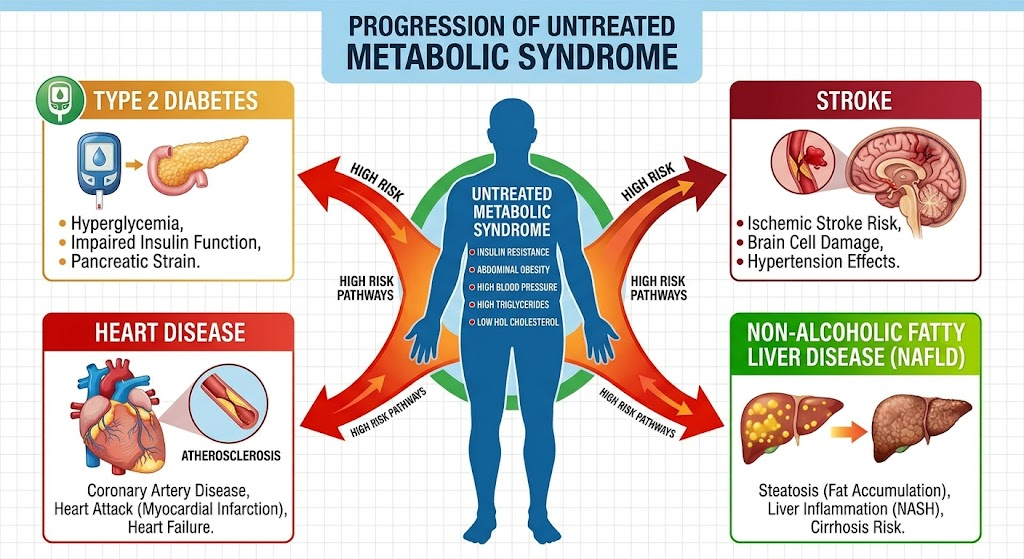
Ignoring metabolic syndrome doesn’t just mean carrying extra weight — it sets off a chain reaction. Here’s what’s at stake:
The encouraging part? Each of these risks shrinks as metabolic syndrome improves. Tigris Valley’s Cardio-Metabolic Health & Recovery Program is built specifically to protect the heart while correcting the metabolic drivers behind it, and their guide on naturally reversing fatty liver disease tackles one of the most common metabolic-syndrome complications head-on.
Yes — in many cases, metabolic syndrome can be reversed naturally, especially when addressed early. Because it is driven by lifestyle and insulin resistance rather than permanent organ failure, the same factors that create it can also unwind it.
Research and clinical experience consistently show that:
The key is consistency and treating all the drivers together — which is exactly where a structured, guided program outperforms scattered DIY attempts. Our Ayurvedic treatment for chronic metabolic diseases combines time-tested detox protocols with modern diagnostics to make this reversal achievable and sustainable.
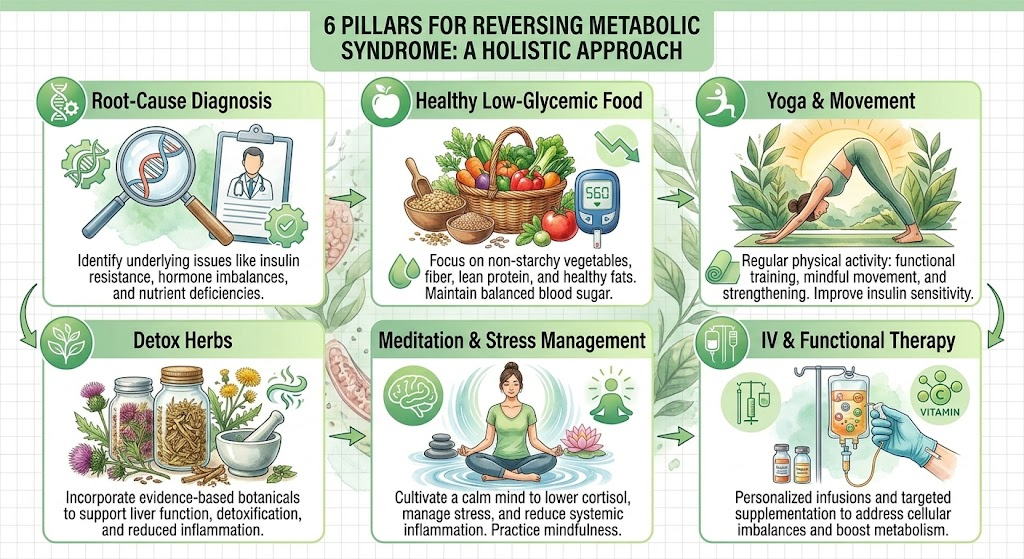
A genuinely effective natural treatment for metabolic syndrome works on every driver at once. Here are the six pillars that form the backbone of an integrative protocol.
You can’t fix what you haven’t measured. Effective treatment starts with a full metabolic work-up — blood sugar, insulin, lipid profile, inflammation markers, hormones, and gut health — to build a plan around your body. This is the entry point of the Metabolic Disorder Management Program.
Food is the most powerful metabolic medicine. The focus:
You don’t need punishing workouts. A blend of daily walking, resistance training, and yoga turns muscle back into an efficient glucose sink — the foundation of any sustainable weight-management and metabolic-balance package.
A congested gut and sluggish detox pathways keep inflammation high. Ayurvedic Panchakarma, hydrotherapy, and targeted cleansing — the core of the Detox & Cleanse Program — help reset digestion and reduce the toxic load that worsens insulin resistance.
Chronic stress is a silent metabolic saboteur. Breathwork, meditation, nature immersion, and sleep restoration lower cortisol and directly improve blood sugar — the focus of Tigris Valley’s Stress & Burnout Recovery Program.
Herbal formulations, IV nutrient therapy, and Ozone therapy complement lifestyle change by improving cellular energy, oxygenation, and metabolic efficiency.
💡 Key Insight: No single pill reverses metabolic syndrome because no single cause creates it. The results come from stacking small, sustainable changes across diet, movement, detox, and stress — all pulling in the same direction.
Set in the serene mountains of Wayanad, Kerala, Tigris Valley blends modern functional-medicine diagnostics with time-tested healing systems — Ayurveda, Unani, and Nature Therapy — to treat metabolic syndrome at its root, not just its symptoms.
What sets the approach apart:
If you recognized yourself in this article, the most valuable next step is a proper assessment. Explore the full range of integrative wellness programs at Tigris Valley or start with a conversation with the medical team.
✅ Key Takeaways
Metabolic syndrome is a group of five conditions — belly fat, high blood pressure, high blood sugar, high triglycerides, and low good cholesterol — that occur together and raise your risk of diabetes, heart disease, and stroke. Having three or more means you have the syndrome.
Common early signs include stubborn belly fat, constant fatigue (especially after meals), sugar cravings, brain fog, increased thirst, and dark velvety skin patches on the neck or armpits.
No. Metabolic syndrome is a risk state that often precedes type 2 diabetes. Not everyone with the syndrome has diabetes, but they are at much higher risk of developing it if it’s not addressed.
Yes, in many cases — especially when caught early. Weight loss of 5–10%, an anti-inflammatory diet, regular movement, better sleep, and stress management can reverse or greatly improve the condition without relying on medication alone.
A whole-food, low-glycemic, anti-inflammatory diet works best — plenty of fiber and vegetables, quality protein and healthy fats, and minimal refined carbs and added sugar. Personalized plans give the strongest results.
The core driver is insulin resistance, fueled by a high-sugar diet, physical inactivity, chronic stress, poor sleep, genetics, and hormonal issues like thyroid dysfunction or PCOS.
Through simple measurements: waist size, blood pressure, and blood tests for fasting glucose, triglycerides, and HDL cholesterol. Three or more abnormal markers confirm the diagnosis.
Yes. It’s often symptomless for years while silently damaging your arteries, liver, and pancreas. That’s exactly why regular screening matters — feeling fine doesn’t mean you’re safe.
Ayurveda addresses metabolic syndrome as an imbalance of Agni (metabolic fire) and Kapha, using detox (Panchakarma), herbal formulations, diet, and lifestyle correction to restore natural metabolic balance rather than just controlling numbers.
The Metabolic Disorder Management Program combines modern diagnostics with Ayurveda, Unani, functional medicine, and nature therapy to target the root causes — insulin resistance, inflammation, stress, and gut health — for lasting results.
Many people see measurable improvements in blood sugar, blood pressure, and energy within 4–8 weeks of consistent, structured change, though full reversal depends on starting point and adherence.
Yes. Chronic stress raises cortisol, which increases blood sugar and drives belly-fat storage — a major, often-overlooked contributor. Addressing stress is a core part of effective treatment.
💡 Key Insight: No single pill reverses metabolic syndrome because no single cause creates it. The results come from stacking small, sustainable changes across diet, movement, detox, and stress — all pulling in the same direction.
Ready to Reverse Metabolic Syndrome — Naturally?
Stop managing symptoms one by one. Get a root-cause metabolic assessment and a personalized, integrative plan built around your body at Tigris Valley, Kerala.
→ Explore the Metabolic Disorder Management Program → Protect Your Heart with the Cardio-Metabolic Health & Recovery Program → Book Your Root-Cause Consultation Today
Kaithappoyil, in the Western Ghats.
Markaz Knowledge City Road, Kaithappoyil, Adivaram, Kerala
Get directions +91 90726 61622 reservation@tigrisvalley.com
Kaithappoyil, Western Ghats

Before you leave
A physician reads every letter. Book a consultation, or send an inquiry — reservations answers the same day.