
[gtranslate]
MENU
What chronic stress does to your body before you notice
You don’t burn out overnight.
You erode, slowly, until one day you can’t sleep — even when you’re exhausted.
That specific symptom — too tired to function, too wired to sleep — is not a lifestyle problem. It’s a nervous system problem. And it has a clinical solution.
You’ve tried everything your doctor suggested: reduce screen time, exercise more, take magnesium, try melatonin. You know the advice. Following it isn’t the problem. The problem is that something has shifted in your physiology — your cortisol cycles are inverted, your nervous system is stuck in permanent alert mode, and the restorative sleep your body desperately needs is the one thing you cannot access. In this article Ayurveda for stress, burnout and sleep we will deal with what actually works and why! Ayurveda doesn’t treat stress as a mindset issue to be managed. It treats it as a physiological condition — and one with a precise, structured clinical solution. This is what that looks like.
Table of Contents
There is a significant difference between normal, temporary stress and the chronic nervous system dysregulation that produces burnout. The second is a clinical condition — not a productivity challenge or a mindset issue. Here are the signs that distinguish it:
⚠️ YOUR BODY
⚠️ YOUR MIND
If five or more of these describe your daily experience, you are not dealing with ordinary work stress. You are dealing with HPA axis dysregulation — the clinical state in which the body’s stress hormone system has lost its natural rhythm, producing cortisol in the wrong quantities at the wrong times, and taking the sleep, immunity, digestion, and emotional regulation systems down with it.
“Stress is more than just an emotional burden — it’s a trigger for chronic fatigue, body aches, migraines, sleep disturbances, and increased risk of serious illnesses like heart disease and metabolic disorders.”
— Tigris Valley Stress & Burnout Recovery Programme documentation

Before discussing what Ayurveda does, it’s worth being direct about why conventional approaches consistently underperform for chronic burnout and sleep disruption:
Sleeping medication produces sedation — not physiological sleep. The difference matters enormously. Natural sleep involves specific neurological cycles (slow-wave sleep and REM) that the brain uses to clear metabolic waste, consolidate memory, and regulate hormones. Most pharmaceutical sleep aids suppress these cycles, producing unconsciousness but not the restorative processes sleep is supposed to deliver. The result: you take a pill, you sleep eight hours, you wake feeling no better. Over time, tolerance develops, and natural sleep becomes harder without the medication. The underlying cortisol dysregulation is completely untouched.
Breathing exercises, journaling, and meditation apps work — when the nervous system has enough residual capacity to engage with them. The problem with severe burnout is that the nervous system’s own regulatory capacity is depleted. Telling a person with severe HPA axis dysregulation to meditate their way to recovery is like telling someone with a broken leg to walk it off. The physiological foundation needs to be restored before the psychological interventions can work. This is precisely what clinical Ayurvedic therapies provide — the physiological substrate on which the mind-body practices can then operate effectively.
A week in Bali or the Maldives produces temporary relief. The cortisol drops, the sleep improves slightly, the mood lifts. And then you return to the same environment, the same pressures, and within two weeks the symptoms are back — often worse, because the brief relief made their return more jarring. A holiday changes the scenery. It doesn’t change the nervous system’s baseline. A structured clinical programme — 14 or 21 days, with physician-supervised interventions that actively recalibrate the HPA axis — changes the baseline.
Ayurveda for stress, burnout, and sleep disruption framework is not a metaphorical model — it describes the same physiological territory as modern neuroscience, using different language developed over millennia of clinical observation.
Vata is the dosha governing all nervous system activity, movement, and communication in the body. In the modern high-performance professional lifestyle — irregular meal times, late nights, constant digital stimulation, relentless cognitive demand, chronic low-level anxiety — Vata becomes chronically aggravated. The result is precisely the burnout symptom constellation: the mind that won’t stop, the body that won’t rest, the sleep that won’t come, the digestion that becomes erratic, and the immunity that begins to fail.
Elevated Vata in Ayurvedic clinical terms corresponds exactly to what modern medicine describes as sustained sympathetic nervous system dominance — the state of permanent alert that produces all the downstream consequences of chronic stress. Pacifying Vata is the therapeutic goal. Every major therapy in the Stress & Burnout Recovery Programme at Tigris Valley targets this mechanism.
Tarpaka Kapha is the specific sub-type of Kapha that nourishes, cushions, and protects the brain and nervous system. When it is depleted — through chronic stress, inadequate sleep, poor nutrition, and sustained emotional strain — the brain loses its buffering capacity. Thoughts race. Sleep onset becomes impossible. The mind cannot settle into the stillness required to transition into sleep. Restoring Tarpaka Kapha is the Ayurvedic mechanism through which therapies like Shirodhara and Nasya address neurological exhaustion.
Ojas is Ayurveda’s concept of vital reserve — the refined essence of all seven tissue layers, governing immunity, vitality, and the body’s resilience to stress. Burnout in Ayurvedic terms is Ojas depletion. Rasayana Therapy — Ayurveda’s classical rejuvenation protocol — is specifically directed at rebuilding Ojas from the inside. It is not a luxury treatment; it is a clinical restoration of the body’s fundamental stress-buffering capacity.
What is Shirodhara?
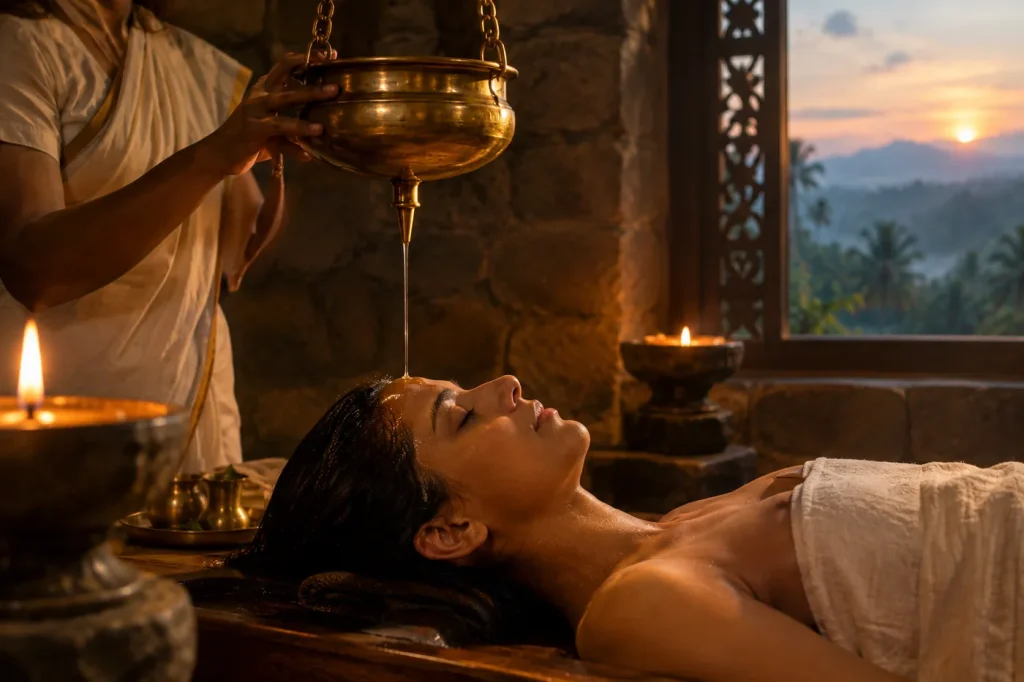
A continuous, calibrated stream of warm herbal oil, poured from a traditional brass vessel in an unbroken arc — directly onto the centre of the forehead, the area corresponding to the third eye and the densest concentration of sensory neural pathways connecting the skin to the hypothalamus. It continues for 30–45 minutes. Most people describe their first Shirodhara session as the deepest stillness they have experienced as an adult.
Confirmed at Tigris Valley as: “Calms the nervous system with a warm herbal oil flow.”
The mechanism is specific and physiologically documented. The forehead is one of the body’s most densely innervated surfaces — the trigeminal nerve distributes sensory fibres across this region that connect directly to the hypothalamus and limbic system. The sustained, warm, rhythmic stimulation of this neural field by Shirodhara induces profound parasympathetic dominance — the physiological state that is the opposite of chronic stress activation.
What this produces in practical terms:
This is not relaxation as a pleasurable side effect. This is clinical parasympathetic induction — a direct, targeted intervention on the autonomic nervous system imbalance that drives both burnout and sleep disruption simultaneously.
Shirodhara is the centrepiece — but the Stress & Burnout Recovery Programme at Tigris Valley works on multiple systems simultaneously. Here is every confirmed therapy with its specific mechanism for stress, burnout, and sleep:
| Therapy | Confirmed Benefit | What It Does for Burnout & Sleep |
|---|---|---|
| Shirodhara | “Calms the nervous system with a warm herbal oil flow” | Parasympathetic activation; cortisol interruption; sleep onset induction; mental stillness |
| Abhyanga | “Full-body massages to release physical and emotional tension” | Releases months of somatic stress holding; improves lymphatic drainage; pacifies Vata in the physical body; reduces muscle tension disrupting sleep |
| Takmeed (Herbal Compress) | “Relaxes muscles and promotes circulation” | Targeted muscle tension release; improved peripheral circulation; warmth-induced parasympathetic shift |
| Hijama (Wet Cupping) | “Detoxification and energy flow improvement” | Inflammatory byproduct clearance; improved microcirculation; energy restoration for patients with burnout-driven fatigue |
| Ozone Therapy + IV Infusions | “Cellular recovery and energy restoration” | Mitochondrial energy production support; oxidative stress reduction; IV Magnesium for sleep and nervous system regulation; IV Levocarnitine for fatigue |
| Forest Bathing | “Cortisol reduction and mental clarity” | Measurable cortisol reduction; phytoncide exposure reducing sympathetic activation; evening cortisol normalisation improving sleep onset |
| Pranayama | “Regulate stress responses” | Heart rate variability improvement; vagal tone enhancement; cortisol reduction through extended exhale practices; portable daily practice guests take home |
| Guided Meditation | “Cultivate emotional balance and mental clarity” | Prefrontal cortex restoration; rumination interruption; sleep architecture improvement through reduced pre-sleep cognitive arousal |
| Herbal Remedies (Unani) | “Detoxify and strengthen the body” | Adaptogenic herbal support; nervous system nourishment; sleep-promoting nervine formulations; physician-prescribed individually |
| Anti-stress Organic Meals | “Locally sourced, organic; herbal teas and tonics to nourish and calm” | Gut-brain axis support; magnesium and tryptophan-rich food preparation; blood sugar stability reducing nocturnal cortisol surges; inflammation reduction |
| Herbal Baths, Steam, Sauna, Jacuzzi | Confirmed facility amenities | Thermoregulation support for sleep onset; skin detoxification; muscle relaxation; sensory parasympathetic activation |
The question people most commonly ask before booking is: what does the day actually look like? Here is a representative day in the middle of a 14-day Stress & Burnout Recovery Programme:
The observation guests most consistently make around Day 10: “I didn’t realise how exhausted I actually was until I started to feel better.”
| Duration | Who It’s For | What It Achieves | Honest Limitation |
|---|---|---|---|
| 7 Days | Early burnout; high-stress period needing immediate relief; preventive reset before reaching depletion | Immediate nervous system relief; sleep improvement; tools and practices to take home; reset of the acute stress state | Insufficient for deep HPA axis recalibration; physiological changes may not fully hold without sustained follow-through at home |
| 14 Days | Established burnout; chronic sleep disruption; 6+ months of sustained high-stress; moderate nervous system depletion | Genuine HPA axis recalibration; sleep architecture restoration; Ama clearance beginning to produce lasting metabolic changes; daily practices firmly established | For very severe or long-standing burnout, 21 days produces more durable outcomes |
| 21 Days | Severe burnout; years of sleep disruption; complex health picture with multiple burnout-driven symptoms; high performers seeking comprehensive transformation | Complete three-phase Panchakarma cycle; full Rasayana restoration; sustained physiological baseline shift; comprehensive post-discharge protocol | Requires 3+ weeks away from work — the most significant barrier for many high performers, and usually the most justified investment |
Programme duration is confirmed during the pre-arrival physician consultation — your health history, burnout severity, and recovery goals all inform the recommendation.
This programme is the right choice if:
This programme is not the right choice if:
For guests whose burnout is accompanied by specific conditions — autoimmune flares, metabolic syndrome, chronic pain — the programme is often combined with elements from other Tigris Valley programmes. The Mindfulness & Mental Clarity Package and the Emotional Healing & Mental Health Programme address the psychological and emotional dimensions alongside the physiological reset. Browse all Tigris Valley programmes, view the facilities, and explore accommodation options.

Most guests report measurably better sleep on the first night following Shirodhara — even guests who haven’t slept well in months. This is not universal, but it is the most consistent single-session effect observed. The mechanism is direct: Shirodhara produces sustained parasympathetic nervous system activation that interrupts the sympathetic overactivation loop maintaining sleep-onset insomnia. The effect deepens with each subsequent session — by Session 5, the sleep improvement is typically sustained and reliable rather than occasional.
Supplements address individual biochemical deficiencies — magnesium for relaxation, melatonin for circadian timing, L-theanine for calm. They work partially and temporarily because they don’t address the primary driver: the autonomic nervous system’s baseline is set to sympathetic dominance. Shirodhara, Abhyanga, and Forest Bathing work directly on the autonomic nervous system’s baseline — not on the downstream biochemistry. This is a different level of the problem. Additionally, the residential immersion removes the environmental stimulus (work, notifications, domestic demands) that is constantly re-triggering the stress response between supplement doses.
You can — Tigris Valley doesn’t confiscate phones. But if you do, the programme’s effectiveness is substantially reduced. The physiological mechanisms of the programme — HPA axis recalibration, cortisol normalisation, nervous system baseline reset — require the removal of the stimulus that is driving them in the wrong direction. Checking email twice a day keeps the stress response active at a level that blunts the therapeutic effect. The guests who see the most dramatic improvements are those who genuinely step away. Framing this honestly to your team before you go is part of the post-discharge resilience work the programme teaches.
You don’t need to believe in anything. The mechanisms through which Shirodhara, Abhyanga, Pranayama, and Forest Bathing produce their effects are well-described in modern physiology — parasympathetic induction, cortisol reduction, heart rate variability improvement, phytoncide-driven sympathetic downregulation. These are physiological mechanisms, not beliefs. Your scepticism is welcome and your physiology will respond regardless. The most common observation from initially sceptical guests: “I can’t explain what happened, but something clearly changed.”
Severe, long-standing burnout cannot be “fixed” in any timeframe. What a 14–21 day programme at Tigris Valley achieves is a measurable, genuine shift in the nervous system’s baseline — moving it from sustained sympathetic overactivation toward a more regulated, resilient state. This shift, supported by the post-discharge protocol (Pranayama, dietary recommendations, Dinacharya daily routine), is the foundation from which real recovery proceeds. The programme is the beginning of recovery, not its completion.
In the first 2–4 days of a Panchakarma programme, some guests experience a temporary intensification of symptoms — including more vivid dreams, more frequent waking, or heightened emotional sensitivity. This is a recognised pattern in Ayurvedic clinical practice: the initial mobilisation of Ama before it is cleared can briefly amplify existing symptoms. It typically resolves by Day 4–5, replaced by the progressive improvement that follows. Your physician is informed and monitoring for this pattern — it is discussed during the intake consultation so you are not alarmed if it occurs.
The 7-day programme provides real benefit — genuine nervous system relief, measurably better sleep, and practical tools to take home. For early or moderate burnout, it produces meaningful improvement. For severe, long-standing burnout with significant sleep disruption, 14 days is the recommended minimum for physiological recalibration. The honest framing: the 7-day option is better than nothing; the 21-day option produces the most lasting change. Many guests who book 7 days request an extension during their stay once they experience the programme’s depth.
This is the most important question. Every guest leaves with a personalised post-discharge protocol: a daily Pranayama practice designed for their dosha, dietary recommendations specific to their stress pattern, an evening wind-down routine, herbal formulations to continue, and guidance on the lifestyle elements most relevant to maintaining their restored baseline. The research on physiological reset programmes is consistent: the changes hold when the post-discharge protocol is followed. They erode when the guest returns to the identical lifestyle that produced the burnout in the first place without any modification. The programme includes coaching on sustainable integration — because the goal is permanent change, not a 14-day holiday from your life.
Yes, in most cases — with physician-supervised assessment. All current medications are reviewed during the pre-arrival consultation. Antidepressants, anxiolytics, and sleep medications are all assessed for interactions with Ayurvedic herbal formulations before any protocol is designed. Medications are continued unchanged throughout the programme — nothing is stopped without explicit instruction from your prescribing psychiatrist or GP. For guests on psychiatric medications, the programme addresses the physiological stress substrate alongside the pharmaceutical management rather than instead of it.
Email reservation@tigrisvalley.com or WhatsApp +91 9072661622. The first step is a pre-arrival physician consultation — a video call reviewing your burnout history, sleep patterns, current medications, and programme goals. Your personalised protocol is designed from this conversation. Kozhikode (CCJ) is the nearest airport — approximately 60–90 minutes from Tigris Valley. Direct and connecting flights operate from Gulf cities (4–6 hours), European hubs (10–14 hours via Dubai or Doha), and Indian metros (1.5–2.5 hours). Use the contact page to submit an initial enquiry.
You’ve been managing it long enough.
It’s time to actually recover.
Tigris Valley’s NABH-accredited physician team has designed a programme that addresses the physiological roots of stress, burnout, and sleep disruption — not the symptoms. Shirodhara. Abhyanga. Forest Bathing. Pranayama. IV Nutritional Therapy. Ozone Therapy. And the only thing that makes all of it work: 14–21 days of genuine immersion in a mountain sanctuary that gives your nervous system the sustained space to actually reset.
→ Explore the Stress & Burnout Recovery Programme

Kaithappoyil, in the Western Ghats.
Markaz Knowledge City Road, Kaithappoyil, Adivaram, Kerala
Get directions +91 90726 61622 reservation@tigrisvalley.com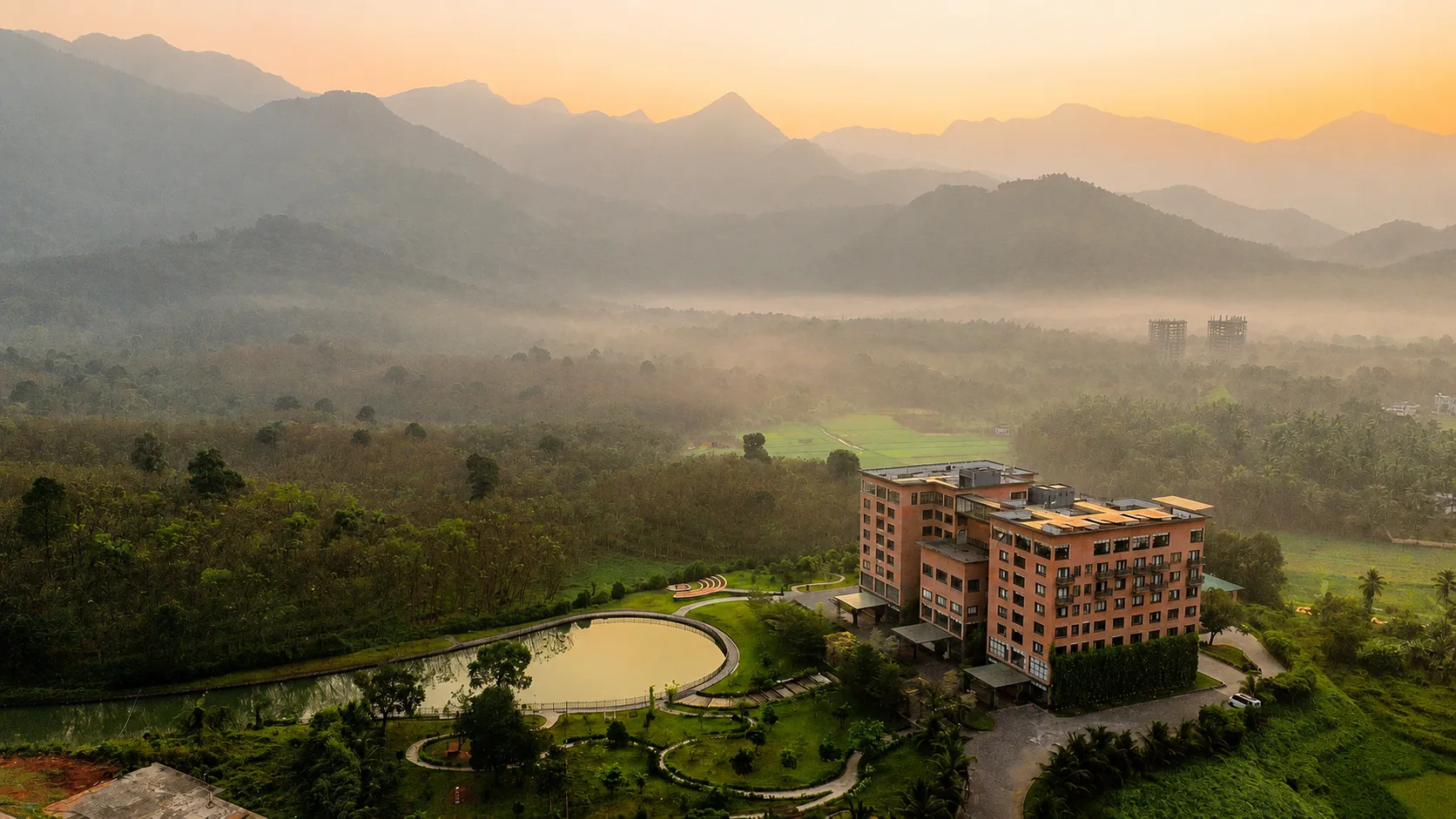
Kaithappoyil, Western Ghats

Before you leave
A physician reads every letter. Book a consultation, or send an inquiry — reservations answers the same day.