
[gtranslate]
MENU
⚡ Quick Facts: Long COVID by the Numbers
Months after your infection cleared, the fatigue, brain fog, and breathlessness haven’t. Your bloodwork looks “normal,” your doctor has run out of tests to order, and the only prescription on offer is patience. That gap — between how you feel and what conventional medicine can currently explain — is exactly where Ayurveda long COVID recovery research and functional medicine have started to meet. Here’s what real trials, not just tradition, actually show.
Long COVID (also called post-acute sequelae of SARS-CoV-2 infection, or PASC) describes symptoms — fatigue, breathlessness, cognitive fog, muscle pain, palpitations — that persist for months after the acute infection has resolved. It isn’t rare, and it isn’t shrinking. A May 2026 analysis in JAMA Network Open, led by researchers at Mass General Brigham, applied an AI detection tool to health records from nearly 460,000 COVID-19 patients across 58 US hospitals and clinics and found that 16.3% had gone on to develop long COVID — a rate roughly double what standard diagnostic-code tracking captures, and one that translates to an estimated 15 to 18 million affected Americans nationally.
Separate CDC survey data tells a similar story: between 5.3% and 7.6% of US adults reported living with long COVID symptoms from mid-2022 through late 2024, with women, adults aged 35–64, and people with pre-existing chronic conditions disproportionately affected. Recovery does happen for many — but a meaningful share of patients remain symptomatic well past the one-year mark, which is exactly the population searching for a long covid natural treatment that goes beyond “wait it out.”
This is the part patients discover on their own, usually after several specialist referrals: there is currently no approved cure for long COVID. A 2025 pharmacology review in Trends in Pharmacology and Toxicology concluded that existing treatment strategies are largely symptomatic and repurposed from therapies designed for other conditions — anti-inflammatory agents, autonomic regulators, anticoagulants for suspected microclotting, and psychiatric medications for the neurological symptoms — rather than treatments aimed at the underlying disease process itself.
That isn’t a criticism of any individual physician. It’s a structural gap. Long COVID is a heterogeneous, multi-system condition, and the conventional model is built around single-organ specialists and single-mechanism drugs. A patient with fatigue, palpitations, and brain fog may be referred to three different departments, each of which can rule out its own area of concern without ever addressing the interconnected root cause — which is precisely the kind of case that ends up searching for a long covid ayurveda kerala program that treats the whole system at once.
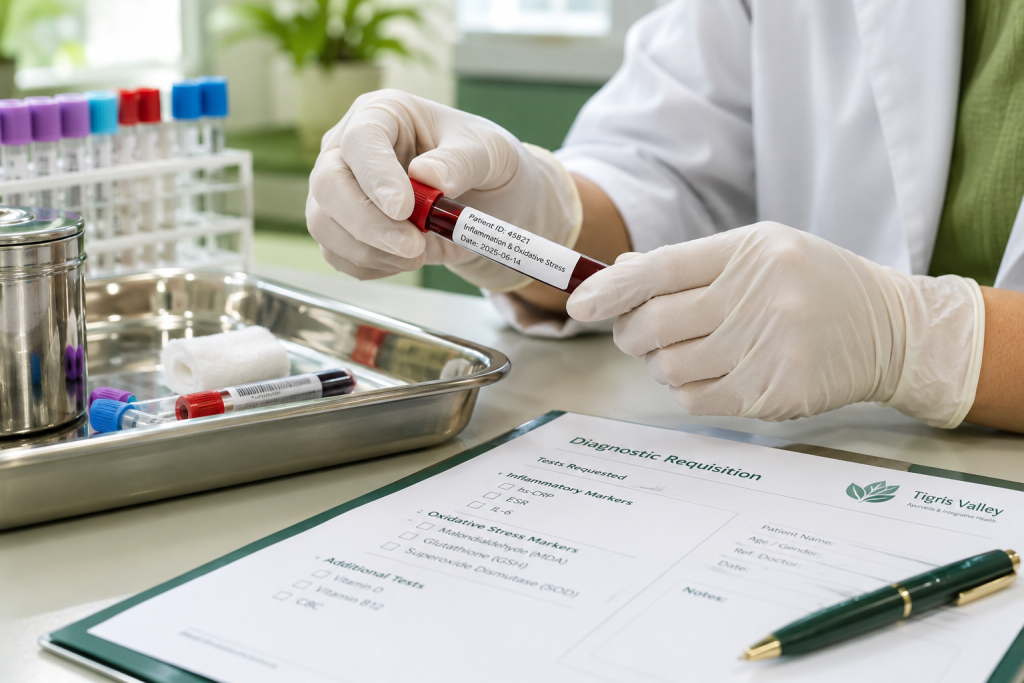
The reason “just rest and wait” so often fails is that long COVID has measurable biological signatures — this is not a condition without a mechanism, even if that mechanism is still being mapped. Four processes come up repeatedly in current research:
💡 Key Insight
The four areas — mitochondrial function, coagulation abnormalities, autonomic dysfunction, and immune dysregulation — are being investigated in Long COVID research. Ayurveda Rasayana approaches and functional medicine also use frameworks that address some of these areas, providing a potential rationale for an integrative approach. However, this mechanistic overlap does not by itself establish that combining these therapies is clinically effective for Long COVID.
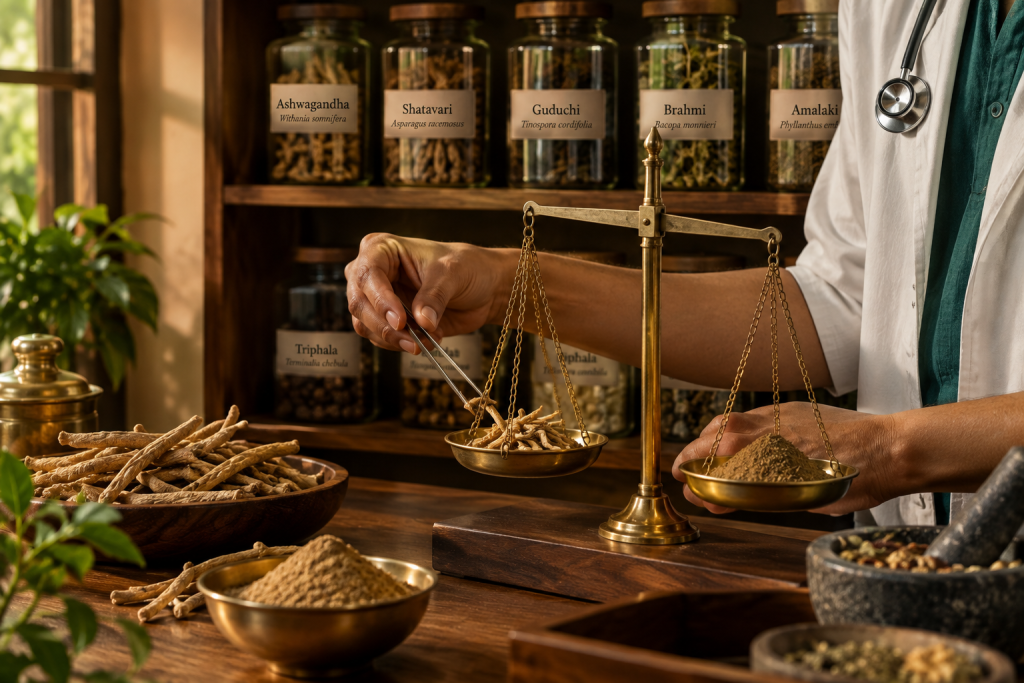
This is where most content about Ayurveda and COVID recovery either overstates the evidence or ignores it entirely. Here is the honest picture.
The most rigorous test to date is the APRIL Trial (Ayurveda for Promoting Recovery In Long COVID), a randomised, double-blind, placebo-controlled study led by the London School of Hygiene & Tropical Medicine in partnership with the All India Institute of Ayurveda, under India’s Ministry of AYUSH. It tested a standardised Ashwagandha (Withania somnifera) root extract against placebo in UK patients with diagnosed long COVID, with functional status as the primary outcome, and the protocol was peer-reviewed and published in BMJ Open in 2025.
The honest result: recruitment closed early after only 105 of a planned 2,500 participants had enrolled, which left the trial underpowered. The researchers reported no strong evidence that Ashwagandha improved functional status, quality of life, or symptom burden — but they also found it was safe, with no adverse events attributed to the supplement itself. That’s a genuinely useful, if unglamorous, data point: it doesn’t prove efficacy, but it does support safety at a standardised dose, which matters for anyone weighing herbal support alongside conventional care.
A separate, government-run multi-centre trial through India’s Central Council for Research in Ayurvedic Sciences compared a combination of Agastya Haritaki and Ashwagandha plus twice-daily yoga against the World Health Organization’s own post-COVID rehabilitation self-management protocol, measuring respiratory function, HRCT chest changes, and fatigue scores over 90 days. What’s notable isn’t a guaranteed result — it’s the design: Ayurveda being measured against an international clinical benchmark, using the same outcome tools a pulmonologist would use, rather than against nothing at all.
Put together, this is where an ayurveda long covid recovery approach earns its place: not as a replacement for evidence, but as a set of therapies now being held to the same trial standards as any pharmaceutical candidate — with results that are promising in mechanism, safe in practice, and still maturing in statistical power.
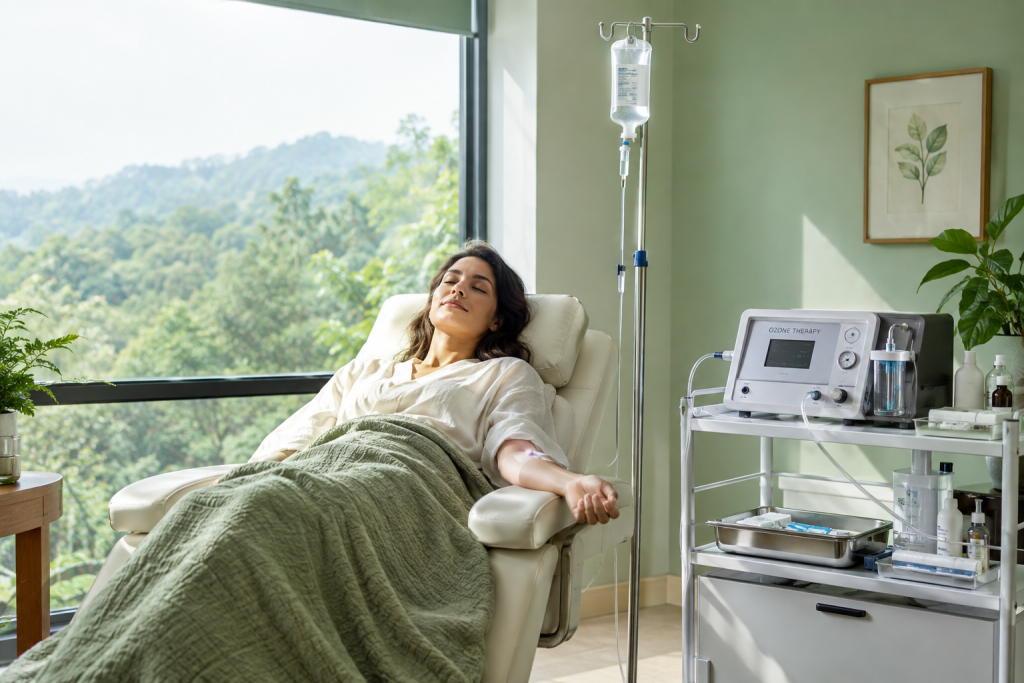
Alongside Ayurveda, functional medicine contributes therapies with their own, separate evidence trail — most of it built during the acute pandemic and now being extended into long COVID care.
None of this amounts to a guaranteed fix. It amounts to a coherent, mechanism-matched toolkit — which is a meaningfully different claim than “natural remedies for COVID,” and one that’s easier to evaluate honestly. A full breakdown of these protocols is covered on the dedicated functional medicine treatment page, including dosing frameworks and how each therapy is sequenced alongside Ayurvedic care.
The honest research picture above points to one practical conclusion: no single discipline currently has a complete answer for long COVID, but several disciplines each hold a real piece of it. That’s the specific gap a clinically supervised, NABH-accredited integrative hospital is built to close — running Ayurvedic Rasayana therapy, functional medicine diagnostics, and structured rehabilitation from one coordinated care plan instead of three unconnected referrals.
| Long COVID Mechanism | Ayurvedic Support | Functional Medicine Support |
|---|---|---|
| Mitochondrial energy deficit | Rasayana rejuvenation therapy, Ashwagandha | IV Glutathione, Alpha-Lipoic Acid, NAC |
| Chronic inflammation / oxidative stress | Panchakarma detoxification, herbal formulations | Ozone therapy, IV Vitamin C |
| Autonomic / nervous system imbalance | Shirodhara, breathwork, yoga | Guided CBT, structured lifestyle protocols |
| Deconditioning & muscle fatigue | Abhyanga oil massage, graded movement | Physiotherapy, nutrient-supported recovery |
Patients typically arrive already carrying an autoimmune flare-up, unresolved chronic pain, or lingering burnout alongside their long COVID symptoms — which is why cases are often routed toward related supporting protocols such as the Autoimmune Disorder Management Program for immune-driven flare-ups, the Chronic Pain & Inflammation Management Program for persistent muscle and joint pain, or the Stress & Burnout Recovery Program where autonomic dysregulation and burnout overlap significantly with post-viral symptoms.
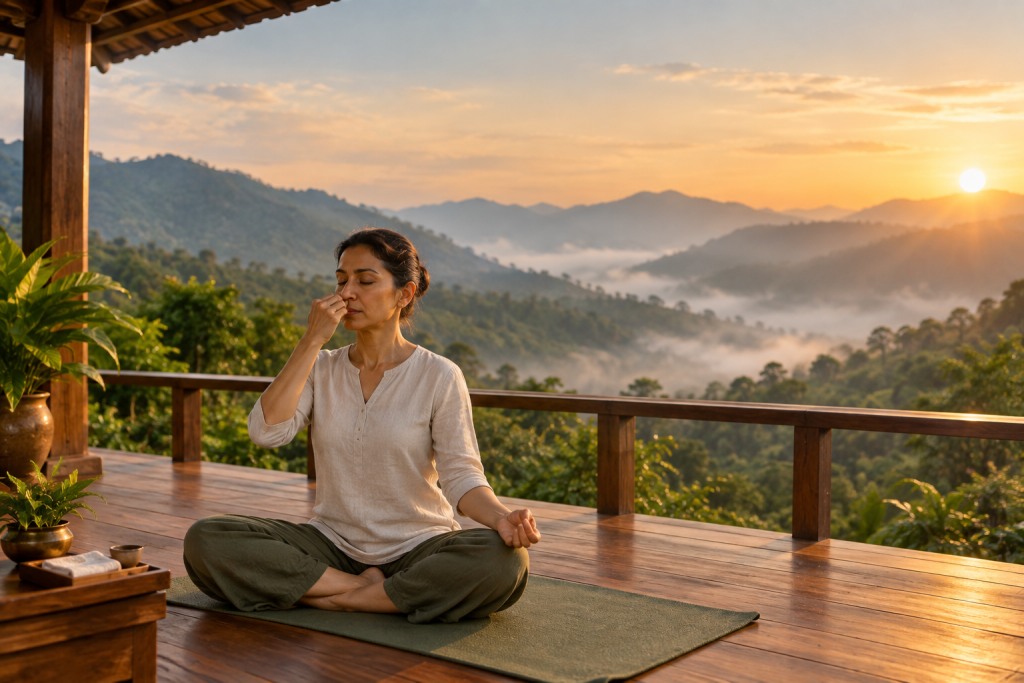
A structured post-viral recovery pathway generally moves through three stages:
Comprehensive intake covering symptom history, inflammatory and oxidative-stress markers, and a functional assessment of fatigue, breathing capacity, and cognitive function — establishing a personalised baseline rather than a generic protocol.
A combined schedule of Panchakarma-based detoxification, targeted Rasayana herbal formulations, IV nutrient or ozone therapy sessions where clinically indicated, and daily yoga or breathwork for autonomic regulation — the same categories mapped in the table above, delivered concurrently rather than sequentially.
Graded physical reconditioning, dietary protocols from the on-site organic farm, and a take-home lifestyle plan designed to sustain gains after returning home — because post-viral recovery rarely ends when a residential program does.
For guests further along in cellular recovery and looking specifically at long-term rejuvenation rather than acute symptom management, the Anti-Aging & Longevity Program extends the same Rasayana and cellular-support therapies into an ongoing wellness track.
In the interest of the same evidence-based honesty this article opened with: an integrative program is not a substitute for emergency care. Anyone with chest pain, severe breathlessness, or new neurological symptoms needs conventional emergency evaluation first — long COVID mechanisms can overlap with genuinely dangerous cardiac or pulmonary complications that must be ruled out by a physician before any complementary program begins.
Where this approach tends to help most is the large population of patients who have already been through that acute work-up, been told their labs are “normal,” and are still dealing with fatigue, brain fog, and post-exertional crashes months later — precisely the group current research shows conventional medicine is least equipped to treat with a single-mechanism drug.
🔑 Key Takeaways
Long COVID (PASC) is diagnosed when symptoms such as fatigue, breathlessness, brain fog, or palpitations persist for three months or more after a COVID-19 infection and aren’t better explained by another condition. There is no single confirmatory blood test yet; diagnosis is clinical, based on symptom pattern and timeline, sometimes supported by functional and inflammatory markers.
A 2026 JAMA Network Open study estimated that 16.3% of COVID-19 patients developed long COVID, translating to roughly 15–18 million affected Americans — nearly double prior estimates based on diagnostic-code tracking alone.
No. As of 2026, there is no drug specifically approved for long COVID. Current pharmacological management is symptomatic and largely repurposed from treatments developed for other conditions, according to a 2025 pharmacology review.
Research points to several overlapping mechanisms: impaired mitochondrial energy production, microscopic blood clots (microclots) restricting oxygen delivery, autonomic nervous system dysregulation, and ongoing immune activation — any combination of which can produce the fatigue and cognitive symptoms patients report.
Yes, though it’s still developing. The APRIL Trial, a randomised placebo-controlled study of Ashwagandha funded through India’s Ministry of AYUSH and published in BMJ Open, found the herb safe but the efficacy results inconclusive because recruitment closed early. A separate government-run trial is comparing Ayurvedic herbs plus yoga directly against WHO’s own post-COVID rehabilitation protocol.
India’s Ministry of AYUSH has published a National Clinical Management Protocol for post-COVID care based on Ayurveda and Yoga, which forms the basis for the multi-centre CCRAS trial combining Agastya Haritaki, Ashwagandha, and structured yoga practice.
Early evidence is encouraging but not definitive. A review of 13 clinical studies on medical ozone in COVID-19 patients showed good tolerability and measurable improvement, and NAC’s role as a glutathione precursor is supported by studies showing reduced oxidative stress and, in some cohorts, reduced risk of severe respiratory complications.
The two conditions overlap substantially — one prospective study found about half of patients still ill six months after mild-to-moderate COVID-19 met diagnostic criteria for ME/CFS. Both are now understood to share mitochondrial dysfunction as a possible common mechanism, which is part of why treatments researched for one are increasingly tested in the other.
Most structured programs run 14 to 21 days to move through diagnostic mapping, active root-cause therapy, and a rebuilding phase, though duration is adjusted based on symptom severity and how long symptoms have persisted.
Anyone experiencing chest pain, severe or worsening breathlessness, fainting, or new neurological symptoms should seek emergency medical evaluation first, since these can signal complications that require immediate conventional care regardless of any complementary program being considered.
It’s generally worth exploring if you’ve completed standard medical evaluation, been told your test results are normal, and are still dealing with unresolved fatigue, brain fog, or exercise intolerance months later — the population current long COVID research shows is least served by single-mechanism drug treatment alone.
Ready to Address Long COVID at the Root Cause?
If months have passed since your infection and conventional care has run out of next steps, a clinically supervised program combining Ayurveda, functional medicine diagnostics, and structured rehabilitation can provide a personalised approach to recovery.
→ Explore Our Post-Viral Recovery Program
Kaithappoyil, in the Western Ghats.
Markaz Knowledge City Road, Kaithappoyil, Adivaram, Kerala
Get directions +91 90726 61622 reservation@tigrisvalley.com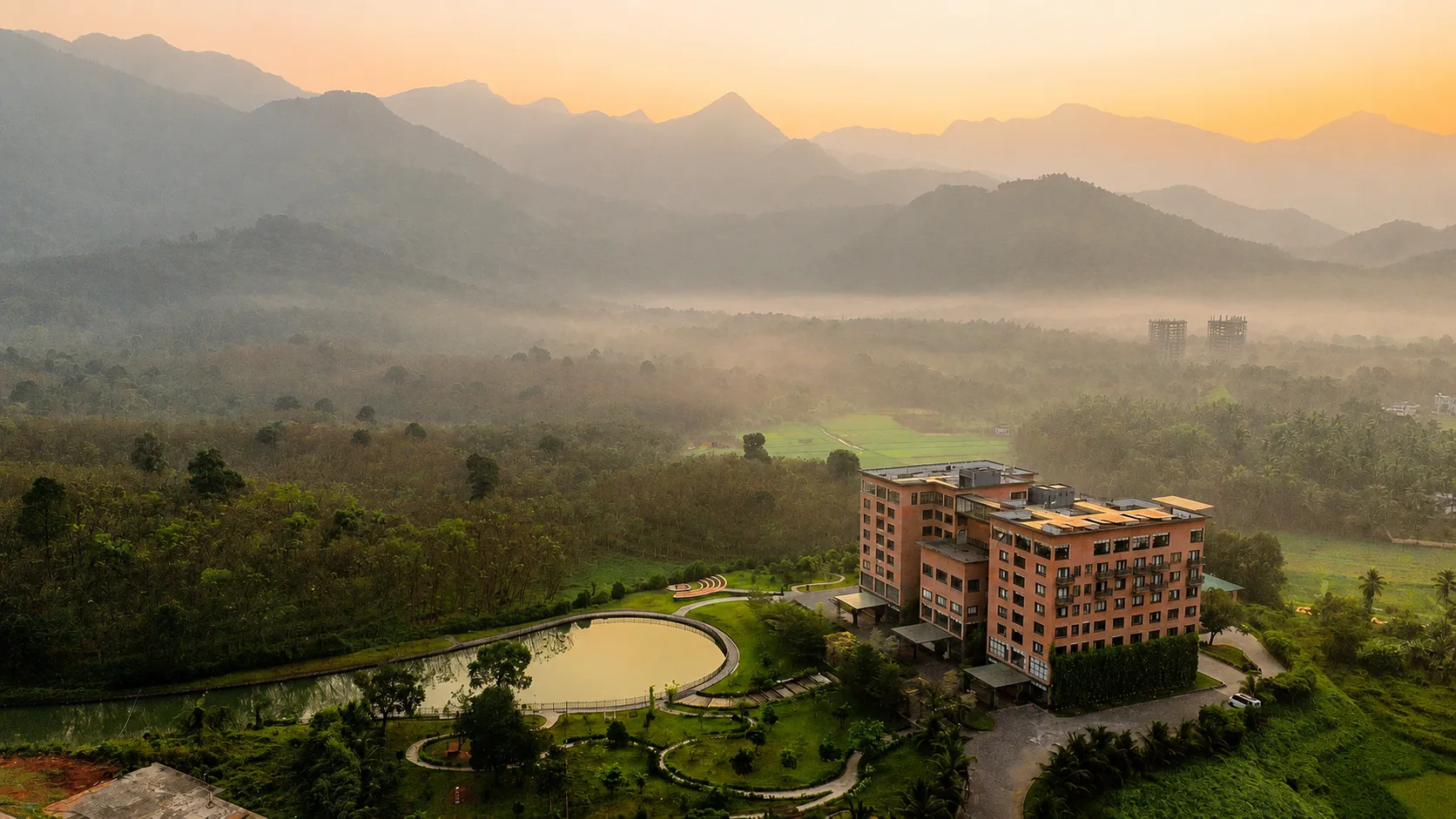
Kaithappoyil, Western Ghats

Before you leave
A physician reads every letter. Book a consultation, or send an inquiry — reservations answers the same day.