
[gtranslate]
MENU
⚡ Quick Facts: Detox, By the Numbers
You’ve got two browser tabs open — a sleek Alpine fasting clinic and a Kerala Ayurveda hospital — and both promise the same thing: a reset. Book the wrong one and you’ll spend a week (and several thousand euros) treating the wrong problem with the wrong protocol. Here’s the honest, side-by-side breakdown of an ayurveda retreat vs western detox retreat — what each actually does, what the evidence says, and which one fits your situation.

This is where most comparison articles get sloppy — they lump every Western option into one bucket. In reality, “Western detox” splits into two very different categories, and confusing them is how people end up disappointed.
Juice cleanses, detox teas, “cleanse” supplements, and short at-home fasting kits. This is the version most people mean by ayurveda vs detox comparisons online — and it’s also the version with the weakest evidence behind it. A 2015 systematic review in the Journal of Human Nutrition and Dietetics found no randomised controlled trials evaluating commercial detox diets for toxin removal or weight loss in humans. The British Dietetic Association, NIH, Mayo Clinic, and UCLA Health all independently describe the underlying premise — that the body accumulates “toxins” requiring external removal — as unsupported, since the liver, kidneys, and gut already perform this function continuously.
This is the more legitimate end of the spectrum, and it deserves credit as such. Clinics built around the Buchinger method or the F.X. Mayr Cure — long-established in Germany, Austria, and Spain — are staffed by physicians, run diagnostics-first intake (bloodwork, body composition, gut assessment) before any fasting begins, and have over a century of clinical operating experience between them. Their core mechanism is caloric restriction and therapeutic fasting, occasionally supported by peer-reviewed research (a small Lancet-published trial, for instance, linked fasting followed by a vegetarian diet to reduced rheumatoid arthritis symptoms). A typical 10-day program at one of these clinics starts around €2,440 for the program itself.

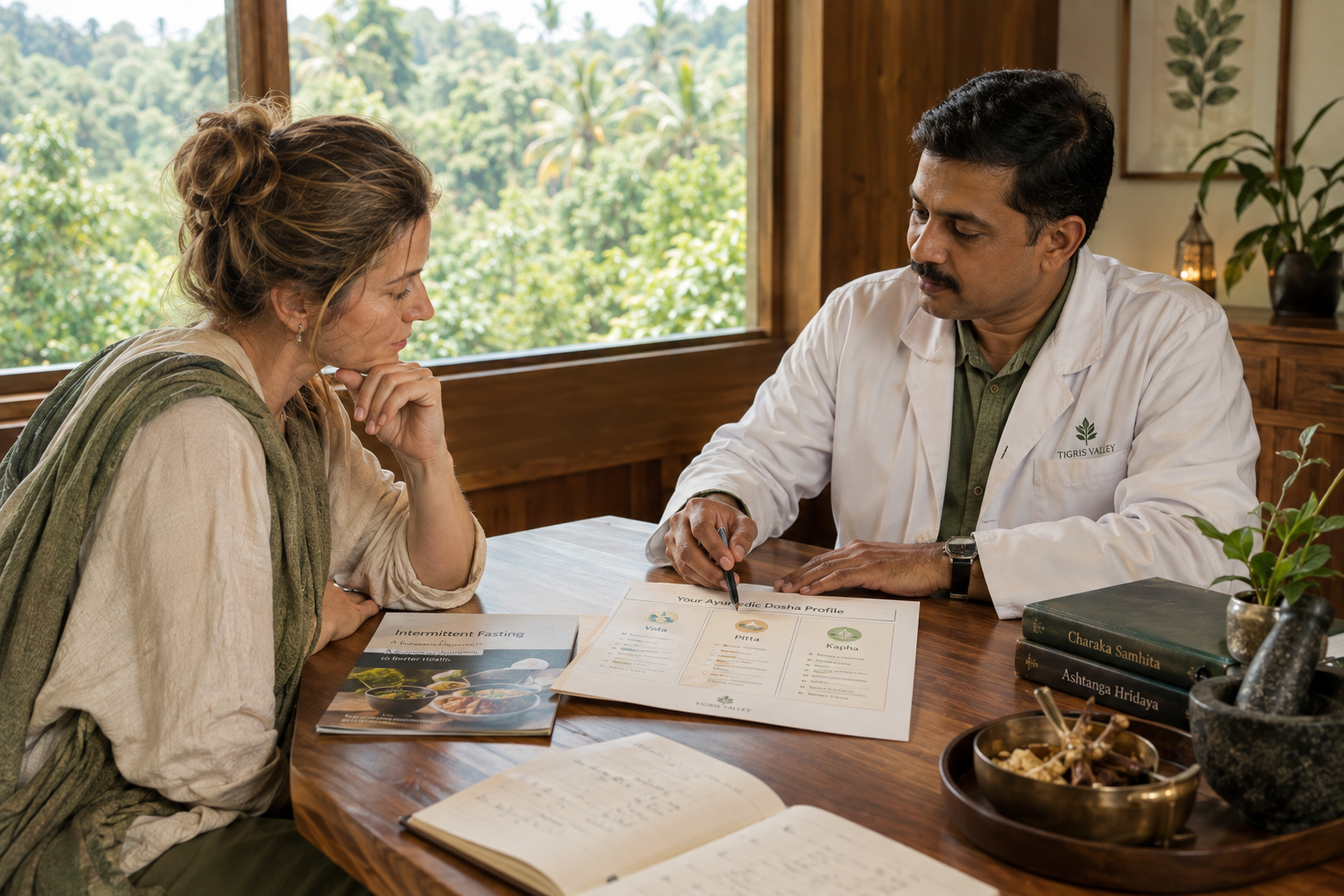
Panchakarma starts from a completely different theoretical premise than either Western category above. Instead of restricting calories to trigger a generalised metabolic reset, it begins with a diagnostic assessment of your individual constitution — your dosha balance — and builds a personalised, multi-modality protocol around it.
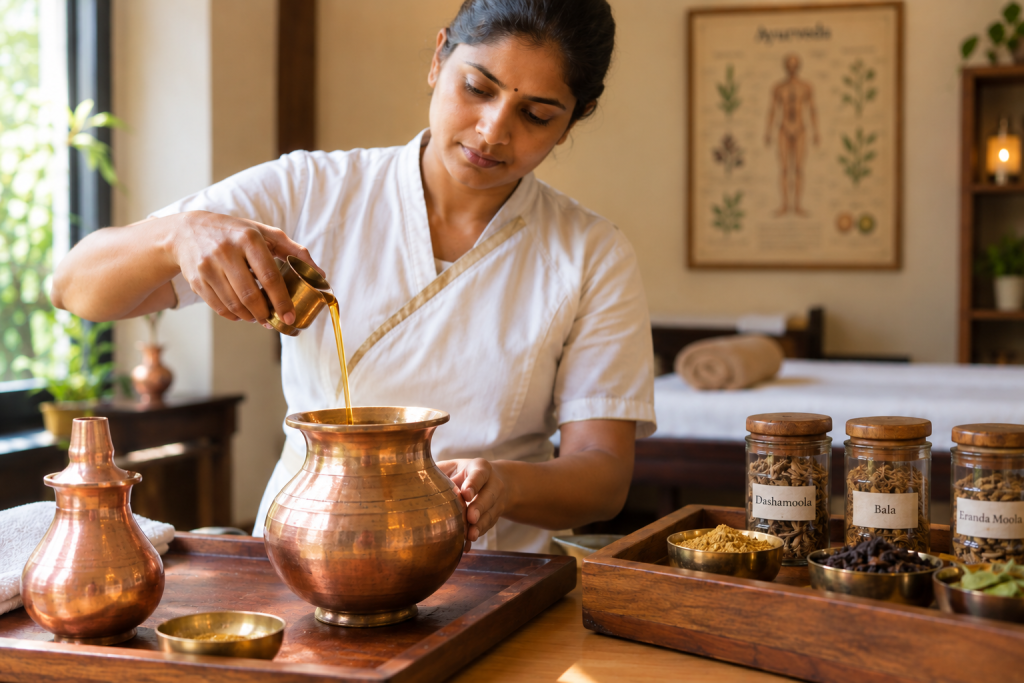
The process runs in three distinct phases over 14 to 21 days:
Crucially, this isn’t an unregulated wellness offering. Ayurveda is a government-regulated medical system in India under the Ministry of AYUSH, with practitioners holding a 5.5-year BAMS degree (Bachelor of Ayurvedic Medicine and Surgery) — a credential comparable in rigour to a conventional medical degree, not a weekend certification.
💡 Key Insight
The distinction isn’t simply “science vs. tradition.” Medically supervised European fasting and Ayurvedic Panchakarma are structured approaches that use different treatment principles and protocols. Fasting primarily uses controlled caloric restriction and metabolic changes, while Panchakarma uses individualized Ayurvedic therapies such as oil treatments, heat therapies, and elimination procedures. Because these approaches differ in methods and goals, choosing a program should be based on individual health needs and professional assessment rather than marketing claims.
| Factor | Ayurvedic Panchakarma (Kerala) | Medically Supervised Western Fasting |
|---|---|---|
| Diagnostic starting point | Individual dosha assessment (Vata/Pitta/Kapha) before protocol design | Bloodwork and body-composition diagnostics, generally applied to a standardised fasting protocol |
| Core mechanism | Oil-based mobilisation + medicated elimination (purgation, enema, nasal therapy) | Caloric restriction / therapeutic fasting |
| Typical duration | 14–21 days for the full three-phase cycle | 7–14 days |
| Practitioner credential | 5.5-year BAMS medical degree, AYUSH-regulated | Physician-led at reputable clinics; unsupervised at commercial cleanse level |
| Hospital accreditation | NABH — India’s JCI equivalent, available at facilities like Tigris Valley | Varies significantly by clinic; commercial cleanses have no medical accreditation |
| Underlying theory | Multi-dosha, tissue-layer toxin theory (thousands of years of clinical documentation) | Autophagy and metabolic reset via caloric restriction (partial modern research base) |
Neither system is universally “better” — they answer different questions.
Many guests dealing with weight and metabolic markers specifically compare this against fasting clinics before choosing the Metabolic Disorder Management Program, which layers Panchakarma detox onto Functional Medicine diagnostics rather than caloric restriction alone. Guests arriving already burned out from an overly rigid fasting attempt elsewhere are often better matched to the Stress & Burnout Recovery Program, and those seeking an ongoing rejuvenation track beyond a single detox often transition into the Anti-Aging & Longevity Program afterward.

For Europeans running a detox retreat india vs europe comparison, the “India” side of that equation should really specify Kerala. Ayurveda is practiced across India, but Kerala holds structural advantages that directly affect protocol quality:
A deeper walkthrough of what genuine Ayurvedic care looks like for international guests, including the specific credential and accreditation standards to check for, is covered in the dedicated guide to Ayurveda treatment benefits, and the full case for choosing Kerala over other Ayurveda destinations for Europeans specifically is laid out on the detox retreat in India for Europeans page. For the foundational treatments themselves — Panchakarma, Abhyanga, and herbal therapies — see the Ayurveda treatments overview.
🔑 Key Takeaways
Ayurvedic Panchakarma begins with an individual dosha diagnosis and uses oil-based mobilisation plus medicated elimination therapies over 14–21 days. Western options split into unproven commercial cleanses and medically supervised fasting clinics that use caloric restriction over 7–14 days, generally without an individualised constitutional diagnosis.
No. A 2015 systematic review found no randomised controlled trials supporting commercial detox diets for toxin elimination, and major health bodies including the British Dietetic Association, NIH, and Mayo Clinic describe the concept as unsupported, since the liver and kidneys already handle this continuously.
Yes, the reputable ones are. Clinics built around the Buchinger or F.X. Mayr methods are physician-staffed, run diagnostics before fasting begins, and have decades of clinical operating history, with limited but real peer-reviewed research behind specific applications like fasting-supported rheumatoid arthritis management.
A full three-phase Panchakarma program runs 14 to 21 days. Most European medically supervised fasting programs run 7 to 14 days, largely because the caloric-restriction model has different physiological limits than Panchakarma’s tissue-layer elimination process.
Some caloric moderation occurs during Panchakarma’s preparation phase, but fasting is not the central mechanism. The core process relies on medicated oil ingestion, therapeutic massage, herbal steam, and elimination procedures like Virechanam and Basti rather than calorie restriction alone.
Yes. Ayurveda operates under India’s Ministry of AYUSH as a government-regulated medical system, with practitioners required to hold a 5.5-year BAMS degree — a credential requiring formal medical education, not a short certification course.
A leading European fasting clinic’s 10-day program starts around €2,440 for the program alone. A full 14–21 day, all-inclusive Panchakarma program in Kerala is generally positioned well below that per-day rate once accommodation, meals, and therapies are included.
Travelers managing a chronic, multi-system issue — metabolic syndrome, autoimmune flare-ups, persistent burnout — who want an individually diagnosed protocol and can commit two to three weeks rather than a short reset.
Travelers wanting a shorter, data-driven metabolic reset closer to home, with less cultural or dietary adjustment, and whose primary goal is metabolic rather than a chronic multi-system condition.
Kerala offers a fundamentally different therapeutic mechanism (diagnosis-led, multi-modality elimination rather than caloric restriction), backed by government medical regulation, NABH hospital accreditation, and access to the Western Ghats’ herbal biodiversity — advantages that are structural, not just geographic.
Some guests do use a short European fasting reset for acute metabolic goals and a longer Panchakarma program for root-cause chronic conditions, though the two protocols are generally not run concurrently since their preparatory dietary requirements differ.
Whether you’re considering a short European fasting reset or a comprehensive Panchakarma program, the right approach depends on your individual health needs—not a one-size-fits-all plan. A personalised assessment can help you understand which program is most suitable for you.
Kaithappoyil, in the Western Ghats.
Markaz Knowledge City Road, Kaithappoyil, Adivaram, Kerala
Get directions +91 90726 61622 reservation@tigrisvalley.com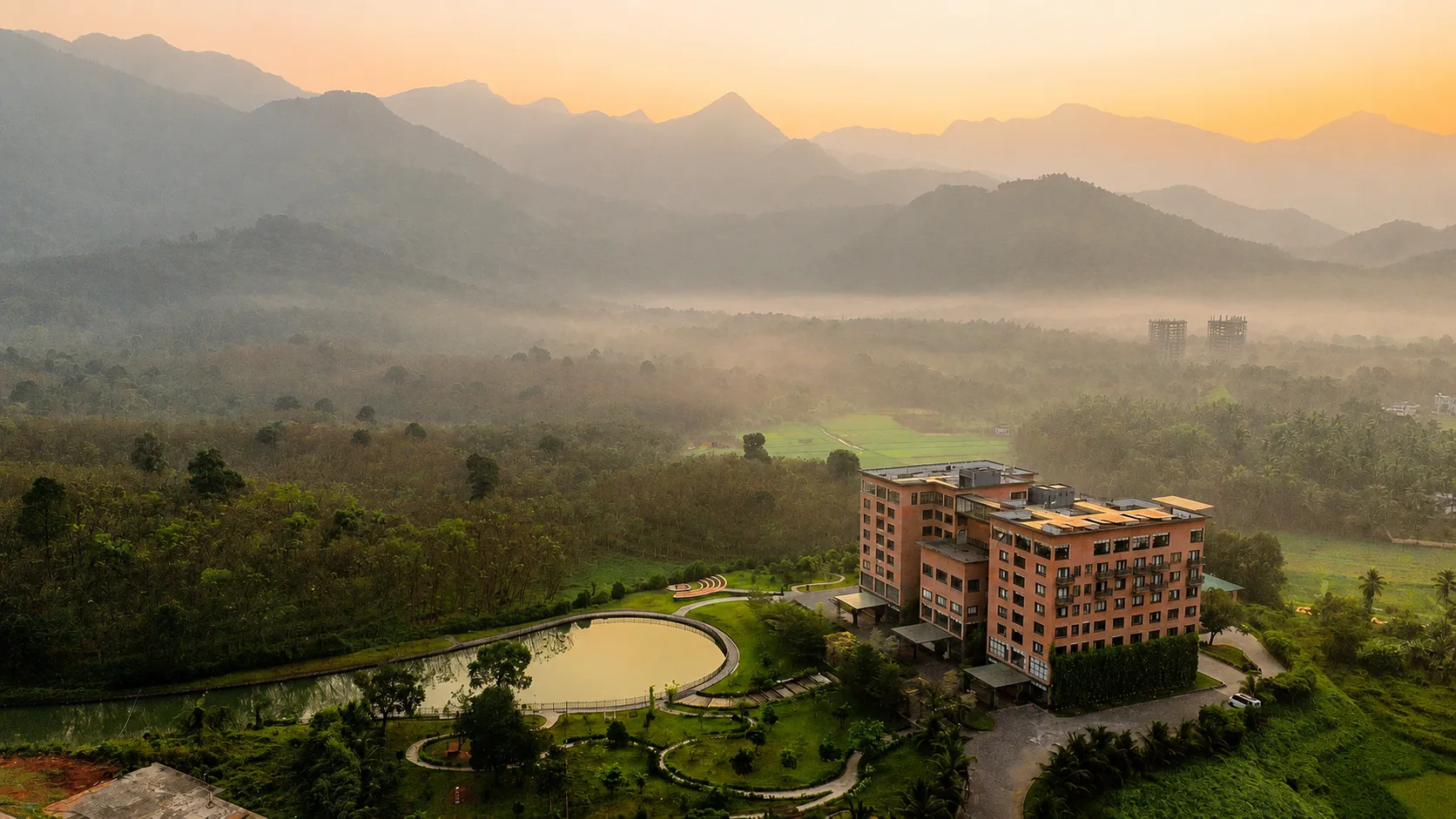
Kaithappoyil, Western Ghats

Before you leave
A physician reads every letter. Book a consultation, or send an inquiry — reservations answers the same day.