[gtranslate]
MENU
Panchakarma is the main way in which Ayurvedic treatment is carried out. The total Ayurvedic treatments can be divided into three main divisions.
Ayurvedic Panchakarma treatments
Ayurvedic treatments such as oil massage, steam therapy etc.
Ayurvedic medicines are prescribed according to diseases and to promote health.

According to Ayurveda, due to the effect of the atmosphere, weather, improper diet lifestyle habits etc, the toxins in the body accumulate. These toxins, in Ayurvedic terms, are called as ‘Ama’. Toxins can be of two types
1. The toxins that enter into the body due to improper food/lifestyle such as exposure to microorganisms through food, air etc.
2. The toxins that our body generates due to seasonal variations, improper diet etc such as high fat consumption leading to excessive cholesterol, old age causing wear and tear in joints causing arthritis etc.
Any disease manifestation can be explained in terms of toxins and the related effects that it exhibits as doshas. To re-word the term toxins, Ayurveda uses the word Tridosha. They are Vata, Pitta and Kapha. When they are normal, they support the body and maintain health. But when they go abnormal, they cause disease. Tridosha in harmony with each other is called health. Tridosha imbalance, one or two or all three Doshas grow up hugely into disease.
Now, either we have to bring back these hyperactive tridosha down to normal range or we throw the imbalanced doshas out of the body. To bring the Doshas to normal levels, we use massage, oral medicines, etc. It is helpful in minor Dosha imbalances. But if they have been vitiated to a large extent, better to get rid of them. This is done by Panchakarma treatment. Ayurvedic treatment aims to relieve the body of these toxins through Panchakarma treatments.
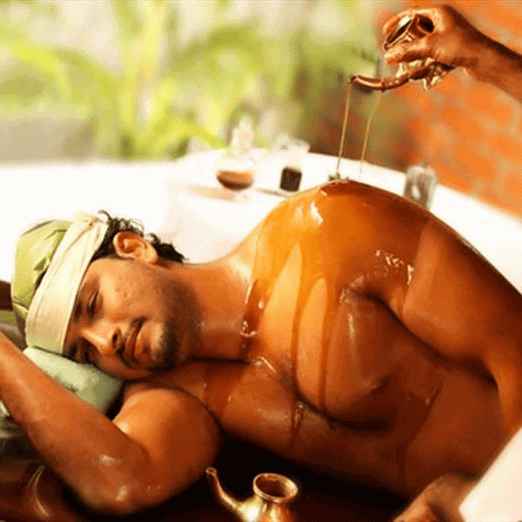
Vamana – Emesis treatment – This refers to removing the toxins through vomiting. The person is made to vomit by giving many medicines. The vomiting continues for a short while. Vamana treatment in Panchakarma is given after preparation procedures called Purvakarma. After the end of the procedure, a diet plan is advised to follow for 1-7 day time. Vamana treatment is usually given for Kapha imbalance diseases.
Virechana-purgative treatment – This refers to removing the toxins through purgation. The person is made to have loose motions for a short while, by administering medicines. Virechana treatment is given after a preparation procedure called Poorva Karma. After the end of the procedure, a diet plan is advised to follow for 1-7 days and post-virechana procedures. Virechana treatment is usually given for Pitta imbalance diseases. Virechana treatment may take from 3-7 days.
3 & 4. 2 types of Vasti rectal enema –
1. Anuvasana: Enema of medicated oils
2. Asthapana: Enema of decoctions
The Ayurvedic enema is quite different from the regular enema given to relieve constipation. Vasti treatment is adopted in a wide range of diseases, predominantly of Vata imbalance.
The principle behind Basti treatment is there are a few sets of herbal active principles that do not undergo digestion, when given through the oral route, either these herbal active components are destroyed due to acid in the stomach or due to the metabolism of these components by the liver (hepatic first-pass effect). Thus, the Ayurvedic experts of ester-centuries found the rectal route to administer the herbs, by which the herbal active components are directly made available for absorption at the level of intestines.
5. Nasya treatment of powders or Ayurvedic liquids through the nose is called Nasya treatment. It is usually prescribed for diseases of the ear, nose, throat, headache etc.
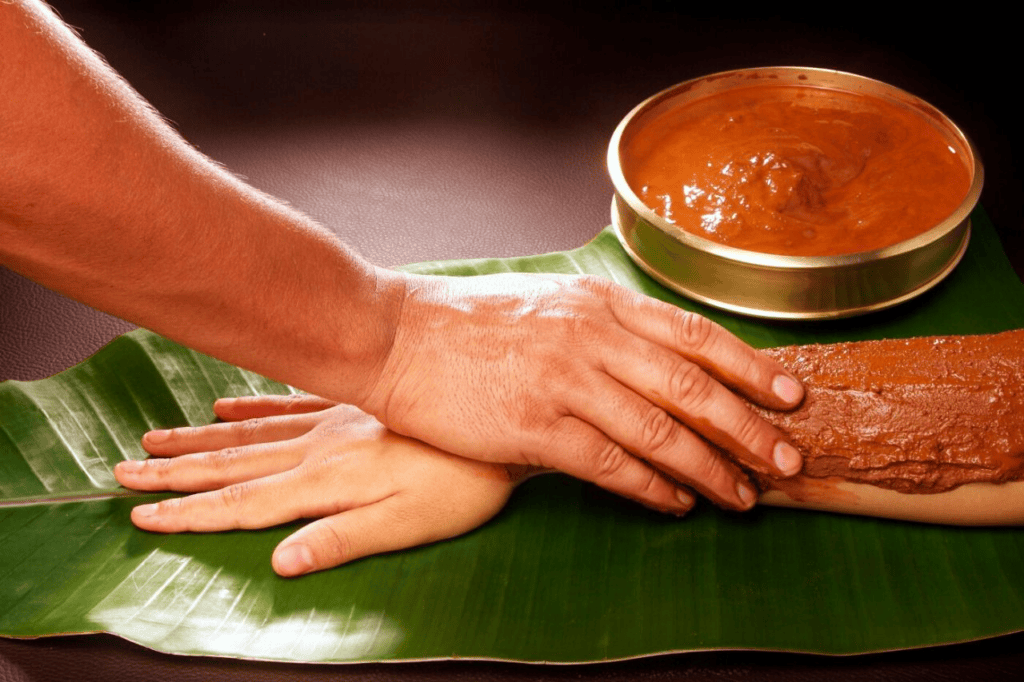
The complete Panchakarma therapy process involves three stages: Purvakarma. Pradhana Karma, and Paschat Karma
Stage 1: Purvakarma
For a better outcome of Panchakarma treatment, it is essential to prepare the body before the main purification procedure. For this, we have three pre-purification measures-
Deepana-Pachana
1. Snehana
2. Swedana
Deepana-pachanga means oral administration of digestive herbs to increase Agni (the digestive fire) and liquefy the toxins so they can be removed easily from the body
1. Snehana means administration of fat to the body. There are two types of Internal and External
Internal Oleation is the administration of medicated ghee internally. Ghee is administered in increasing doses for 3-7 days The type of medicated ghee depends upon the disease condition and nature of the patient
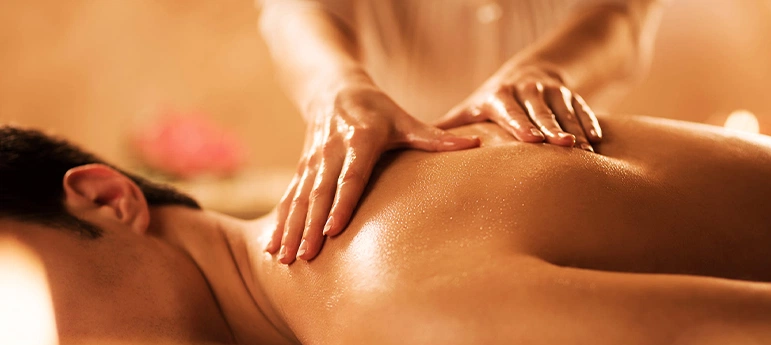
External Oleation means body massage using specific oils it can be done for the entire body or just specific locations. Oils are selected as per the disease condition
Oleation helps the toxins to move toward the gastrointestinal tract. It also softens the superficial and deep tissues and nourishes the nervous system.
2. Swedana: Sweating treatment (Swedana) is usually given after fat administration (Oleation-Snehana) therapy. These two are administered as preparation for Panchakarma therapy.
Svedana is the prime modality of treatment for several disorders, especially in Vāta predominant diseases. Svedana is done to liquefy the vitiated Dosha which is spread throughout the body. As a result of the application of Svedana, the vitiated Dosha are made easily expelled in the form of induction of sweating or with the help of Pradhāna Karma such as Vamana, Virechana, Vasti etc. Svedana is termed sudation therapy or fomentation therapy.
Stage 2: Pradhana Karma – The Main 5 Panchakarma Therapies.
Vamana Panchakarma Therapy helps treat Kapha dominant diseases, and the purification is done through emesis Including the administration of herbal medicines to induce vomiting to eliminate toxins through the mouth.
Virechana Panchakarma Therapy is beneficial mainly for Pitta diseases but is also useful in Kapha and Vata, Inducing controlled loose motions does purification by eliminating toxins. The most popular herbal preparation used for Virechana includes Avipathy Powder for the comfortable completion of the Virechana procedure.
Vasthy is the mother of all panchakarma procedures, it purifies through the colon and rectum. Vasthy is of two types.
Anuvasana: Enema of medicated oils.
Asthapana: Enema of decoctions.
Nasya can be done by putting medicated oils through the nose. The most widely used oil for Nasya karma is Anu Thailam. It is easily instilled in the nostrils. Many patients use it daily at home.
Raktamokshona is the removal of impure blood. It is done by using Leech or directly puncturing the veins. (Sushruta has considered blood as the fourth dosha and mentioned Raktamokshana i. e. bloodletting as one among five panchakarma measures)
Specific uses of Panchakarma Processes:
Chronic asthma
Diabetes
Chronic cough & cold,
Chronic indigestion
Allergies
Skin diseases
Chronic Fever
Diabetes
Skin disorders such as Vitiligo and Psoriasis
Neurological diseases like Paraplegia, Hemiplegia, and paralysis
Joint disorders
Digestive disorders like constipation and hyperacidity.
Headaches
Gynaecological disorders
Degenerative diseases
Ankylosing spondylitis
Lumbar spondylitis
Skin diseases
Osteoporosis
Sciatica
Digestive diseases
To improve eyesight
Ear, Nose, and Throat diseases
To improve memory
Trigeminal neuralgia
Bell’s palsy
Headache
Migraine
Nasal polyps
Breathing problems
Hair falling
Premature hair-greying
Skin Diseases like acne, urticaria, psoriasis, and eczema
Non-healing wounds
Pain management
Sciatica
Elephantiasis Varicose veins
Arthritis
Stage 3: Paschat Karma
This is a post-purification regime to restore digestive power and bring normalcy to the body. It is done through specific diet lifestyle management, rejuvenating medicines, and specific herbal preparations it includes-
Sansarjan Karma: it is a specific diet protocol aiming to gradually increase diet from liquids to semi-solids to a normal diet
Administration of Rasayana: taking a rejuvenating medicine as per your condition is used to help physically restore the body
Shaman Chikitsa adding appropriate ayurvedic medicine may help further reduce the disease symptoms.
Buddhi Prasada – Clarity of the mind.
Balam Indriyanam-strength of the sense organs.
Dhatu Stiratva stability of the tissues
Jvalanasya Deeptim – keenness of digestive power.
Chirat cha paakam vayasaha karoti – slow and delayed ageing process.
Samyak Upasyamanam – if the procedures are done perfectly.
Speaking loud
Excess travelling
Excessive walking
Excessive sitting
Indigestion and repeated eating
Incompatible food
Day sleeping
Indulgence in Sex
Overall Impact-
The overall impact of not avoiding the above-mentioned eight factors will be dreadful. Panchakarma treatment causes cleansing of the body and the body will get weak after the procedures. In such conditions if the above said eight avoidable things are partaken, they will cause more weakness of the body and cause serious complications. Therefore these should be compulsorily avoided.nt, especially if you have existing health conditions or are on medication.