[gtranslate]
MENU
Most people don’t realize their body is keeping score — quietly accumulating tension, dryness, inflammation, and fatigue from the inside out. You might feel it as stiff joints in the morning, restless sleep at night, or skin that just doesn’t feel alive anymore. These aren’t signs of aging. They’re often signs your body is asking for care it hasn’t received in a long time.
Abhyanga massage — a full-body warm oil therapy rooted in Ayurveda — is one of the oldest answers to exactly that. And unlike trendy wellness routines, it’s backed by thousands of years of practice and a growing body of modern evidence.
Abhyanga (pronounced ab-yahn-ga) comes from Sanskrit — Abhi meaning “into” or “toward,” and Anga meaning “limb” or “body.” Together, it translates loosely to loving care of the body through oil. In the ancient system of Ayurveda, it is described as a daily self-care ritual — Dinacharya — intended to nourish the physical body, calm the nervous system, and maintain the balance of the three doshas: Vata, Pitta, and Kapha.
Unlike Swedish or deep-tissue massage, which primarily target muscle groups mechanically, Abhyanga works at multiple layers — skin, lymph, fascia, joints, and the nervous system — using the medium of warm, herb-infused oils. It is both therapeutic and deeply preventive.
In classical Ayurvedic texts like the Ashtanga Hridayam, daily Abhyanga is described as capable of counteracting the effects of aging, fatigue, and degeneration. Modern practitioners and researchers are increasingly finding that this isn’t just poetic language — it reflects genuine physiological effects.
At Tigris Valley Wellness Retreat, Abhyanga is offered as part of a structured Ayurvedic treatment program customized to each person’s constitution and health objectives.
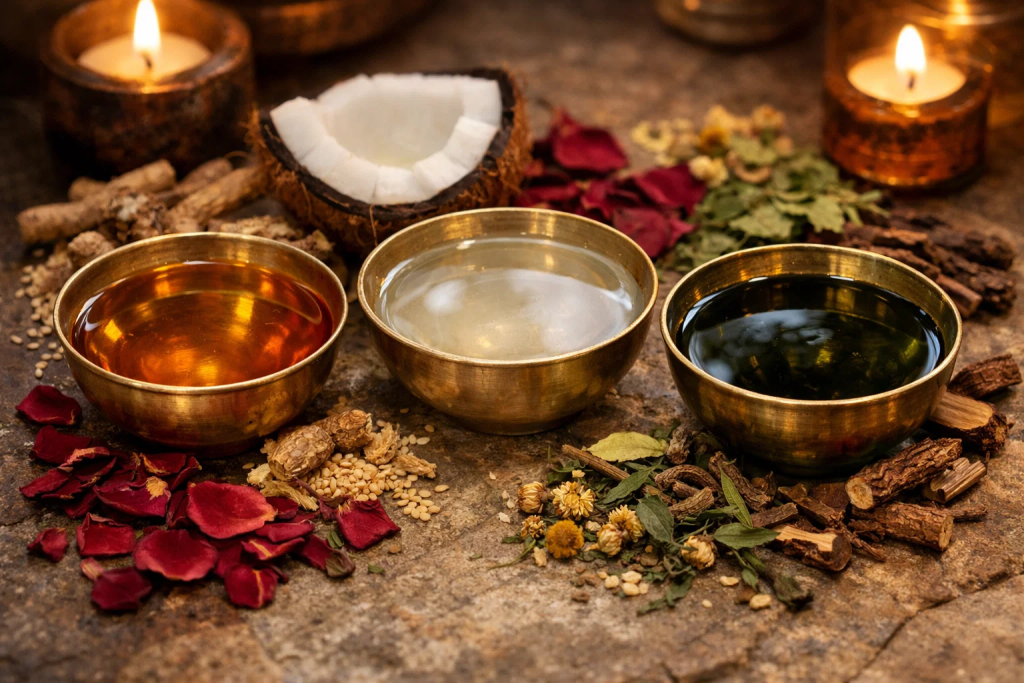
The choice of oil in Abhyanga isn’t random. It’s determined by your prakriti (body constitution), current imbalances (vikriti), season, and health goals. Different oils carry different therapeutic properties and penetrate different tissue layers.
| Oil | Best For | Primary Effect |
|---|---|---|
| Sesame Oil | Vata imbalance, joint stiffness | Warming, deeply penetrating, grounding |
| Coconut Oil | Pitta imbalance, inflammation | Cooling, anti-inflammatory, skin-nourishing |
| Mustard Oil | Kapha imbalance, sluggishness | Stimulating, circulatory, detoxifying |
| Medicated Herbal Oils (e.g., Dhanwantharam, Ksheerabala) | Chronic conditions, pain, neurological care | Targeted therapeutic action |
Oils are almost always warmed before application — this isn’t just for comfort. Heat opens skin pores, allows the oil to penetrate the dermis, and activates the herb compounds within medicated oils. The skin absorbs these compounds, which then travel into deeper tissues and the bloodstream, carrying their healing properties.
This is why Abhyanga performed by a trained Ayurvedic therapist using correctly prescribed oils is quite different from a simple relaxation massage.
A typical therapeutic Abhyanga session at a clinical wellness setting runs between 45 to 60 minutes. Here’s what to expect:
Before the session: A trained Ayurvedic physician or therapist will assess your constitution and current health status. Based on that, a specific oil formulation is selected for you. You may be asked about digestion, sleep, joint concerns, and emotional state.
During the session: You lie on a special wooden Droni (massage table). The therapist applies warm oil in long, rhythmic strokes (along the limbs) and circular movements (over joints and the abdomen). Both sides of the body are treated, including the scalp, face, ears, and soles of the feet. The pressure and speed vary — long strokes are calming for the nervous system, while shorter, faster strokes stimulate circulation.
After the session: A medicated steam bath (Swedana) typically follows Abhyanga. The steam helps drive the oil deeper into tissues, opens channels (srotas), and encourages the release of deep-seated toxins through sweat. You’re then advised to rest and avoid cold water for a period.
This is how Abhyanga functions in a professional clinical context — very different from the quick self-massage version often described in lifestyle blogs.

One of the most immediate and consistent effects of Abhyanga is a profound sense of calm. The slow, intentional touch, combined with the warmth of the oil, directly stimulates the parasympathetic nervous system — the body’s “rest and digest” mode. Cortisol levels drop. The breath slows. Muscle guarding releases.
For anyone dealing with burnout, anxiety, or chronic stress, this isn’t luxury — it’s medicine. Explore how Abhyanga fits within a structured recovery framework in Tigris Valley’s Stress & Burnout Recovery Program.
Abhyanga significantly enhances peripheral circulation. The manual pressure of the strokes and the vasodilatory effects of warm oil together increase blood flow to the skin, muscles, and extremities — without placing any cardiovascular demand on the body. This makes it particularly valuable for those recovering from illness or cardiac events. Learn how integrative cardiac care works at our Cardio-Metabolic Health Recovery Program.
The lymphatic system has no pump — it depends on movement, breathing, and manual stimulation to move. Abhyanga, performed in the correct direction (toward the heart), supports lymphatic flow and helps clear metabolic waste, inflammatory byproducts, and Ama (undigested toxins in Ayurvedic terms) from the tissues.
This is why Abhyanga is a cornerstone therapy in Tigris Valley’s Detox & Cleanse Program, where it works in synergy with Panchakarma, herbal therapies, and functional medicine approaches.
The skin is the body’s largest organ, and it absorbs far more than we give it credit for. Warm herbal oils applied during Abhyanga restore the skin’s natural lipid barrier, improve elasticity, reduce roughness and dryness, and stimulate collagen-supportive processes. Regular sessions are associated with reduction in fine lines, improved skin tone, and a characteristic Ayurvedic concept called Twak Prasadana — luminosity of the skin.
This is one reason Abhyanga is central to Tigris Valley’s Anti-Aging & Longevity Program. If skin health is a concern — whether from chronic conditions or environmental damage — explore our skin disease treatment approach as well.
In Ayurveda, most joint and musculoskeletal disorders are associated with Vata vitiation — dryness and irregular movement in the joints and channels. Abhyanga directly counteracts this by delivering warming, unctuous oils into the periarticular tissue. Patients with osteoarthritis, frozen shoulder, lower back stiffness, and cervical spondylosis often report significant improvement after a course of Abhyanga combined with other therapies.
For those living with persistent pain, this integrates naturally into Tigris Valley’s Chronic Pain & Inflammation Management Program.
The calming effect of Abhyanga extends beyond the session. Regular practice is associated with improved sleep latency (how quickly you fall asleep), sleep depth, and morning alertness. Foot massage with warm oil before bed — a simplified Abhyanga practice — has been shown to reduce cortisol and improve melatonin secretion.
For anyone experiencing sleep disruption alongside chronic stress, pairing Abhyanga with mindfulness and meditation practices amplifies results. Explore this combination at the Mindfulness & Mental Clarity Package.
The lymphatic drainage effect, stress reduction, improved sleep, and skin barrier reinforcement collectively contribute to a stronger immune response. Regular Abhyanga helps the body maintain its natural surveillance systems more effectively. This is particularly relevant during recovery from illness, seasonal changes, or for those with autoimmune tendencies.
See how Tigris Valley supports immune health holistically through the Immune Strengthening Package and the Autoimmune Disorder Management Program.
The skin and the nervous system share the same embryonic origin — the ectoderm. This is why touch has such a direct and powerful effect on emotional regulation. Abhyanga, by providing slow, intentional, full-body touch, helps resolve stored somatic tension and supports emotional processing.
People dealing with grief, trauma, anxiety, or emotional exhaustion often describe Abhyanga as helping them “come back into their body.” This aligns deeply with Tigris Valley’s integrated approach to emotional healing and mental wellness and the Post-Trauma Rehabilitation Program.
By improving digestion, liver function, lymphatic clearance, and metabolic regulation, regular Abhyanga can support healthy weight management — especially when combined with dietary adjustments and other lifestyle therapies. In Ayurveda, a sluggish lymphatic system and accumulated Ama are considered root causes of weight gain. Abhyanga addresses both. For those with metabolic challenges, this pairs well with the Metabolic Disorder Management Program and the Weight Management Package.
Classical Ayurvedic texts describe Abhyanga as bringing Deerghayushyam — longevity — because it maintains the health of the sense organs, keeps the body supple, and sustains vitality into old age. In practice, people report a general sense of aliveness, body awareness, and energy that persists long after a course of treatment ends.

Abhyanga is genuinely beneficial for most people, but it’s particularly indicated for:
When to avoid or modify Abhyanga: It is generally not recommended during fever, active infection, open wounds, or during the first trimester of pregnancy. A qualified Ayurvedic physician should always assess your suitability before beginning a clinical program.
Abhyanga rarely works in isolation at a clinical level. Its greatest benefits emerge when it’s part of a coherent therapeutic plan. At Tigris Valley, Abhyanga integrates with:
This is the difference between Abhyanga as a spa treatment and Abhyanga as medicine. The former offers temporary relaxation. The latter creates measurable, lasting change.
Explore the full range of AYUSH treatments and wellness programs at Tigris Valley.
Tigris Valley is set in the mountains of Wayanad, Kerala — a place where the environment itself supports healing. Our Ayurvedic physicians customize every Abhyanga session based on your body constitution, current health status, and treatment goals. We don’t offer generic massage packages. We offer medicine.
Our team brings together expertise across Ayurveda, Unani, Functional Medicine, and modern diagnostics — so your Abhyanga therapy is never standalone, but always part of a larger, coherent healing journey.
Read what past guests have shared on our Testimonials page, explore The Tigris Experience, or simply get in touch to speak with a member of our care team.
Abhyanga is primarily a therapeutic and preventive Ayurvedic practice. Its main purpose is to nourish the body through warm oil, support lymphatic and circulatory health, calm the nervous system, and maintain the balance of the three doshas — Vata, Pitta, and Kapha.
Unlike a general relaxation massage, Abhyanga is a clinical Ayurvedic therapy where the choice of oil, stroke direction, pressure, duration, and post-treatment protocol are all determined by your individual body constitution and health goals. It’s medicine with intention, not just touch.
During an intensive wellness program, Abhyanga may be performed daily. For general maintenance, once or twice a week is effective for most adults. Your Ayurvedic physician will recommend the appropriate frequency based on your constitution and health objectives.
Yes. One of its most well-documented effects is on the nervous system — promoting parasympathetic dominance, reducing cortisol, and improving sleep quality. It is commonly used alongside mindfulness therapies and yoga for anxiety and insomnia.
Yes, oil selection is critical. Sesame oil is most commonly used for its warming, deeply penetrating qualities. Coconut oil is preferred for those with inflammatory conditions. Medicated oils like Dhanwantharam or Ksheerabala are used for specific therapeutic purposes. The wrong oil can aggravate an existing imbalance.
In most cases, yes — and it can be highly beneficial for conditions like psoriasis, eczema, and chronic dryness. However, the specific oil must be selected carefully. A trained Ayurvedic physician should assess your skin condition before recommending a protocol. Learn more about holistic skin disease treatment.
Abhyanga indirectly supports healthy weight by improving lymphatic flow, digestion, and metabolic function, and by reducing stress-related cortisol (which drives fat storage, particularly abdominal). It works best as part of a comprehensive program that includes dietary and lifestyle changes. Explore the Weight Management Package.
Absolutely. Abhyanga is among the most important therapies for Vata-related disorders, which include most musculoskeletal and joint conditions. It reduces stiffness, improves joint mobility, and decreases pain — especially when combined with Swedana (steam therapy) and internal herbal medicines.
Yes, a simplified version called self-Abhyanga can be practiced at home using warm sesame or coconut oil before a shower. However, for therapeutic outcomes — particularly for chronic conditions — it is best performed by a trained Ayurvedic therapist with prescribed medicated oils. The depth, technique, and sequence matter significantly in clinical application.
There’s a reason Abhyanga has survived thousands of years without being replaced. It doesn’t just feel good — it works, on levels that modern medicine is only beginning to formally measure. From the skin’s surface down to the nervous system, the lymph, the joints, and even your emotional landscape, warm oil applied with intention and skill does something that no pill or device has quite replicated: it reminds your body what it feels like to be cared for.
That might sound poetic, but it has real physiological consequences — lower cortisol, better sleep, more supple joints, clearer skin, improved detoxification, and a nervous system that can actually rest.
If you’ve been running on empty, managing chronic pain, struggling with stress, or simply feeling disconnected from your own body, Abhyanga is worth taking seriously — not as a one-off spa treat, but as part of a deliberate, sustained commitment to your health.
At Tigris Valley, we’ve built our entire approach around this philosophy. Every therapy — including Abhyanga — is prescribed, not assumed. Because real healing isn’t generic, and neither are you.
💚 Take the first step toward genuine restoration. Connect with our team at Tigris Valley →
Explore more on the Tigris Valley Wellness Blog or learn about us to understand our integrative healing philosophy.