
[gtranslate]
MENU
You wake up and before your feet even touch the floor, the stiffness is already there, tight, dull, unforgiving. For millions living with arthritis and chronic joint pain, mornings are the hardest reminder that something deeper is out of balance. Pain medications dull the signal but rarely change what’s causing it. Ayurvedic treatment for joint pain works differently: it targets the root, reduces the inflammatory load, and rebuilds the tissues that have been silently deteriorating. This guide breaks down the seven most clinically relevant Ayurvedic therapies, how each one works, and who benefits most.
Before examining individual therapies, it helps to understand how Ayurveda frames joint disease — because that framing determines everything about the treatment approach.
In classical Ayurvedic medicine, the two primary joint conditions are:
Why this distinction matters: Sandhivata is treated primarily with oleation (snehana) and nourishment therapies. Amavata requires Ama-clearing therapies first — applying oleation before clearing Ama would be counterproductive. This is why an Ayurvedic physician always assesses your specific condition before prescribing any treatment.
The goal of Ayurvedic joint therapy is threefold: reduce Ama, pacify aggravated Vata, and rebuild Sleshaka Kapha (joint fluid). Every therapy below works toward one or more of these three objectives.
Explore our full Chronic Pain & Inflammation Management Program to understand how these therapies are integrated into a structured healing plan at Tigris Valley.
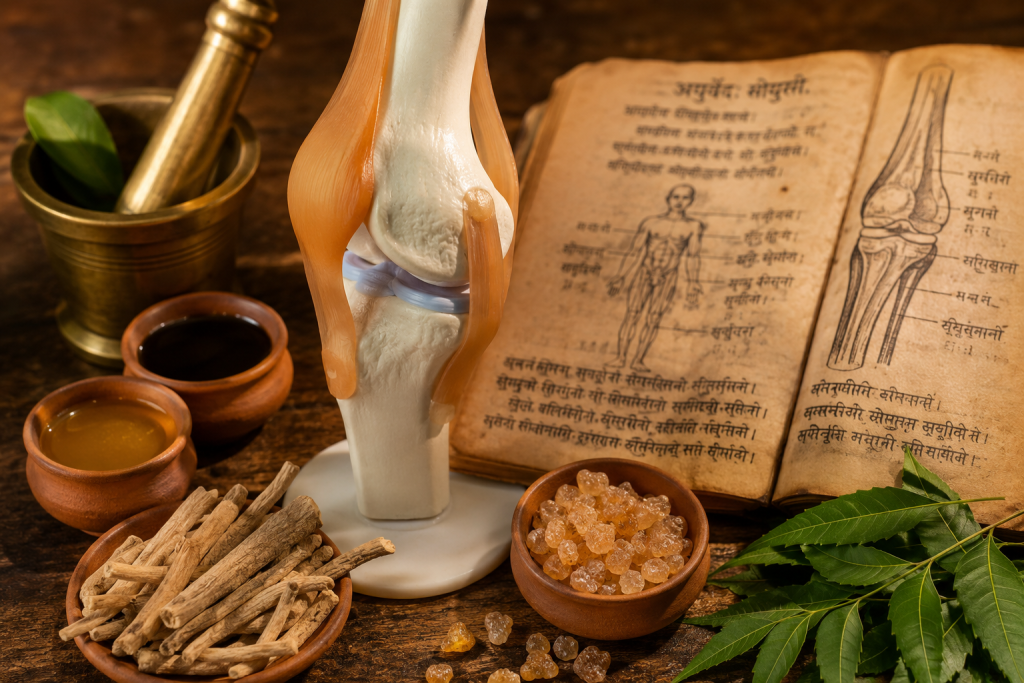
What it is: Elakizhi (Ela = leaves, Kizhi = bolus/poultice) is a classical Kerala Ayurvedic therapy where fresh medicinal leaves — typically Tamarind, Calotropis, Castor, Drumstick, and Lemon — are sautéed in medicated oil and tied tightly into cloth boluses. These boluses are heated continuously and rhythmically applied to affected joints by two trained therapists working in synchrony.
How it works for arthritis: The combination of therapeutic heat and the volatile phytochemicals released from the leaves achieves four simultaneous effects:
Duration: Typically 45–60 minutes per session, administered daily for 7–14 days as part of an immersive program.
Best for: Osteoarthritis (especially knee, hip, and shoulder), inflammatory joint swelling, early-stage Rheumatoid Arthritis (when Ama has been addressed first), post-injury joint stiffness, and ankylosing spondylitis.
What research says: A 2019 clinical study published in the Journal of Ayurveda and Integrative Medicine found that Elakizhi significantly reduced pain scores (VAS scale) and improved joint mobility in Sandhivata patients after 14 days of treatment, with effects sustained at 30-day follow-up.
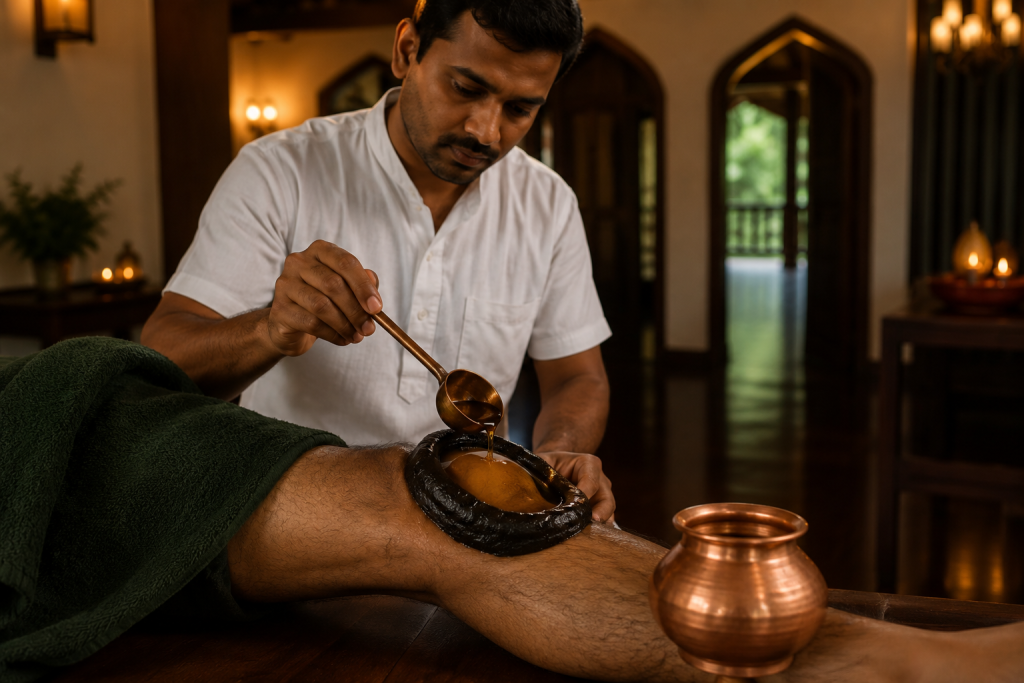
What it is: Janu Basti is one of the most targeted — and visually distinctive — Ayurvedic therapies. A dam of black gram (urad dal) dough is constructed around the knee joint, creating a watertight reservoir. Warm medicated oil (typically Ksheerabala, Dhanwantharam, or Mahamasha tailam depending on the patient’s constitution) is poured into this reservoir and maintained at a therapeutic temperature for 30–45 minutes.
How it works: The static retention of warm oil over the knee achieves deep oleation of the:
Unlike Abhyanga, which applies oil in motion, Janu Basti holds the therapeutic medium stationary — allowing maximum penetration through the joint capsule without the dilution of movement.
The medicated oil difference: Not all oils are equal. Ksheerabala tailam is cooling and anti-inflammatory, making it ideal for Pitta-dominant arthritis with burning sensations. Mahamasha tailam is warming and strengthening, preferred for Vata-dominant degeneration with cold, stiff joints. This precision — matching the oil to the dosha — is what separates classical Ayurvedic treatment from generic massage therapy.
Best for: Knee osteoarthritis (particularly Grades 1–3), runner’s knee, post-surgical knee recovery, knee joint effusion, and ligament laxity.
Contraindications: Open wounds around the knee, active skin infection, or Grade 4 OA where surgical intervention is the indicated first step.
What it is: Kati Basti applies the same oil-retention dam principle as Janu Basti, but to the lumbar spine (Kati = lower back). A dough ring is formed over the lumbar vertebrae from L1 to the sacrum, filled with warm medicated oil, and maintained for 40–50 minutes.
How it works for back-related joint pain: Chronic low back pain in Ayurveda is classified as Katigraha (stiffness) or Katishoola (pain), both primarily Vata disorders. The oil reservoir achieves:
Beyond the spine: Kati Basti is also highly effective for sacroiliac joint dysfunction — a frequently missed pain source that generates low back, buttock, and referred leg pain identical to discogenic sciatica.
Best for: Lumbar spondylosis, disc herniation (L4-L5, L5-S1), sacroiliac joint pain, chronic low back stiffness, and piriformis syndrome.
Patients recovering from spinal injury or surgery often combine Kati Basti with the protocols in the Post-Trauma & Rehabilitation Program for accelerated recovery of spinal mobility.
What it is: Njavarkizhi (Njavar = a special variety of medicinal rice, Kizhi = bolus) is arguably the most nourishing of all Kizhi therapies. Navara rice is cooked in a decoction of Bala root (Sida cordifolia) and cow’s milk, then tied into cloth boluses. These are dipped continuously in warm milk-herbal broth and massaged rhythmically over the entire body or specific joints.
Why it’s different from other Kizhi therapies: While Elakizhi primarily reduces inflammation and Ama, Njavarkizhi is a tissue-building (Brumhana) therapy. The milky paste that coats the skin during treatment provides amino acids, carbohydrates, and bioactive compounds that are absorbed transdermally and contribute directly to:
A note on patient selection: Njavarkizhi is contraindicated during active Amavata flares (excess Ama and Pitta). It is prescribed in the later, strengthening phase of a treatment program — after Ama has been cleared by Virechana or Basti and inflammation has subsided. This sequencing is critical and is why Ayurvedic treatment requires an expert physician, not just a trained therapist.
Best for: Advanced osteoarthritis with significant cartilage loss, post-Panchakarma rehabilitation, fibromyalgia, muscle wasting associated with chronic pain, and elderly patients with systemic tissue depletion (Dhatu Kshaya).
What it is: Abhyanga is the foundational Ayurvedic oil massage — the practice most people associate with Ayurveda globally. But therapeutic Abhyanga for joint conditions is categorically different from a relaxation massage. Every variable is precisely chosen: the oil formulation, the temperature, the direction and pressure of strokes, the sequence of body regions, and the duration of post-massage rest.
The science of direction: Ayurvedic texts specify that therapeutic strokes follow the direction of hair growth (anuloma) when the goal is Vata pacification and nourishment, and move against hair growth (pratiloma) for lymphatic drainage and Ama mobilization. In joint pain protocols, most strokes move toward the heart to assist venous and lymphatic return from swollen distal joints.
Key medicated oils used at Tigris Valley for joint conditions:
| Oil | Key Ingredients | Indication |
|---|---|---|
| Ksheerabala tailam | Bala root, cow’s milk, sesame base | Vata-dominant OA, nerve pain, stiffness |
| Mahanarayan tailam | Ashwagandha, Shatavari, 54 herbs | Degenerative joint disease, muscle weakness |
| Dhanwantharam tailam | 28 herbs incl. Bilva, Agnimantha | Post-injury rehabilitation, spinal pain |
| Murivenna oil | Coconut base, Eclipta, lime | Acute joint swelling, fracture healing |
| Sahacharadi tailam | Sahachara (Strobilanthes), sesame | Sciatic nerve pain, hip and thigh pain |
Duration and frequency: A full therapeutic Abhyanga session runs 60–75 minutes. For joint pain programs, it is typically administered daily for the first 7 days, then on alternate days during the maintenance phase.
The Ayurveda treatments at Tigris Valley use only in-house prepared, quality-controlled medicated oils formulated according to classical Ashtanga Hridayam references — not commercially processed oils that have lost much of their phytochemical potency.
What it is: While the above therapies address joint pain locally and regionally, Virechana (therapeutic purgation) works systemically to eliminate the excess Pitta and Ama that generate systemic inflammation. In Ayurvedic pathology, both gout and inflammatory arthritis have their origin in the accumulation of inflammatory metabolites in the blood and digestive system — long before they manifest as joint symptoms.
How Virechana works for arthritis:
Clinical relevance: A well-administered Virechana course can produce dramatic improvements in Rheumatoid Arthritis markers (ESR, CRP, RF) and joint mobility. It is the foundational procedure in the Chronic Pain & Inflammation Management Program for patients with inflammatory arthritis and autoimmune-driven joint disease.
Patients with overlapping autoimmune conditions should also review the Autoimmune Disorder Management Program, which extends immune modulation beyond joint-specific therapy.
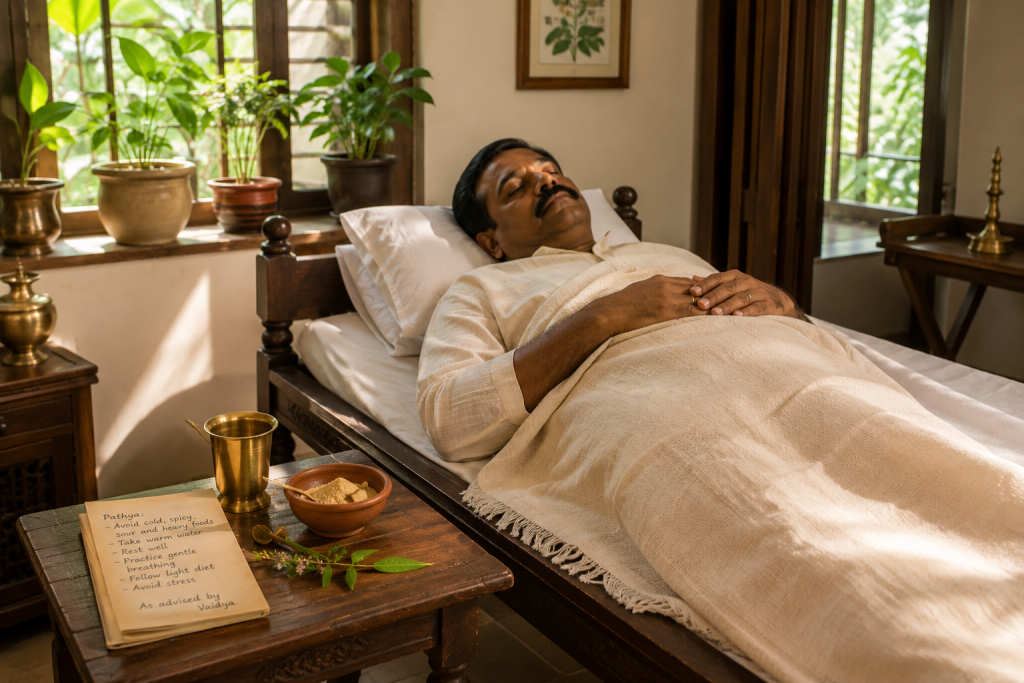
What it is: Lepanam is the topical application of fresh herbal pastes directly over inflamed or painful joint areas. Unlike oil-based therapies, Lepas (pastes) are cooling-to-neutral in energy and work primarily through anti-inflammatory, analgesic, and anti-edematous phytochemical action on the local tissue.
Common Lepa formulations for joint conditions:
Application protocol: The paste is applied at a specific thickness (typically 1–1.5 cm), allowed to dry partially, and then removed before it becomes completely dry to avoid excessive astringency. Sessions last 30–45 minutes and are often combined with a post-application steam or warm compress.
Best for: Gout flares, post-traumatic joint swelling, localized tendinitis, carpal tunnel-type presentations, and acute Rheumatoid Arthritis flares as an adjunct to systemic therapy.
Ayurvedic joint therapies are appropriate for a wide range of patients, but certain profiles benefit most from an immersive residential program versus a course of outpatient sessions.
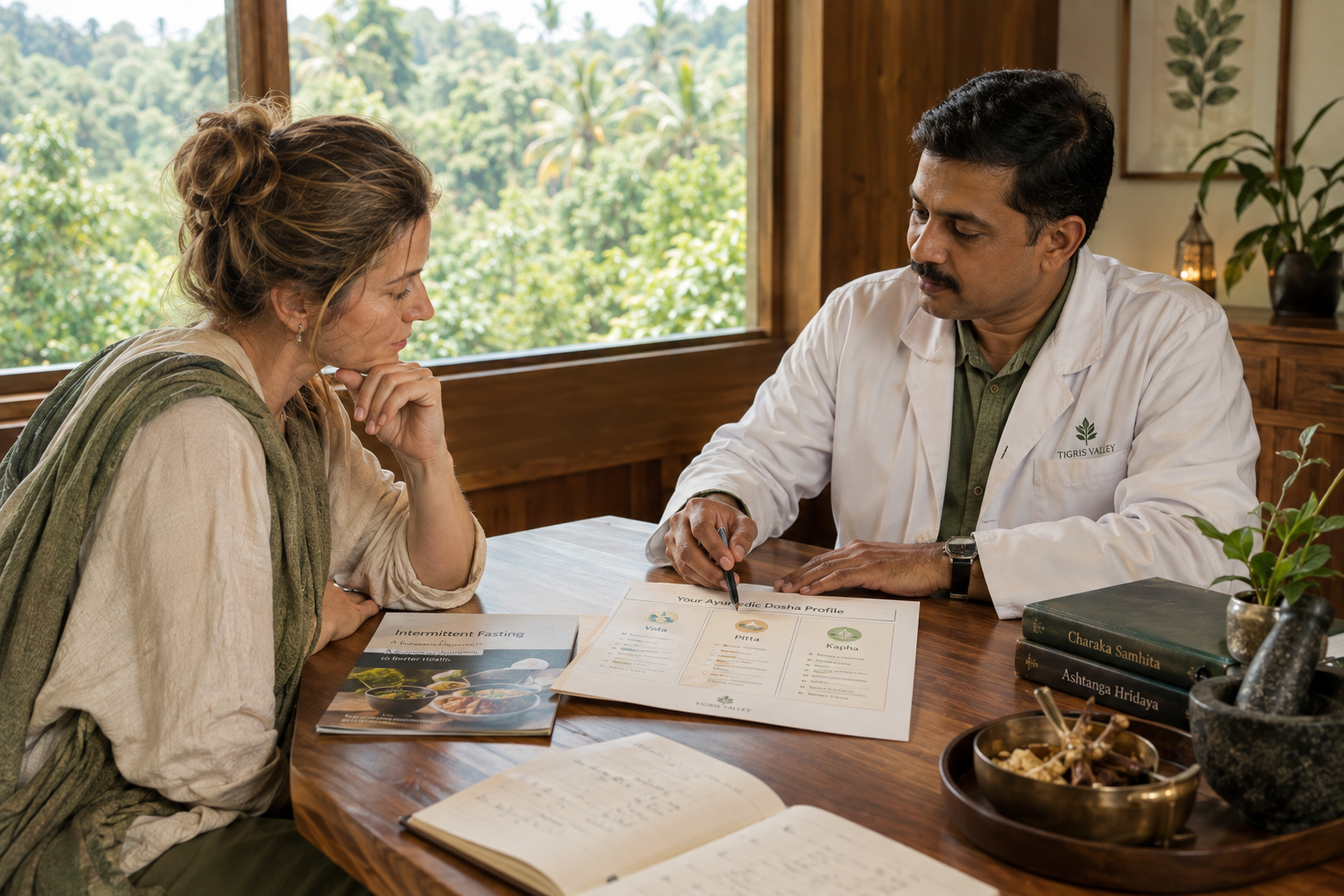
The Tigris Valley medical team conducts a comprehensive intake evaluation — including review of imaging (X-rays, MRI), blood inflammatory markers (ESR, CRP, RF, ANA), and complete medical history — before designing any treatment plan.
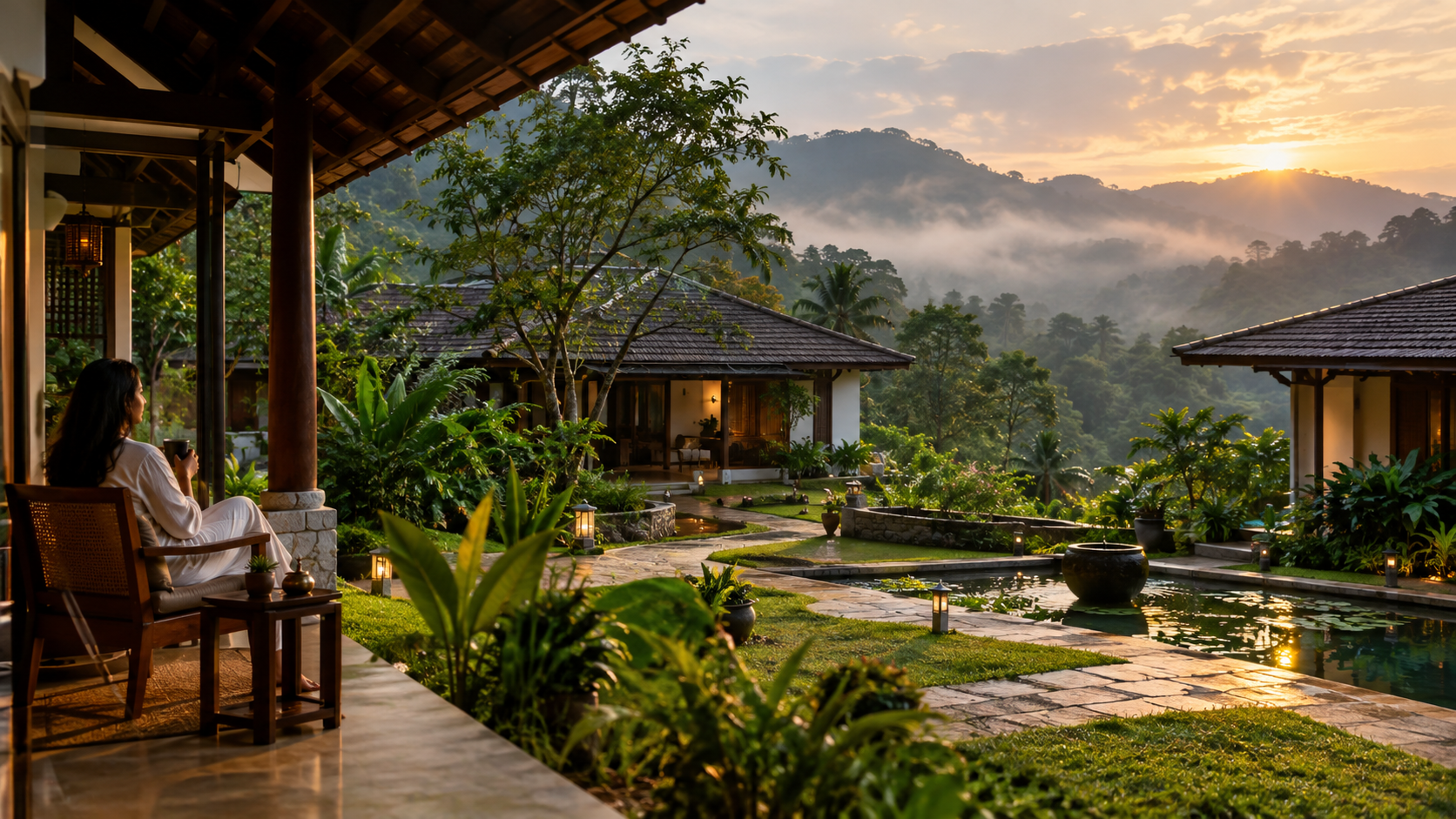
The Chronic Pain & Inflammation Management Program at Tigris Valley is structured as a 14–21 day residential experience in the Wayanad mountains of Kerala — a setting that itself contributes therapeutically through clean mountain air, reduced environmental stressors, and access to forest bathing and nature therapy.
Days 1–3: Diagnostic & Preparation Phase
Days 4–7: Deep Oleation & Swedana
Days 8–10: Primary Panchakarma Procedures
Days 11–17: Targeted Local Therapies
Days 18–21: Rehabilitation & Discharge Preparation
For guests dealing with stress-amplified pain — a clinically recognized phenomenon — the Stress & Burnout Recovery Program elements are integrated to address the HPA-axis dysregulation that chronically elevates inflammatory cytokines.
The AYUSH treatment framework ensures all therapies are delivered by qualified, registered practitioners under active physician oversight — not as spa services but as clinical interventions.
Q1. What is the difference between Sandhivata and Amavata, and why does it matter for treatment? Sandhivata is the Ayurvedic equivalent of Osteoarthritis — driven by Vata depletion of joint fluid, producing dryness and degeneration. Amavata corresponds to Rheumatoid Arthritis — driven by Ama toxins combining with Vata to create inflammation and swelling. The treatment approach is fundamentally different: Sandhivata is treated with oleation and nourishment from the start, while Amavata requires Ama-clearing (Langhana) therapies before oleation is introduced. Misidentifying the condition leads to treatments that worsen symptoms.
Q2. How many sessions of Janu Basti or Elakizhi are needed to see results? Most patients notice meaningful reduction in pain and stiffness within 5–7 consecutive sessions. For sustained structural benefit — particularly cartilage nourishment in Sandhivata — a minimum of 14 consecutive days is recommended. Isolated outpatient sessions without dietary and lifestyle support produce limited results because the inflammatory triggers remain active between sessions.
Q3. Can Ayurvedic joint treatments be received alongside ongoing NSAID or DMARD therapy? Yes, in most cases. Ayurvedic external therapies (Kizhi, Basti, Abhyanga) are generally safe alongside pharmaceutical medications. Certain herbal formulations can interact with DMARDs or blood thinners, so the Tigris Valley medical team always reviews your current medication list before prescribing internal Ayurvedic medicines. The long-term goal for many patients is a medically supervised reduction of pharmaceutical dependence — not an abrupt substitution.
Q4. Is there an age limit for Panchakarma procedures for arthritis? There is no fixed age limit, but procedures are modified based on Agni strength (digestive fire), overall vitality (Bala), and current health status. Elderly patients often receive gentler Basti protocols rather than Virechana, and dose intensities are reduced. The Tigris Valley team evaluates each patient individually — a 75-year-old with strong constitution may be a better candidate than a depleted 50-year-old.
Q5. What is the role of diet during and after Ayurvedic arthritis treatment? Diet is not peripheral — it is central. During the treatment program, guests follow a therapeutic Pathya (appropriate) diet designed to pacify the relevant dosha, support Agni, and avoid Ama-forming foods. Post-discharge, dietary compliance is the single biggest predictor of sustained relief. Key principles: warm, cooked, easily digestible foods; anti-inflammatory spices (turmeric, ginger, black pepper); avoidance of cold dairy, raw salads, processed sugars, and nightshades.
Q6. Can gout be treated with Ayurveda, and how? Yes. Gout (Vatarakta in Ayurveda — literally “blood vitiated by Vata”) is treated with a specific protocol combining Virechana to clear excess uric acid burden via the gut, cooling Lepanam applications for acute joint swelling, blood-purifying herbs (Guduchi, Neem, Manjistha), and a strict dietary protocol eliminating purine-rich foods, alcohol, and fructose. Many patients achieve sustained reduction in serum uric acid and significant reduction in flare frequency within 3–6 months of consistent treatment.
Q7. How does forest bathing at Tigris Valley contribute to joint pain relief? Forest bathing (Shinrin-yoku) is not simply a pleasant walk. Research from multiple Japanese and Korean trials documents that phytoncides — airborne compounds released by trees — significantly reduce cortisol levels and inflammatory cytokine concentrations (particularly IL-6 and TNF-α) within 2 hours of forest exposure. Since elevated cortisol is a primary driver of systemic inflammation that amplifies joint pain, the mountain forest environment at Tigris Valley is genuinely therapeutic — not just aesthetically pleasant.
Q8. What herbal supplements are typically prescribed post-discharge for joint conditions? Common post-discharge formulations include: Shallaki (Boswellia) extract for continued COX-2 inhibition, Ashwagandha (Withania somnifera) for cortisol modulation and anti-inflammatory effect, Guggulu-based formulations (Yograj Guggulu for Vata, Kaishore Guggulu for Pitta-Ama-driven arthritis), Maharasnadi Kwatha decoction for nerve and joint pain, and Dashamoolarishtam for systemic Vata pacification. All are prescribed individually — not as a standard kit — based on your specific condition at discharge.
Q9. Is the Tigris Valley Chronic Pain program suitable for fibromyalgia? Yes, and fibromyalgia responds particularly well to the integrative approach because it is a multi-system condition involving central sensitization, HPA-axis dysregulation, and musculoskeletal pain simultaneously. The combination of Panchakarma, Njavarkizhi, Yoga Nidra, Pranayama, and the Functional Medicine interventions addresses each of these dimensions. Many fibromyalgia patients who have seen limited results from conventional treatment report significant improvement after a 21-day program.
Q10. How do I know if I need the Chronic Pain program versus the Autoimmune Disorder Management program? If your joint pain is primarily mechanical or degenerative (osteoarthritis, spondylosis, sports injury, post-surgical stiffness), the Chronic Pain program is your primary fit. If your joint pain is driven by a confirmed autoimmune condition (Rheumatoid Arthritis, Psoriatic Arthritis, Lupus, Ankylosing Spondylitis), the Autoimmune Disorder Management Program places greater emphasis on immune modulation and may be more appropriate — or the two programs may be combined. The Tigris Valley medical team will guide this assessment during your initial consultation.
Joint pain does not have to be permanent. The therapies described here — when delivered in the right sequence, by qualified practitioners, with the dietary and lifestyle support that makes the difference between temporary relief and lasting change — can fundamentally alter the trajectory of your condition. Ayurvedic treatment for joint pain and arthritis has a 5,000-year clinical record, and today at Tigris Valley that record is backed by modern diagnostics, functional medicine, and world-class facilities in one of India’s most healing natural environments.
The first step is a consultation. Your pain has a cause. Your cause has a treatment. Your treatment starts here.
→ Explore the Chronic Pain & Inflammation Management Program
→ View All Wellness Programs at Tigris Valley
→ Contact Us to Book a Consultation

Kaithappoyil, in the Western Ghats.
Markaz Knowledge City Road, Kaithappoyil, Adivaram, Kerala
Get directions +91 90726 61622 reservation@tigrisvalley.com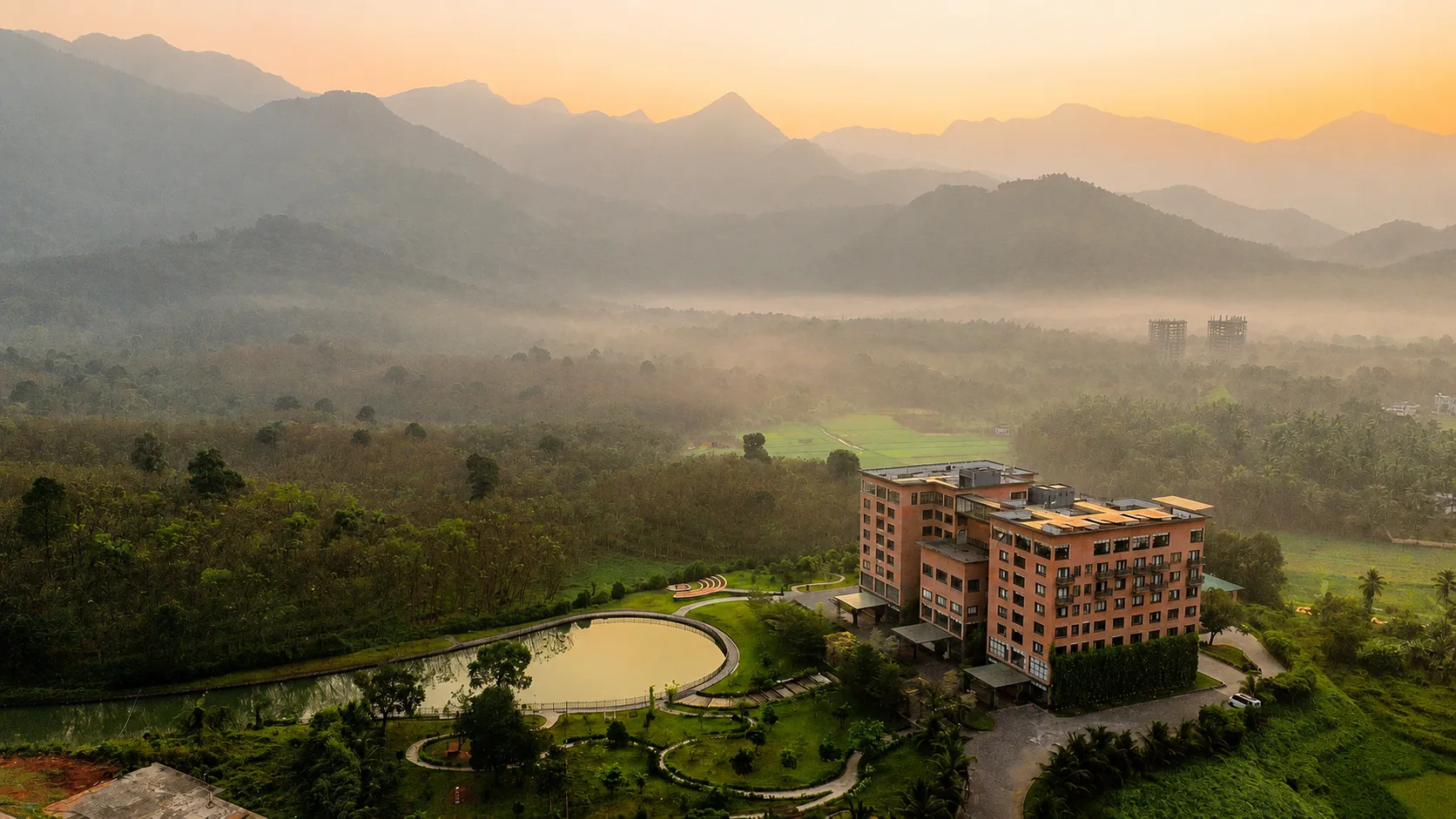
Kaithappoyil, Western Ghats

Before you leave
A physician reads every letter. Book a consultation, or send an inquiry — reservations answers the same day.