[gtranslate]
MENU
Living with PTSD is exhausting in a way that’s hard to explain. You’re not just tired — you’re wired and tired at the same time. Everyday sounds, smells, or moments can suddenly pull you back somewhere you’d rather not be. And despite trying to “move on,” the body keeps score. Left unaddressed, trauma reshapes sleep, relationships, and the ability to feel safe anywhere. The good news? Healing is real — and it doesn’t have to start with a prescription. This guide walks you through natural, evidence-informed methods that help you overcome PTSD naturally, gently rebuilding the life trauma interrupted.
Post-Traumatic Stress Disorder isn’t just “being stressed after something bad.” It’s a rewiring of the nervous system. Your brain, specifically the amygdala (the threat-detection center), gets stuck in high alert long after the danger has passed.
People living with PTSD commonly experience:
What makes PTSD particularly isolating is that it’s often invisible. You might look perfectly fine from the outside while your inner world is in chaos. That’s why healing needs to go beyond surface-level symptom management.
Conventional treatment — typically a combination of psychotherapy and medication — works for many people. But a growing number of individuals are looking for approaches that address the whole person: the body, the nervous system, the emotional landscape, and even the spirit.
Natural and integrative therapies aren’t a replacement for clinical care in severe cases, but they offer something that medication alone often can’t: a sense of active participation in your own healing. When you’re recovering from trauma, feeling in control again matters enormously.
At Tigris Valley Wellness Retreat, an integrative healing center nestled in the mountains of Kerala, the approach to trauma recovery combines ancient healing traditions with functional medicine — creating a truly holistic path forward. Explore their full suite of wellness programs to understand how this integrated model works in practice.

Ayurveda views trauma through the lens of Vata imbalance — an excess of air and space energy that keeps the nervous system scattered, restless, and fearful. Long-term trauma disturbs the body’s natural rhythms, disrupts digestion, and depletes Ojas (vital life essence).
Key Ayurvedic therapies that support PTSD recovery include:
Shirodhara: A continuous stream of warm medicated oil poured gently onto the forehead. It directly calms the nervous system, reduces cortisol, and is one of the most deeply relaxing therapies in existence. Many people who’ve struggled with sleep for years report significant improvement after just a few sessions.
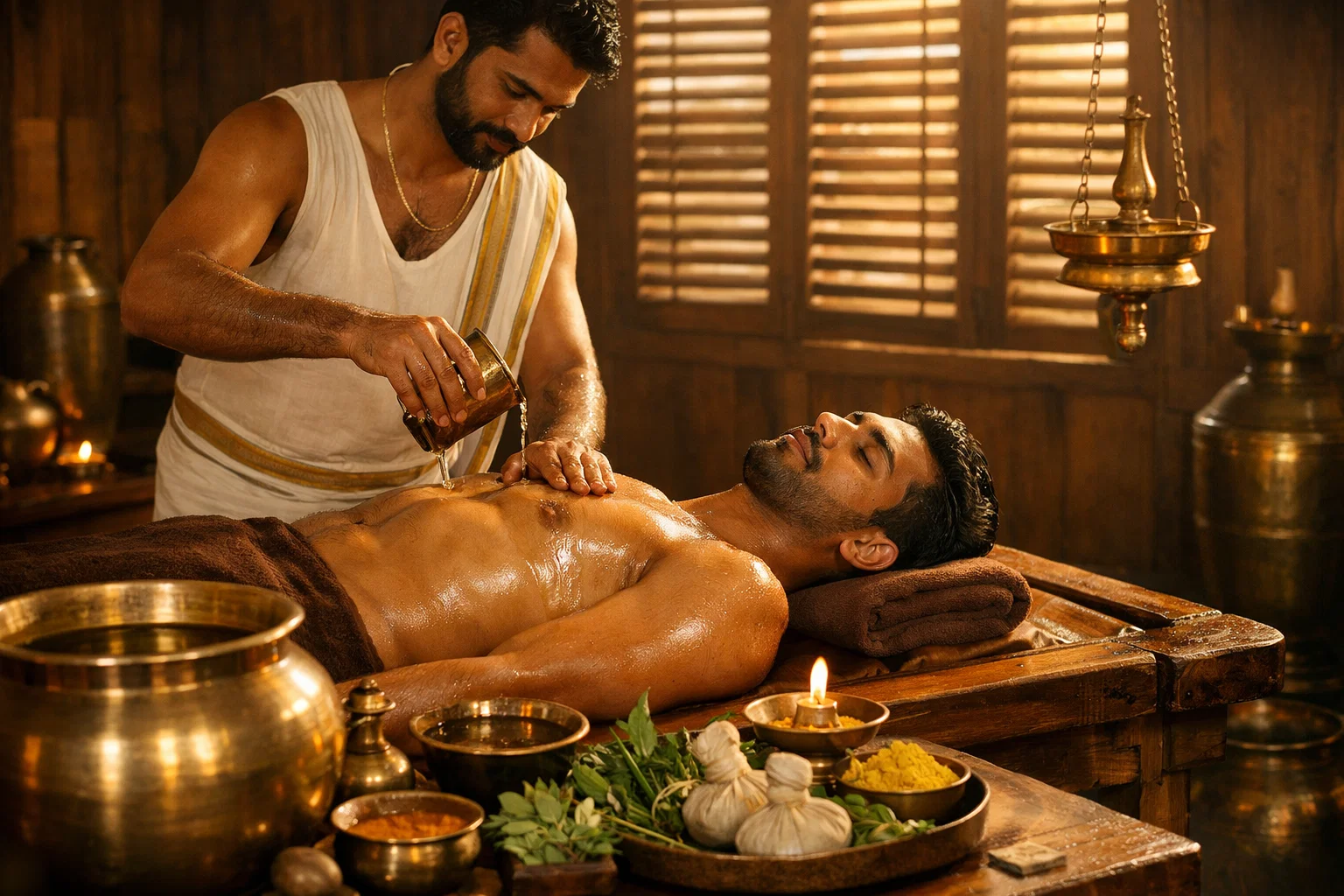
Abhyanga (Full Body Oil Massage): Not just relaxation — Abhyanga uses medicated herbal oils to nourish the nervous system through the skin, reduce anxiety, and help the body feel safe again.
Panchakarma Detoxification: Trauma stores itself in tissues and the nervous system. Panchakarma works to flush out accumulated toxins (Ama), restoring clarity and lightness that many trauma survivors haven’t felt in years.
Rasayana Therapy: Adaptogenic herbs and rejuvenating formulations that rebuild depleted vitality and resilience over time.
Tigris Valley’s Ayurveda treatment program integrates all of these within a personalized plan designed specifically for your trauma history and constitution.

Trauma lives in the body. One of the most well-established findings in trauma research is that the body needs to process what the mind tries to suppress. Yoga and breathwork are uniquely positioned to do exactly that.
Trauma-Sensitive Yoga differs from regular yoga classes. The emphasis is on choice, safety, and body awareness — not performance. It helps you gradually reconnect with physical sensations without being overwhelmed by them. Over time, this rebuilds the mind-body connection that trauma severs.
Pranayama (Breathwork): Slow, regulated breathing directly activates the parasympathetic nervous system — the body’s “rest and digest” mode. Techniques like Nadi Shodhana (alternate nostril breathing) and Bhramari (humming bee breath) are particularly effective for anxiety and hypervigilance.
Naturopathy includes hydrotherapy, therapeutic baths, and dietary interventions that support nervous system regulation through the gut-brain axis — an increasingly important pathway in trauma recovery.
Tigris Valley’s Yoga & Naturopathy program uses all of these approaches within a structured, supportive environment that makes it safe to go inward.

Acupuncture has been used for over 2,000 years to regulate the flow of Qi (life energy) through the body’s meridian pathways. In the context of trauma, it works by:
Research increasingly supports acupuncture as a complementary therapy for PTSD, with veterans’ programs in several countries now incorporating it alongside conventional treatment.
Tigris Valley’s acupuncture therapy is delivered by experienced practitioners and is often combined with other Traditional Chinese Medicine treatments for a more comprehensive effect.

Hijama — wet cupping therapy rooted in Islamic medicine — is gaining recognition for its ability to release stagnant blood, reduce inflammatory markers, and calm an overactivated nervous system. While many associate it primarily with physical pain, practitioners have long observed its impact on emotional and psychological heaviness.
In PTSD specifically, Hijama is thought to:
Tigris Valley’s Hijama cupping therapy is performed by trained specialists and integrated with broader trauma recovery plans. It’s not a standalone fix — but as part of a holistic program, it can be a meaningful piece of the healing puzzle.
Unani medicine, rooted in Greco-Arabic healing traditions, takes a deeply constitutional view of emotional health. It recognizes that the mind and body are inseparable — and that conditions like PTSD affect Mizaj (temperament) and the balance of four humors that govern wellbeing.
Unani’s contributions to natural PTSD recovery include:
Tigris Valley’s Unani medicine program creates individualized herbal protocols based on your specific temperament and trauma presentation — not a one-size-fits-all approach.

One thing many people don’t realize about PTSD is that it leaves measurable biological footprints — elevated cortisol, disrupted HPA axis function, gut microbiome dysbiosis, chronic inflammation, and nutrient depletions. Functional medicine maps these imbalances and addresses them directly.
At Tigris Valley, a functional medicine consultation for trauma typically involves:
This approach doesn’t just treat symptoms — it corrects the underlying biological terrain that trauma has disrupted. Learn more about how functional medicine is applied at Tigris Valley.
If chronic pain is also part of your post-trauma picture — as it often is — the Chronic Pain & Inflammation Management Program addresses this connection directly.

The nervous system heals in safety. And few environments communicate safety as powerfully as unspoiled nature.
Mindfulness-Based Stress Reduction (MBSR) has one of the strongest evidence bases among non-pharmacological approaches to PTSD. It teaches you to observe thoughts and sensations without being controlled by them — a critical skill when intrusive memories and hypervigilance are daily battles.
Nature therapy (Shinrin-yoku / forest bathing) lowers cortisol, reduces blood pressure, and activates the parasympathetic nervous system. Being among trees and mountains isn’t a vague wellness cliché — there’s measurable physiology behind why it helps trauma survivors feel safer in their bodies.
Tigris Valley’s location in the mountains near Wayanad, Kerala, isn’t incidental. It was chosen because the environment itself is therapeutic. The Mindfulness & Mental Clarity Package combines guided meditation, forest walks, and breathwork in this setting.
The retreat also offers dedicated emotional healing and mental wellness support that addresses trauma-related anxiety, emotional numbness, and disconnection.
Knowing which therapies are helpful is one thing. Experiencing them in a structured, supportive environment is another entirely.
Tigris Valley’s Post-Trauma Rehabilitation Program is designed for individuals recovering from emotional trauma, PTSD, post-surgery stress, accident-related anxiety, and health-crisis-induced fear. It’s the most comprehensive natural PTSD treatment option the retreat offers, and it brings everything discussed in this article into one personalized journey.
What the program includes:
The retreat’s setting does meaningful work too. Surrounded by mountains, forest, and fresh air, away from urban noise and triggers, many guests describe the first few days simply as “the first time I’ve breathed properly in years.”
If stress and burnout are intertwined with your trauma — which they often are — the Stress & Burnout Recovery Program runs alongside trauma rehabilitation support.
Read what guests who’ve walked this path have to say on the testimonials page. And when you’re ready to take the first step, the Tigris Valley team is available to walk you through what healing might look like for you specifically.
💡 Key Takeaway: Overcoming PTSD naturally isn’t about ignoring the severity of the condition — it’s about expanding the toolkit. When the body, nervous system, and spirit are addressed together, recovery becomes not just possible but deeply transformative.
PTSD can significantly improve — and in many cases fully resolve — without medication, particularly with consistent, structured therapy and holistic interventions. However, severe or complex PTSD may require medical supervision alongside natural approaches. It’s always best to work with qualified practitioners.
Ayurvedic treatments like Shirodhara have demonstrated measurable effects on cortisol reduction and anxiety in clinical studies. While large-scale PTSD-specific trials are still emerging, the neurological and physiological mechanisms are increasingly well understood.
Grounding techniques combined with regular pranayama practice (especially slow exhalation techniques) are among the most accessible and effective tools for managing flashbacks. Longer term, somatic therapies and trauma-sensitive yoga address the root cause.
Acupuncture has shown positive results in multiple studies on PTSD, particularly for reducing hyperarousal, improving sleep, and decreasing anxiety. It works best as part of an integrated treatment plan rather than a standalone therapy.
Ayurveda, Yoga & Naturopathy, and Unani medicine each contribute meaningfully to trauma recovery. The most effective approach combines multiple AYUSH modalities tailored to the individual — which is the model practiced at Tigris Valley’s AYUSH center.
Spending time in natural environments lowers cortisol, reduces heart rate, and activates the parasympathetic nervous system. For trauma survivors, this physiological shift helps interrupt the chronic fight-or-flight state that defines PTSD.
The gut-brain axis is bidirectional — trauma disrupts gut microbiome balance, and gut dysbiosis worsens anxiety and mood instability. Addressing gut health through diet, probiotics, and naturopathic protocols is an important and often overlooked component of PTSD recovery.
A well-structured retreat offers something that’s genuinely difficult to achieve at home: sustained, immersive healing away from your triggers. The combination of therapeutic intensity, natural environment, and expert guidance accelerates recovery in ways that weekly outpatient sessions often can’t. It’s not about luxury — it’s about having the space and conditions to truly heal.
Yes, when performed by trained practitioners. Many people with anxiety initially feel apprehensive about cupping therapy, but most report a calming, releasing sensation during and after treatment. It’s always introduced gradually and only when appropriate for the individual.
Consistent sleep hygiene, daily movement (even gentle walking), a whole-food anti-inflammatory diet, limiting news and social media exposure, and regular breathwork practice all support ongoing PTSD recovery. These are the maintenance practices that sustain gains made in intensive therapeutic environments.
Overcoming PTSD naturally is not about dismissing how serious trauma is — it’s about recognizing that the human body and mind have a profound, built-in capacity to heal when given the right conditions.
The methods covered in this guide — Ayurveda, yoga, acupuncture, Hijama, Unani medicine, functional medicine, mindfulness, and nature therapy — aren’t alternatives to healing. They are healing. They address what medication alone often can’t: the nervous system that stays stuck in survival mode, the body that holds what the mind tries to let go of, and the spirit that needs more than symptom management to genuinely recover.
What makes the difference between reading about these therapies and actually experiencing transformation is consistency, guidance, and environment. That’s why a structured, immersive program in a place designed for healing — like Tigris Valley’s Post-Trauma Rehabilitation Program — can accomplish in weeks what years of isolated effort sometimes can’t.
You’ve already taken a meaningful step just by seeking this information. Healing begins with the decision that you deserve to feel safe again — in your body, in your mind, and in your life. That decision belongs entirely to you.
Healing from trauma is not a straight line — but it is possible, and you don’t have to navigate it alone. Whether you’re just beginning to explore natural approaches or you’re ready to commit to a structured program, Tigris Valley’s team is here to help you find the path that fits your life.
Explore the Post-Trauma Rehabilitation Program →
Or get in touch with the team to ask questions and book a consultation. You can also learn more about Tigris Valley and the philosophy behind their integrative healing approach.
This article is for informational purposes only and does not constitute medical advice. Please consult a qualified healthcare provider for diagnosis and personalized treatment.