

[gtranslate]
MENU
Quick Facts: Back & Neck Pain Programme
| Who it is for | Software engineers, developers, QA, data, product and support teams with recurring back, neck or shoulder pain |
| Cities served | Bengaluru, Hyderabad, Pune, Chennai (and anywhere in India) |
| Format | Residential, doctor-led, personalised plan |
| Typical stay | 7 days (early stiffness) to 14–21 days (chronic or disc-related pain) |
| Systems used | Ayurveda, Unani, Functional Medicine, physiotherapy, acupuncture, yoga and nature therapy |
| Location | Western Ghats hills, Kerala, 60–90 min from Calicut (CCJ) airport |
| Care standard | NABH-accredited wellness hospital, 24/7 medical assistance |
Ten hours at a laptop, a 9 a.m. stand-up, a midnight deploy, and a neck that cracks every time you check Slack. For most IT professionals, back and neck pain starts as stiffness and grows into tingling fingers, sciatica or broken sleep. Painkillers and weekend physio only buy time. This guide shows how a back and neck pain programme for IT professionals treats the cause, what each day involves, and how long you need.
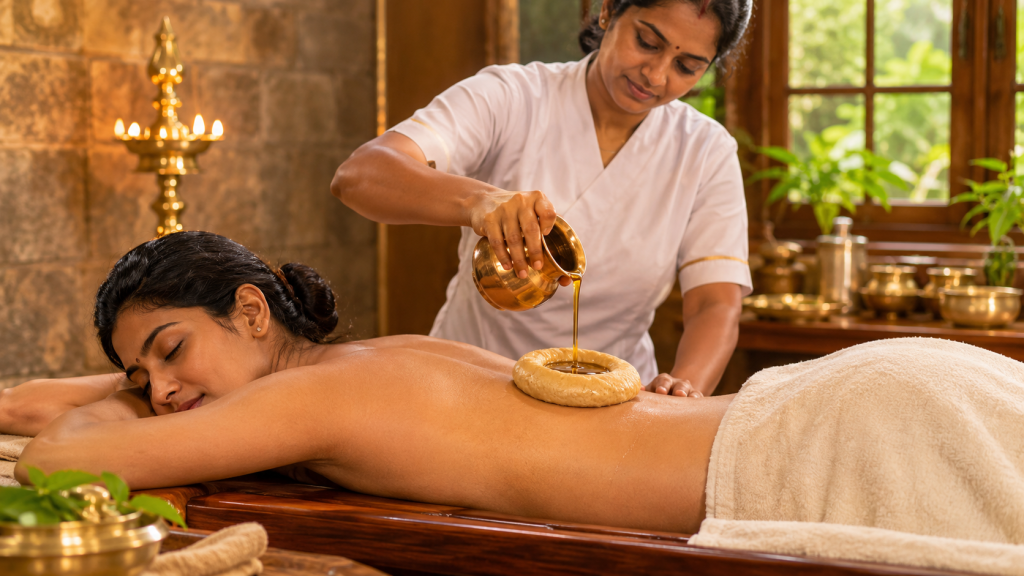
They are the norm, not the exception. A 2025 cross-sectional study of 200 software professionals at multinational companies in India found that 72% had a musculoskeletal disorder in the previous 12 months. The lower back (66.7%) and neck (56.9%) were the most affected areas. A larger review of 5,357 Indian IT professionals found that neck pain was the most common complaint, followed by low back, shoulder and arm pain. It also found that neck pain and low back pain usually occur together.
The cause is rarely one bad chair. It is a stack of small loads repeated 2,000+ hours a year:
Your commute adds to your desk hours. A 60–90 minute crawl down Outer Ring Road or past Silk Board in Bengaluru, through HITEC City in Hyderabad, into Hinjewadi in Pune or along OMR in Chennai means 2–3 more hours of sitting with a flexed spine, often on two-wheelers or in cabs with poor lumbar support. Hybrid work has not fixed it either. Work-from-home back pain treatment is now one of the most common requests from remote engineers working off sofas, beds and dining chairs.
Not every stiff neck is the same problem. Read this guide on the difference between neck pain and cervical pain to understand which one you are likely dealing with.
| Symptom you notice | Likely driver at work | What the programme targets |
|---|---|---|
| Stiff neck by 4 p.m., headaches at the base of the skull | Forward head posture, laptop screen too low | Neck muscle release, posture retraining, Greeva Basti where indicated |
| Dull lower-back ache after long calls | Hours of sitting, weak core, tight hip flexors | Core and glute strengthening, Kati Basti, Abhyanga |
| Pain or tingling down one leg | Disc irritation (bulge or herniation) | Doctor assessment, anti-inflammatory therapies, graded rehab |
| Shoulder-blade knot, mouse-arm ache | Mouse too far away, rounded shoulders | Cupping, scapular strengthening, workstation correction |
| Tingling or numbness in the fingers | Possible cervical nerve irritation | Medical evaluation first, then targeted cervical care |
Key Insight
Back and neck pain in IT professionals is a load-and-recovery problem, not just a posture problem. A better chair cuts the load, but the spine only recovers when inflammation, muscle guarding, stress and movement habits are treated together. That is why short fixes fade, and why a structured programme lasts longer.

A massage eases tight muscles for a day or two. It does not fix a disc, a nerve or an inflammatory pattern. A structured programme is worth considering if any of these sound familiar:
If your leg pain is the main complaint, read this guide on Ayurvedic treatment for slipped disc and sciatica in Kerala. It explains how disc-related pain is assessed and treated without rushing into surgery.
See a doctor urgently, not a retreat, if you have:
These can signal conditions that need emergency medical care. The programme is designed for stable, non-emergency spine pain.
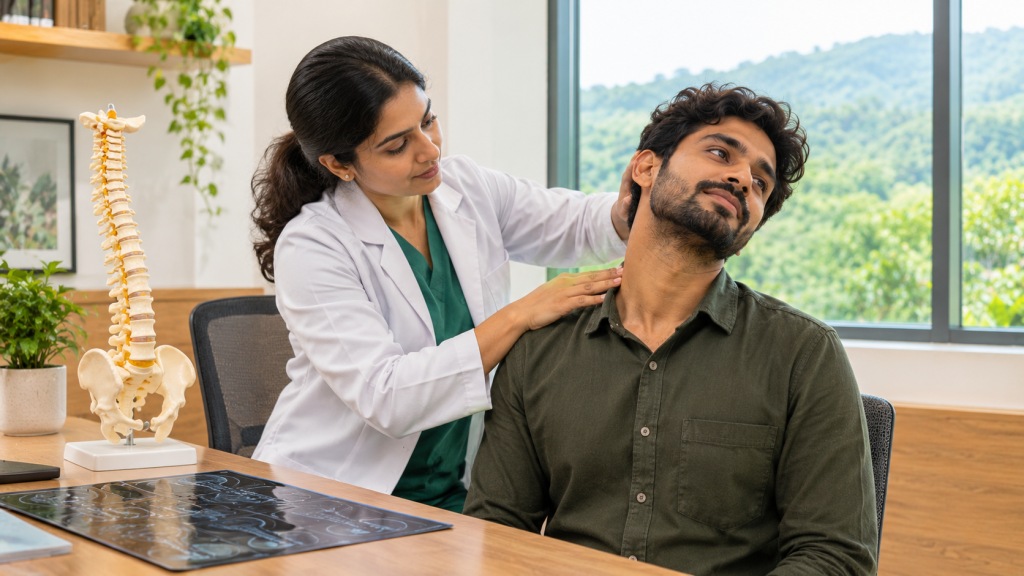
The programme combines four medical systems under one doctor-led plan, so each therapy has a clear job. It is built on the Chronic Pain & Inflammation Management Programme and adapted for desk-related spine problems.
For the full Ayurvedic approach to the lower spine, see the pillar guide on Ayurvedic treatment for back pain. For the cervical side, see the pillar guide on Ayurvedic treatment for neck pain.
| Therapy | What it does | Best for |
|---|---|---|
| Abhyanga + Kizhi | Relaxes guarded muscles, improves circulation | General stiffness, desk-driven back ache |
| Kati / Greeva Basti | Local warmth and nourishment for the spine | Lumbar and cervical pain, early spondylosis |
| Cupping / Hijama | Releases tight fascia, eases local pain | Upper-back and shoulder-blade knots |
| Acupuncture | Calms pain signals, reduces muscle tension | Neck pain, radiating pain |
| Physiotherapy | Restores strength, mobility and posture | All cases; key for keeping pain away |
| Shirodhara + CBT | Lowers stress and supports sleep | Pain that comes with burnout or insomnia |
IT professionals usually ask this first, and the answer is simple: there are no laptops in the treatment schedule. Days are structured but unhurried. Here is an indicative schedule; your doctor adjusts it to your case.
| Time | Activity |
|---|---|
| 6:30 – 7:30 a.m. | Guided stretching, outdoor yoga or a walk on the trails |
| 8:00 a.m. | Anti-inflammatory breakfast from the wellness kitchen |
| 9:30 a.m. – 12:30 p.m. | Main therapy block: Ayurveda or Unani treatments, doctor review |
| 1:00 p.m. | Therapeutic lunch, then rest |
| 3:00 – 4:30 p.m. | Physiotherapy, core and posture training |
| 5:00 p.m. | Steam, sauna or hydrotherapy |
| 6:30 p.m. | Guided meditation or breathwork |
| 7:30 p.m. | Light dinner, then a screen curfew to protect your sleep |
It depends on how long you have had the pain and what is driving it. Your doctor confirms the length after the first consultation. Use this table as a planning guide for your leave request:
| Your situation | Suggested stay | What you can expect |
|---|---|---|
| Stiffness and aches under 3 months, no radiating pain | 7 days | Muscle release, posture reset, a home routine |
| Recurring back or neck pain for 3+ months | 14 days | Deeper anti-inflammatory therapy plus a strength base |
| Disc bulge, sciatica, cervical spondylosis or pain with burnout | 21 days | Full therapy cycle, graded rehab and lasting habit change |
The three weeks follow a clear arc:
Our earlier article on the back pain treatment wellness programme explains how these phases build on each other.
Each option has its place. For pain that keeps returning, the difference is how much of the cause each one treats.
| Factor | Painkillers + rest | Weekly physio in your city | Residential spine programme |
|---|---|---|---|
| Treats the root cause | No, it masks symptoms | Partly: strength and mobility | Yes: inflammation, muscles, posture, stress and sleep |
| Time per week | Minimal | 2–3 hours plus commute | Full immersion for 7–21 days |
| Work and screen breaks | None | None | Complete break, so tissues get time to heal |
| Doctor-led, multi-system care | No | Rarely | Yes: Ayurveda, Unani, Functional Medicine, physio |
| Diet and stress addressed | No | Rarely | Yes, built into the plan |
| Habit change you keep | Unlikely | Depends on discipline | Built daily, with a home plan |
| Best for | Short-term flare-ups | Mild, recent pain | Chronic, recurring or disc-related pain |
The programme works best when it hands over to a sustainable routine back home, so city physiotherapy and a residential stay can complement each other.
If exhaustion is as big a problem as the pain, ask about pairing your plan with the Stress & Burnout Recovery Programme.
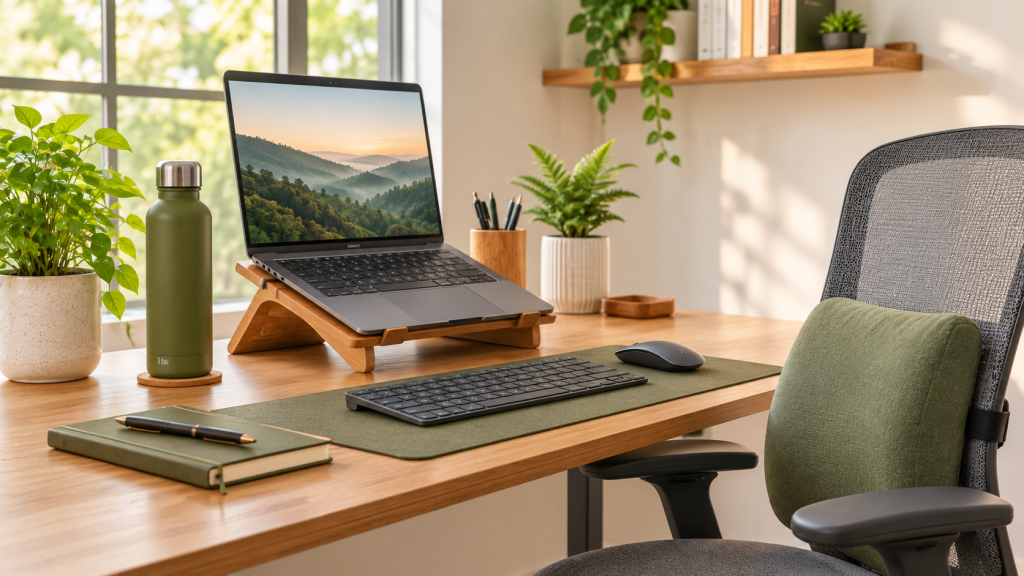
The programme resets your spine. Your desk setup decides whether the reset lasts. Every guest leaves with a personal plan, built on these basics:
Workstation checklist
Movement rules
Five 2-minute desk exercises
For a longer strengthening routine, read this guide on staying strong on your back to eliminate back pain. Daily yoga and naturopathy practice, learned during your stay, helps you keep the gains.
Key Takeaways
The main difference is that care is doctor-led. Every plan starts with a physician’s assessment, and the integrative medical team adjusts it as you respond. You are not handed a fixed spa menu.
For IT professionals who want a wellness retreat in Kerala that treats the problem rather than offering a holiday with massages, this combination is hard to find elsewhere.
It is a residential, doctor-led treatment plan for spine pain caused by long hours at a desk. It combines Ayurvedic therapies, Unani treatments, functional medicine, physiotherapy and stress care to reduce inflammation, release tight muscles, correct posture and build strength. You leave with a routine for your desk at home.
Yes. Most desk-related neck pain is muscular or postural, or comes from early disc changes, and responds to non-surgical care. Oil therapies, Greeva Basti, acupuncture, cupping and targeted physiotherapy are combined after a medical assessment. Surgery is rarely needed unless there is serious nerve compression, which your doctor will screen for.
Yes, especially when it is paired with physiotherapy and posture correction. Ayurveda reduces inflammation and muscle guarding through therapies such as Abhyanga, Kizhi and Kati Basti, while strengthening work stops the pain returning. Results depend on the cause, so a consultation comes first.
It starts with a posture and movement assessment, followed by daily oil therapies, neck-specific treatments and deep neck flexor strengthening. Most guests also learn screen and phone habits to protect the neck. Being in the hills, away from screens, gives the tissues real time to recover.
Yes. Cervical spondylosis treatment for desk workers focuses on reducing inflammation, improving neck mobility and strengthening the supporting muscles. Therapies are chosen after reviewing your X-ray or MRI. The aim is less pain and stiffness and slower progression, not reversing age-related changes.
Yes. Sciatica caused by a disc bulge or herniation is assessed first, then treated with anti-inflammatory therapies, graded physiotherapy and nerve-friendly movement. To understand disc-related pain in more depth, read this guide on healing back pain naturally with Ayurvedic disc bulging treatment.
Plan 7 days for recent stiffness and 14–21 days for chronic, recurring or disc-related pain. Add a travel day at each end. Your doctor confirms the ideal length after the first consultation.
Yes. The retreat is a short flight from Bengaluru to Calicut (Kozhikode) plus a 60–90 minute transfer, or a road trip via Mysuru. That makes it practical for a one- or two-week break without long-haul travel.
We strongly advise against it. A screen break is part of the treatment: posture, stress and sleep can’t reset while you are still taking calls. If you must stay reachable, agree a short daily check-in window with your manager before you arrive.
The difference is integration and medical oversight. This residential pain management programme in Kerala is run in an NABH-accredited wellness hospital, where Ayurveda, Unani, Functional Medicine and physiotherapy are coordinated by one team with 24/7 medical assistance. It is not a resort menu of separate massages.
Typical therapies are Abhyanga, Kizhi, Kati Basti and, for inflammation-driven cases, Panchakarma. Herbal formulations and an anti-inflammatory diet support them. Unani therapies such as Takmeed, and Unani medicine more broadly, may be added for stubborn stiffness.
Yes. Companies can book group programmes that combine posture workshops, stress care and individual spine assessments. They suit engineering teams after a heavy release cycle or as part of an annual wellness plan.
Your Spine Has Been On-Call for Years. Give It a Real Break.
Tell our doctors about your pain, your work hours and your city. We will recommend the right length of stay and a treatment plan built around your spine, not a generic package.
Book Your Spine Consultation Explore the Chronic Pain ProgrammeServing IT professionals from Bengaluru, Hyderabad, Pune & Chennai
Kaithappoyil, in the Western Ghats.
Markaz Knowledge City Road, Kaithappoyil, Adivaram, Kerala
Get directions +91 90726 61622 reservation@tigrisvalley.com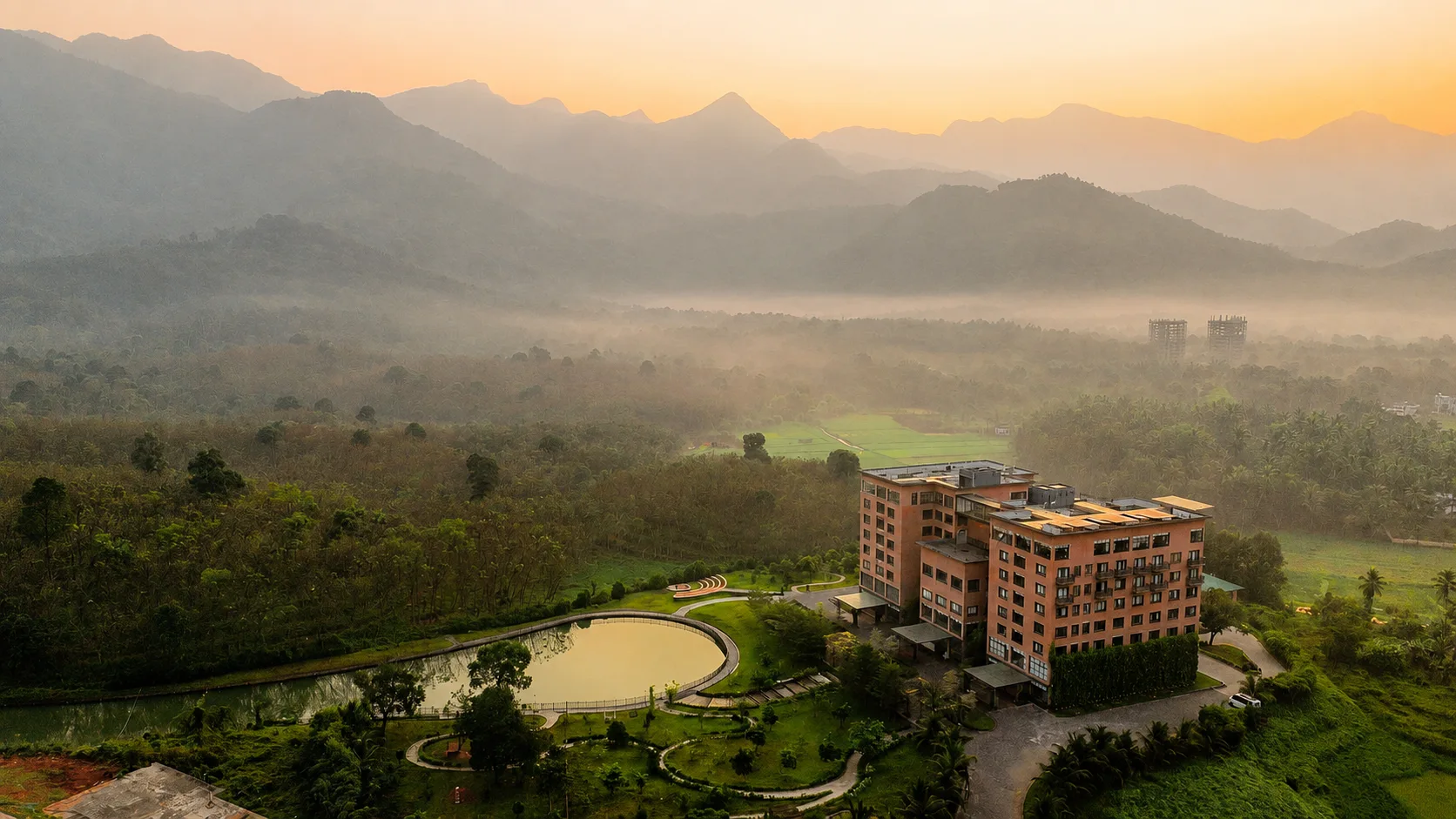
Kaithappoyil, Western Ghats

Before you leave
A physician reads every letter. Book a consultation, or send an inquiry — reservations answers the same day.