
[gtranslate]
MENU
Medically reviewed by Dr. Faheem Najeeb, Medical Director · Updated 2026
⚠️ Medical disclaimer: This article is educational and is not a substitute for your doctor’s advice. Do not stop or change blood pressure medication without your prescribing physician. If you have chest pain, severe headache, vision changes, or readings above 180/120 mmHg, seek emergency care immediately.
Table of Contents
⚡ Quick Facts: Retreats for Hypertension
- Roughly 1 in 3 adults in India has high blood pressure; globally the figure is over 1.2 billion adults.
- The safest retreats for high BP have physician oversight, daily BP checks and a medication review before any herb or therapy is given.
- Diet alone matters: the DASH eating pattern lowered BP by about 11/6 mmHg in people with hypertension in NIH trials.
- Most physicians recommend 14–21 days for meaningful change; 7 days works best as a reset and education stay.
- Your BP medication should continue unchanged during the retreat — dose changes are for your own doctor afterwards.
- Readings consistently above 180/120 mmHg need emergency care, not a retreat.
Your readings keep creeping up despite the tablets, and every “wellness retreat” promises calm without telling you who checks your blood pressure. Pick the wrong one and a hot steam room, an unreviewed herb, or a hard yoga class can push your numbers the wrong way. This guide compares the best retreats for hypertension by type, shows which therapies genuinely help, and gives you a checklist to book safely.
The best retreat for hypertension is a physician-led program that checks your blood pressure daily, reviews every medication before prescribing herbs, continues your existing tablets, and targets the drivers behind your readings — stress, sleep, diet, weight and blood sugar — over at least 14 days. A spa that only offers relaxation can feel wonderful, but it rarely changes the numbers that matter once you’re home.

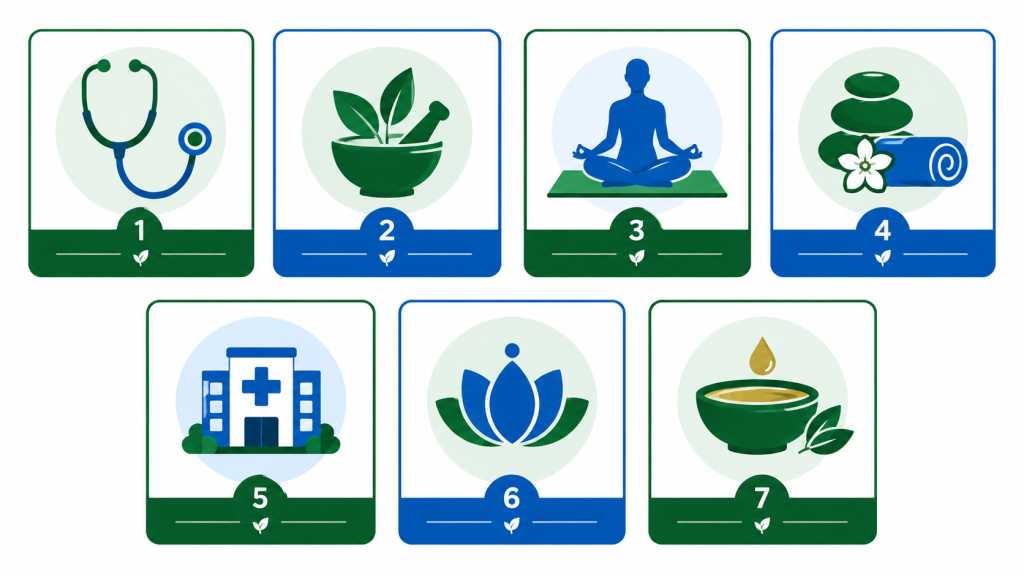
Use these seven non-negotiables to separate clinical retreats from holiday packages:
If a retreat can’t confirm all seven in writing, treat it as a relaxation holiday — not treatment. For a deeper look at the clinical side, see what doctors supervise during an Ayurveda retreat for high blood pressure.
Not every hypertension management program is built the same way. Here is how the main categories compare on the factors that affect safety and results:
| Retreat type | Medical supervision | Daily BP checks | Medication review | Typical stay | Best for | Watch out for |
|---|---|---|---|---|---|---|
| 1. Physician-led integrative retreat (Ayurveda + Functional Medicine, NABH-accredited) | High — MD/BAMS team, 24/7 | Yes | Yes, before any herb | 14–21 days | Diagnosed HTN on meds, with stress, weight or blood-sugar drivers | Choose accredited centers only |
| 2. Lifestyle-medicine residential center | Moderate–high | Usually | Usually | 7–21 days | Diet-driven HTN, weight loss | Often diet-only; less stress/sleep work |
| 3. Integrated naturopathy & yoga hospital | Moderate | Usually | Varies | 10–21 days | Structured, budget-conscious stays | Fasting protocols need close monitoring |
| 4. Luxury destination spa with a BP program | Varies by brand | Sometimes | Sometimes | 5–14 days | Stress-driven HTN, comfort priority | Clinical depth varies; high cost |
| 5. European medical spa / rehab clinic | High | Yes | Yes | 21 days | Post-cardiac-event rehab | Less focus on mind-body therapies |
| 6. Yoga & meditation retreat / ashram | Low | Rarely | No | 5–30 days | Mild, well-controlled HTN | Inversions, breath-holding, no doctor |
| 7. Resort-style Ayurveda spa | Low–moderate | Rarely | Rarely | 3–14 days | Relaxation | Unreviewed herbs, unmodified steam |
Key takeaway: For most people already on medication, Type 1 offers the widest safety net and the broadest set of tools — clinical monitoring plus therapies that address stress, metabolism and inflammation together. That’s the model behind the cardio-metabolic health and recovery program, which lists blood pressure stabilization as a core goal.
✅ Key Insights From Our Physicians
The best retreats combine several modest, proven effects rather than chasing one “miracle” therapy:
| Therapy | Why it’s a concern | Safe practice |
|---|---|---|
| Intense steam (Swedana), sauna | Heat can spike readings and dehydrate | Shorter, cooler sessions; BP checked before and after |
| Virechana (therapeutic purgation) | Fluid and electrolyte shifts, especially on diuretics | Done only if morning BP is in range, with hydration protocol |
| Liquorice root (Yashtimadhu) | Known to raise blood pressure | Excluded for hypertensive guests |
| Headstands, shoulder stands | Raise pressure in the head | Replaced with restorative poses |
| Breath-holding (Kumbhaka) | Can acutely raise BP | Slow, extended-exhale breathing instead |
| Extended water or juice fasting | Electrolyte and medication-dose issues | Only under physician monitoring |
A retreat that hands you this kind of list before you arrive is showing you it practices real clinical care.
| Length | What’s realistic | Best suited to |
|---|---|---|
| 7 days | Stress reset, sleep improvement, BP education, diet training | Early or well-controlled hypertension |
| 14 days | Measurable shift in stress-driven readings; habit formation | Most people on 1–2 BP medicines |
| 21 days+ | Metabolic change (weight, insulin sensitivity) that supports BP | HTN with diabetes, obesity, or after cardiac clearance |
Longer isn’t automatically better — but chronic, multi-driver hypertension rarely shifts in a long weekend. Budgeting help is in our breakdown of Ayurveda retreat costs in Kerala by program and duration.
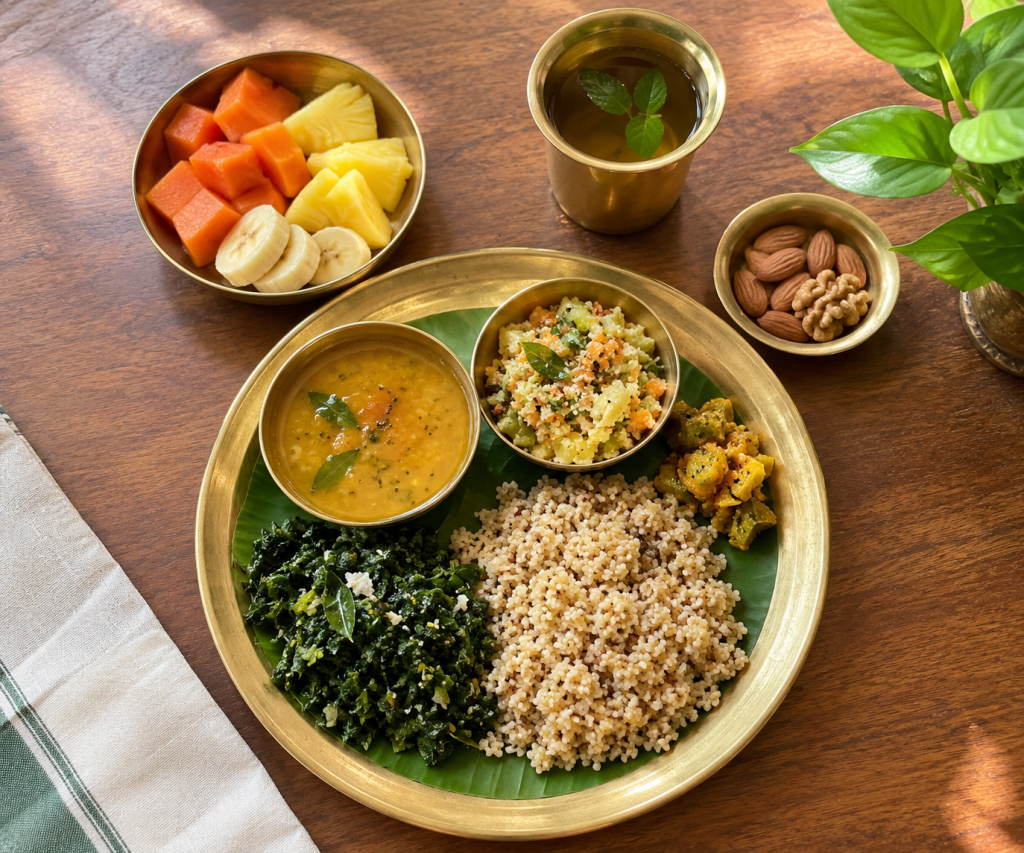
Illustrative schedule — every plan is set by the attending physician.
| Time | Activity | Why it matters for BP |
|---|---|---|
| 6:30 am | Seated BP reading + slow pranayama | Baseline and vagal activation |
| 7:30 am | Gentle, inversion-free yoga | Improves vascular tone safely |
| 8:30 am | Low-sodium, potassium-rich breakfast | DASH principles in practice |
| 10:00 am | Physician round | Reviews readings, adjusts therapies |
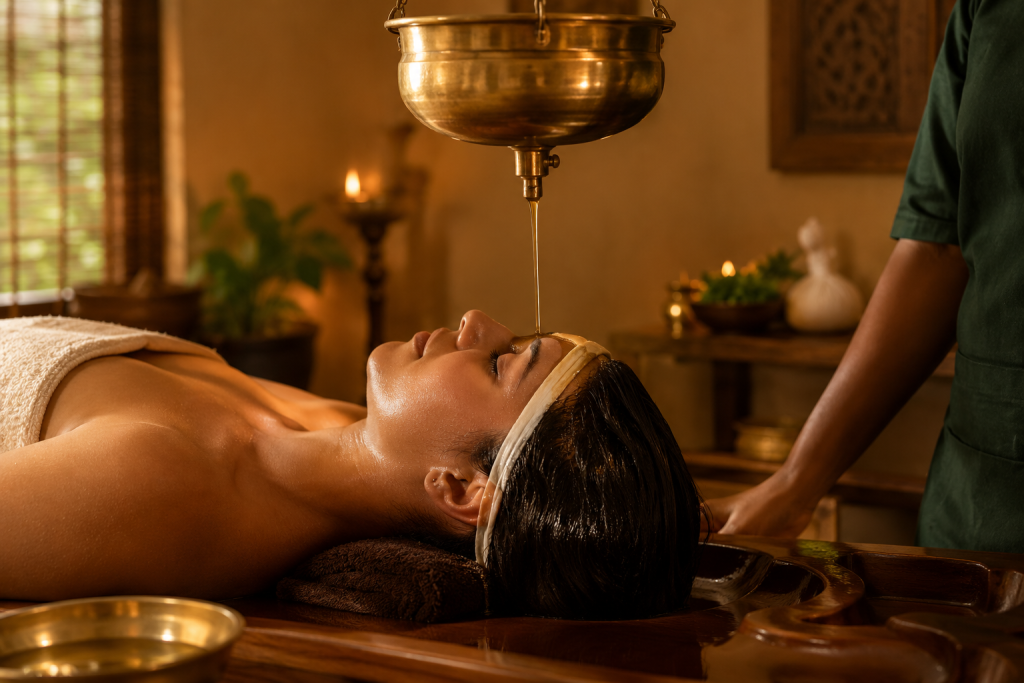
| 11:00 am | Abhyanga or Shirodhara | Lowers stress hormones |
| 3:30 pm | Guided forest walk | Moderate aerobic activity, nature exposure |
| 5:00 pm | Heart-health workshop | Label-reading, home BP technique |
| 9:30 pm | Screens off, lights out | Sleep is a blood pressure treatment |

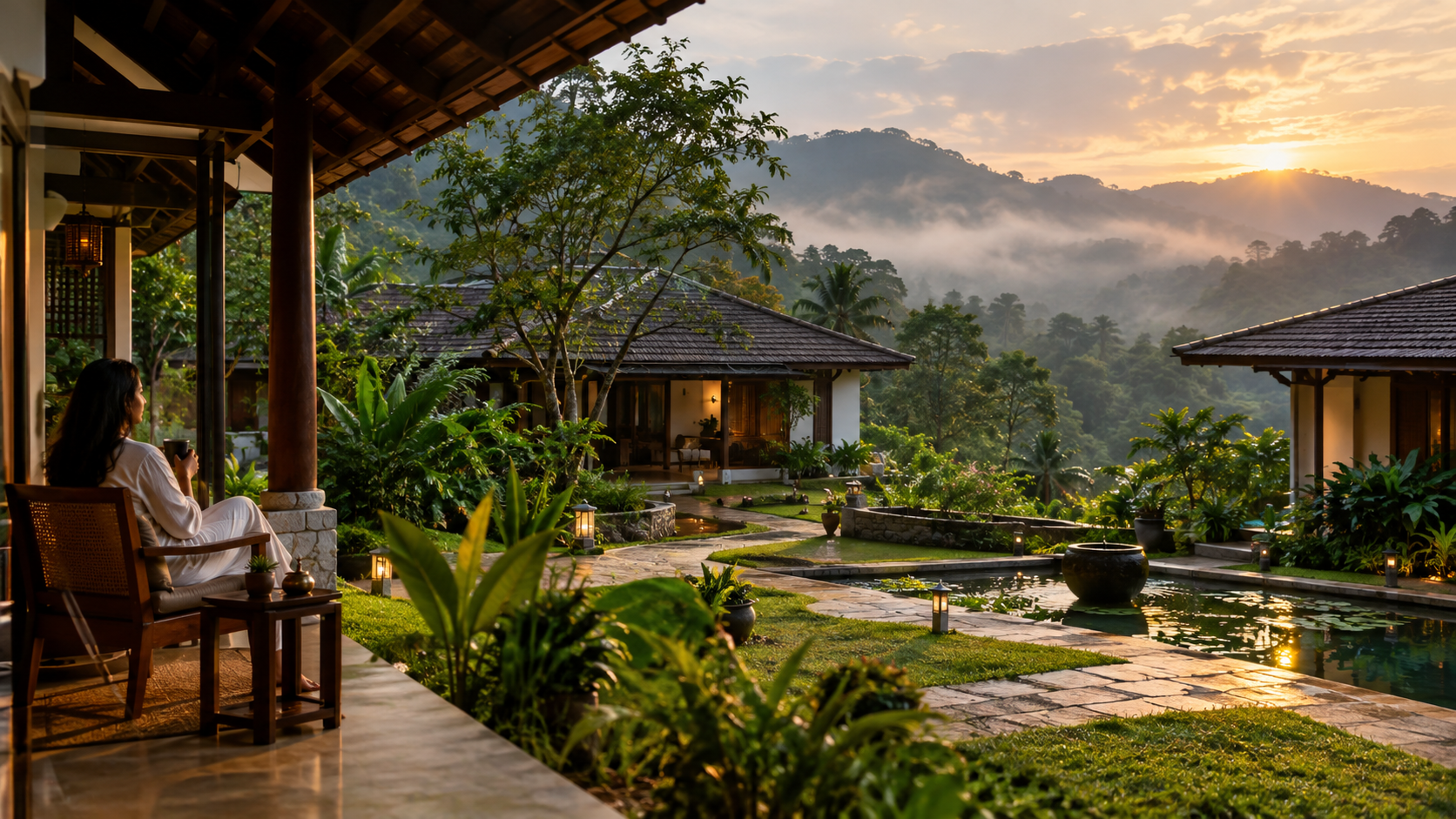
A blood pressure retreat in Kerala brings together three things that are hard to find in one place elsewhere: a living Ayurvedic clinical tradition with qualified BAMS physicians, NABH-accredited integrative hospitals that also run modern diagnostics, and a quiet Western Ghats setting where low stimulation is part of the therapy. For international guests, costs are typically a fraction of comparable Western residential programs. Readers weighing this against other stress-driven care often compare it with a stress and burnout recovery program, since chronic stress is one of the most common hidden drivers of high readings.
Tip: Ask these in writing. A confident, specific reply is a strong sign of clinical maturity; a vague “our therapies are natural and safe” is not.
Stabilize first — and speak to your cardiologist — if any of these apply:
Once your doctor confirms stability, a supervised retreat can be a powerful next step. For the wider picture of heart recovery, read our complete holistic guide to cardiac rehabilitation.
Bottom line: The best retreats for hypertension don’t promise a cure. They give you daily clinical oversight, therapies that calm the nervous system, food that treats, and a plan your own doctor can build on — so your next reading at home tells a better story
✅ Key Takeaways
Related Reads
For most people on medication, the best choice is a physician-led, accredited integrative retreat that checks blood pressure daily, reviews medications before prescribing herbs, and addresses stress, sleep, diet and weight together over 14–21 days. Relaxation-only spas can help mood but rarely change long-term readings.
Yes, if your blood pressure is reasonably controlled, your medication is stable, your own doctor has cleared you, and the retreat provides 24/7 medical supervision. It is not appropriate if readings are above 180/120 mmHg or you’ve had a heart attack or stroke in the past three months.
No. A responsible retreat continues your antihypertensives exactly as prescribed. If your readings improve, your prescribing doctor — not the retreat — decides later whether a dose change is appropriate.
It works best as an addition to conventional care, not a replacement. Integrative programs combining Ayurvedic therapies, diet, yoga and stress management alongside standard medication have been studied in India with encouraging results, especially for stress-related and lifestyle-driven hypertension.
It can be, when individually modified. Procedures such as purgation and steam are adjusted or withheld depending on your reading that morning. Learn what a supervised Panchakarma treatment in Kerala involves before you book.
Shirodhara promotes deep relaxation and a shift toward the calming parasympathetic nervous system, which helps most when stress is a key driver of your readings. It supports blood pressure control; it is not a standalone cure.
Look for nervous-system therapies (Shirodhara, pranayama, meditation), counseling, and serious attention to sleep — poor sleep keeps blood pressure high. See how Ayurveda and functional medicine treat chronic insomnia.
Yes — and treating both together usually works better, since insulin resistance and hypertension share root causes. A metabolic disorder management program targets blood sugar, weight and BP drivers in parallel.
Yes, with modifications. Gentle, restorative yoga and slow-exhale breathing are among the best-supported lifestyle tools for BP; avoid headstands, shoulder stands and breath-holding. Explore supervised yoga and naturopathy therapies.
Results vary. Diet changes alone can reduce readings by around 11/6 mmHg in hypertensive adults, and yoga or stress therapies add smaller effects. Sustained improvement depends on continuing the plan at home.
Yes. Accredited Kerala centers routinely host guests from the Gulf, Europe and North America and review Western prescriptions for interactions. Details on visas, travel and consultations are on the international patients page.
Somewhere that pairs a calm, low-stimulation setting with real clinical oversight and root-cause testing — lipids, blood sugar, kidney function, stress and sleep. That’s the approach of functional medicine for chronic conditions combined with Ayurveda.
EECP is mainly used for angina and coronary circulation, and blood pressure must be controlled before it is considered. Your physician decides suitability — read more about EECP therapy for heart circulation.
Ready to Lower Your Blood Pressure — Safely?
Share your readings and medication list. A physician will review your history and recommend the right program length, therapies and precautions — before you book a single night.
Book a Physician Consultation Talk to the Care TeamNABH-accredited · 24/7 medical supervision · Your medications continue unchanged
Kaithappoyil, in the Western Ghats.
Markaz Knowledge City Road, Kaithappoyil, Adivaram, Kerala
Get directions +91 90726 61622 reservation@tigrisvalley.com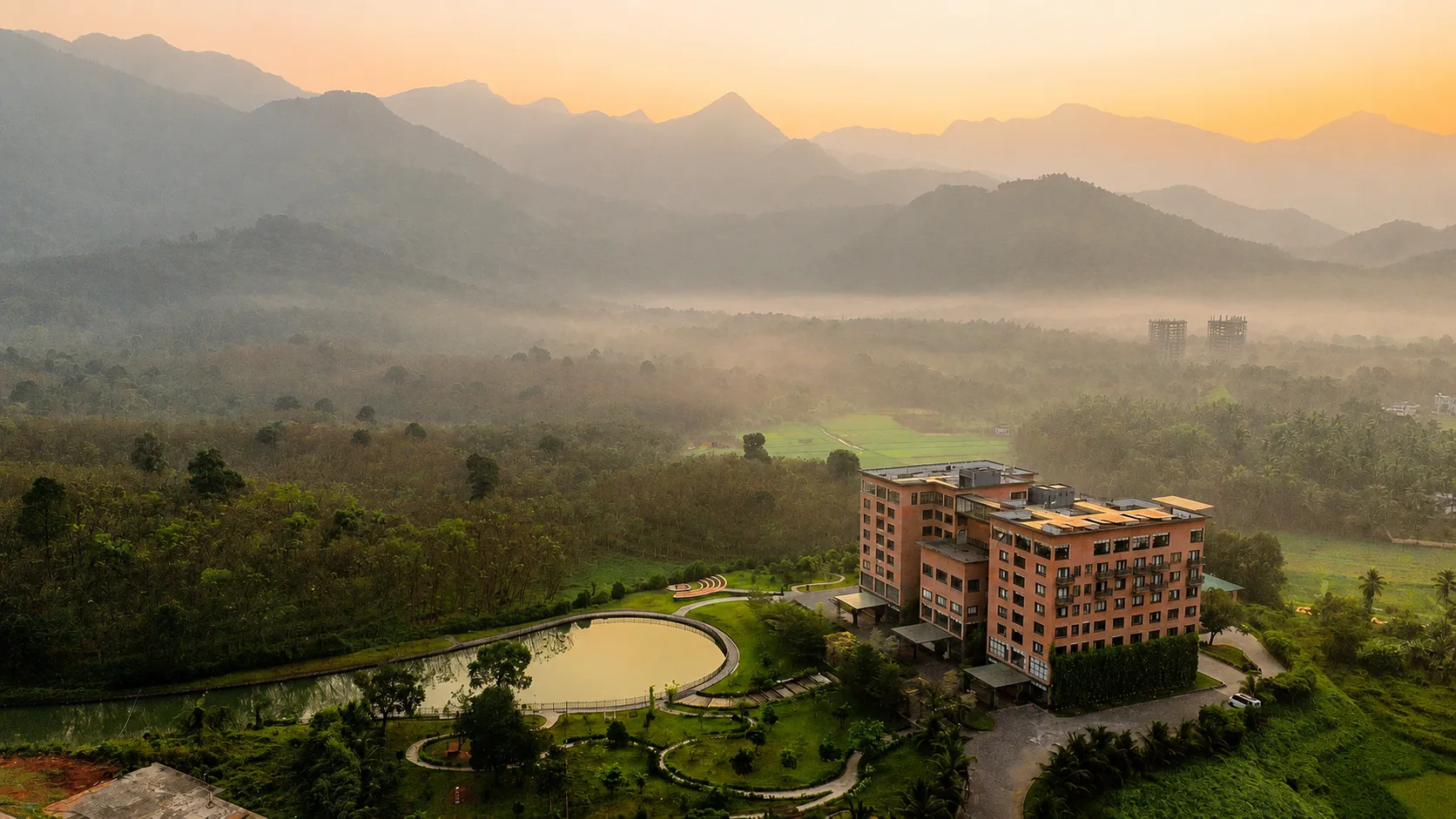
Kaithappoyil, Western Ghats

Before you leave
A physician reads every letter. Book a consultation, or send an inquiry — reservations answers the same day.